



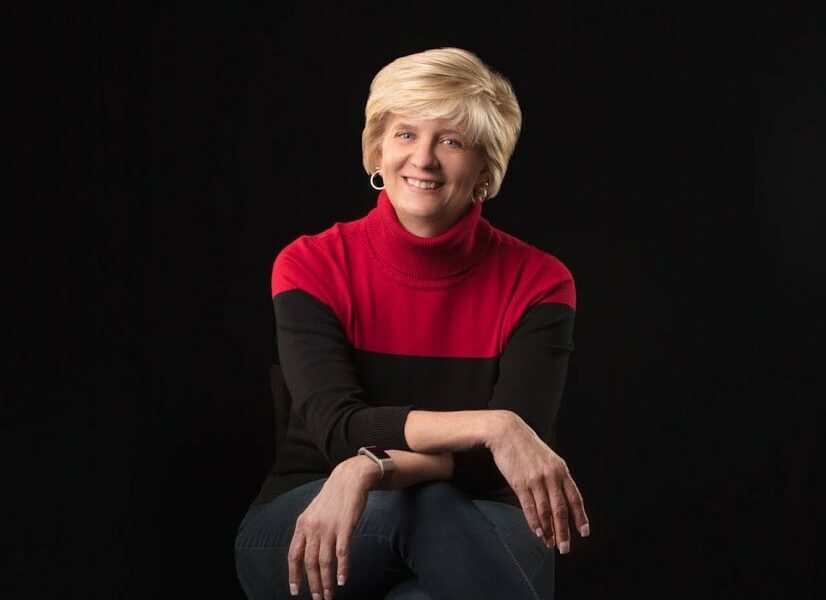
Today we’d like to introduce you to Deborah Westphal.
Hi Deborah, so excited to have you on the platform. So, before we get into questions about your work-life, maybe you can bring our readers up to speed on your story and how you got to where you are today?
My whole upbringing centered around systems and structures. My parents-built houses, my dad had me work with him to fix things. I learned that a great house is about the right structures and fitting pieces together. His influence is why I became an engineer. After college graduation, I went to work as a civilian for the US Air Force, helping to design future weapon systems. After several years there, I went to business school and came away from MBA school having confirmed that the best way to design a business was like engineering a house or weapons system. It all happens because of the right structure and operational processes.
These collective learning experiences showed me that people are important but messy. Having the right structure, systems, and operations keep things together and moving forward. Those were the early days.
In the late nineties, Alvin and Heidi Toffler launched a strategy consulting firm called Toffler Associates. My fit with the firm’s passion, purpose, and cultural focus was immediate. I was hired to help leaders understand the disruptive changes happening around them and to give them the courage and vulnerability to set new courses of action that would equip them to adapt to a very different future.
About 12 years ago, I experienced a huge turning point. I am sitting with an executive of a large aerospace company. She observed that the organization was having problems because of its people. I knew they weren’t the issue. The problem was the onerous processes and layers of bureaucracy.
Throughout the 30 years of my career, I’ve supported hundreds of organizations and the leaders responsible for their success. I also have unlearned much of what I thought I knew about business success. I’ve learned that it’s not the best organizational design or operation management capability that makes a successful business; it is the people.
Last year I published my first book, Convergence: Technology, Business, and the Human-Centric Future. The premise of the book is the forces of technology, people, and business purpose are imbalanced and diverging. It is happening all around us so we have to make a choice. Either we recognize what is happening and join in to rebalance these forces or we ignore them, with peril.
As an author and speaker, I bring these experiences to add to the growing number of voices that are calling for change. Today’s leaders must think through their role in addressing broad worldly issues and the challenges we face as societies and humanity in addition to running profitable and healthy businesses. My hope is that readers come away motivated to add their energy to solving humanity’s hardest problems.
I’m sure you wouldn’t say it’s been obstacle-free, but so far would you say the journey has been a fairly smooth road?
There have been some definite bumps. It took me a while to understand leadership. As a concept, leadership is both incredibly powerful and incredibly damaged by overuse. People apply the term to a diverse range of actions, attributes, behaviors, and positions. Do a quick search on Amazon and you’ll find more than ninety thousand books in the category. There are millions of scholarly and journalistic articles written on the subject. All that chatter might make leadership seem complicated.
Leadership is the fundamental ability to behave with humility and wisdom, to engage authentically, and to inspire others toward achieving a purpose they might never accomplish on their own.
Effective leadership cultivates a deep understanding of who we are as individuals. Knowing how we make decisions and why we make them the way we do is critical. Recognizing our individual biases and belief systems is foundational. Nurturing the ability to determine when these parts of ourselves get in the way of our capacity to lead from a place of transparency is required. Effective leadership leads with authenticity, vulnerability, and courage. It took me some time to get comfortable with this behavior.
Thanks – so what else should our readers know about your work and what you’re currently focused on?
There are always twists and turns in life that take us down unexpected paths. My introduction to Alvin and Heidi Toffler had a profound impact on my professional career. When I discovered their work, they already had eight books in publication, including the bestselling Future Shock, Powershift, and The Third Wave. I am a much different person from who I was before I met them. They influenced the way I see the world, but more importantly, their influence shaped the way I think and sense what is going on around me and throughout the rest of the world.
I was tapped to be an original member of the Tofflers’ eponymous advisory firm. Through the work I was doing with the Air Force, I became one of the first clients for Toffler Associates, which opened in 1997. I made the decision to leave my position with the Air Force in 1999 to join the exciting startup. In 2007, I became its CEO, a position held for thirteen years until we sold the firm in 2019.
Today I spend time supporting leaders creating better futures for all of us. I am especially proud of my work with the Karen Toffler Charitable Trust. The Karen Toffler Charitable Trust was born out of the Toffler’s constant dedication to humanity. It honors their legacy. Named for their daughter, Karen, it also honors their love of family. The efforts of the Trust are grounded in the same spirit that motivated their writings about learning, technology, thinking, and change. It is with that dedication that it exerts to empower early-career individuals working at the front edge of medical research who challenge conventional thinking and strive to create a healthier future free of debilitating diseases.
Is there any advice you’d like to share with our readers who might just be starting out?
Stay diligent in understanding the intricacies of the human system. Individuals and groups of people inside and outside your organization have their own direction and momentum. The human system interacts and influences our business system, directly and indirectly. These complex relationships challenge the very reason our business exists.
Being mindful of those things that you cannot control is also a must. What you can do is become more aware of how the world is changing and understand the likely consequences of these changes. Go beyond defining what is changing. Look at why change might be happening and the disruptions it may produce.
Create a culture of future-focused thinking. Sense and assess the landscape all the time. Create the practice of continually challenging what you believe is happening, why it is happening, and what could happen next. Look for where things may be converging or diverging. There are people in your organization who have a natural tendency toward future-focused thinking. Give them top cover so they have the capacity to challenge and present new thoughts and ideas. There is no crystal ball but you can become better at anticipating how the future may unfold.
Contact Info:
- Website: deborahwestphal.com
- Instagram: https://www.instagram.com/deb.westphal/
- Twitter: https://twitter.com/westphaldeb


Popular
-

The Change-Makers: stories that inspire
-

Take Flight: Lamar Thomas on Building an Inclusive Brand Rooted in Youth, Community, and Purpose
-

Cultivating Inner Clarity: Angel Inspires on Thought, Healing, and Purpose
-

Local Highlighter Series
-

Highlighting Local Gems
-

Hidden Gems: Local Businesses & Creatives You Should Know