




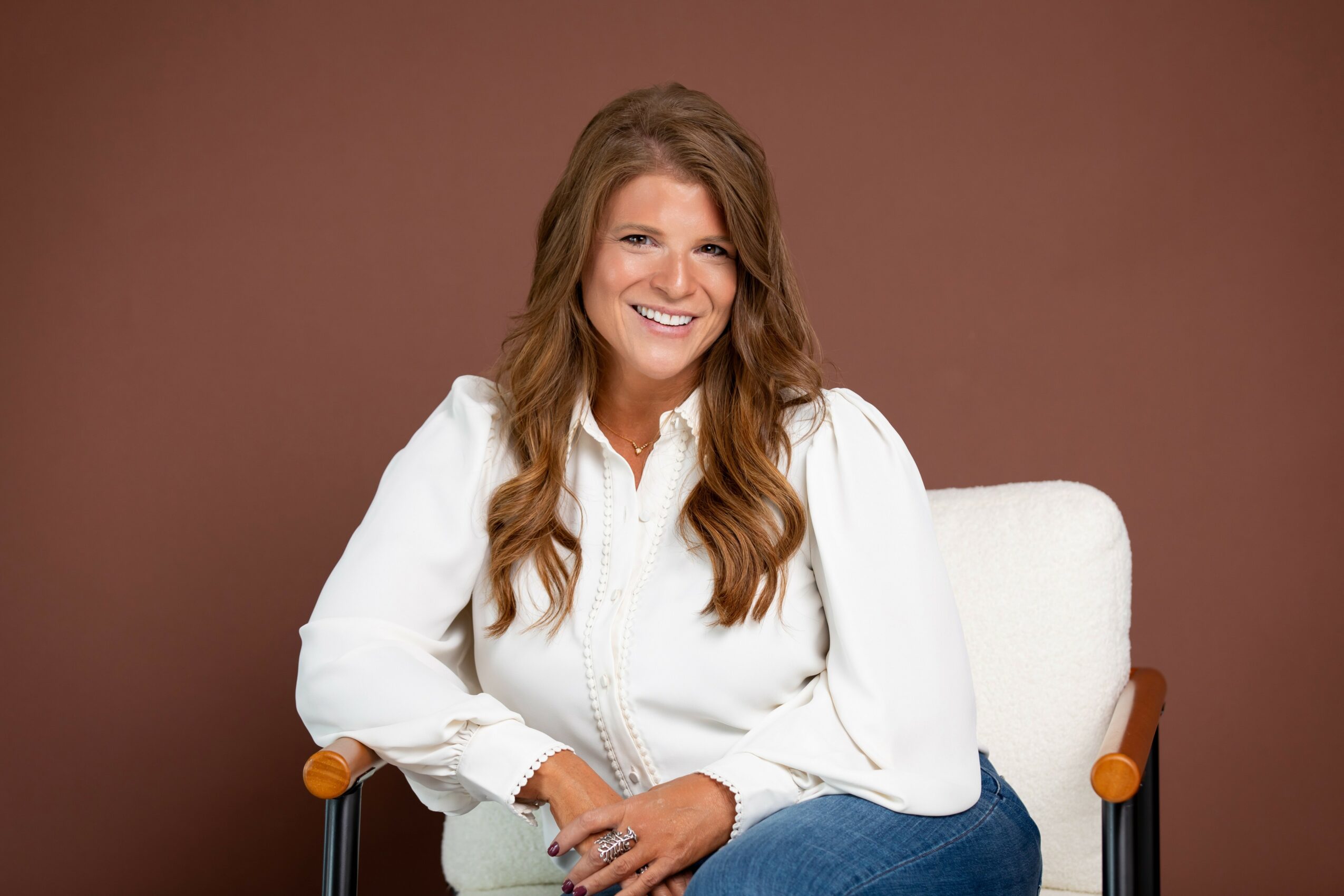
We recently had the chance to connect with Katie Greenleaf MA, LPCC and have shared our conversation below.
Hi Katie, thank you so much for joining us today. We’re thrilled to learn more about your journey, values and what you are currently working on. Let’s start with an ice breaker: Have you ever been glad you didn’t act fast?
Oh my gosh, all the time! Especially when it comes to emails. There have been times when I’ve felt that knot in my stomach when I’m reading something that I initially discern to be offensive, off base, misunderstanding, etc., and I’m over here barely finishing the entire message before I’m furiously typing a response. Way too many times, I’ve re-read the original email and realized that I jumped to conclusions prematurely or I could recognize that my own shortcomings or vulnerabilities probably put some spin on the tone or message. I now have a policy with myself to NEVER send those emails. I’m allowed to draft a new one, but I also made it part of this policy that I wait at least 24 hours before returning to it.
Can you briefly introduce yourself and share what makes you or your brand unique?
I’m a licensed clinical counselor, owner and clinician at Anchored Unbound Counseling, Coaching & Consulting, and creator of The Executive Function Playbook—an online hub with real-world guidance on parenting, practical trainings, tools and resources, and insight into what is behind our kids’ struggles at school and at home. And most importantly…how to have great relationships with kids.
There’s a parent that will read this and think to themselves, “Yeah, right. I’ve tried everything the ‘experts’ tell you to do, none of it works for MY kid.” That is the parent that I can help the most. When you realize that the way we’ve been ‘helping’ kids and trying to build relationships with them over the past century doesn’t work for a huge percentage of kids, you’re in a perfect place to really learn why kids and teens do the things they do and how to actually help them—especially the most challenging ones.
And I’m excited because I’m about to launch my podcast, called I Know This Therapist…, so look for that soon!
Great, so let’s dive into your journey a bit more. What part of you has served its purpose and must now be released?
Wow, what a powerful question.
The part of me that has served its purpose and that I’m releasing is the “I’ll take the hit so no one else has to” version of me. It’s the one who learned early in life that the safest way to exist emotionally was to absorb the discomfort, smooth the edges, make myself smaller, and carry the emotional load so others wouldn’t fall apart.
This part of me was a survival specialist of sorts, I think.
She kept me safe in homes, relationships, and situations where other people’s feelings were unpredictable, my needs felt like liabilities, or when being the “strong” one got me praise or love.
It sounds exhausting now, but I became quite skilled at pre-empting conflict, anticipating other people’s reactions, and constantly scanning the emotional weather so that I didn’t end up humiliated or blindsided.
(I was also made fun of a lot in school as well, so it was extra important to not embarrass myself.)
Here’s the thing, though. That part of me understood the assignment when it mattered the most. She helped me get through childhood, get an education, build a life, raise kids, create a career, and become someone who can show up for others with compassion, boundaries, and emotional insight.
But she’s holding me back now. This version of me started to not work well when it came to truly connecting with people or expanding my life out of fear and into freedom. I’ve had to really work on changing things, and it’s an ongoing project for sure.
I’m learning to let myself off the hook. I refrain from trying to fix the energy in the room before I’ve even checked if the room deserves that level of effort. I don’t feel the need to manage grown adults like they’re fragile antiques—which is important in the therapy room and in coaching. I’m careful to not carry more than my share in personal and professional relationships, and I don’t defend my worth to people who can’t see it. I try not to beat myself up when I make a mistake.
I’m known for my no-nonsense approach, but I think most people who know me would also vouch for my ability to maintain kind candor in tough conversations. I don’t shy away from delivering hard news—even when it feels incredibly difficult to do so. I know that the core of everything I do is my desire to make other peoples’ lives better. So as long as I do my best, I know what I deliver is with good intention.
I think so many of us are learning to not force ourselves to be contortionists in conversation. It’s painful to be a people pleaser. In the same vein, we need to feel comfortable that sharing feelings or showing emotion will not get us instantly abandoned. I do think there’s a big secret that needs to be revealed about that, though. People who can’t or won’t meet us in our vulnerability are actually doing us a favor by taking themselves off our playing field. I’m a communicator. I love connecting with people on a deeper level. I try to not get upset or angry when people can’t meet me there, and I try to not take it personally if they don’t want to.
Mistakes, discomfort and disappointing others are the costs of playing in this big game we call life. Seems like a fair deal to me. Releasing the parts of us that no longer serve us make us better teammates for sure.
If you could say one kind thing to your younger self, what would it be?
“You are never ‘too much,’ you are always enough, and you are so brave. I’m in awe of you.”
I spent so many years thinking I was too emotional, too sensitive, too much, too eager, not good enough, not pretty enough, not smart enough. When I started healing myself, I could see that I kept showing up with an open heart in places that didn’t know how to honor one. I was so courageous and didn’t even know it.
So a lot of these questions go deep, but if you are open to it, we’ve got a few more questions that we’d love to get your take on. What’s a belief or project you’re committed to, no matter how long it takes?
Hands down, my life’s work is making sure that anyone who impacts the life of any child understands that kids are born with an internal motivation to do well and meet expectations placed on them. When kids miss the mark–whether thats at home, in school, in friendships, with managing impulses and emotions, being kind,…any of it–it’s because they need better skills and/or there are barriers in their way. Behavior is a symptom of a problem, and we must identify and define the problems and then work together with kids to solve them. It’s just not working (and is just plain wrong and not supported in data) to respond to kids as though maladaptive behavior is a choice they are making, even when it looks like they are simply choosing it, or you think they SHOULD be able to do better.
Okay, so let’s keep going with one more question that means a lot to us: What do you understand deeply that most people don’t?
I understand that being a positive influence in a child’s life has more to do with the quality of our relationship with that child than the lessons we want to teach them. I learned early in my career that in order to have any influence on a person I’m trying to help, I would have to earn their trust and respect first. Without it, nothing I said mattered. Most people know what the ‘right’ thing to do is, but most people also need support, encouragement and reassurance in order to do the hard things required. We need to show kids that we believe in them, we trust them, we’ll help keep them safe when they need us to, that making mistakes is human, and that we will show up for them even when we don’t agree with their choices. It’s difficult to parent fearlessly. We want to prevent pain, we see consequences down the line that our kids maybe can’t see yet, and we’ve learned our own hard lessons. We believe all of this can help our kids avoid what we had to learn the hard way, so we tell them…and remind them…and nag them…and repeat ourselves…and get angry when they just want us to stop talking. I want people to understand that when kids learn their own lessons while we are still around and close by to guide and support them, we all win. This is a formula for confident, kind, empathic, and HAPPY kids. Success will follow naturally under these conditions.
Contact Info:
- Website: www.anchoredunbound.com www.katiegreenleaf.com
- Instagram: @executivefunctionplaybook @anchoredunbound
- Linkedin: https://www.linkedin.com/in/katiegreenleaf
- Facebook: https://www.facebook.com/efplaybook https://www.facebook.com/anchoredunbound

Popular
-

Hidden Gems: Local Businesses & Creatives You Should Know
-

The Change-Makers: stories that inspire
-

Portraits of Ohio
-

Take Flight: Lamar Thomas on Building an Inclusive Brand Rooted in Youth, Community, and Purpose
-

Cultivating Inner Clarity: Angel Inspires on Thought, Healing, and Purpose
-

Local Highlighter Series