



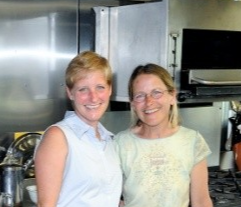
Today we’d like to introduce you to Jeannie Seabrook.
Alright, so thank you so much for sharing your story and insight with our readers. To kick things off, can you tell us a bit about how you got started?
Glass Rooster Cannery began with a friend, a magazine article, and a spark. The article described the disappearance of community canneries—once common during World War II, when victory gardens flourished and neighbors gathered to preserve their harvests. Back then, the government helped communities build shared canning kitchens, and women worked side by side to “put up” the season’s bounty. As decades passed, the buildings aged, home canning fell out of fashion, and the tradition faded.
By the 1990s and early 2000s, a wave of food safety scares shook public trust in industrial food systems. People wanted to reconnect with where their food came from, but the generational chain of knowledge had broken. The grandmas who once taught canning weren’t always there to pass it on.
In August 2010, I handed that article to my sister Susie and said, “I think I know what I want to be when I grow up.” Without missing a beat, she replied, “Do it here.” And just like that, our journey began.
We sketched our vision on scrap paper, consulted friends in the building trades, and set out to build a small barn dedicated to food preservation and cooking. That fall and winter, we scoured auctions, garage sales, and Craigslist to outfit the space. Sustainability mattered deeply to both of us, so we built with upcycled and recycled materials whenever possible. Susie, the artist, created a warm, welcoming space—complete with a glass art “mop sink” in the bathroom. I chose the equipment and laid out the floor plan.
Six months after breaking ground, we opened our doors in May 2011.
I began teaching “all the things Grandma used to teach,” and we planted a garden onsite so classes could use our own produce. Susie continued creating art around the farm and restored an old grain barn for an art shop. Business grew—steadily, if not always smoothly.
In 2012, one of my daughters asked Susie if she could get married in the dilapidated dairy barn on the property—the one abandoned for fifty years, filled with old straw, rodents of unusual size, no floor, no electricity, and a roof caving in. Susie said yes immediately. Five months later, with sweat, love, and a little magic, the barn was restored and ready for a wedding. That moment launched the third branch of our business: hosting parties, bus tours, and weddings catered from our own kitchen.
Then, in 2018, everything changed. While I was on a family vacation, a friend called to say Susie was in the hospital. I rushed home to learn she had been diagnosed with an untreatable form of acute myeloid leukemia. Eleven days later, she was gone.
I reeled. Grief and the strain of untangling business and property matters—things we had talked about but never fully documented—brought everything to a standstill. It took nearly two years for my husband and me to regain our footing. When the fog finally began to lift, it was because I remembered how blessed I had been. Susie had rearranged her entire life for me and a wild idea. She believed in me. The best way to honor her was to succeed.
Today, Glass Rooster Cannery is thriving. Susie’s home is now a quirky, art filled guest house. We produce our own line of canned goods. We partner with farmers to turn excess produce into value added products. We host events in the Big Barn and teach cooking classes in the Cannery. Twice each summer, kids fill the farm for our “Kids Can! Cook” camp. Guests wander the property and pick flowers just for fun.
We carry on Susie’s legacy with the gifts we each bring—and with the same business model we started with: Try everything once. If it’s fun, keep doing it.
Everyone deserves a Susie in their life.
We all face challenges, but looking back would you describe it as a relatively smooth road?
The death of my sister and business partner.
Our business model was new to our county, and the health department did not know what to do with us. Which rules applied? All of them. One inspector began to backtrack our progress and tried to close us down before we opened. The seriousness of the matter escalated to the director of health at the state level.
Learning to run a business-Susie was the brake to my accelerator. When we got used to this, it was a great combination.
Balancing work and home.
Can you tell our readers more about what you do and what you think sets you apart from others?
Today, I focus on bringing fun and joy to every guest who walks through our doors. People come to us for different reasons, and understanding those motives is the key to making their experience memorable. Some arrive eager to soak up as much knowledge as possible; others simply want to enjoy the fellowship and the rhythm of working together.
I’ve become known for meeting each group exactly where they are—creating an easygoing atmosphere where no one feels intimidated and everyone feels welcomed. Whether someone is here to learn, to laugh, or to connect, my goal is to make sure they leave feeling enriched, relaxed, and part of our community.
What were you like growing up?
Susie and I were two of sixteen children. She was number six, I was number fifteen. Our dad died when I was eight, and Susie was already out of the house. There were twelve of us left, and we each had responsibilities. After receiving a girl scout merit badge on meals and budgeting, it became my role to shop and make dinner most nights. I learned how to shop on a budget, cook for a crowd, and can the season’s bounty as a child.
Contact Info:
- Website: https://www.glassroostercannery.com
- Instagram: https://www.instagram.com/glassroostercannery/
- Facebook: https://facebook.com/glassroostercannery
- Twitter: https://twitter.com/glassrooster
- Youtube: https://youtube.com/glassroostercannery


Popular
-

Hidden Gems: Local Businesses & Creatives You Should Know
-

The Change-Makers: stories that inspire
-

Take Flight: Lamar Thomas on Building an Inclusive Brand Rooted in Youth, Community, and Purpose
-

Cultivating Inner Clarity: Angel Inspires on Thought, Healing, and Purpose
-

Local Highlighter Series
-

Highlighting Local Gems