



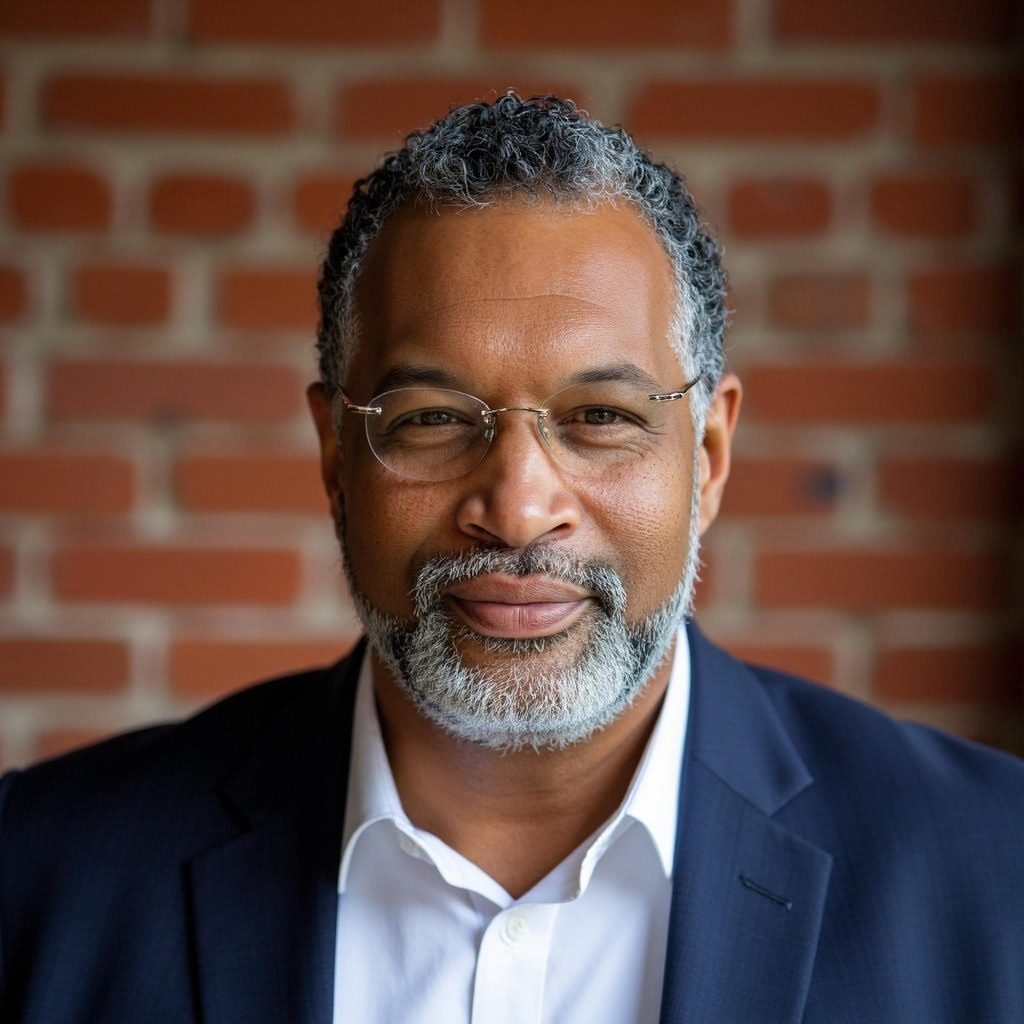
Today we’d like to introduce you to Dr. Timothy Goler.
Hi Dr. Timothy, please kick things off for us with an introduction to yourself and your story.
My roots are in the Glenville neighborhood of Cleveland. I currently reside in Hampton, Virginia, but Cleveland remains home and continues to shape my identity, scholarship, writing, and community work. Can you briefly walk us through your story, how you started and how you got to where you are today?
I was born and raised in the Glenville neighborhood of Cleveland. Long before I knew the language of sociology, Cleveland was teaching me how neighborhoods, schools, public policy, race, and opportunity shape people’s lives.
I grew up surrounded by the strength, creativity, humor, and resilience of Black Cleveland. At the same time, I saw the consequences of segregation, disinvestment, unequal education, and economic exclusion. I attended Miles Standish Elementary and Empire Junior High before being bused across the city to Lincoln West High School, where I graduated in 1984. Those experiences taught me that geography is never just geography. Where a person lives can influence the education they receive, the opportunities they encounter, how others see them, and how they eventually learn to see themselves.
After high school, I joined the United States Marine Corps and rose to the rank of corporal. The Marine Corps gave me discipline, accountability, and the ability to operate under pressure. It also expanded my understanding of the world and strengthened my belief that leadership should be connected to service.
My academic journey eventually took me to Norfolk State University, where I earned my undergraduate degree, Cleveland State University, where I earned a graduate degree in urban planning, and Case Western Reserve University, where I earned my doctorate in sociology. I became the first African American man to earn a doctorate in sociology from Case Western Reserve.
My career has never followed a single lane. I have worked as an educator, sociologist, school founder, public policy leader, community advocate, researcher, author, and strategic advisor. I helped establish PolicyBridge in Cleveland, created the HBCU Preparatory Schools Network, and have spent years building educational and civic institutions intended to expand opportunities for Black children, families, and communities.
Today, I serve as Associate Professor and Chair of the Department of Sociology at Norfolk State University. I also serve as Senior Advisor for Equity and Community Affairs to Morino Ventures and lead The Goler Group, where I advise leaders and organizations on education, strategy, community engagement, and institutional development.
The latest chapter of my journey is my book, Liberated Mind: A Guide to Black Clarity. The book brings together my experiences in Cleveland, education, sociology, Black psychology, institution building, public policy, and community life.
Liberated Mind introduces what I call the Bonsai Theory. A bonsai tree remains small, not because its genetics are different from those of a full sized tree, but because its environment has been carefully manipulated. Its roots are restricted, its branches are pruned, and its growth is directed.
I use that image to explain how social conditions can shape human identity, consciousness, expectations, and behavior. Black people have never lacked ability or potential. We have lived within systems designed to restrict the conditions under which that potential could develop.
The thread running through all my work is helping people understand the roots beneath what they see. I want people to recognize the forces that have shaped their lives without surrendering their ability to choose, reconstruct, build, and grow.
We all face challenges, but looking back would you describe it as a relatively smooth road?
Has it been a smooth road? If not, what were some of the struggles along the way?
It has not been a smooth road, but I no longer believe smoothness is the best measure of a meaningful life.
Growing up as a Black child in Cleveland during an era of school desegregation taught me early that institutions can speak the language of equality while continuing to produce unequal experiences. Being bused from Glenville to the West Side of Cleveland exposed me to social divisions that many children could feel but did not yet have the language to explain.
Later, I entered professional, academic, and institutional spaces where people from my background were often underrepresented. Being the first can be an honor, but it can also be isolating. There were moments when I had to prove my qualifications repeatedly, navigate expectations that were not applied equally, and learn how to protect my purpose without becoming consumed by other people’s perceptions.
Building schools and community organizations brought another set of challenges. A good idea does not automatically bring capital, political support, administrative capacity, or institutional protection. I have built organizations with limited resources and enormous expectations. I have had to manage financial pressure, shifting partnerships, political realities, organizational setbacks, and the emotional weight of being responsible for other people’s futures.
Some of the institutions I helped build did not survive in their original form. Some partnerships ended. Some doors closed after I had invested years of work. I have experienced disappointment, rejection, loss, and periods when I had to rebuild both professionally and personally.
My academic journey was also not linear. I earned my doctorate later in life while carrying responsibilities that many traditional students did not have. That required humility, persistence, and the willingness to begin again.
One of the most important lessons I have learned is the difference between failure and formation. Some experiences that felt like endings were preparing me to think more deeply, write more honestly, and lead with greater clarity.
The challenge has not simply been overcoming obstacles. It has been refusing to let those obstacles define my identity. I have learned to examine what each experience taught me, release what no longer serves me, and continue moving with greater intention.
As you know, we’re big fans of you and your work. For our readers who might not be as familiar what can you tell them about what you do?
I am a sociologist, author, educator, institution builder, and strategic advisor. My work examines how structural conditions shape identity, consciousness, stress, health, education, and human development, particularly within Black communities.
As a professor and department chair, I teach students to look beneath individual behavior and examine the historical, social, political, and economic conditions surrounding it. Sociology teaches us that what appears to be a personal problem is often connected to a larger pattern. That perspective runs through everything I do.
Through The Goler Group, I advise leaders, schools, nonprofits, foundations, and community institutions. I help people move beyond surface level solutions and understand the roots of the problem they are attempting to solve. My approach connects strategic thinking with education, community knowledge, organizational leadership, and social analysis.
My current work is centered on Liberated Mind: A Guide to Black Clarity. The book examines how Black people have been shaped by centuries of social pressure while also presenting a practical framework for reclaiming mental authority and intentional identity.
Bonsai Theory explains how external conditions restrict and direct human development. Reconstructed Self Theory addresses what happens next. It provides a way to identify inherited narratives, examine the beliefs and adaptations we have internalized, decide what continues to serve us, and reconstruct identity around consciously selected values.
I am proud that my work connects scholarship with application. I have not only studied schools, inequality, community development, or public policy. I have built schools, led organizations, advised leaders, conducted research, mentored students, and worked beside communities dealing with the consequences of those systems.
What distinguishes my work is the combination of academic training, military experience, public policy, entrepreneurship, education, institution building, and lived experience. I write and speak in a way that makes complex ideas understandable without stripping them of their depth.
My work asks two connected questions: What conditions produced what we are seeing, and what can we do now?
Understanding the conditions protects us from blaming people for adaptations they developed to survive. Asking what we can do now protects us from becoming trapped in explanation without action.
So maybe we end on discussing what matters most to you and why?
What matters most to you? Why?
Clarity matters most to me because without clarity, people can confuse adaptation with identity, survival with purpose, and what society demanded of them with who they were created to become.
Black communities have often been forced to adjust to harmful conditions and then blamed for the very adjustments those conditions produced. I want people to understand the forces that have shaped them without surrendering their agency or responsibility.
Clarity allows us to ask difficult but necessary questions. Which beliefs are mine? Which were handed to me? Which behaviors once protected me but are now limiting me? What do I value when I am no longer performing for acceptance, safety, or approval?
This is not only about individual development. Clear people make different decisions about families, relationships, leadership, education, money, health, boundaries, and community. They are better positioned to build institutions that do not reproduce the same injuries they are trying to escape.
My daughter, my students, and the generations coming behind us matter deeply to me. I want them to inherit more than stories about what we endured. I want them to inherit knowledge, language, institutions, confidence, and room to grow.
At this stage of my life, success is not measured primarily by attention or titles. It is measured by whether my work helps someone see themselves, their circumstances, and their possibilities differently.
Contact Info:
- Website: https://timgoler.com
- Facebook: https://www.facebook.com/tim.goler/
- LinkedIn: https://www.linkedin.com/in/timothy-goler-59a7626
- Other: https://a.co/d/06iqj0rf
Popular
-

Hidden Gems: Local Businesses & Creatives You Should Know
-

The Change-Makers: stories that inspire
-

Portraits of Ohio
-

Take Flight: Lamar Thomas on Building an Inclusive Brand Rooted in Youth, Community, and Purpose
-

Cultivating Inner Clarity: Angel Inspires on Thought, Healing, and Purpose
-

Local Highlighter Series