



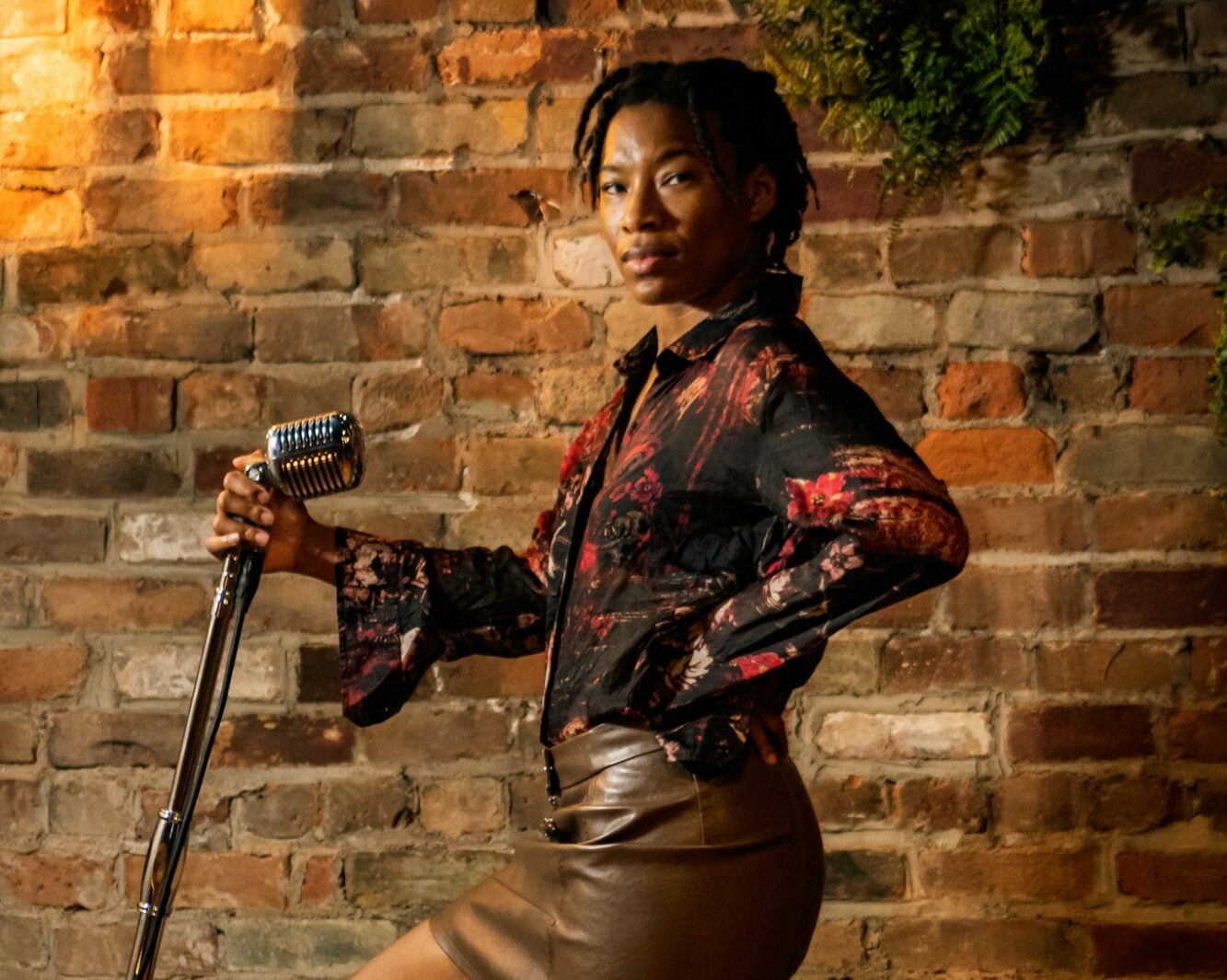
Today we’d like to introduce you to Queen J.
Alright, so thank you so much for sharing your story and insight with our readers. To kick things off, can you tell us a bit about how you got started?
My story is anything but ordinary; it has been filled with a few heavy-hitting events, such as #metoo, and other traumatic occurrences during my ongoing journey in healing. Growing up, I always had a passion for words and speaking and understanding how things worked linguistically. During the times I would experience trauma, I would turn to writing and would often say to myself, “There is life after trauma, and my story is going to be an example of it. I would often profess I would write a book, use my voice in some way. I often felt my voice was ignored, and I soon grew to internalize verbal abuse and in heartily believe all I had endured that was traumatic was my fault. Through this lens, I was living in a cycle of depression and anxiety that periodically seemed endless. That is until poetry saved my life. Later on, as I was subject to physical, verbal, and often SA, I was silenced when I began to actively speak out against my upbringing. During high school, I kept a journal where I would house all the thoughts and feelings I felt I couldn’t externally express. This lead to beautiful sonnets and rhymes stringing together but unfortunately, I never took it seriously until my first year of college. By this time, I had already lived the life of ignorance and shame placed onto me by others’ rejection, and anger, and pain. As an empath, I often took on others’ feelings partly due to my not being allowed to express my own due to having to “stay in a child’s place.” Over these years, I developed a sense of passion to live, but when times were especially imbalanced for me mentally, I would begin to feel like a burden this led to me having suicidal thoughts.
We all face challenges, but looking back, would you describe it as a relatively smooth road?
The journey to get to where I am has been anything but easy. I’ve come from a dysfunctional upbringing that involved a lot of psychological interruption due to emotional, mental, and physical abuse. I have had to endure a lot of pain. It honestly took a lot of courage for me to finally speak up and use my voice and build a platform where mental health, healing, and trauma-informed education can meet. One of the most challenging things I have had to experience was healing from not only traumas from my childhood but also more in the more recent years due to my collegiate experience. In 2018, at the height of the #Metoo movement, I became a survivor of SA case. This led to me reverting back to my old unhealthy methods of coping. After seeking an uplifting community, I once again found safety in writing. I began to build my blog turned podcast series; Voices for the Voiceless, because I felt that this had become a home for my innermost difficulties in healing. While doing this, I hadn’t yet known that I would be building a platform for others to heal from and through. I had always envisioned my story being an inspiration, and now it had. Shortly after birthing my blog, I began to create its sister podcast series: Let’s Get Uncomfortable, I set out to uplift others who had experienced the same traumas and began documenting my healing journey via poetic journalism via the blog site, and as I faced the lifelong journey of healing I became more aware of the need for a social shift in thinking around mental health and living a life after experiencing trauma. The biggest challenge recently has been my ability to put forth another educational showcase; Words In Power that aims to ignite a new wave of healing through the strength of vulnerability and the power of connectivity. My family and I have not always had the best dynamic, in fact keeping secrets had become a favorite pastime over the years, and with time they began to shape our family bonds. connection became vital in my personal journey although I feared it at first, I discovered its true power. While obtaining my degree in Liberal Arts with concentrations in Psychology, promotional health education, WIGS (Women gender studies) and lastly, Africana studies; I battled with my own identity after my 2018 SA case, I struggled to find hope and kept returning back to poetry and its release it brought me. Following this, my voice was found and thus, created the foundation of my motivational speaking and passion for overall improvement of self-including wellness; centering on mindfulness.
Thanks for sharing that. So, maybe next you can tell us a bit more about your work?
I would describe myself as a multi-talented creative with a passion for Motivational speaking, Black women empowerment, and educator and advocator for mental health awareness. As a member of the LGBTQIA community, I always found myself feeling disconnected partly due to trauma and partly due to feeling invisible when attempting to speak out. I would say that the art and mystery of poetry drives me. While I built both trauma-informed educational blog and podcast series dating back to 2018, I coined a term I like to call poetic journalism. Poetic journalism is a way of expressing your thoughts and feelings through journaling yet with poetic undertones. I would often journal, and after writing, I noticed there was a level of beauty written in the process. I am the host and creator of the trauma-informed podcast called Let’s Get Uncomfortable, and I currently am working on some pretty exciting projects for the end of the summer with other fellow creatives. I am the owner, director, and curator of a poetic educational showcase called Words in Power; aiming to educate those within the Black community on how we can begin healing via creative expression. i.e., dance, poetry, music, comedy, etc. through the strength of our vulnerability and the power of connectivity. I would say I’m multi-talented mainly because I have always had an intense passion for the arts from dancing to singing to performing spoken word freestyles; I have found myself in spaces where open expressive forms of art allow me to move freely and uplift those around me. More recently, I have received praise and acknowledgment over the years for cultivating such important spaces and sharing my story via the documentary CANYOUHEARUS that displays the impact that black mental health plays when seeking proper health care via the lens of health disparity amongst black women and black mothers.
Before we go, is there anything else you can share with us?
In other news, I am actively looking to publish one of my books that remains currently untitled but will finally shed more light on the impact of #METOO. This book is sure to inspire many. I would be forever grateful for anyone who would be willing to share their stories and experiences to make this book a success. If anyone is interested in sharing and being a part of this journey, please send all stories and as much details as you prefer to the following email: Queenj34624@gmail com with subject: MeToo project this project will depict my story and navigate around the aftermath of coping after experiencing SA, harassment of any kind ranging from verbal, emotional and even physical abuse. All submissions can be sent in anonymously. for safety reasons, names can be changed. As a Black queer woman, I want to leave you all with this. If we are called to use our voices in such open spaces, we must not fear our stories. We must embrace them and turn our pain into power.
Thank you for seeing and hearing me!
Queen J.
Pricing:
- $75 for speaking events
- $5/month for podcast subscribers
- $3/month Patreon
- $10 for 1:1 mindfullness sessions
Contact Info:
- Website: www.vfvl.wordpress.com
- Instagram: @officiallyjanayh
- Facebook: https://open.spotify.com/show/6l3v7GazwsB685jWYdweUq?si=pNonCEqxTGSPIxgse1Be-Q
- Twitter: https://twitter.com/WordqueenSpoken?t=_2nUIpU0JlIsIiwVy_Reyw&s=09
- Other: https://www.patreon.com/queenjwellness


Image Credits
Makayla boyd
Popular
-

Hidden Gems: Local Businesses & Creatives You Should Know
-

The Change-Makers: stories that inspire
-

Portraits of Ohio
-

Take Flight: Lamar Thomas on Building an Inclusive Brand Rooted in Youth, Community, and Purpose
-

Cultivating Inner Clarity: Angel Inspires on Thought, Healing, and Purpose
-

Local Highlighter Series