



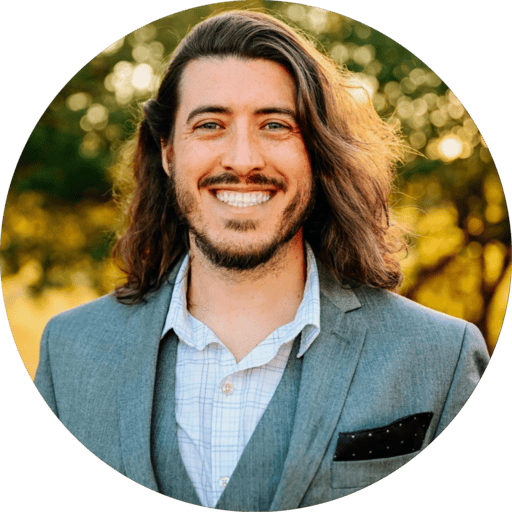
Today we’d like to introduce you to Justin Ford.
Hi Justin, can you start by introducing yourself? We’d love to learn more about how you got to where you are today?
I was raised in a large family of entrepreneurs, so I grew up seeing business from just about every angle and learned a great deal. The recurring theme, though, was that I usually learned what not to do.
I watched plenty of people in my family build real wealth over the years, and then lose it all not too long after because of poor decisions and not knowing how to make it grow and last. That stuck with me.
After high school, where I’ll be honest and say I slept through most of my final year (I’d run out of credits to take and already had college credit, but those pesky laws said I had to be there), I graduated with a full academic scholarship. But instead of heading straight to college, I wanted a challenge, so I joined the Marine Corps. Did a few years, was put in charge of a lot, and built a tracking system that helped prevent millions in lost equipment costs and, as far as I know, is still in use today.
After the Corps, I went back to school while working part-time, met my now-wife, moved to Georgia, and finished two business degrees and a master’s in Exercise Science & Nutrition.
From there I launched a supplement company that did really well on Amazon, right up until I learned a hard lesson about building a business on a platform you don’t control. That experience taught me to never again leave something I’d built at someone else’s mercy. So I pivoted into contracting with the government on a few of their installations, training military members from all walks of life and a lot of different countries.
That ran through the consulting business I’d been building the whole time, where I helped companies with their finances, operations, and efficiency. High level business growth and development, with the on-base training being one piece of it.
Then COVID hit, and I saw just how many people weren’t financially prepared for an emergency. That’s when I decided to take what I knew about money and actually put it to good use. So I started my path in financial services. Getting fully licensed didn’t take long, since I’d already spent a decade working in the markets alongside others on the unlicensed side, so it wasn’t all that different.
I’ve since come to settle in with Primerica, where I work as a licensed representative helping everyday people get their finances in order.
I’m also the Director of Technology for Hives for Heroes, the largest beekeeping network in the United States. We primarily help veterans and first responders, but everyone is welcome. The goal is always the same: community connection.
And I founded a nonprofit of my own, the Ninth Star Foundation. Through it, we help where help is needed. We support disaster relief efforts, get the right supplies where they need to go, and build free, open-source tools that people can actually use to better their lives.
My ultimate goal has always been to help and to leave the world a little better than I found it. I’m in a unique spot in life where I can actually work on that, building toward real change and leaving my kids something far more to look forward to. That’s exactly what I do. I believe building solid foundations gives people and communities the room to build something lasting on top. A rising tide lifts all boats.
Can you talk to us a bit about the challenges and lessons you’ve learned along the way. Looking back would you say it’s been easy or smooth in retrospect?
yeah, let’s see it. Sound like me.No, it definitely hasn’t been a smooth road, but I’m not sure a smooth one would have taught me much. I’ve enjoyed my life overall, and the hard parts are just the cost of building anything worth building. If you’re a small business in this country, it can feel like everything’s set up to work against you. Nothing comes easy. I don’t think it all needs to be easy, but I do take issue with how hard it’s become for an ordinary person to take real control of their own life these days.
I’ve worked through physical injuries from my time in service. I’ve had a situation try to rip my business right out from under me when Amazon moved into the space I’d built in. I’ve dealt with people who didn’t have faith in what I was doing, and people who didn’t have the persistence to see it through. Most of that is the same stuff anyone in a leadership role runs into, just with a few extra wrinkles.
None of it ever struck me as a reason to stop, though. I don’t really see those things as challenges the way most people seem to. They’re just friction, and friction is part of moving forward. Amazon taught me to never build on ground I don’t own. The injuries taught me what I could work through. Pretty much everything I know now came from going through the hard parts instead of around them. So I don’t make a big deal out of any of it. I just keep moving, and I try to leave the path a little clearer for the people coming up behind me.
Thanks – so what else should our readers know about your work and what you’re currently focused on?
If I had to sum up what I actually do, it’s this: I build foundations that give ordinary people back some control over their own lives. Everything else is just the form that takes on any given day.
The most visible piece is financial services. I’m a licensed representative, and I work with everyday people to help them get their finances in order and build something that lasts. I came to that work honestly. I grew up watching people build real wealth and then lose it all because nobody ever taught them how to make it grow and hold. After COVID, when I saw how many families weren’t prepared for even a small emergency, I decided that knowledge was too useful to keep to myself. So I got licensed and made it my work.
But finance is only one part of it. I’m also the Director of Technology for Hives for Heroes, the largest beekeeping network in the country, where we connect veterans and first responders through beekeeping and community. And I founded my own nonprofit, the Ninth Star Foundation, where we support disaster relief, get supplies where they’re needed, and build free, open-source tools that anyone can use to better their own situation. No paywall, no catch.
That last part is probably what sets me apart. Most people in my line of work are selling you something. A good chunk of what I build, I give away. I’d rather hand someone a tool they own outright than rent them a solution they’ll never control. That comes from hard experience. I once built a business on a platform I didn’t own and watched how fast that can be taken from you. I don’t want anyone depending on my goodwill to keep what they’ve built. I want them standing on their own ground.
If I’m proud of anything, it isn’t a title or a number. It’s that the work tends to reach people who don’t usually get this kind of help. The veteran finding their footing again. The family that finally has a plan. The person who gets a real tool instead of a sales pitch. I believe a solid foundation gives people and communities the room to build something lasting on top of it. That’s the whole point of what I do. A rising tide lifts all boats, and I’d rather spend my life raising the water than guarding my own little corner of it.
Do you have any advice for those looking to network or find a mentor?
Ask for what you want. That’s it. If you take one thing away from anything I’ve said here, let it be that. Most people never get the help they need for the simple reason that they never asked for it. I asked, I got pointed in the right direction, and I kept walking forward from there. It really is that simple, and almost nobody does it.
Beyond that, I’m a big believer in the mentor and mentee model. It isn’t one-to-many, but it’s far more effective at helping an actual person get somewhere. One-on-one, someone who’s done the thing showing someone who wants to do it. That’s how real skill gets passed down.
I put my time where my mouth is on this. I’ve volunteered as a mentor for a few years now with American Corporate Partners, a nonprofit that pairs post-9/11 veterans and military spouses with professionals for free, yearlong mentorships. It costs a mentor about an hour a month, and it can change the entire trajectory of someone’s career. We practice the same model at Hives for Heroes and in the financial work too. If you really want to learn a skill, go find someone willing to teach it to you.
Because at the end of the day, life is about what you know, but it’s just as much about who you know. Building a life is really just building community, large or small. So ask. Find your people. And once you’ve made it a little further down the road, turn around and teach the next person coming up.
Contact Info:
- Website: https://justinchaseford.com
Popular
-

Hidden Gems: Local Businesses & Creatives You Should Know
-

The Change-Makers: stories that inspire
-

Portraits of Ohio
-

Take Flight: Lamar Thomas on Building an Inclusive Brand Rooted in Youth, Community, and Purpose
-

Cultivating Inner Clarity: Angel Inspires on Thought, Healing, and Purpose
-

Local Highlighter Series