



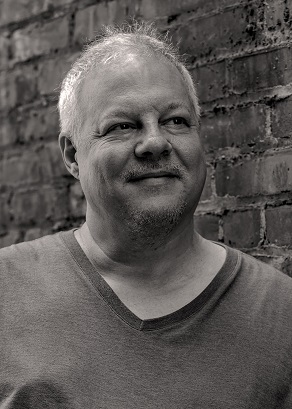
Today we’d like to introduce you to Brian Lumley.
Hi Brian, we’re thrilled to have a chance to learn your story today. So, before we get into specifics, maybe you can briefly walk us through how you got to where you are today?
In 1987 I decided to finish my Bachelor’s Degree, something I had started in September of 1984 after graduating from high school earlier that year. I realized by early 1985 that I wasn’t ready to move forward, so I took some time off from my college experience. Today that would be called a “gap year.” Mine stretched into an almost three-year gap. But by early 1987 I was ready to finish up what I had started; I received a BA in Communications, essentially a degree in filmmaking and Film Studies.
I was always in love with storytelling and had an infatuation with the movies. After moving to Hawai’i in 1992 and realizing a life-long dream of working in the movie business, I came to the hard realization that the film industry and its values didn’t align with mine.
It was a HUGE production; as a matter of fact, you could say it was a dinosaur-sized movie. I got to work with my childhood idol, Steven Spielberg, and be a part of the location shoot of Jurassic Park, which spent a little over a month on Kauai in late summer 1992. I was a lowly production assistant with the Properties (Props) department, but I was intimately involved with the production every day, for as much as eighteen hours each day. It was brutal, exhausting work, but I loved the challenge and seeing how a major Hollywood show was being put together.
On September 11th, 1992, a category-five hurricane struck, the worst that Hawai’i had ever seen (and thankfully has never seen again), and I stayed behind on Kauai where I was living to help my Ohana rebuild their homes, not pursuing work in Los Angeles with the production. I turned down offers to tag along because my friends needed me and, frankly, I was a little shell-shocked from being knocked out by such a huge disaster.
Two days before Christmas 1992 I moved back to Northeast Ohio, as there was really nowhere to live on Kauai for almost a year after the storm. I met a woman, had a child, and now had responsibilities that my year in Hawai’i didn’t have. I needed to provide for him so any illusions of finding what I was meant to do with my life took a back seat to his needs (which, by the way, has been the most rewarding challenge of my life, and I wouldn’t have traded it for a thousand Spielberg movies).
As he grew older, I had a creative itch that needed to get scratched. I went to New York City in early 2002 and saw the still-smoldering remains of the World Trade Center. It struck a nerve. I wanted to document the things that I’d seen in Lower Manhattan.
I got back to Cleveland from Manhattan and immediately purchased my first camera: an inexpensive Canon point and shoot. Six months later I bought a Canon DSLR. A year later I started buying different styles of more expensive lenses. I took some lessons. I watched tutorials. I shot something EVERY day; whether it was a sunset, my young son, trees, snow, it didn’t matter. Each click of that shutter was teaching me something.
I took a job in a portrait studio. At Christmas, the busiest time of the year, I was shooting thirty to fifty people a day, learning how to pose them and how to shoot in “manual.”
Subsequently, I started charging people for their family photos, senior pictures, and weddings. Then I registered my studio name with the state of Ohio. I got a federal tax identification number and the rest, as we’re fond of saying, is history.
One of the proudest moments of my life is when my first business cards arrived.
Over the last several years I’ve changed my focus to corporate events and headshots for attorneys, doctors’ offices, and real estate agents. That’s how I pay the bills; the fun stuff, concert photography, and international travel, is what keeps me creatively juiced.
Alright, so let’s dig a little deeper into the story – has it been an easy path overall, and if not, what were the challenges you’ve had to overcome?
I suppose starting any business has its share of struggles. The biggest challenge has been the uncertainty of life as an “artist.” If I don’t work, I don’t eat. Especially during COVID. Of course, no one needs photography when the world’s on fire, right?
One of the things I’ve learned is that you have to find your niche and go with that. You can’t be a successful photographer and tackle every project that comes your way. I found the areas in which I think I excel: I’m good at portraits. A large part of that is how you make people feel. There’s a certain formula that comes to every portrait session. The subject needs to feel comfortable; I think that I’m good at making people feel at ease.
I’m not so good with certain types of photography, so I don’t attempt to book those types of sessions. Food photography? Real estate photography? Not my thing. So I don’t squander my time and resources on those genres.
I also realized that after creating and keeping a website alive for almost a decade it didn’t provide me with a lot of referrals or work. I got rid of it! I use my business cards and my Facebook business page to get the word out. I’m not hurting for work; I think I realized I’d rather take the money I was spending on parts of the business that weren’t moving the studio forward, such as the website, and re-invest that money in new lenses or other technologies that were having an immediate impact on my work.
I also think you need to learn to pace yourself; don’t bite off more than you’re able to chew. I’ve learned the ins-and-outs of this business; I’ve found good channel partners with whom to align; I’ve been able to find good assistants who know how I work best and we complement each other along the way.
I’d say the biggest challenge has been to stay true to myself and realize that I can’t be everything to everyone. There’s no shame in turning some business away or to refer the client to a photographer who better suits their needs.
Thanks for sharing that. So, maybe next you can tell us a bit more about your work?
Like every burgeoning photographer, I started with huge aspirations; I wanted to be the next Ansel Adams or Annie Leibovitz. I’ve found what suits me best and over the years my interests have changed from weddings and senior portraits to more specialized, niche genres such as music concert photography, for instance. I co-founded and owned a website called North Coast Music Beat, a Northeast Ohio-based site that covers the music scene here. I photographed about a hundred to 125 concerts a year. At one point, I was doing three to four shows a week. In one August several years ago I photographed Rod Stewart, Chris Isaak, Pat Benatar, KISS, and Kenny G all in the space of five days. It was exhilarating but after a while became too much to manage. I told my business partner I needed to remove myself from that environment; each show averaged about nine hours of commitment and three shows a week became too much to balance a work life, a personal life, and time spent with Photoshop. I still shoot the occasional festival or one-off show. I miss the pit and the decibels, sometimes. But not the harried pace. I shot a big festival a few weeks ago and really soaked in the ambience; there’s nothing quite like live music being shared with thousands of screaming people.
In 2017 I started to travel internationally. I really enjoyed shooting France and southern England. That quickly became my passion. I’ve been to seventeen countries in the last five years; my goal is to have visited fifty countries by 2024 and I’m a little over halfway to that goal right now.
In December of 2018 I went to my weekly trivia night with old high school friends. I announced to them that I would be going to Egypt and Kenya the following month. One of my friends, whom I’ve known for decades, sat there incredulous. He looked at me and said, “Are you CRAZY? Some Muslim guy is going to cut off your head!”
I didn’t know what to say at first. I thought he was joking. When I realized he was serious, it really stayed with me. I thought to myself, “Does he know something that I don’t?”
Two weeks later I went to Egypt and was met with nothing but love, laughter, and plenty of hugs. I’ve been there twice now and I’ve never felt as if my life was in danger. On the contrary, some of the best people I’ve ever had the pleasure of breaking bread with were from my travels to Egypt, Morocco, Oman, and Jordan. I don’t want to come off as a Pollyana-type, but I tend to give people the benefit of the doubt. But I also don’t walk out into a pride of lions while they’re looking for something to eat. I assess any risks ahead of time and make a decision before buying my plane tickets. So, no, my friend didn’t know something that I didn’t. On the contrary, he didn’t really know much of anything.
I started a coffee-table book project called “Ten Fingers Ten Toes” based on that Wednesday trivia night exclamation. I’ve been on five continents since then, meeting and photographing people from all types of cultures. When you get past the fact that their food may taste different than ours, they speak a different language, and their clothes may be a bit alien to ours, we all have ten fingers and ten toes.
I don’t know if that makes my studio or projects any different than most, but I love the direction my business has taken since 2017. I’ve only been to Europe twice; I’ve been poking around in various out-of-the-way places like Cuba, Morocco, the Galapagos Islands, and the Amazon Basin. Those are places begging to be photographed. Much of Europe is just like Chicago or Cleveland; there are KFCs and Burger Kings on every corner. Not so much in rural Ecuador and definitely not Cuba.
Are there any important lessons you’ve learned that you can share with us?
When I was in my late teens, I worked in a video store in my hometown. Do you remember those places? People would come in, spend hours poring over the boxes, and then walk out with a handful of VHS tapes, stopping at the pizza store behind my store, completing the ensemble with a two-liter of Dr. Pepper and a large pepperoni and mushroom for what would be an incredible way to spend a night in the late 1980s.
The owners of the store were two high school teachers that had opened that little shop with about two dozen Beta and VHS movies. I worked there for seven years, all through college and summers when BGSU was out on break. I learned so much there. I watched how they did business. I saw how they treated our customers. I joke that I never had either of them for a class while I was in high school, but they taught me more things, practical things, that no textbook could have ever taught me. To this day, I treat my clients with the same kindness, compassion, and empathy that they used in that little video rental store. Those men, Bill Pierson, and Lou Hull, gave me something for which I’ll be eternally grateful.
A huge aspect of modern photography is properly protecting your body of work. Everything I shoot gets registered with the U.S. Copyright Office before it gets posted anywhere. There is such rampant copyright infringement in the world right now and people wrongfully believe that if an image is on the internet, then it’s free for them to use. I work hard to produce my images; I’m gobsmacked how many photographers don’t take the time and the paltry sum it will cost them to protect their work.
The other lessons learned? Patience. Kindness. Listening to people and what their needs may be.
When I shoot a different culture, especially one whose language is different than mine, I need to find a way to connect to them. If my guide or interpreter is able to get my ideas across to the subject, most of them respond in kind.
I’ve also been a huge proponent of a smile. So many doors have opened up for me because I look someone directly in the eyes, greet them warmly and smile at them.
As corny or cliche as that may sound, it’s absolutely true.
Contact Info:
- Instagram: https://www.instagram.com/brian_lumley/
- Facebook: https://www.facebook.com/brianmlumleyphotography


Image Credits
Brian M. Lumley Photography
Popular
-

The Change-Makers: stories that inspire
-

Take Flight: Lamar Thomas on Building an Inclusive Brand Rooted in Youth, Community, and Purpose
-

Cultivating Inner Clarity: Angel Inspires on Thought, Healing, and Purpose
-

Local Highlighter Series
-

Highlighting Local Gems
-

Hidden Gems: Local Businesses & Creatives You Should Know