



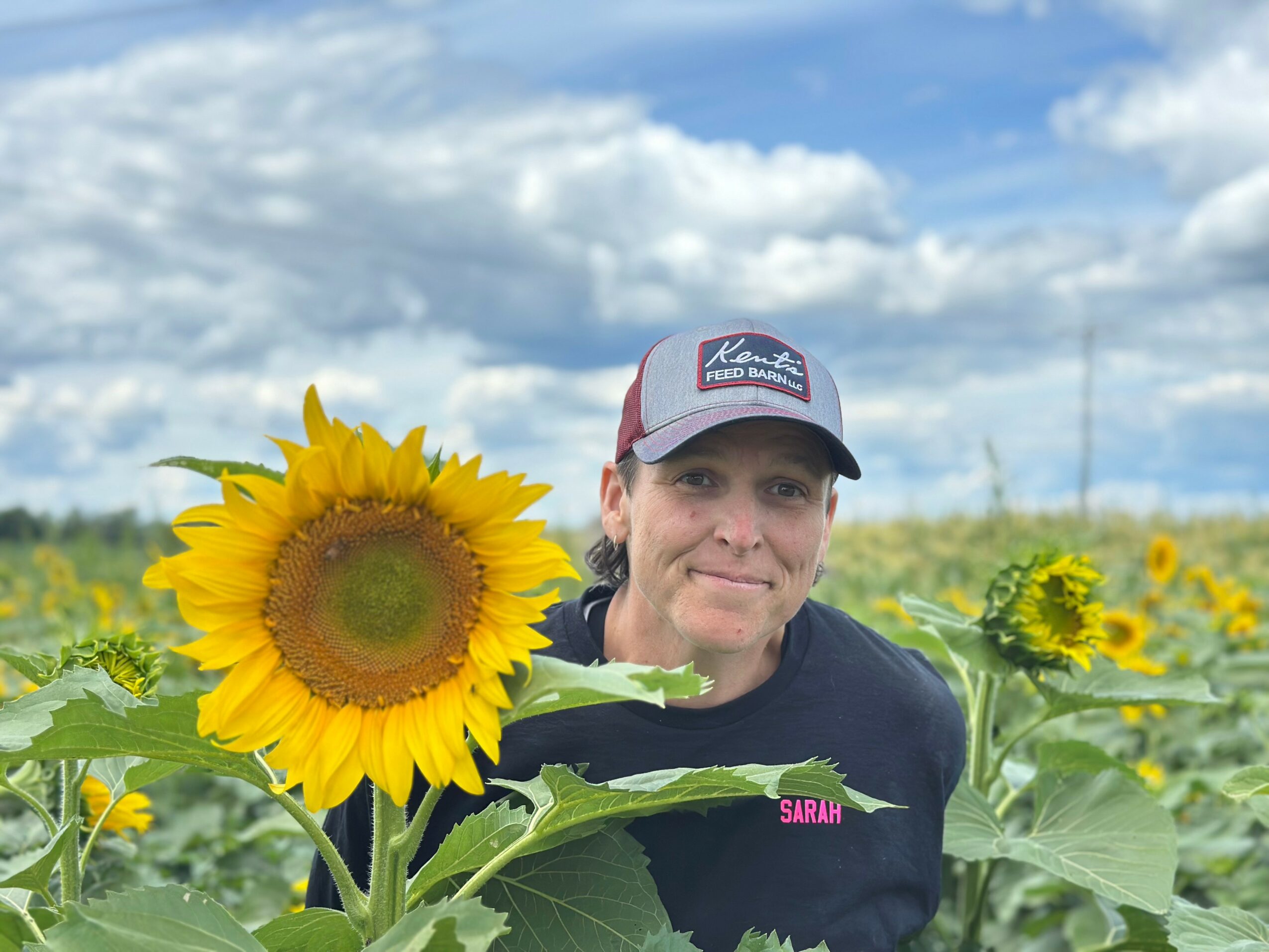
Today we’d like to introduce you to Sarah Kelly.
Hi Sarah, we’d love for you to start by introducing yourself.
Hi, my name is Sarah Kelly, and I am married to the love of my life, Liz Kelly, formerly Liz Markley—the All-American soccer goalie from a tiny village called Cedarville, Ohio.
And Cedarville really is something special.
It sits just outside in the Dayton suburbs, tucked into the kind of countryside that makes you slow down without even meaning to. There is something magical about it. Maybe it is the open fields, the old family farms, the backroads, or the way people still know each other by name. Whatever it is, it has a way of getting into your heart.
I also grew up in Ohio but hit the road as soon as possible to live a life worth talking about with job titles such as arcade technition, licensed tour guide, Personal Assistant, barista, dog groomer, and everyone’s favorite, Professional Mascot. Many of these jobs I did at the same time to make ends meat. I didn’t mind. I loved everything interesting and fun.
Liz and I first found each other in Charleston, South Carolina, in 2012—a time that still glows softly in my memory. We built our little world on Sullivan’s Island, where the Intracoastal Waterway sparkled just beyond our windows, carrying the salty breeze and the quiet rhythm of the tides. Mornings were filled with that easy Lowcountry beauty: the warm light on the water and the kind of peace that settles deep in your soul.
It was a golden, sunlit season. I can still taste the salt in the air and feel the warmth of those carefree days wrapped around us like an old, beloved blanket. But in time, Liz began to ache for home—the rolling fields and familiar skies of Ohio that called to her heart. Because I loved her more than the sunshine and sea itself, I let go of that coastal dream without regret. So we packed our things, stole one last look at the waves we had come to love, and made our way back to our native land.
First, we landed in Columbus. I became a courier, and Liz took a job as an accounting bookkeeper at a commercial roofing company. We settled into city life, but pretty quickly we knew we wanted to grow our family. After a lot of planning, hoping, and waiting, our son, Elijah, was born in 2017.
It was after Eli was born that something shifted in Liz. Her love for family, land, and her roots took hold in a new way.
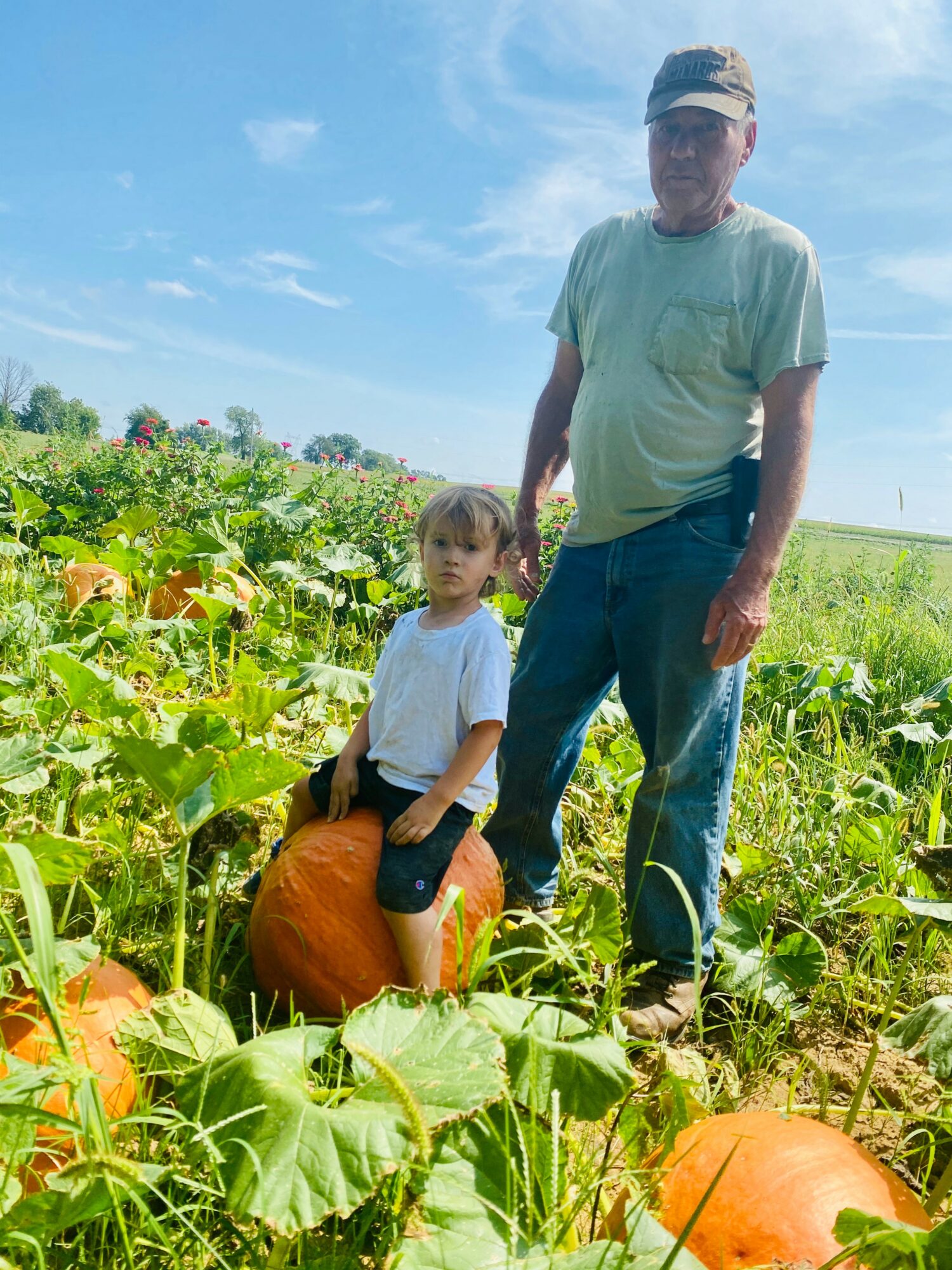
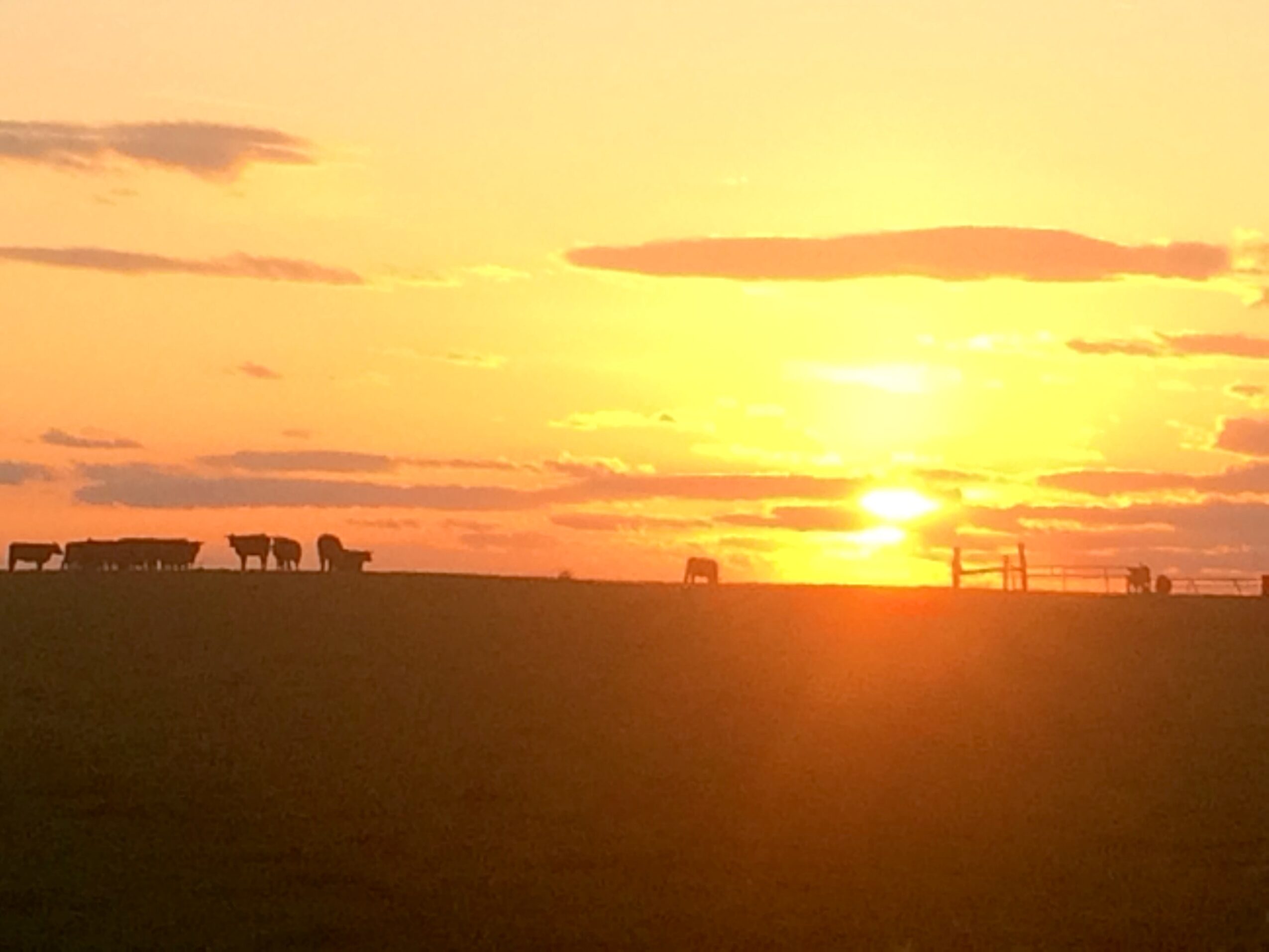
We had always loved visiting her parents in Cedarville, about an hour from our house in the city. Their farm was grand, just over 220 acres, with a giant farmhouse where Liz’s grandmother still lived at nearly 100 years old. Liz’s dad, Tom, still farmed the land the way his father had before him, after moving from nearby Champaign County. We commuted every weekend in the summer to help Tom with his giant garden.
Just like that garden, Liz’s family was huge, especially compared to what I was used to. My big family gatherings usually included eight or nine people. Hers included well over 25, with Grandma, her children, Liz’s cousins, the grandkids, and even some great grandkids. There were more names than I could keep straight at first. Liz is the youngest of four kids, and just about every cousin had a kid or 4. It took me more than a year of birthdays, holidays, and family get-togethers to fully understand the family tree. And I loved it.
There was life there. Noise. History. Belonging. A sense that the land and the people had grown together.
After a couple years of gardening with her father, Liz decided she wanted to become part of the next generation to farm the land her grandfather and father had tended for so many years. Of course, that dream came with real challenges. The land would eventually be split three ways, as it should be, and making a small farm sustain itself is no small thing. So Liz started studying ways to make the land work, not just sentimentally, but practically. That is when she decided she wanted to become a beekeeper. I did, too.
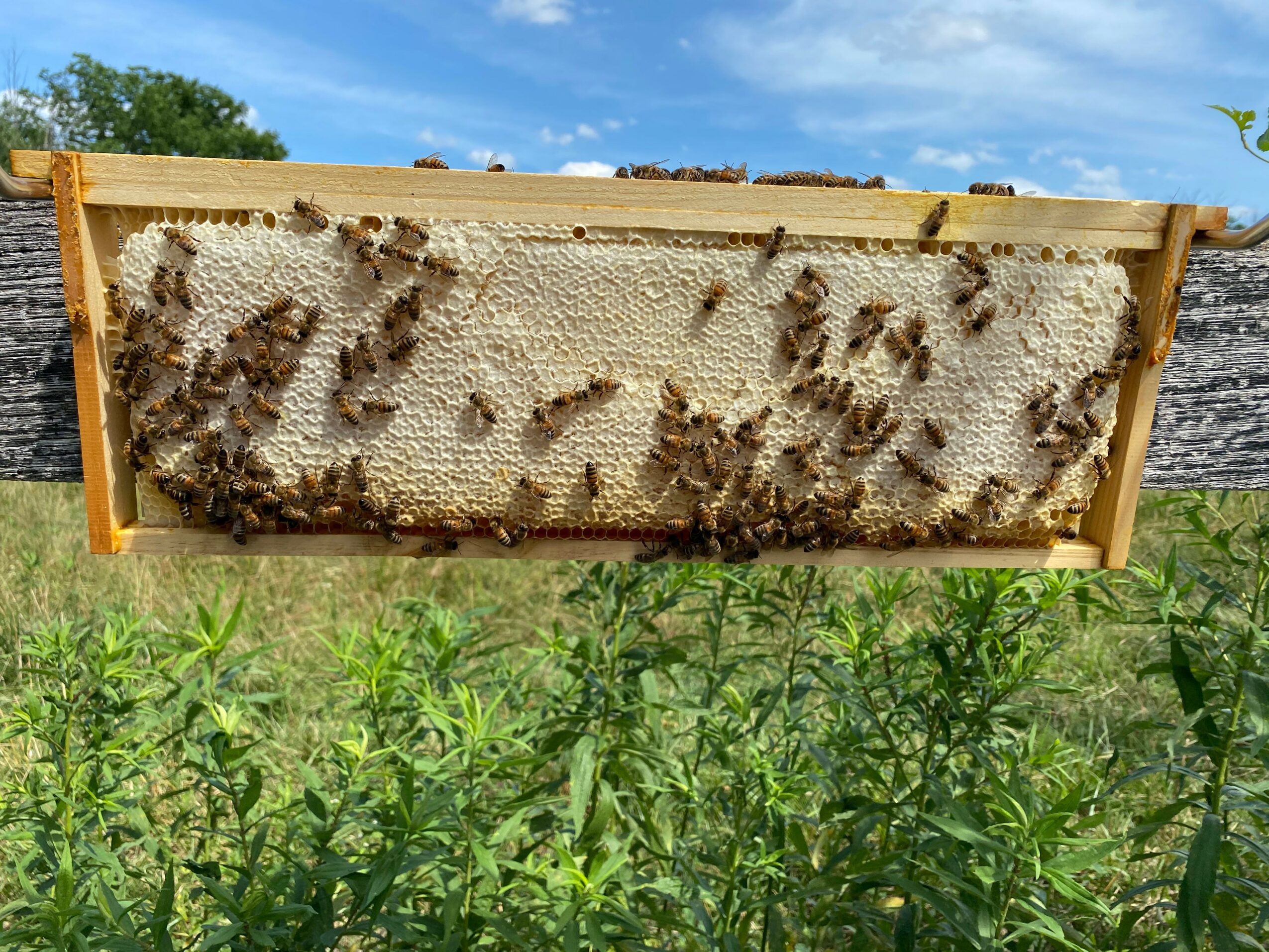
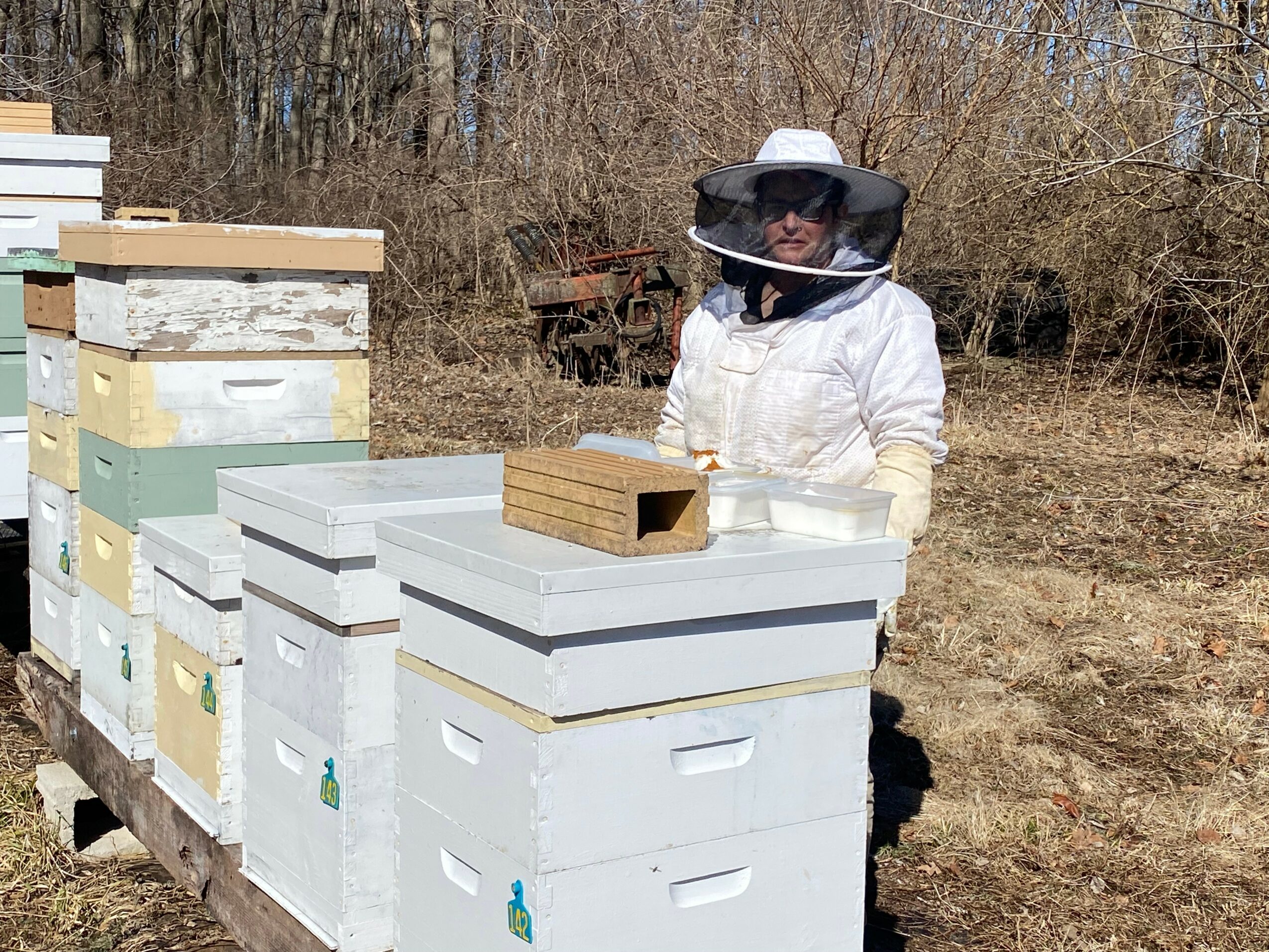
Before long everything we owned was packed up in the city. We bought a small piece of land south of Springfield, Ohio, and started taking classes through the extension office, learning from Master Gardeners and local beekeepers. We found a mentor and began learning about equipment, weather, extracting honey, splitting colonies, requeening hives, pest control, and the delicate rhythm of caring for bees. The bees amazed us and we hadn’t even started yet.
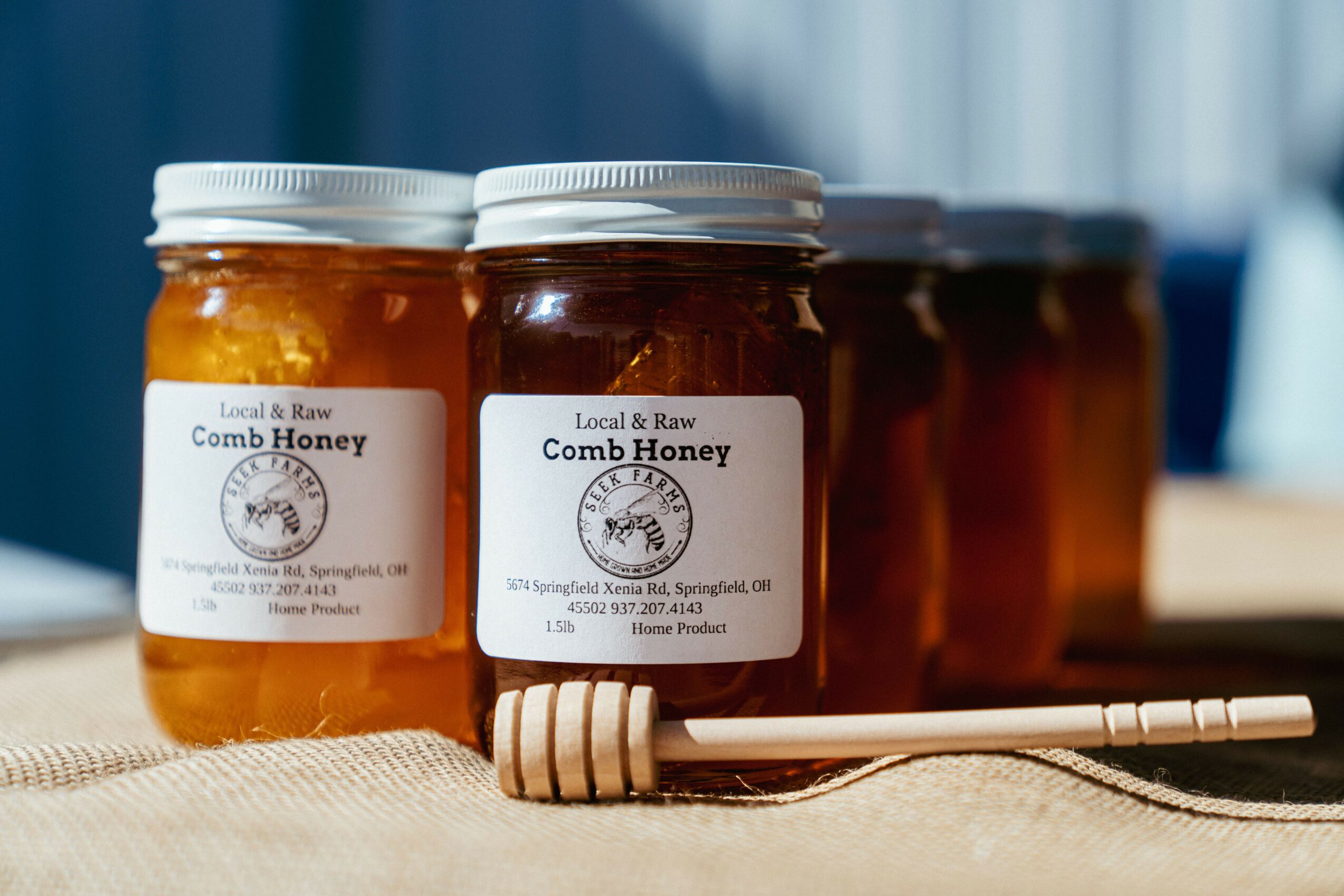
We started with two hives at home the first year. The second year, we doubled. The third year, we added several established hives from a retiring beekeeper. In fact, we more than doubled nearly every year until we reached about 40 hives. That became our number.
The honey flowed. The bees buzzed. And something beautiful began to grow.
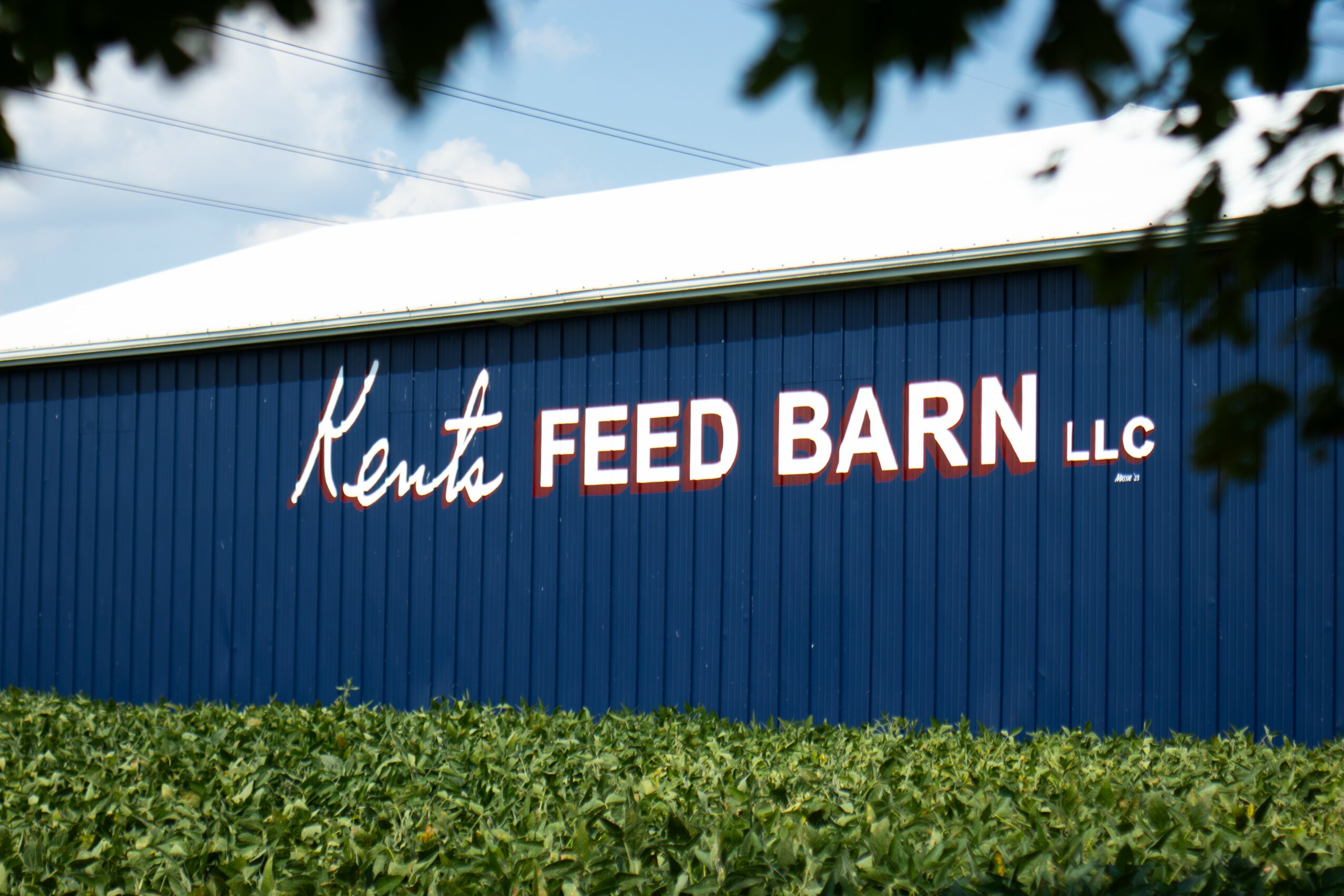
We discovered pretty quickly that we did not have to sell our honey very hard. It sold itself. We simply had to get it in front of people. So we started attending the local farmers market at a feed store just a stone’s throw from the family farm. It also happened to be the same store where we bought feed for our chickens, ducks, and dairy goats. That place was Kent’s Feed Barn. And it was magical, too.
Kent’s Feed Barn felt like it had been written into existence by someone from Mayberry. It was family-owned, community-centered, and built on trust. For years, the store operated on the honor system. The doors were unlocked. You went in, got what you needed, and left money in a drawer with a note. The rules were simple: write your name, say what you are taking, leave the money or write an IOU, and don’t steal.
If Kent Campbell was there, he greeted you with a giant smile and usually offered some unsolicited but useful dad advice about your animals, your feed, or—in my case—my water softener salt settings. His presence was commanding, but his heart was gold. His daughter, Beki Ryan worked with him. Together they helped us get our animals fed and stay healthy.
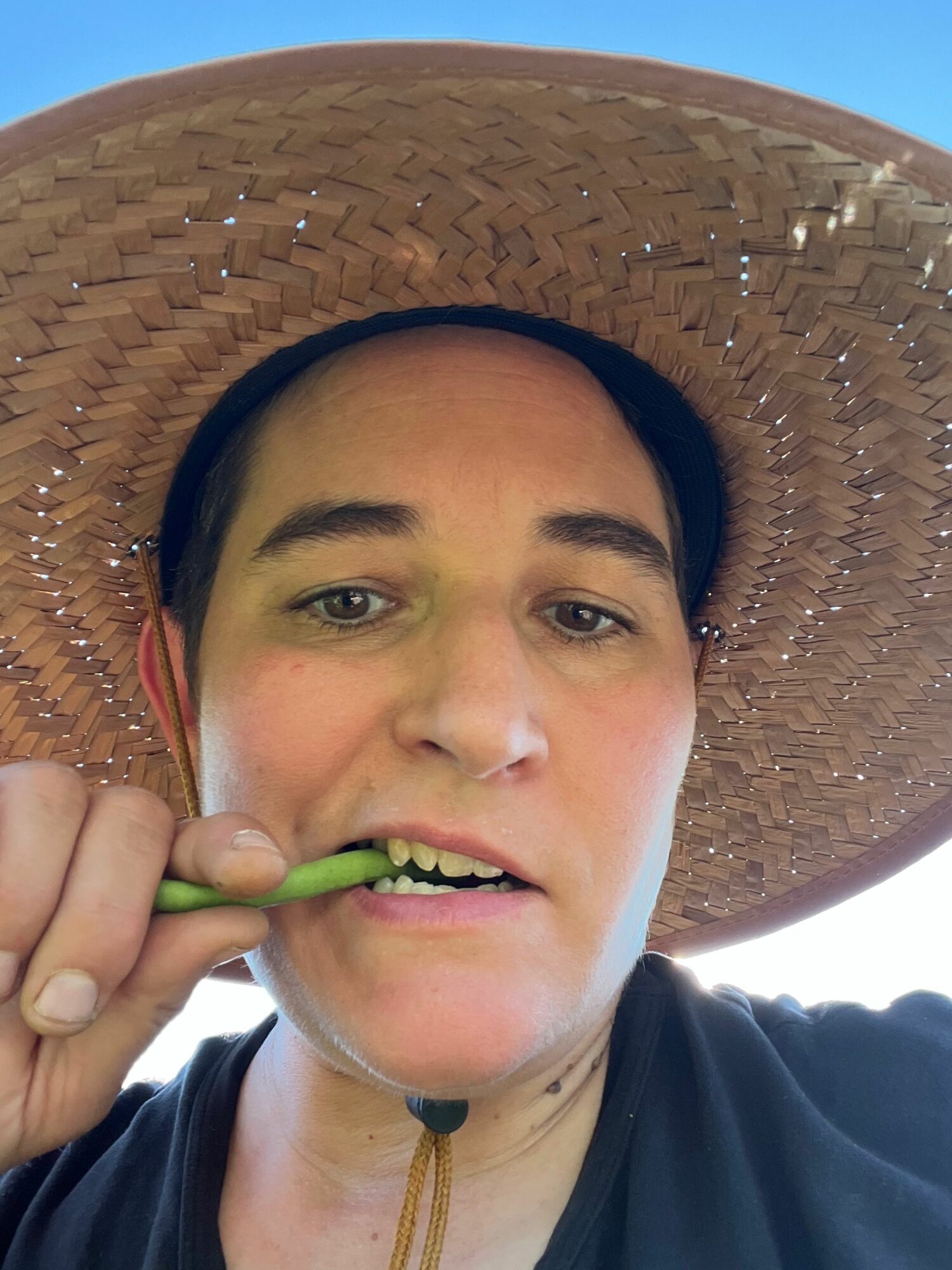
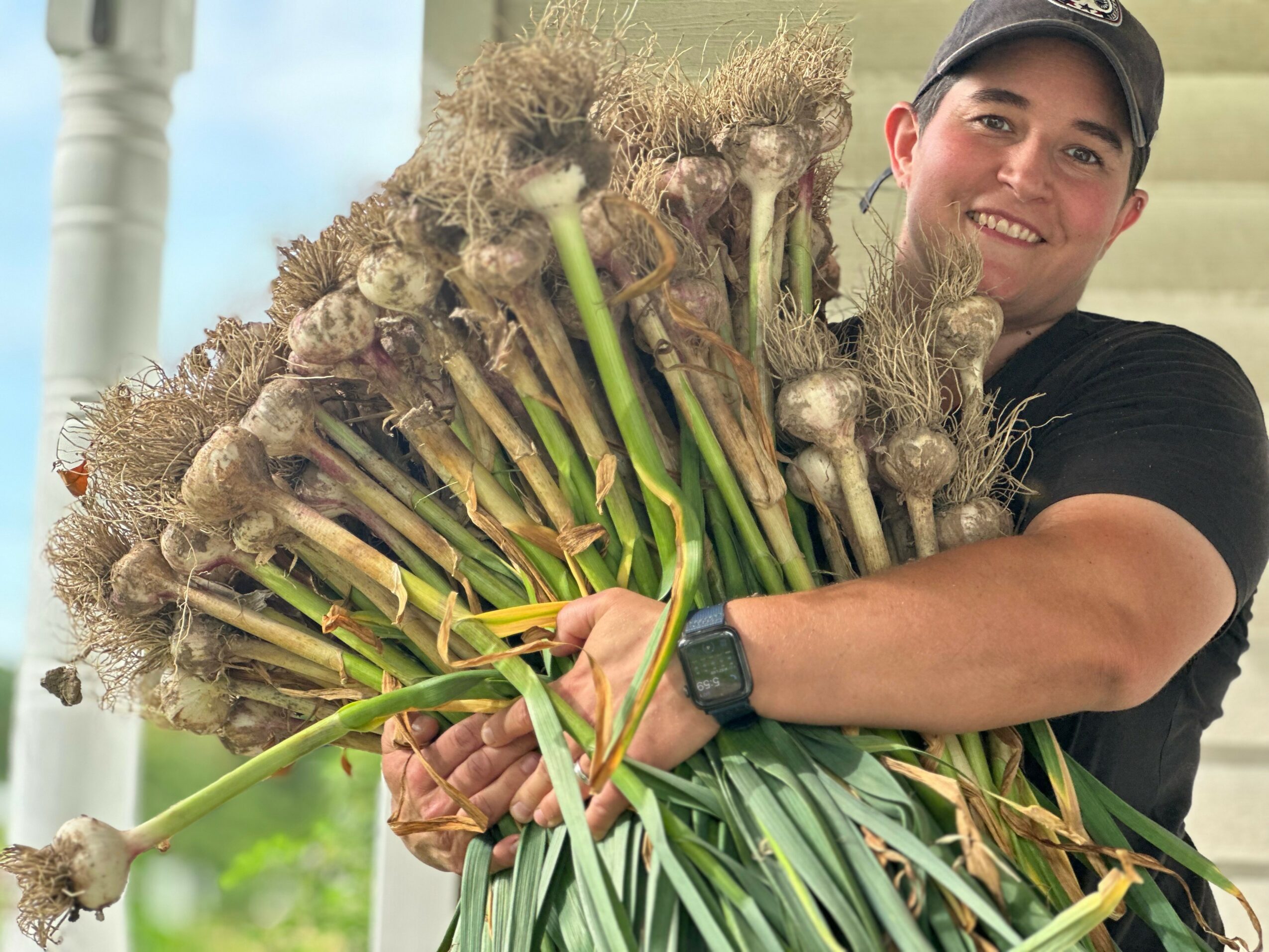
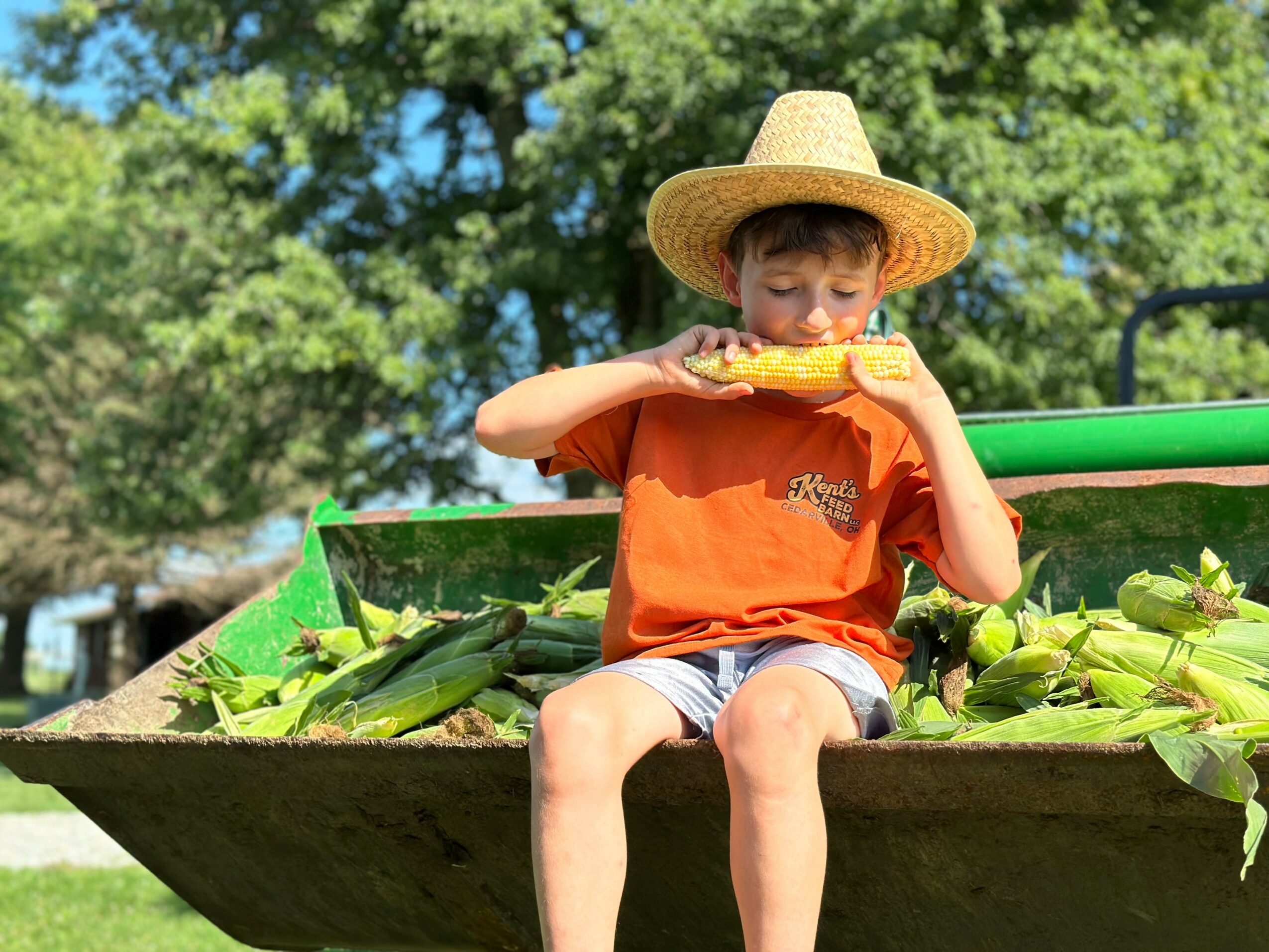
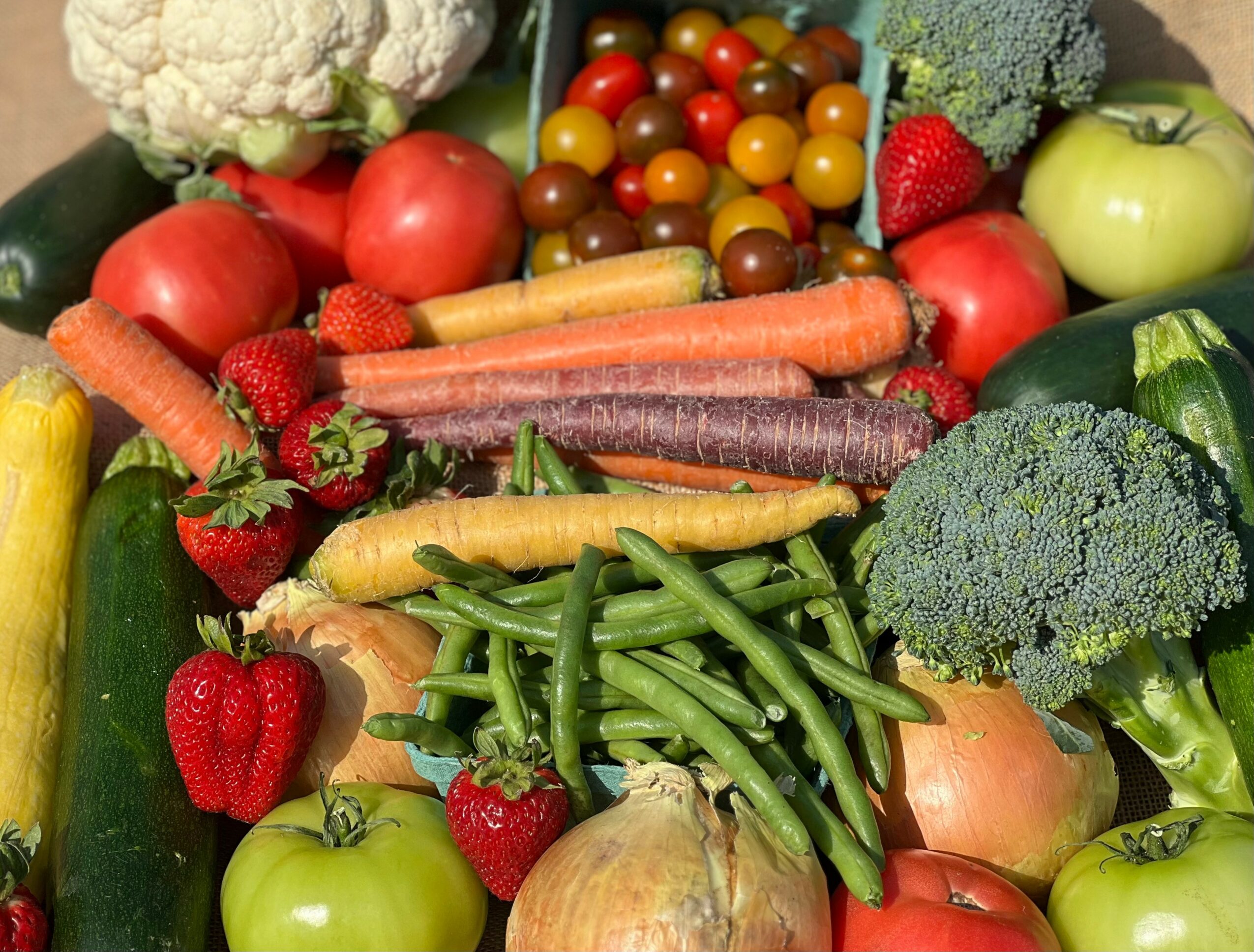
During the pandemic, Liz and I turned our garden into an old-fashioned truck patch. Liz’s dad invited us to use some of the land at the farm to grow produce not just for ourselves, but for the markets where we sold our honey. We started with about half an acre, and within a couple of years, we were looking at a full-blown football field of fresh tomatoes, sweet corn, peas, beans, strawberries, and peppers of every shape, color, and notch on the Scoville scale.
Liz was right at home with her hands in the dirt, pulling weeds, planning crops, and dreaming up what could come next. It was beautiful to watch her reconnect with Tom after nearly 15 years of living away from her parents and family. Farming became more than a business idea. It became a bridge.
In 2023, we were approached by a pharmaceutical THC manufacturer looking to source local honey for their products. Much of the bulk honey available to them was being shipped in from other countries, and they wanted something local. We were able to contract about 1,000 pounds of honey, which they used to create locally sourced THC-infused honey. We worried we might run out of product that year, but somehow we managed to fulfill every order, big and small.
It felt like we had finally arrived.
By the end of 2023, I had come to a realization of my own. I no longer wanted to be away from my family every day for well over 12 hours, driving a truck for a large corporation that seemingly no longer cared about benefits or service. The company was reaching a point where customers and employees were losing everything to the shareholders. I wanted a job I could be passionate about without filling out paperwork to explain why I went above and beyond for a customer.
Around that time, Beki put a video out on social media that she was looking for part time help. With Liz’s encouragement, I took a part-time job at Kent’s Feed Barn. Kent Campbell, the owner had passed away by then, and the business had grown. It was now being ran by Beki Ryan. She is one of those people who has never met a stranger. She is funny, caring, sharp, and deeply involved in her community—just like her dad. She was working hard to keep up with growth, make time for her family, and keep customers happy.
I loved working there immediately.
The atmosphere was part local watering hole, part beauty salon, part community bulletin board, and part Angie’s List. You could come in for feed and leave with a full heart, a good story, the latest local happenings, and the name of a reliable electrician or plumber. It was not unusual for someone to stop in and talk for an hour or more.
Beki and I hit it off right away. She liked my creativity, and I liked her structure. Working for her also meant I no longer had a two-hour daily commute. Instead, I drove about 20 minutes total each day. That one change gave me more time with my family, more time in my community, and more room to become part of something local and meaningful.
Beki also started selling Liz’s produce at the store during the summer and helped promote our newest venture: a mobile farmers market.
By then, Liz had started taking weekly orders for produce, honey, maple syrup, sweet baked goods, breads, dairy, and just about every kind of meat you could imagine from vendors at the Greene County Farmers Market. The idea was simple: Liz wanted a CSA that allowed folks the ability to choose what they wanted in a weekly delivery. She wanted it to be affordable. So she started a texting her produce list every Wednesday to people who wanted delivery. That list grew and grew and is now over 200 people.
Some people reply with exact orders. Others give her a budget and a few favorite items, trusting her to work her magic. Then Liz begins planning, gathering, sorting, and coordinating. She picks up from the other vendors and growers after her 9-to-5 job, and some vendors drop products at the farm.
Every Friday around lunch, her mom—The Original Farmer’s Wife, Carla—comes over, takes the list, and turns it into beautifully packed orders ready for delivery. Liz starts the mobile market around 4:30 p.m. after finishing her daytime job and often goes until 8 p.m. I ride along when there is room in the car, but as the business has grown, room has become harder to come by.
Now Liz is planning to make this a full-time adventure, one that will allow her to source even more food right from the farm and continue building relationships between local producers and local families.
As for me, I am working at the feed barn full time, where I get to help promote Liz’s business, work for an amazing family, and get to know our community even better.
This summer, we are baling hay for the first time with Tom. He is teaching us what to do, what not to do, and probably a few things we will only understand after we mess them up. Afterall, he is the Hay Man of the family, with more than 60 years of experience, and being able to learn from him feels like a gift.
When I look at all of it—the bees, the produce, the feed barn, the family farm, the mobile market, the hayfields, the customers, the vendors, and the people who keep showing up—I see a love story.
It is the love story of Liz and me, yes. But it is also the love story of a farm that keeps calling its people home. It is the love story of a family learning how to carry something forward. It is the love story of a small-town feed barn that has become a gathering place for people of all walks of life. It is the love story of a community that still believes in handshakes, honor systems, fresh food, hard work, and taking care of one another.
And somehow, by grace and grit, I get to be part of it.
I’m sure it wasn’t obstacle-free, but would you say the journey has been fairly smooth so far?
Of course, none of this has been easy.
Working full-time jobs, raising a family, starting a business, and trying to build a farm from the ground up has been exhausting in ways we could not have fully understood when we began. There have been weeks when the dream felt exciting and impossible at the same time. There have been late nights, early mornings, missed dinners, tired bodies, and more than a few moments when we wondered if we were strong enough to keep carrying it all.
And then life added its own weight.
About 3 years ago, Liz’s dad, Tom, suffered a major stroke. This was the kind of stroke people don’t usually come back home from. He has made an incredible recovery and has since returned to the life he loves. But for nearly a year, it was scary. We did not know what his future would look like. He and Carla had just started making plans with Liz about the future of the farm. We did not know if he would be able to keep teaching us the things only he knew—the timing, the instincts, the old farm wisdom, the lessons that do not always come from books. We were not just afraid of losing his help. We were afraid of losing the chance to learn from him while he was still here to teach us.
In that same season of moving, building, and planning my mother and stepmother were both diagnosed with terminal cancer. My mother sought care at The Ohio State University so I was able to be part of her care team. I was glad to have whatever extra time with her even though a lot of that time was spent caring for her. Within 4 years we lost both of them. They loved sitting at our market tables, watching us sell our honey and produce, visiting with customers, and helping whenever and wherever they could. They were proud of what we were building, and they showed that pride by simply being there. Their absence is still felt deeply.
So this story is not just about growth. It is also about grief. It is about the people who helped us dream, the people who taught us how to work, and the people we wish were still sitting beside us at the market table. It is about trying to build something beautiful while carrying loss, fear, and exhaustion along the way. And maybe that is what makes it a love story after all.
Because love is not just found in the easy parts. It is found in showing up tired. It is found in packing orders after a full workday. It is found in learning hay from a father who fought his way back. It is found in caring for and remembering the mothers who cheered us on from folding chairs beside a market table. It is found in a community that keeps buying, helping, asking, encouraging, and believing.
When I look at all of it—the bees, the produce, the feed barn, the family farm, the mobile market, the hayfields, the customers, the vendors, the people we have lost, and the people who keep showing up—I see a love story.
Thanks for sharing that. So, maybe next you can tell us a bit more about your work?
One of the unexpected gifts in all of this has been finding a place for my own creativity.
I am able to create content and ideas for both Liz at The Farmer’s Wife at SEEK Farms and for Beki at Kent’s Feed Barn. I get to take the heart of what they are building and help give it words, shape, humor, and attention. I get to tell people about fresh produce, local honey, good feed, community events, farm life, and the kind of businesses that still feel personal because they are personal.
For Liz especially, I get to help tell the story of a farmer’s wife building something thoughtful, local, and nourishing—one market. one order, one delivery, one relationship at a time. For Beki, I get to help carry forward the voice of a beloved feed barn while bringing new ideas to a business that already means so much to the community.
Being creative and coming up with ideas to help bring attention to these wonderful businesses has truly been a dream come true. It has allowed me to be useful in a way that feels natural to me. It has given me a way to support the people I love, serve the community I am growing to love, and become part of the story instead of just watching it unfold.
What has been the most important lesson you’ve learned along your journey?
The biggest lesson for me in all of this has been grace.
Not the easy kind of grace that sounds pretty on paper, but the kind you have to choose when it is hard. The kind you give when life is unfair, when people disappoint you, when plans fall apart, and when you realize—against your will—that you cannot control everything around you.
Liz and I have not always been accepted or treated the same as others in our orbit. There have been moments when that hurt deeply. But we have stayed our course. We have held each other up through hard seasons, chosen our family together, and kept building a life rooted in love, work, and hope.
Liz and Eli have taught me how to love unconditionally. They have taught me that love is not just something you feel. It is something you practice. It is patience. It is forgiveness. It is showing up. It is laughing when you can, crying when you need to, and getting back up when life knocks the wind out of you.
I have learned that I cannot make every person understand my family. I cannot protect us from every hard thing. I cannot control every outcome, every opinion, every loss, or every storm that comes rolling across the field. But I sure can love well. I can give grace. I can keep showing up. I can stand beside Liz, raise Eli with tenderness, honor the people who helped us get here, and keep choosing the kind of life that makes room for others.
That, more than anything, is what this farm, this business, this family, and this community have taught me.
Contact Info:
Popular
-

Hidden Gems: Local Businesses & Creatives You Should Know
-

The Change-Makers: stories that inspire
-

Take Flight: Lamar Thomas on Building an Inclusive Brand Rooted in Youth, Community, and Purpose
-

Cultivating Inner Clarity: Angel Inspires on Thought, Healing, and Purpose
-

Local Highlighter Series
-

Highlighting Local Gems