



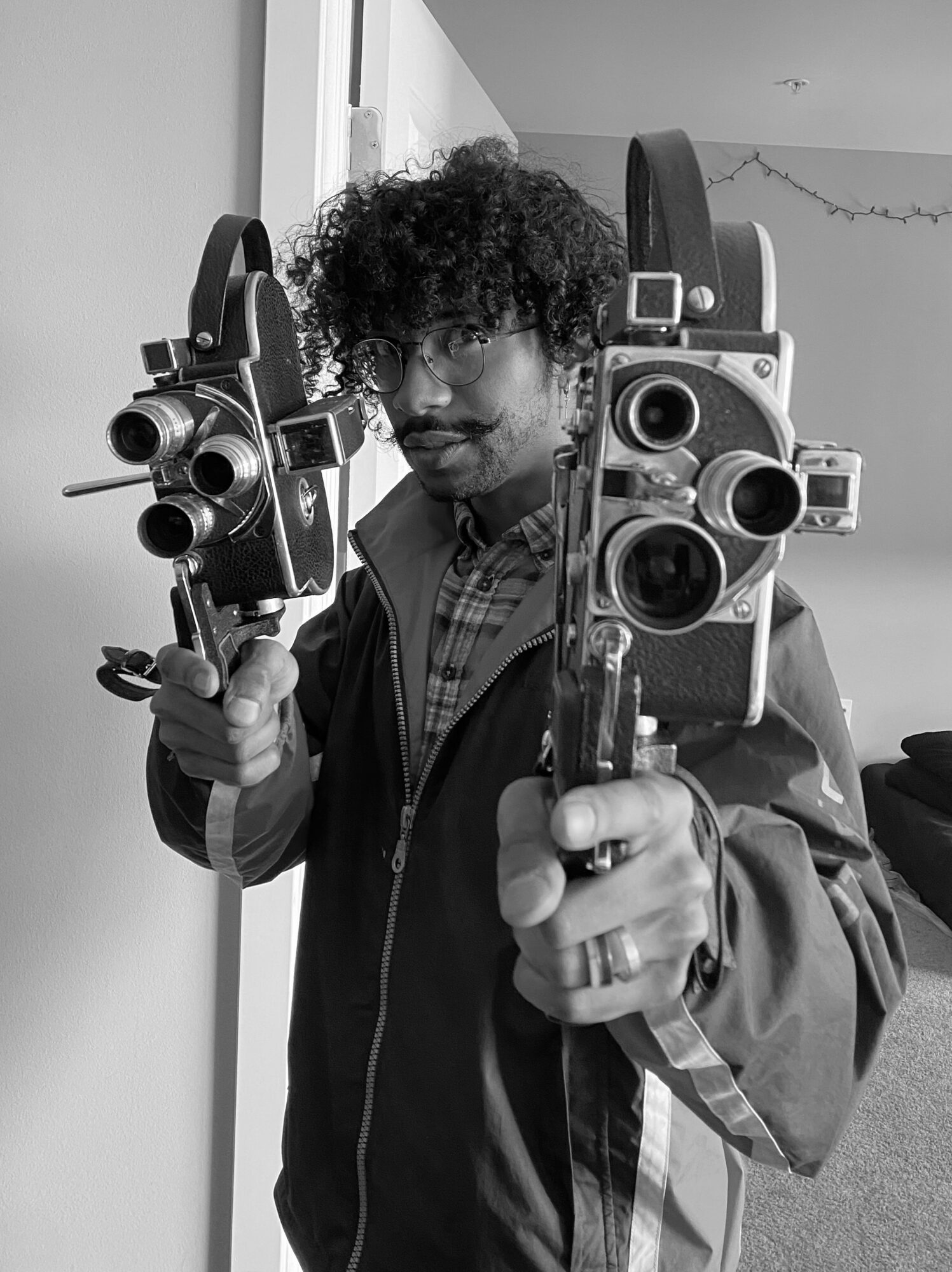
Today we’d like to introduce you to Omari Hitson.
Hi Omari, we’d love for you to start by introducing yourself.
I grew up taking things apart. Not to break them. To understand them.
The first camera I ever bought was a Polaroid Highlander. Middle school, maybe $20 on Ebay. I disassembled it on my bedroom floor, put it back together, and sold it for more than I paid. Then I did it again with another camera, and another, trading up each time. By my junior year of high school, what started as $20 had become $1,200 and I walked out of a camera shop with a Leica M6, at the time- my absolute dream camera.
That experience taught me something I still carry: understanding how something is made is almost always the clearest path to imagining what it could become.
Along the way I became obsessed with the people who actually designed these cameras. Oskar Barnack, who conceived the original Leica. Edwin Land, who built Polaroid out of a desire to let people hold a memory within minutes of making it. People who believed how something felt in your hands mattered as much as what it did. That realization made me a product designer before I even knew the term for it.
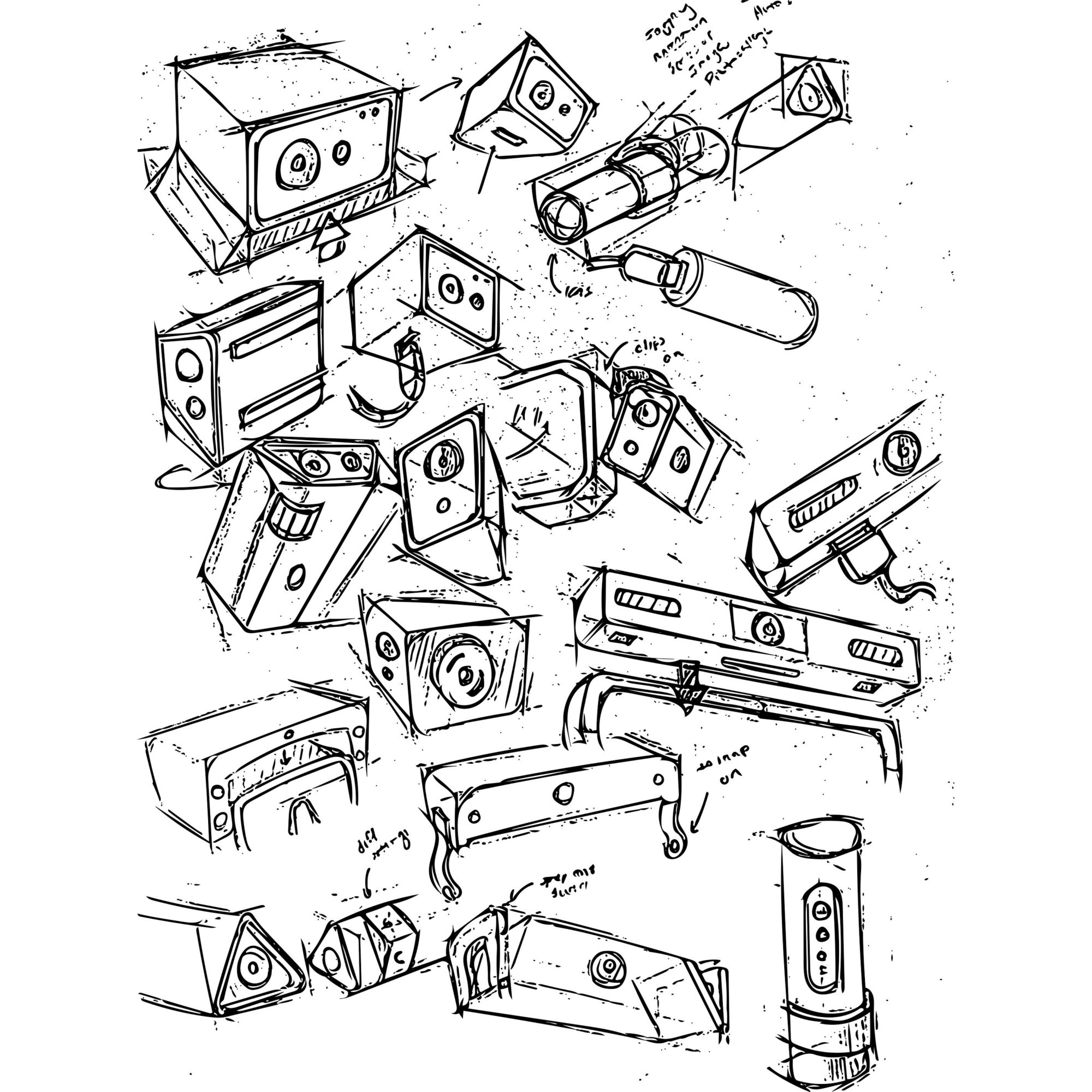
I studied industrial and product design at Georgia Tech, where I spent three years designing and building my own camera from scratch. I also did a year abroad at Lund University in Sweden that reshaped how I think about creativity entirely.
The rule I formed there: creativity isn’t innate. It’s the accumulation of diverse experiences.
Sweden showed me a society where design is a first-class citizen in everything from products to how cities are organized.
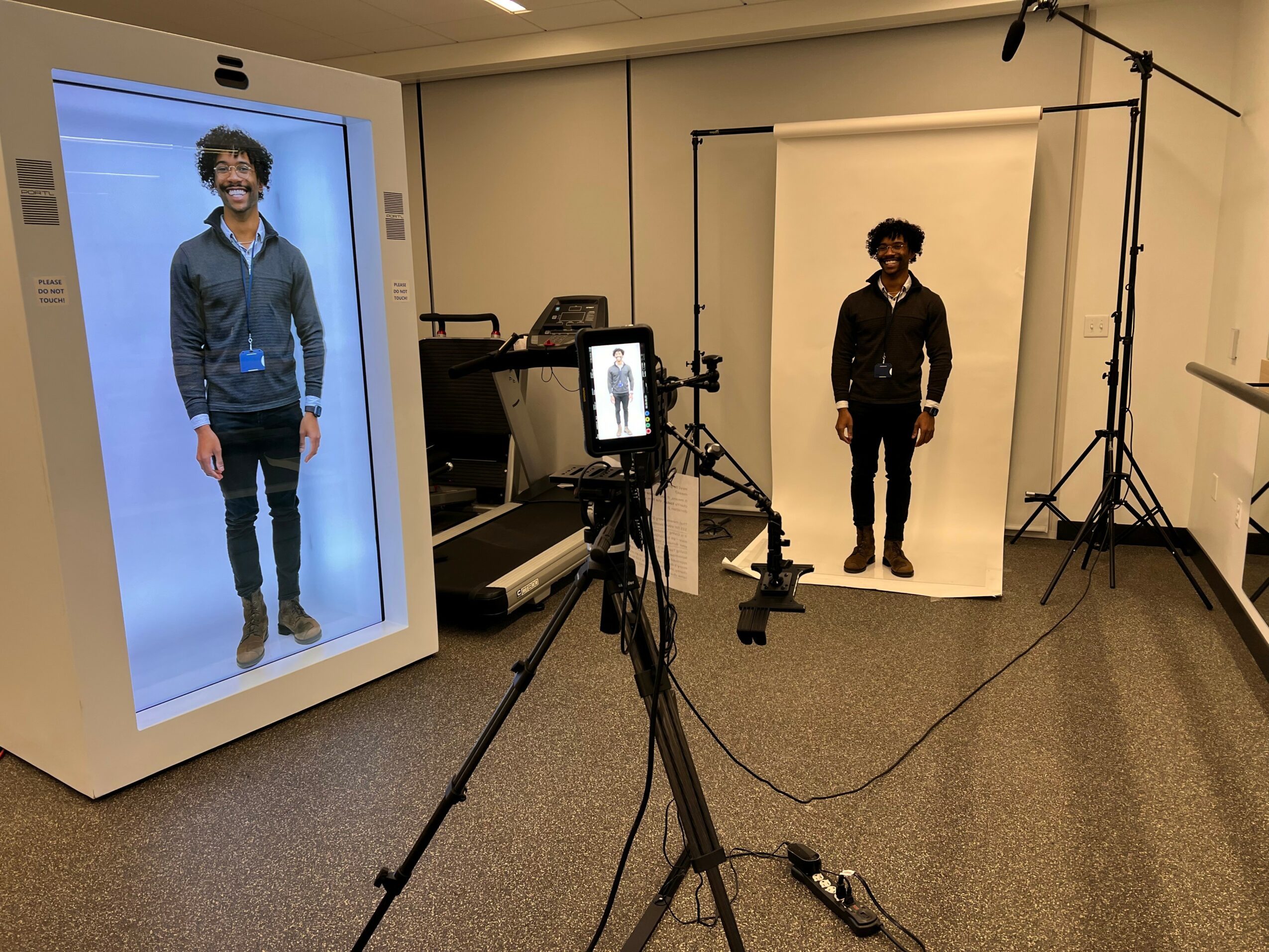
I graduated during COVID into a fractured supply chain. The career I had prepared for had frozen overnight, so I pivoted into spatial computing and digital product design, freelancing across industries I hadn’t expected. That path eventually led to JPMorgan Chase, where I now lead product design for emerging technologies. My work sits at the convergence of camera technology, innovation strategy, and product design: taking half-formed ideas and building them into prototypes tangible enough to hold, share, and pitch. Spatial computing interfaces, AI agentic workspaces, holographic displays.
That work has taken me beyond the office. I’ve spoken at hackathons, conferences, and enterprise technology events, consistently making the same argument: we are living through a fundamental paradigm shift in how humans interact with computers. The interfaces that defined the last 40 years were built for desktops. What’s coming is spatial, ambient, and context-aware, and most organizations are still designing for the old finish line.
Ohio wasn’t part of the original plan. But I started seeing something here that most people outside the state miss: one of the most diverse XR adoption ecosystems in the country, spanning healthcare, education, manufacturing, and more. The people are open and genuinely collaborative. I started calling these Ohio’s hidden advantages. They deserve a bigger stage, and I’ve made it part of my mission to tell that story.
I’m sure it wasn’t obstacle-free, but would you say the journey has been fairly smooth so far?
No. And I think anyone who tells you their road was smooth either had an unusually lucky path or isn’t being honest about it.
My biggest early lesson came from a project called Lysande, a camera company I founded while still at Georgia Tech. The concept was genuinely first of its kind: a multi-sensor imaging system that turned your smartphone into a full-frame camera without hiding what it was doing behind computational black boxes. I believed in it completely.
What I learned, painfully, was that believing in an idea is probably the smallest part of the battle.
The project stalled because I couldn’t get the right people moving in the same direction. Hardware specialists, electrical engineers, algorithmic photography experts. I had a vision locked clearly in my head and no reliable way to transfer it into theirs. And beyond the team problem was an equally difficult one: I couldn’t build the story and the artifacts that would make investors and collaborators care enough to bet on what we were building.
Lysande didn’t fail because the idea was wrong. It failed because I hadn’t yet learned that an idea without a compelling, tangible expression of it is just a thought. That lesson reframed everything about how I work. It’s what pushed me toward rapid prototyping, toward building something people can hold and react to before you ask them to commit to anything.
Then came COVID. I graduated into a world where the career I had specifically prepared for had effectively frozen. It triggered a genuine identity crisis. I had spent years building toward a very specific destination and the environment simply didn’t support it anymore.
What that forced me to do was look honestly at what I actually brought to the table. Not the job title I wanted, but the underlying capabilities: user research, spatial thinking, the ability to take an abstract idea and make it real enough to react to. Somewhere in that stretch I realized skillset was only part of the equation. The other part was how I told the story of what I did, and what problems made someone think of my name.
The tension I carried for years was always the same: feeling a couple of steps short of true end-to-end capability. As a physical product designer I needed a mechanical engineer. As a camera designer I needed hardware specialists I couldn’t always convince. AI genuinely shifted that, not by replacing those collaborators, but by compressing the distance between the idea in my head and something others could touch and react to.
The road wasn’t smooth. But every rough patch taught me something the smooth parts never could have.
Thanks for sharing that. So, maybe next you can tell us a bit more about your work?
I take ideas people can barely articulate and turn them into something they can hold, react to, and believe in. That’s the simplest way I know to say it.
By day I lead product design for emerging technologies at JPMorganChase, one of the most risk-averse, high-stakes environments in the world. You give me a loose concept and I take it the distance until there’s something tangible enough to share with a room and get people genuinely excited about the future it points toward.
What sets me apart is where I came from. I didn’t arrive at this work through software or a traditional UX path. I came through industrial design, through years of studying physical objects, their histories, the people who designed them, and why some endure across generations while others disappear. Understanding how something is made is almost always the clearest path to imagining what it could become. That principle, the same one I learned flipping cameras as a kid, still drives everything I build.
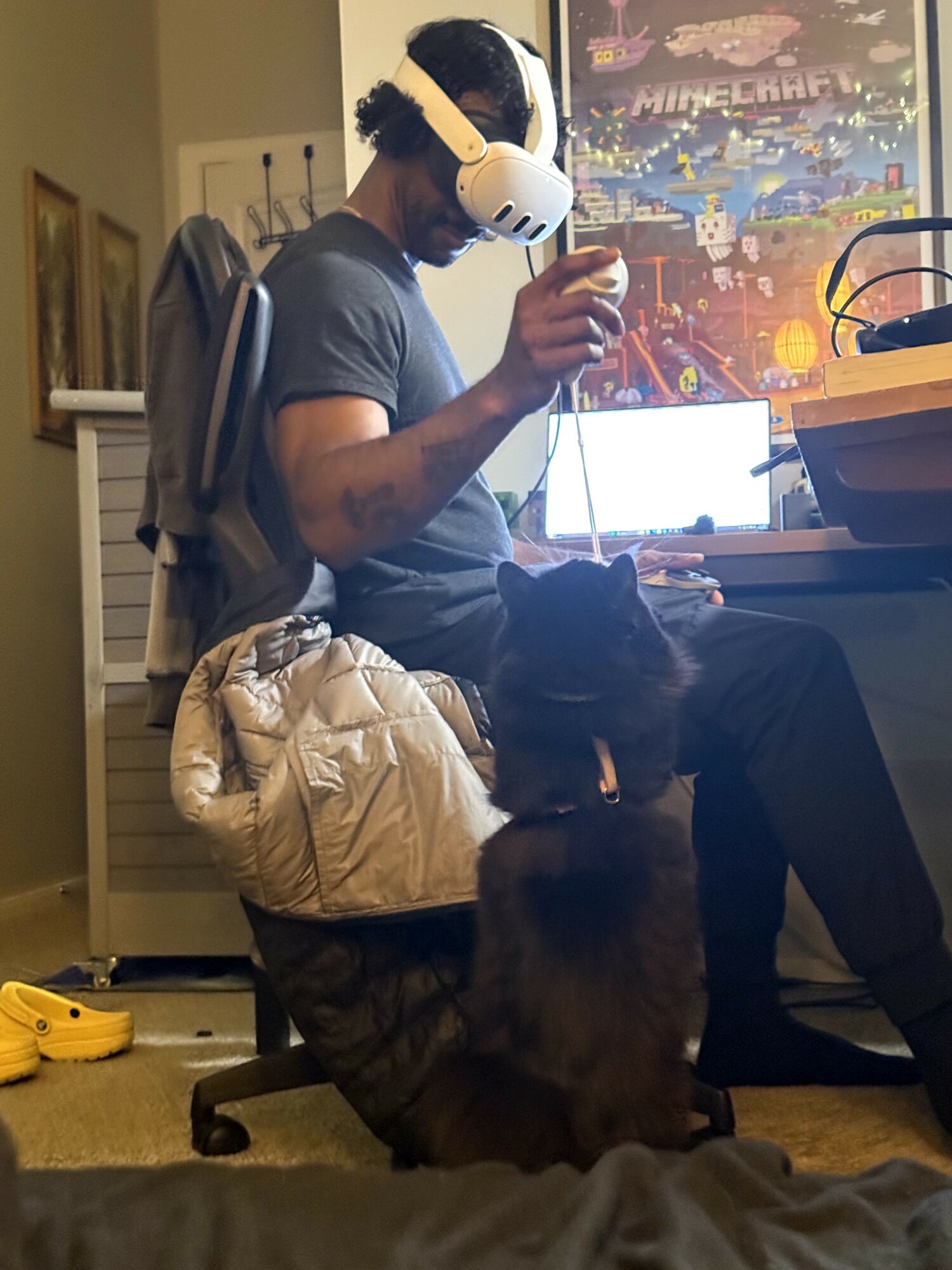
Beyond the day job, I’m building something I’m genuinely proud of. As Chapter President of the VR/AR Association Ohio I’m growing a practitioner community connecting XR professionals across healthcare, education, manufacturing, and more right here in this state. I also recently developed LangLens, an award-nominated mixed reality application that combines spatial computing and AI-powered smart glasses to teach language the way children actually learn their first one: through curiosity and exploration in the real world rather than repetition at a desk.
I’m also a speaker. The argument I keep making is the same one regardless of the room: we are in the middle of a fundamental shift in how humans interact with computers. Most people are still optimizing for the old finish line.
If someone reads this and finds themselves sitting on an idea they don’t know how to make real, whether that’s a product, a technology concept, or something they can’t quite name yet, that’s exactly the kind of conversation I want to have and contribute to.
Are there any books, apps, podcasts or blogs that help you do your best?
Reading is probably the most important habit in my life outside of the work itself. I aim for at least two books a month and I take that seriously.
The reason goes back to something I believe deeply: creativity is not an innate gift. The most innovative people I’ve encountered aren’t creative because they were born that way. They’re creative because they’ve exposed themselves to enough unlike scenarios, enough different ways of seeing the world, that they can draw connections others simply don’t have the raw material to make.
Reading is the most efficient way I know to do that at scale. It is, in the most literal sense, learning from the dead.
If all of human history stretches behind us and we are only a speck at the leading edge of it, the knowledge that already exists vastly outweighs anything we’re likely to discover fresh. Books are the access point to that archive.
My favorite book ever written is ‘Mechanization Takes Command’ by Sigfried Giedion. It was the first book that made me understand that design is not a series of individual inventions but a continuous conversation across generations. Ideas are born, proliferated, reshaped by cultural shifts and scientific advances, and passed forward in forms their originators would barely recognize.
I read it and immediately saw the cameras I grew up with differently. The Leica didn’t appear out of nowhere. It was Barnack responding to the constraints of his time, and every camera that came after was a response to his response. That chain of thinking is still running. I try to figure out where I sit in it.
Reading it gave me a framework I still use: when I encounter a new technology or design challenge, I ask where it sits in that longer arc. Understanding where something comes from is almost always the clearest path to understanding where it’s going.
That habit, more than any app or tool, is what I’d point to if someone asked me how I do my best thinking.
Contact Info:
- Instagram: https://www.instagram.com/hitson.jpg/
- LinkedIn: https://www.linkedin.com/in/omari-hitson/
- Twitter: https://x.com/hitsonXR
- Other: https://www.ohioxr.com/


Popular
-

Hidden Gems: Local Businesses & Creatives You Should Know
-

The Change-Makers: stories that inspire
-

Take Flight: Lamar Thomas on Building an Inclusive Brand Rooted in Youth, Community, and Purpose
-

Cultivating Inner Clarity: Angel Inspires on Thought, Healing, and Purpose
-

Local Highlighter Series
-

Highlighting Local Gems