



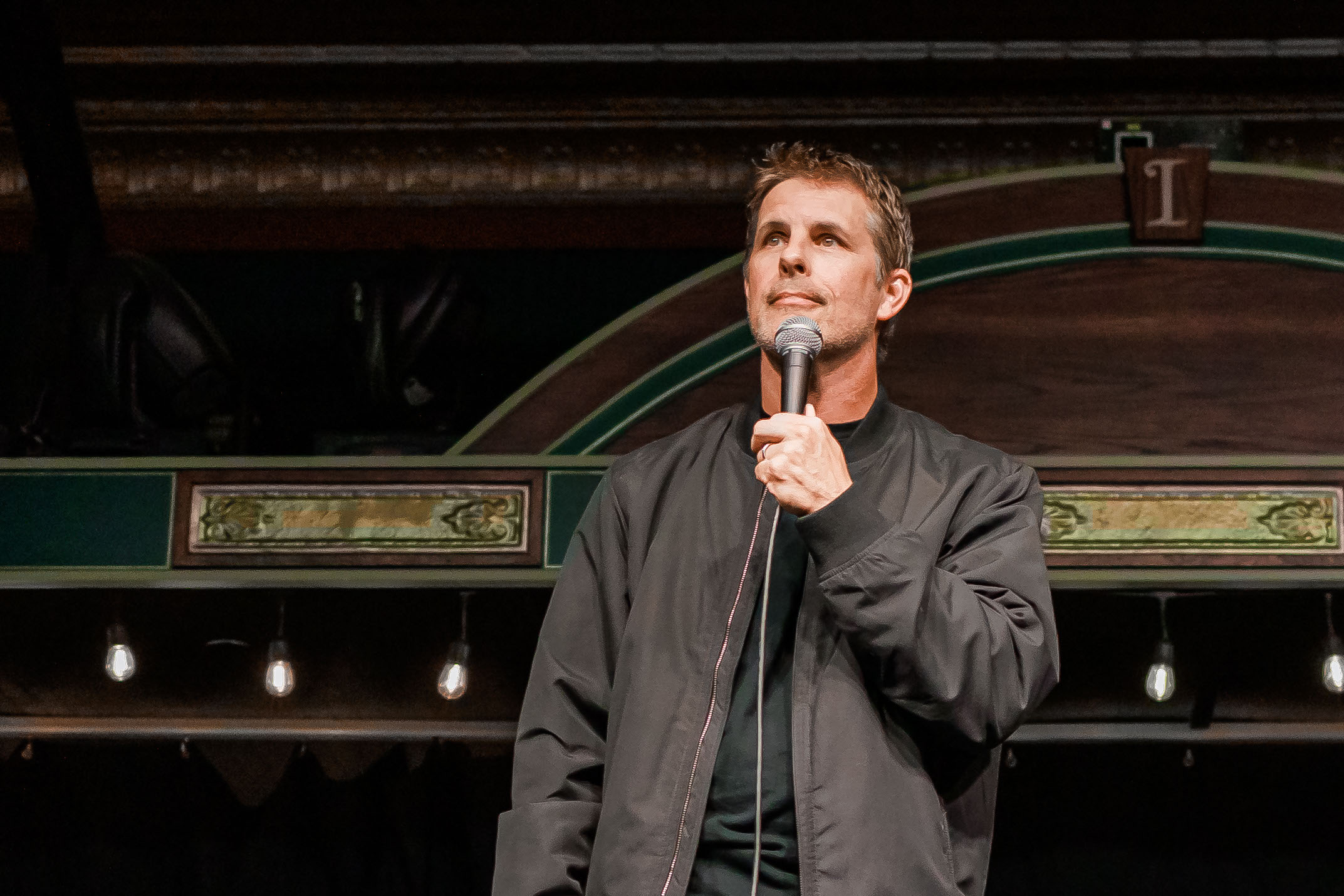
Today we’d like to introduce you to Nathan Timmel.
Hi Nathan, we’d love for you to start by introducing yourself.
I’d loved stand-up comedy since I was a child, but I didn’t start performing until after I graduated from college. I had a degree in English, which is fairly useless, so… Yeah. Why not stand on stage and make people giggle?
We all face challenges, but looking back would you describe it as a relatively smooth road?
The only meritocracy left on the planet is sport—and Lebron James is really testing that with his kid. Hollywood is full of nepo babies, and the rest of the art world… well, that’s a lesson in rubbing elbows. Who you know is more important than anything else. If you’re an introvert, you have your work cut out for you.
Thanks – so what else should our readers know about your work and what you’re currently focused on?
I’m a comedian, writer, and commentator who specializes in finding humor and insight in everyday life, and human behavior.
What I’m probably best known for is taking subjects people are already arguing about and approaching them from an unexpected angle. Rather than telling people what to think, I prefer to point out contradictions, hypocrisies, absurdities, and the strange little details most people overlook.
I’m equally comfortable talking about politics, marriage, religion, parenting, my dog, or a guy wearing a reflective vest while picking up dog poop. To me, they’re all connected by the same thing: people are fascinating, irrational creatures.
What I’m most proud of is longevity.
I’ve spent decades performing stand-up comedy, writing, creating content, and building an audience without a major network, famous mentor, viral breakthrough, or industry machine behind me. Nearly everything I’ve accomplished came from showing up, doing the work, and continuing after disappointment would have convinced a more sensible person to quit.
What sets me apart is that I don’t see people as teams.
I can criticize Republicans, Democrats, Christians, atheists, activists, corporations, government agencies, and comedians without feeling obligated to defend “my side” afterward. I try to follow ideas wherever they lead, even when the conclusions make people uncomfortable.
At my core, I’m less interested in winning arguments than understanding why people believe what they believe.
Also, I occasionally spend an alarming amount of time trying to determine what my dog is thinking.
In terms of your work and the industry, what are some of the changes you are expecting to see over the next five to ten years?
Fifteen years ago, the comedy industry felt like a sprawling, reliable ecosystem. Across the United States, dedicated comedy clubs formed a robust middle class for the art form.
A working-class comic with a killer forty-five minutes could book a steady calendar of club dates, rely on the venue to market the show to local regulars, and make a highly respectable living. The clubs were the curators; audiences trusted the room, and the talent had a clear, ascending ladder to climb.
Today, that middle class has been completely hollowed out. The industry has polarized into a sharp, hyper-focused split.
At the top, a tiny handful of elite comedians have transformed into pop-culture titans, selling out arenas and stadiums to audiences chasing a massive “event” experience.
Right below them, a few celebrity comics pull focus in the premier clubs.
For everyone else, the traditional ladder is gone, leaving a sea of independent artists scrounging for scraps in a world where talent alone no longer guarantees a seat at the table.
This shift wasn’t accidental; it was driven by the rise of “audience portability.”
Marketing has been entirely outsourced from the venues to the individual.
Club owners rarely book acts based on a pristine set or a masterclass in crowd control; they book based on follower metrics and a creator’s ability to drag an online audience offline into a physical seat. If you have the digital footprint, you bypass the grind entirely; if you don’t, you are viewed as a financial liability, regardless of how long you’ve been sharpening your knives on stage.
Looking ahead over the next few years, this divide will only solidify into a new kind of infrastructure.
The arena elite will continue to treat stand-up as a mere loss-leader—the top of a massive marketing funnel designed to drive lifestyle brands, podcast networks, and corporate merchandise.
Meanwhile, the brick-and-mortar clubs that survive will inevitably rebrand themselves as “content factories.” The physical room, the lighting, and the sound systems will be engineered not for the live crowd’s intimacy, but to look optimal on a vertical phone screen, trading ticket revenue for a cut of digital syndication.
Yet, this bleak polarization also paves the way for a fierce, decentralized counter-movement.
As the mainstream internet hits a wall of absolute fatigue with formulaic, algorithmically engineered “crowd-work” clips, a deep craving for genuine, structured joke-writing will return.
The comedians who thrive in the future won’t do it by trying to appease the masses or begging for a spot on a traditional club calendar.
Instead, the survivors will be the hyper-focused independent producers who build micro-niche, intensely loyal digital cult fanbases.
By bypassing the gatekeepers entirely, renting their own spaces, and speaking directly to the few thousand people who love their exact flavor of humor, they will build a self-funded, resilient middle class from the ground up—one daily drop at a time.
At least, I hope that last part is true.
Contact Info:
- Website: https://nathantimmel.com/
- Instagram: https://www.instagram.com/nathantimmel/
- Facebook: https://www.facebook.com/nathantimmel
- Youtube: https://www.youtube.com/nathantimmel
- Other: https://linktr.ee/ntimmel
Popular
-

Hidden Gems: Local Businesses & Creatives You Should Know
-

The Change-Makers: stories that inspire
-

Take Flight: Lamar Thomas on Building an Inclusive Brand Rooted in Youth, Community, and Purpose
-

Cultivating Inner Clarity: Angel Inspires on Thought, Healing, and Purpose
-

Local Highlighter Series
-

Highlighting Local Gems