



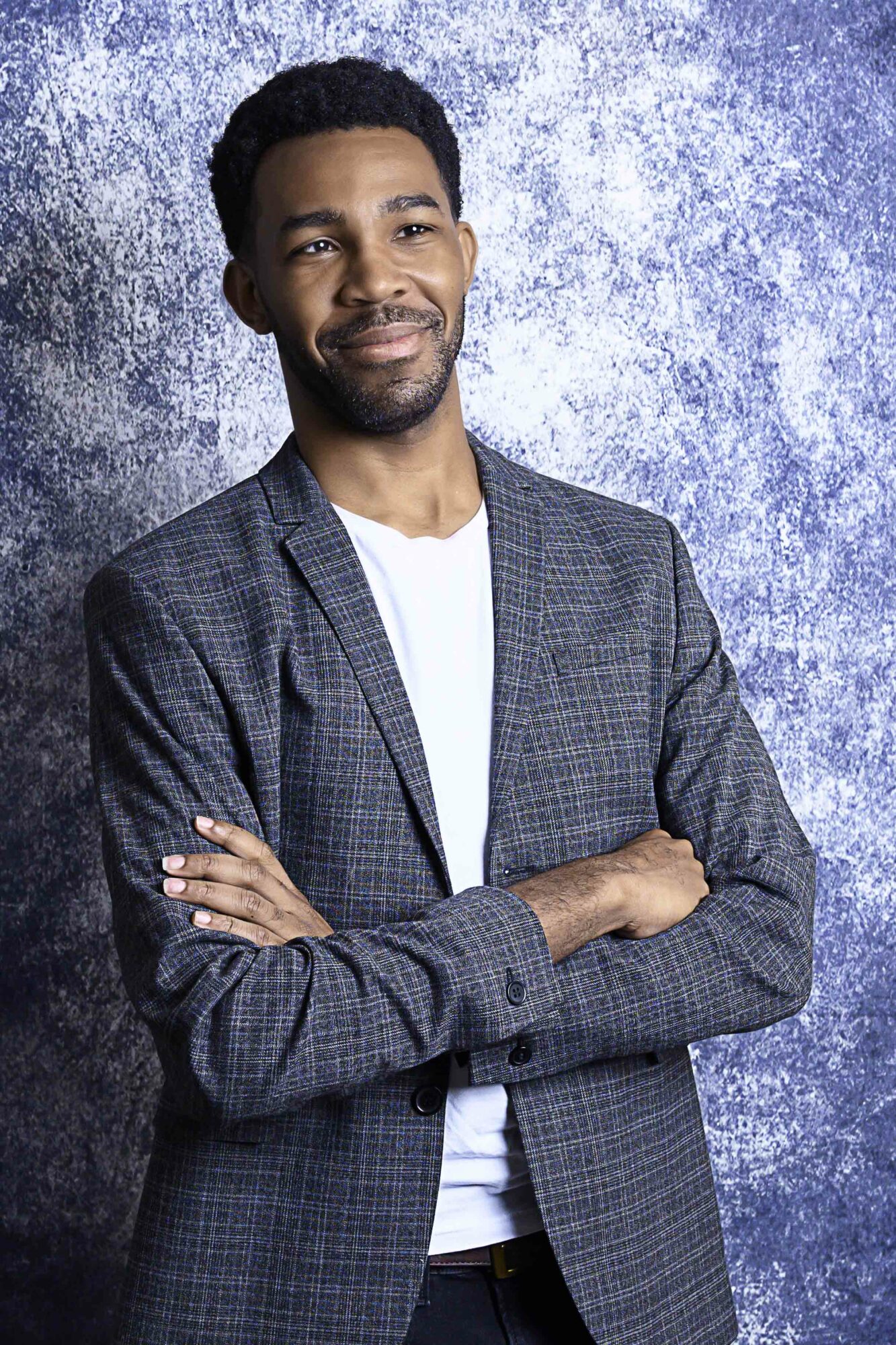
Today we’d like to introduce you to David McKee.
Hi David, thanks for joining us today. We’d love for you to start by introducing yourself.
I am visually impaired, born with a condition called optic nerve hypoplasia — where the eyes may work fine but the optic nerves connecting them to the brain are underdeveloped. That has shaped how I move through daily life and how I create.
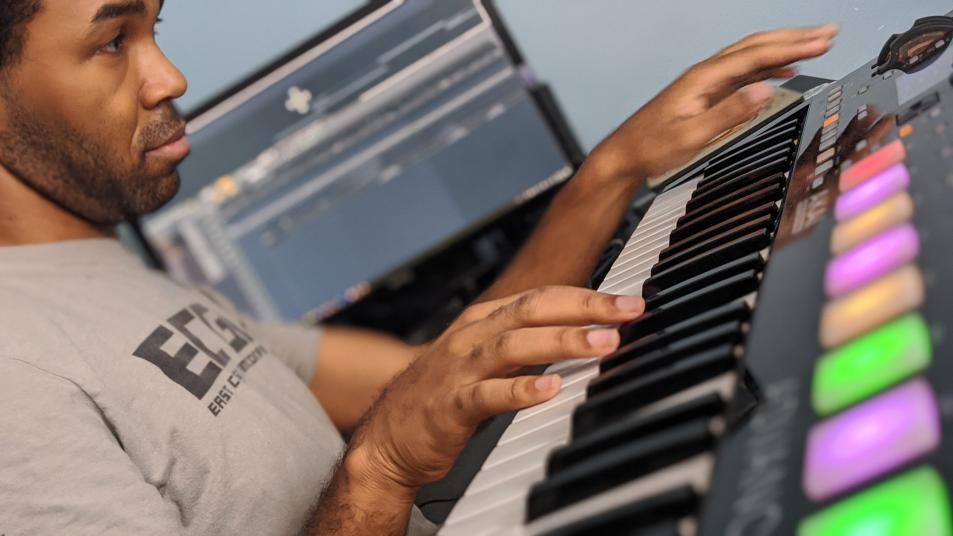
I started playing piano at three, and by ten I was obsessed with video game music — bringing songs from games like Rayman, Bomberman, and Ape Escape to my piano teachers, much to their confusion. By high school I was making my own electronic and drum and bass tracks in FL Studio, imagining what video game music could sound like. Those songs mostly sat on my computer, with a few uploaded to Acid Planet and Newgrounds.
Around 2016-2017, through a group called Cleveland Game Developers, I met a developer named Max Krieger who was building a Y2K-style puzzle game and needed drum and bass music. I shared some of my old high school tracks, wrote some new ones, and those songs ended up on the Nintendo Switch in a game called CROSSNIQ+. I now have music in two Switch titles — CROSSNIQ+ and Vividlope.
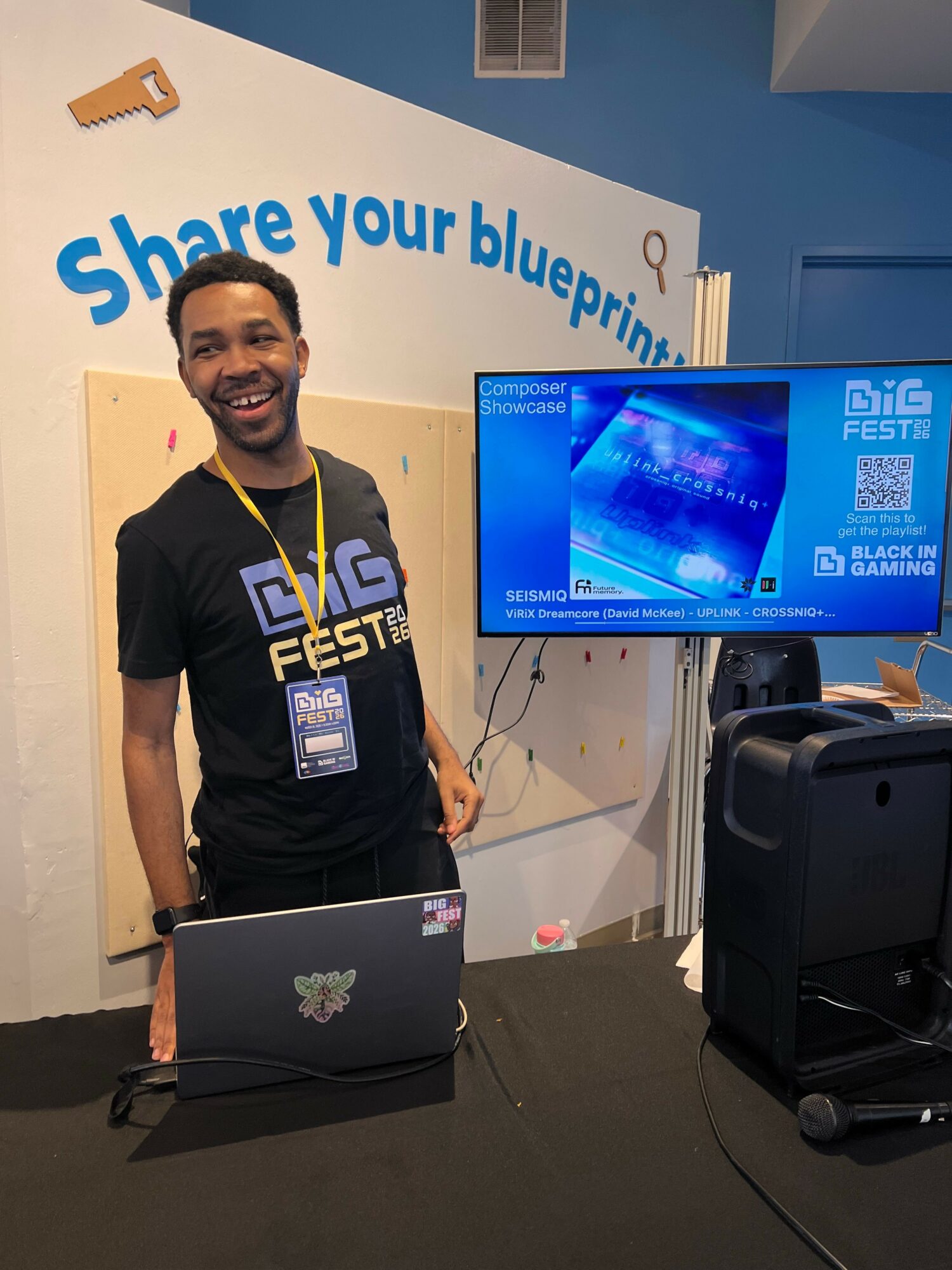
Since then I’ve expanded into sound design, joined communities like Black and Gaming, and become an advocate for accessibility in games, particularly for visually impaired and blind players.
Would you say it’s been a smooth road, and if not what are some of the biggest challenges you’ve faced along the way?
It hasn’t been the smoothest road, but there have been things that made it smoother.
The most consistent challenge has been my vision. Early on, working with certain tools and programs was difficult — particularly on Mac, which had limited accessibility features well into the late 2000s. When I studied recording arts technology at Cuyahoga Community College, there were times I had to rely heavily on instructors just to get my workspace set up properly. Even today, some tools don’t play well with screen magnification, and the industry’s growing reliance on touchscreen hardware creates its own set of obstacles.
Until about 15 years ago, music and sound design for games was much more niche than they are today. There weren’t many clear pathways into the industry, and not a lot of people in my life — family or educators — could point me in the right direction. As a result, probably about 90% of what I know about game audio I taught myself. Interestingly, one of the things that pushed me deeper into dynamic music and sound design for games came from a conversation with a fully blind individual — which feels fitting given where my advocacy work has gone.
Networking has also been its own challenge. In a room full of people, I can’t recognize faces from a distance, so if someone waves at me across a crowded event I’m not going to see it. I’ve learned to just be upfront about it, and most people are genuinely understanding once they know.
As you know, we’re big fans of you and your work. For our readers who might not be as familiar what can you tell them about what you do?
I primarily compose jazz fusion and electronic music — drum and bass, house, and a bit of R&B and New Jack swing — for video games and interactive media. Beyond composition, I create sound effects, handle audio implementation, and consult with smaller studios on what audio systems would work best for their projects.
More recently I’ve been branching into audio drama. I’m currently producing a project called Vaporware, mixed in Dolby Atmos with professional voice actors — which has pushed me into casting and directing as well. It’s a natural extension of what I’ve always done, which is build audio environments that feel like real spaces you can inhabit.
I also release music SoundCloud, Spotify, Apple Music, and YouTube under the same styles under the artist name ViRiX Dreamcore.
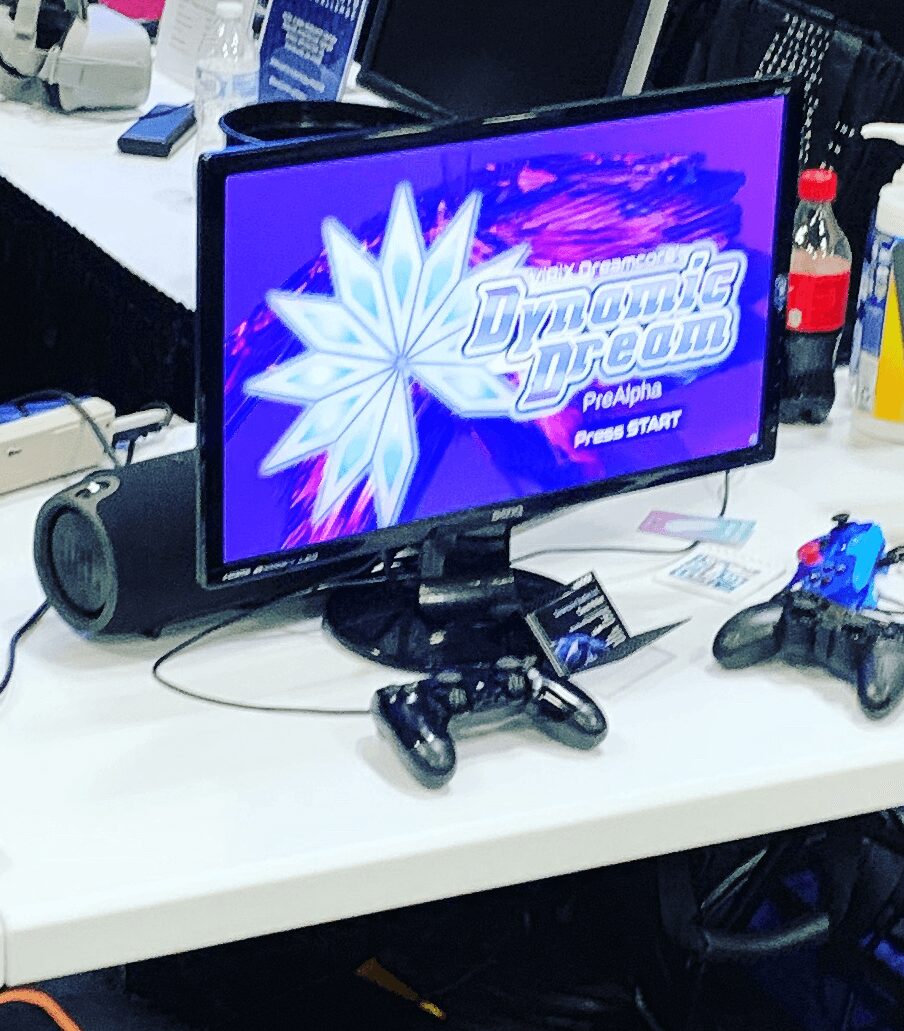
One project I’m particularly proud of is a technical demo called ViRiX Dreamcore’s Dynamic Dream — a proof of concept for fully interactive audio and visuals that can be played entirely by a blind person, and runs on both Windows and Mac with PlayStation and Xbox controller support. It’s not a finished game, but it demonstrates what’s possible when accessibility is built in from the start rather than added as an afterthought.
What sets me apart is how I think about audio spatially. Being visually impaired means I don’t rely on my eyes to assess whether something is working — I’m listening for everything. That naturally extends into accessibility. I’m thinking about audio cues and spatial design from the very beginning of a project, which means accessibility gets built in rather than bolted on. That perspective is genuinely rare in this industry.
Do you have any memories from childhood that you can share with us?
One that stands out happened when I was riding in the car with my dad and heard a radio advertisement for Sam Ash Music Store. I asked him if we could go to “the keyboard store,” and he said yes.
I remember getting my hands on a keyboard there — possibly the Korg Triton, though I may be misremembering — and being completely blown away. You could hold down a single note and it would trigger this pulsing trance beat, with different chord voicings on the lower keys producing different drum sequences and bass lines, while the upper register had a melodic lead sound. It felt like you could play an entire song by yourself. I probably stood there for what felt like hours.
I asked my dad if I could have it. He told me he’d wait on that one — probably a wise call given the price tag. I ended up getting a Yamaha PSR for my birthday instead, which I actually still own and still works. But Sam Ash was like the big leagues to me. Going there just to play keyboards I couldn’t have at home was its own kind of magic.
Fittingly, Korg has since released the Triton as a software synthesizer, and I now own the virtual version. What started as a kid pressing keys in a music store has come full circle.
Pricing:
- $150 per 1 minute of original music
- $30 per hour for consulting on audio implementation of interactive software or multimedia
- $120 per set of 10 original sound effects
- Dialogue and audio cleanup for $30 per half an hour of unedited audio
- $50 for intro and outro jingle
Contact Info:
- Website: https://www.virixcore.net
- Instagram: https://www.instagram.com/dreamcorev
- LinkedIn: https://www.linkedin.com/in/davidqmckee/
- Twitter: https://x.com/ViRiX_Dreamcore
- Youtube: https://www.youtube.com/@ViRiXDreamcore
- Soundcloud: https://soundcloud.com/virix
- Other: https://bsky.app/profile/virixdreamcore.bsky.social
Popular
-

Hidden Gems: Local Businesses & Creatives You Should Know
-

The Change-Makers: stories that inspire
-

Take Flight: Lamar Thomas on Building an Inclusive Brand Rooted in Youth, Community, and Purpose
-

Cultivating Inner Clarity: Angel Inspires on Thought, Healing, and Purpose
-

Local Highlighter Series
-

Highlighting Local Gems