



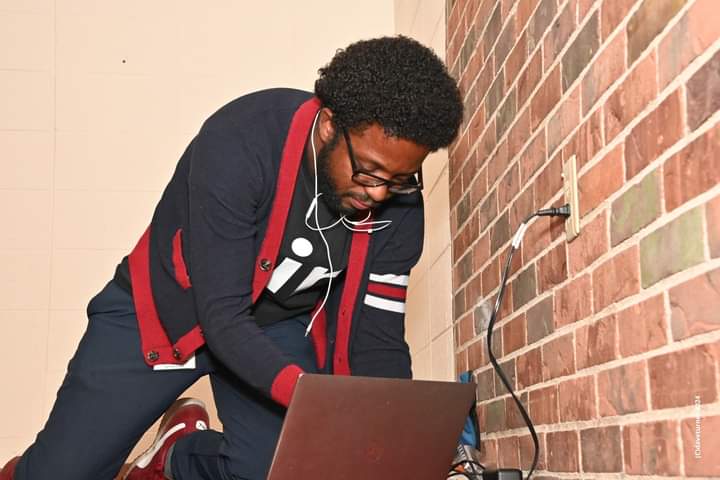
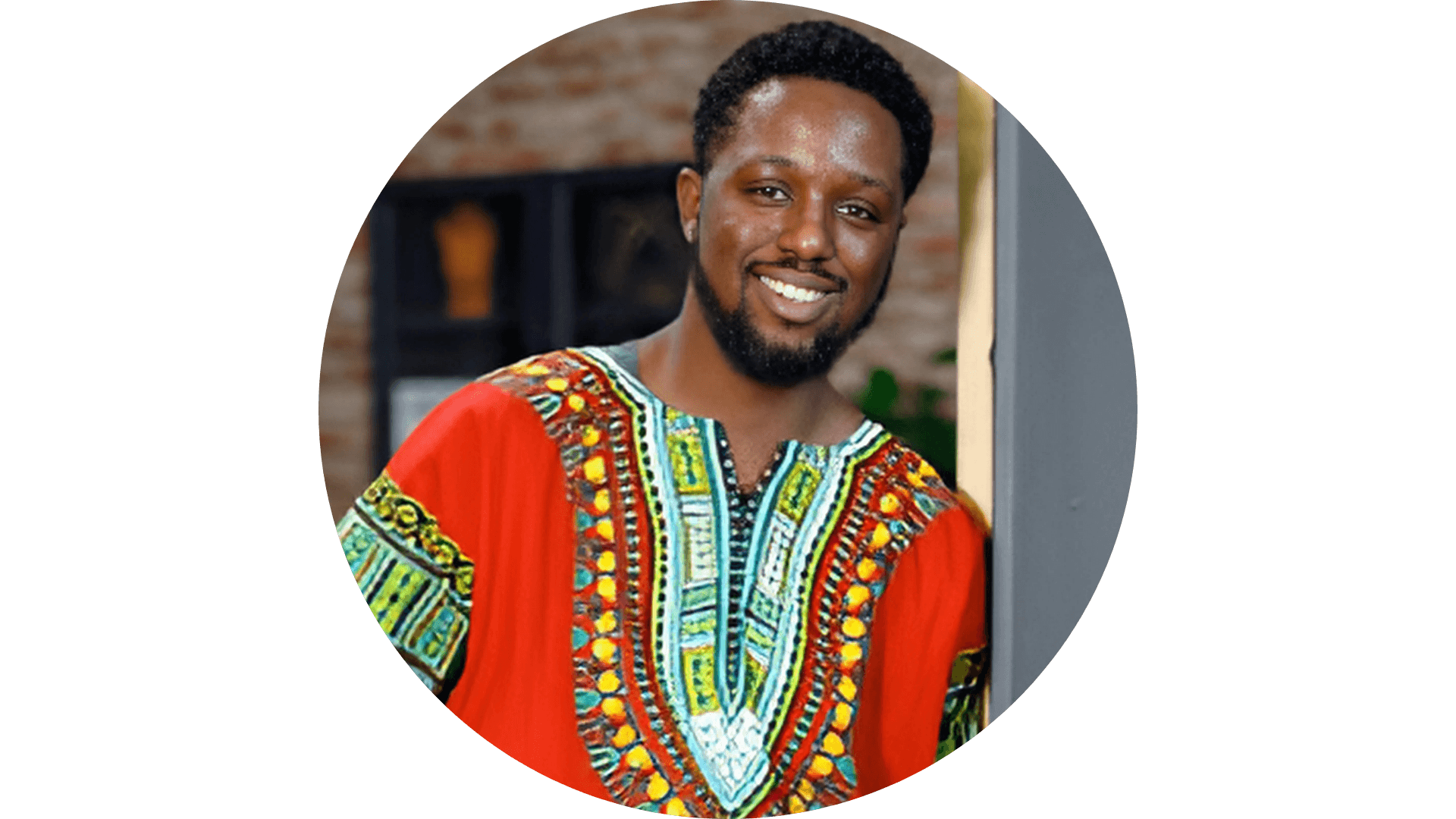
Today we’d like to introduce you to DaVante Goins.
Hi DaVante, it’s an honor to have you on the platform. Thanks for taking the time to share your story with us – to start maybe you can share some of your backstory with our readers?
From Youth Activism to Building a Black-Owned Digital Empire
I’m DaVante’ Goins, also known as Black America’s Architect and Big Cuz, and my journey is really a story about recognizing pain and deciding to do something about it. It starts way back, and I think it’s important to trace it forward because everything I’m building today is rooted in who I was at fifteen.
The Early Foundation: Operation Shelter for Homeless Veterans (2011)
When I was just a 15-year-old sophomore at Mifflin High School in Columbus, I wasn’t worried about prom or football games—I was thinking about homeless veterans. My grandmother had shared stories with me about my grandfather and other Vietnam vets who returned home only to find themselves on the streets. That gap between sacrifice and abandonment bothered me deeply. I thought, “I think it’s criminal for a veteran to be homeless. You shouldn’t be able to put those two words together in the United States.”
So I took action. At fifteen, I founded Operation 4 Homeless Veterans, a nonprofit dedicated to converting Columbus’s then-5,700 abandoned and vacant properties into transitional housing for homeless military vets. I put together a business plan, presented it to Columbus City Council, and built a board that included a local judge, school counselors, Ohio Civil Rights Commission officials, and business leaders. I got the opportunity to share my story with national and local media outlets, had meetings with Columbus Veterans Affairs, and was recognized by Columbus Public Schools Superintendent Gene Harris. That early recognition taught me something crucial: if you have an idea rooted in compassion and backed by strategy, people will listen—especially when you’re willing to do the work.
That’s the first pillar of who I am: activism with accountability.
The Educational Bridge: Wittenberg University & Political Science
I carried that activist energy forward to Wittenberg University in Springfield, Ohio, where I studied Philosophy and Political Science. That combination wasn’t random. I was trying to understand not just how systems worked, but why they were structured the way they were. I wrote for the university student-run newspaper “The Torch” and hosted a radio show on “89.1 The Berg.” My service didn’t stop there. I also served in student government, taking on the role of Residence Hall Association Senator, which represented two-thirds of the student body, and also managed to stay engaged in community conversations. Wittenberg taught me that there’s a direct line between understanding theory and building movements.
The Journalism Era: Reclaiming the Spirit of Black Media Resistance (2015-2024)
After college, I made a critical shift. I realized that storytelling and narrative control are the real power in any movement. And not just any storytelling—Black storytelling told by Black people, for Black people, with no permission from white gatekeepers. That’s when I founded The UnBossed Network, central Ohio’s only Black-owned and operated streaming news and talk network. The name itself came from a mandate: our stories, our platform, our terms. No mediators. No gatekeepers. Just Black truth.
When I started doing this work, I was tapping into a lineage that goes back almost 200 years. I was channeling the spirit of Frederick Douglass, who in 1847—while still navigating a country that enslaved his people—founded The North Star newspaper because he understood something fundamental: those who suffer injustice must speak for themselves. Douglass wrote in his first issue that while he appreciated white abolitionists like William Lloyd Garrison, he knew that “it is common sense that those who suffer injustice are those who must demand redress.” The North Star’s motto was revolutionary: “Right is of no Sex—Truth is of no Color—God is the Father of us all, and we are brethren.” That motto became my north star as well.
I was also walking in the footsteps of Robert S. Abbott, who in 1905 founded The Chicago Defender with just 25 cents in his pocket—from his landlord’s kitchen table. Abbott, the son of formerly enslaved people, understood that mainstream media would never tell our story.
So he created a newspaper that became an unflinching voice for Black America, reaching 500,000 weekly readers at its height. The Defender didn’t apologize for its Blackness—it capitalized “Negro” while using lowercase for “white,” signaling whose perspective mattered. The paper championed the Great Migration, smuggled into the South by Pullman Porters on trains, read aloud in barbershops and churches, passed from hand to hand like contraband truth.
Abbott understood that Black media isn’t a business—it’s a movement. The Defender didn’t just report news; it mobilized communities. It exposed injustice through “searing photos and red ink.” It advocated for military desegregation. It covered the lives of ordinary Black Chicagoans that nobody else cared about—cemetery scandals, community issues, the texture of Black life itself.
And then there was Petey Greene—the radical voice who understood that in the 1960s and ’70s, Black radio wasn’t entertainment, it was resistance. Greene used his show “Rapping With Petey Greene” to do what mainstream media refused: speak the unvarnished truth about racism, poverty, corruption, and Black liberation in the language of the streets, not the language of white respectability. He was what scholars called “the ghetto jester, the original rapper,” and he refused to sanitize Black struggle for white comfort. When the DC riots erupted after King’s assassination in 1968, they called on Petey Greene—not a politician, not a mainstream journalist, but this unapologetic Black radical voice—to be the one to calm the streets because his people trusted him. He had street credibility because he never compromised it.
This was the tradition I was stepping into.
Through The UnBossed Network and later as an independent journalist, I covered the stories that mattered—especially to Columbus’s Black community. I reported on the Casey Goodson Jr. and Andre Hill lynchings by local law enforcement and wrote critical analysis pieces that challenged power structures. When the Columbus NAACP crisis erupted in 2024-2025, I wasn’t silent—I wrote op-eds calling out what I saw as organizational dysfunction that mainstream media wouldn’t touch. I served as Vice President of the Black Liberation Movement of Central Ohio and organized Juneteenth press conferences at City Hall, demanding that the city light the Pan-African flag colors on the building during the holiday.
I used journalism not just to report, but to organize and push for concrete action—exactly like Petey Greene did on air, exactly like Abbott did with the Defender, exactly like Douglass did with The North Star. My journalism had a mission: to give Black Columbus a voice in its own narrative.
I also connected with local creative projects—writing for publications like Columbus Free Press and engaging with stories about the city’s cultural renaissance and political evolution. But more importantly, I was teaching people that Black media matters. That there’s a difference between reporting written for us versus reporting written by us. That The Chicago Defender existed because Robert Abbott knew mainstream media would never tell the Black story. That Frederick Douglass started The North Star because he understood that freedom requires Black people owning their own narratives. That Petey Greene ruled DC airwaves because he spoke truth in a language his people recognized as authentic.
My journalism was a continuation of that tradition. Unafraid. Unapologetic. Grounded in community. Designed to move people to action.
The Community Organizing Work: Reviving the Coming Home Festival
Parallel to journalism, I became obsessed with bringing back the energy of the 1990s “Coming Home Festival” that my generation had grown up experiencing. That festival was more than just an event—it was a moment when the Black community gathered, celebrated, networked, and dreamed together. So shortly after founding UnBossed! Columbus, I launched the Black Columbus Family Reunion in September 2023.
This wasn’t nostalgia—it was strategic community building. The two-day reunion featured music, dance, cultural showcases, educational seminars, and entrepreneurial expos. We partnered with Congressional Representative Joyce Beatty, brought in local Black-owned businesses, and created what I called “a beacon shining light on the rich tapestry of our shared heritage and the endless possibilities that lie ahead.” The event was free and open to everyone, but the architecture was intentional: it was about reconnecting the community, celebrating Black entrepreneurship, and proving that we’re a force. The reunion contributed an economic impact of $250,000 to black-owned businesses, with the average purchase of $50.
Just 72 days earlier, I also organized the city’s first-ever Juneteenth Parade in the Linden community, working with the Makinde Foundation to highlight Black excellence and unity in an area that had seen too much crisis coverage.
The Author Emerges: “Black America! It’s Time For Us To Save America, Again!” (2024)
By 2023-2024, I had been documenting patterns, witnessing attacks on voting rights, studying the architecture of political suppression, and recognizing a dangerous moment. That’s when I sat down to write something I felt America needed to read. I authored “Black America! It’s Time For Us To Save America, Again!”—a book published in 2024 that became a clarion call to Black America about the existential threats to our democracy.
This book wasn’t academic—it was Bronx real, grounded in the everyday struggles I was witnessing in Ohio and across America. In its pages, I traced the history of voting rights from the 15th Amendment through Jim Crow, but more importantly, I analyzed the contemporary assault on voting rights happening in 2023-2024. I wrote about:
Voter ID laws and the “Ballot Bouncer Blues”—how seemingly neutral election regulations disproportionately suppress Black voters in battleground states like Ohio, Georgia, and Michigan.
Gerrymandering and “Rigged District Dancing”—the GOP’s deliberate manipulation of electoral maps to dilute Black voting power, with Ohio’s redistricting battles serving as a case study.
The one-sided Supreme Court—how a conservative 6-3 majority has systematically eroded voting rights protections, from Shelby County v. Holder to the overturning of Roe v. Wade and the gutting of affirmative action.
Felony disenfranchisement as voter suppression—exposing how over 6.1 million Americans—including one in every 13 voting-age Black Americans—are locked out of democracy due to criminal convictions, creating a modern-day version of Jim Crow.
The core thesis of the book is encapsulated in one fundamental question: “Are we truly free in America? Is this the home of the brave or the home of the cowardly?”
I argued that America is at a crossroads. The nation’s melting pot philosophy—the idea that diverse people can maintain their unique identities while contributing to a collective American culture—is under attack by those who fear that diversity equals weakness. I drew on James Baldwin, referenced the Jim Crow Paradox (the persistence of racist ideology even after Jim Crow laws were dismantled), and challenged America to recognize that Black America has repeatedly saved this nation—from the Civil Rights Movement to the 2020 election where the Black vote was decisive.
The book was published in July 2024. I wasn’t just writing—I was organizing through the page, just like Douglass did with The North Star, just like Abbott did with the Defender.
The Awakening: Recognizing the Ownership Gap
By 2024, I had authored a book that indicted the system, organized communities that honored our heritage, and reported stories that challenged power. But I was still working for platforms and publishers I didn’t own. I was good at it, but I was building on rented land. And then something clicked: I realized that we’ve been creating culture, building billion-dollar industries, and authoring the narratives that move the world—but we own none of it.
The Defenders, the North Stars, the Petey Greenes of the world understood something essential: you cannot ask the master’s tools to dismantle the master’s house. Douglass didn’t wait for permission to have a voice; he printed his own paper. Abbott didn’t wait for mainstream acceptance; he built his own empire from 25 cents. Greene didn’t wait for mainstream validation; he spoke truth through a megaphone he controlled.
That’s when I started studying the blueprint. I looked at Steve Jobs’ relentless innovation, Nipsey Hussle’s vertical integration model, and Fawn Weaver’s cultural storytelling approach. I realized that to actually solve the problem—not just report on it, organize around it, or write about it—I had to build the infrastructure for Black ownership.
The Present: Kin Worldwide (February 2024 – Today)
In February 2024, I officially launched Kin Worldwide, the first-ever fully integrated Black-owned digital media and technology ecosystem. This isn’t just a platform. This is the infrastructure I’ve been preparing to build my entire life—and it’s the next chapter in the tradition that Douglass, Abbott, and Greene started.
Kin+ is the unfiltered journalism and storytelling hub—finally, a space where Black truth isn’t edited for comfort, where we operate with the same mission that Abbott used for the Defender: telling our story for ourselves. Kin360 is the “culture concierge for Black-owned businesses.”
But the bigger vision is KinOS, a private operating system for Black creators and entrepreneurs where we control everything: the algorithm, the monetization, the community rules, the wealth-building. The goal is to build a $1 billion Black-owned media and tech empire by 2035.
My book laid out the problem. Now, Kin Worldwide is building the solution.
Why Columbus Matters
Everything I’m building stays rooted in Central Ohio. This city is where I learned to organize, where I built my first nonprofit at fifteen, where I launched my first media company, where I authored a call to action for Black America, and where I organized the Black Columbus Family Reunion to honor our heritage. Columbus isn’t just my home—it’s the test bed for what ownership looks like at a local level before we scale it nationally and globally.
The Core Philosophy: Own It All
If I had to distill my entire journey into one phrase, it’s OWN IT ALL. Own your platform. Own your story. Own your data. Own your wealth. That’s what connects the fifteen-year-old who organized business leaders to address veteran homelessness, the journalist who documented our community’s struggle and triumph through the spirit of the Defender and The North Star, the organizer who revived our cultural celebrations, the author who warned America about threats to its democracy, and the entrepreneur building Kin Worldwide today.
I don’t just belong in media and tech—we belong owning it. And more than that: You don’t just belong, you connect. That’s the Kin Worldwide mission. It’s a statement and a promise: when you come through our platforms, our community, our ecosystem, you’re not just consuming. You’re connecting to other creators, other entrepreneurs, other visionaries who are collectively building something that will outlast us all.
We are continuing the work that Frederick Douglass started when he demanded that Black people speak for themselves. We are continuing the legacy that Robert S. Abbott built when he proved that a Black-owned newspaper could move an entire nation. We are continuing the tradition that Petey Greene exemplified when he showed that authenticity and truth, spoken from the streets in the voice of the people, is more powerful than any sanitized mainstream narrative.
That’s my story. That’s what brought me here. And Kin Worldwide? It’s the next evolution of that sacred lineage—a platform where Black people don’t just have a voice, we own the megaphone.
I’m sure it wasn’t obstacle-free, but would you say the journey has been fairly smooth so far?
On Obstacles & Challenges: The Road Has Never Been Smooth
No, it hasn’t been a smooth road. Not even close. And I think it’s important to be real about that because if I painted some fairy tale where everything worked out perfectly, I’d be lying to you and disrespecting every founder—especially every Black founder—who’s out here fighting the same battles. So let me break down what I’ve actually been facing.
The Systemic Funding Gap: Being Locked Out Before You Even Try
When you’re a Black founder building in tech and media, the most immediate obstacle you hit is capital access. This isn’t personal—it’s systemic. In 2024, Black-founded startups received only 0.4% of all venture capital funding in the United States. Let me say that again: 0.4%. Out of $182.5 billion distributed to startups, Black founders got $730 million. That’s not a funding gap—that’s a funding chasm.
For context, Black men like me face unique barriers that even exceed what Black women face in some ways, but Black women founders? They’re getting less than 1% of venture capital. The systemic racism is built into the very DNA of how venture capital firms operate. Research from Columbia Business School found that only 3.47% of founders even seeking funding from VC firms are Black, suggesting there are systemic barriers just to get in the door. And even when Black founders do get funded, they receive only a third of the amount that non-Black founders receive for similar businesses.
What this means practically? I couldn’t walk into a room with a pitch deck and conventional VC and expect to get serious attention. I had to build differently. I had to bootstrap. I had to think about alternative funding—grants, community investment, corporate sponsorships, crowdfunding models that don’t require me to surrender equity. That’s not innovation by choice; it’s innovation by necessity
The Network Tax: You’re Not Where They Are
The second obstacle is access to high-value networks and mentorship. Business success is fundamentally about relationships—who you know, who believes in you, who opens doors for you. But Black entrepreneurs are systematically excluded from the networks where capital flows and opportunities are born.
When you’re building in Columbus, Ohio, you’re not automatically in the tech corridor conversations happening in Silicon Valley or New York. You don’t have the inherited network of your Ivy League roommates who went into venture capital. You don’t have the family connections to capital that generational wealth affords. You’re building from outside the clubhouse, and the people inside the clubhouse aren’t always trying to let you in.
I’ve had to be intentional about building relationships, but I’ve also watched the disparity: white founders get warm introductions to investors; Black founders have to cold-email and prove they belong. That’s a cost—in time, energy, and opportunity—that’s not calculated in any financial model.
The Advertising & Revenue Problem: Black Media Doesn’t Get Paid
Here’s one that hits directly at Kin Worldwide: Black-owned media doesn’t get advertising dollars. Even though Black buying power is $1.4 trillion (and projected to reach $2 trillion by 2026), advertisers and media buyers spend disproportionately little on Black-owned media. In 2022, Black-owned media outlets received only 1.16% of total ad spend despite their cultural influence.
Think about that. We create culture. We move the culture. We influence trends globally. But we can’t monetize it effectively through traditional advertising because the gatekeepers don’t consider us a viable market or a competitive business—they see us as charity.
For Kin+, this means I’m building a journalism and content platform in a landscape where the revenue model is fundamentally broken for Black media. The sustainability crisis in Black media is real—independent outlets have considerably lower financial resources than mainstream media, which limits our ability to invest in quality reporting, hire talented journalists, and scale operations.
The Access to Capital Ladder: Every Rung is Rigged
Beyond venture capital, even small business lending is stacked against us. Black business owners are twice as likely to be denied loans compared to White entrepreneurs—even with similar credit profiles. When we do get loans, we receive worse terms. We have fewer government and corporate contracts available to us.
I’ve experienced this directly trying to access different forms of capital for different projects. Traditional banking relationships? Harder. Supplier diversity programs? Limited access. Government contracting? Requires navigating systems that weren’t built with Black ownership in mind.
The Legitimacy Tax: Constantly Proving You Belong
Here’s an obstacle that doesn’t show up in funding statistics: you’re constantly having to prove that you belong in spaces where others walk in unchallenged. I’ve been in rooms where people questioned whether my ideas were actually innovative or just “another social media platform” when the exact same idea pitched by a white founder would be called “disruptive.”
For journalism specifically, there’s an additional legitimacy tax. When you’re doing investigative journalism on eviction pipelines, police killings, housing discrimination, and institutional corruption—the stories that matter most to your community—you face pressure from multiple angles:
– People assume you’re “biased” because you’re covering Black experiences with depth and rigor.
– Advertisers are hesitant because controversial investigative work scares away mainstream brands.
– You can’t hide behind “objectivity” because that concept itself is a tool used to silence Black truth-telling.
The Sustainability Crisis: Building While Bleeding
The biggest obstacle right now is sustainability. I’m not going to lie to you—Kin+ is burning through resources. As I’ve written in personal notes to our community, without growing our paid membership base substantially, our current pace of reporting and output is not sustainable.
This is the trap many Black media outlets face: you have a mission that’s urgent and necessary, you’re doing work that mainstream media won’t do, you’re serving a community that desperately needs you, but the business model that would make you sustainable—traditional advertising dollars—is systematically withheld from Black media.
So I’m asking our community to literally invest in their own media, to become paid members, to understand that this isn’t a charity—it’s a fight. But that’s a heavy lift when so many people have been conditioned to expect content for free, especially from Black creators.
The Burnout That Comes With Fighting Systemic Obstacles
Maybe the deepest obstacle is psychological. When you’re fighting not just competitive market forces but systemic racism embedded in funding mechanisms, advertising networks, and institutional legitimacy, the constant battle wears on you. You can’t just outwork the problem. You can’t just have a better idea. You have to navigate both excellence and systemic obstacles simultaneously.
I’ve had projects where I gave everything—intellectual capital, time, emotional energy—only to watch them plateau because the revenue model for Black-owned ventures is fundamentally constrained by institutional bias. That teaches you something: you need to build differently.
How I’m Responding to These Obstacles
Redefining Capital: I’m not waiting for permission from venture capitalists. I’m building through community investment, corporate partnerships, and alternative funding models that preserve Black ownership. Kin Worldwide is structured to maintain majority Black ownership and control—no compromises on that.
Building Alternative Networks: I’m deliberately connecting with other Black founders, Black media operators, and Black entrepreneurs who understand the landscape. Organizations like BOMESI are doing critical work to build ecosystems that support Black media sustainability. I’m showing up for that community.
Telling Stories Nobody Else Will Tell: My journalism work—especially investigations like “Eviction is the Point”—demonstrates that Black media doesn’t compete on the same playing field, so we shouldn’t try to. We win by going deeper, by staying accountable to our community, by investigating the stories that mainstream media considers “not worth the risk.” That creates differentiation.
Being Transparent About the Struggle: I’m telling my community directly: this is hard. We need you. Your membership, your support, your belief in Black-owned media—that’s what makes this sustainable. I’m not pretending there’s a magical answer. I’m asking people to understand that supporting Black media is an act of resistance and community power.
The Real Talk
The obstacles are real. The funding gap is real. The racism embedded in venture capital is real. The advertising discrimination against Black media is real. But here’s what’s also real: Black Americans built this country, shaped its culture, and continuously save it from itself. We’ve navigated worse obstacles than this.
The difference now is that I’m not trying to navigate these obstacles within a broken system. I’m building an alternative system—Kin Worldwide—that’s designed to work for us, not against us. That’s the answer. Not accepting the obstacles, but building around them.
That’s the real vision. That’s what keeps me moving.
As you know, we’re big fans of you and your work. For our readers who might not be as familiar what can you tell them about what you do?
I wear multiple hats intentionally. I’m not a specialist in one narrow lane—I’m a systems thinker and an architect building interconnected solutions to a singular problem: How do Black creators, entrepreneurs, and communities build generational wealth while maintaining ownership and control?
What I Do: The Integrated Ecosystem Approach
I’m the Founder and CEO of Kin Worldwide, which is fundamentally different from traditional social media platforms, advertising networks, or media companies. Kin isn’t just one thing—it’s an integrated ecosystem where every component feeds into and strengthens every other component.
Here’s the architecture:
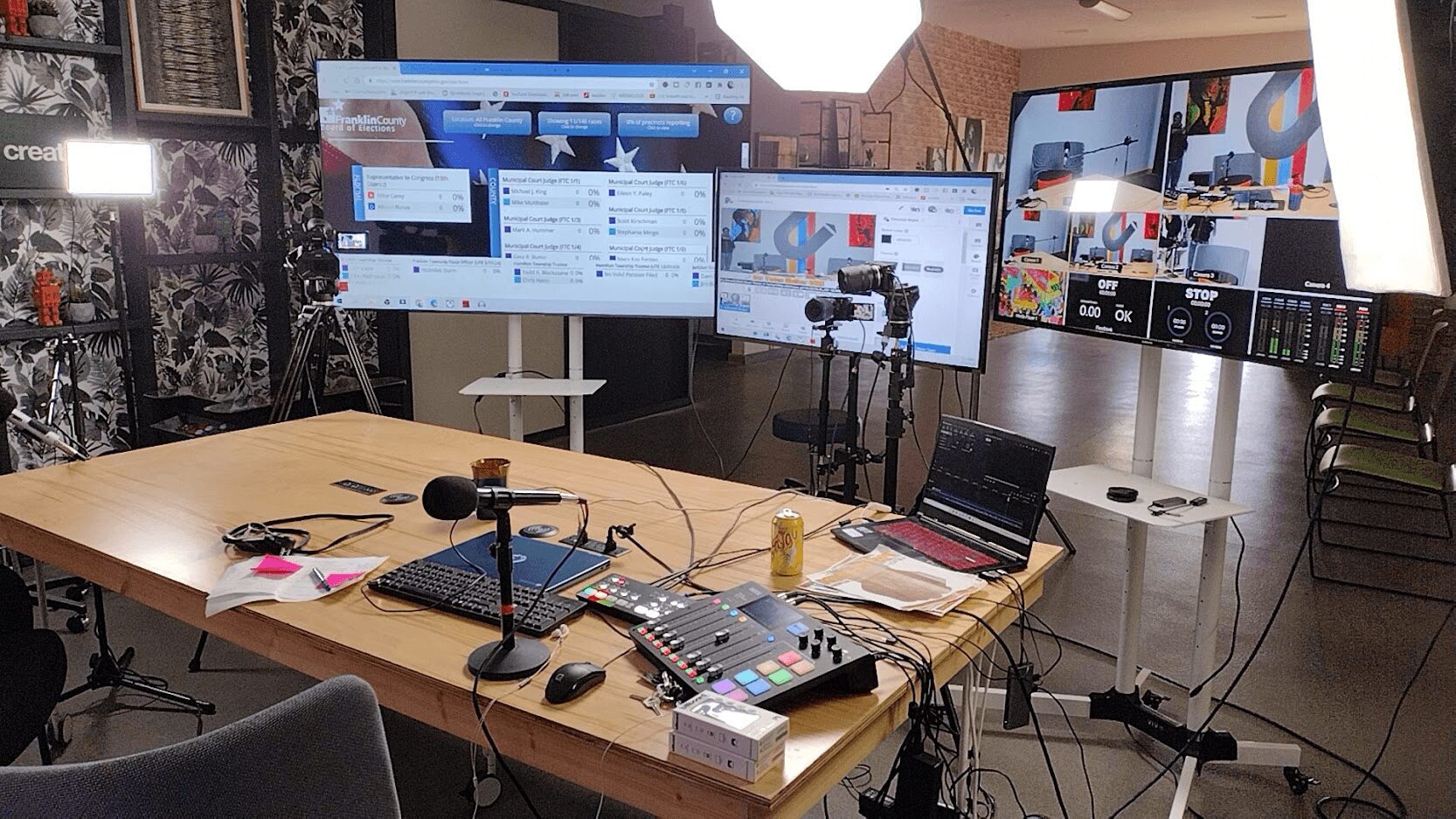
Kin+ is my journalism and media hub—this is where I do what I was trained to do through my work with UnBossed Network and my book. We publish hard-hitting journalism that mainstream outlets ignore, original creator-driven content, unfiltered discussions, and cultural analysis. TalkBack is our semi-daily news talk show covering everything from Black News to the Black creator economy and business landscape. This is where truth-telling happens.
Kin360 is the advertising and marketing network that connects Black businesses and nonprofits with engaged Black audiences through vetted Black creators. This is the monetization engine. When a small business or nonprofit needs video content, strategy, or marketing amplification, they don’t go through a middleman—they come to us and get paired with black and brown creators with followings of less than 20,000 on social media who understand their community and their mission. We handle the entire workflow: briefing, content creation, posting strategy, and measurement.
KinOS is the private social community where creators, founders, storytellers, and organizers connect without the noise of public social media. It’s intentionally small, intentionally curated, and intentionally focused on real relationships over metrics.
What I Specialize In: The Intersection of Culture, Economics, and Systems Design
If I had to distill my specialization, it’s this: I understand how to architect systems that align cultural power with economic power.
Most entrepreneurs pick a lane: media OR tech OR advertising. I’ve never been satisfied with that fragmentation because real power requires integration. A journalist without a business model isn’t sustainable. An advertising network without real relationships to the community doesn’t generate trust. A creator platform without journalism doesn’t provide context.
My specialty is seeing how all these pieces interconnect and building them simultaneously.
I specialize in:
– Creator Economics: I understand how to structure systems so creators actually build wealth, not just visibility. The difference is foundational. Most platforms promise reach; I’m building infrastructure for income, ownership, and long-term asset-building.
– Community Architecture: I’ve built three nonprofits and multiple community initiatives. I understand how to create spaces where people feel they belong and are motivated to contribute—not through manipulation, but through genuine alignment of values and outcomes.
– Black Media Strategy & Journalism: Through my years with UnBossed Network and my independent reporting, I understand how to do journalism that serves Black communities as the primary audience while also holding power accountable. This isn’t objectivity theater—it’s accountability reporting rooted in community trust.
– Narrative Control & Messaging: I wrote a 200-page book analyzing political suppression, studied how messaging shapes elections, and worked as a media strategist. I understand that whoever controls the narrative controls the outcome. Kin is designed to make sure that’s us.
– Business Development for Black Ownership: I specialize in structuring deals, partnerships, and revenue models that preserve Black majority ownership and control while still generating capital.
What Sets Me Apart: Bronx Real + Strategic Depth
What distinguishes me from other founders and operators:
1. I Don’t Separate Culture from Commerce. Most Black entrepreneurs treat culture as the thing they sell and commerce as the goal. I treat them as inseparable. Kin’s entire architecture is built on the recognition that culture is the product, the business model, and the outcome. We’re not selling “Black culture” to white audiences; we’re building infrastructure where Black culture drives Black wealth.
2. I’m Building from History, Not from Scratch. I ground everything in the lineage of Robert Abbott’s Chicago Defender, Frederick Douglass’ North Star, and Petey Greene’s radical truth-telling. I’m not trying to invent something new—I’m building the digital evolution of something with 200 years of proven power. That historical grounding is my competitive advantage because it means I understand what works and why.
3. I Actually Understand the Problem Because I’ve Lived It. I’m not a consultant analyzing from the outside. I’ve been a homeless veteran’s grandson, a teen activist, a nonprofit founder, an independent journalist, an author, a community organizer, and an entrepreneur. I’ve experienced the systems I’m building to change. That gives me an empathy and clarity that comes only from lived experience.
4. I’m Willing to Be the Bridge Between Sectors. I move fluently between nonprofit work, journalism, tech, business development, and community organizing. Most operators stay in one lane. My ability to connect insights across all these domains is what allows me to see system-level solutions that siloed experts miss.
5. I Lead with Mission Over Money. Kin Worldwide was structured to maintain majority Black ownership specifically because I refuse to trade away the vision for capital. That’s risky in the VC world, but it’s what makes the work credible.
6. I’m Obsessed With Sustainability, Not Just Growth. I write openly about the revenue challenges facing Black media—not to make excuses, but to build real solutions. I’m not chasing vanity metrics. I’m building the Founders Circle model where members genuinely invest in the ecosystem. I’m asking people to understand that supporting Black-owned media is an act of resistance and power.
What I’m Most Proud Of
Honestly? I’m most proud of the fact that Kin Worldwide exists at all. Building a fully integrated Black-owned ecosystem in a landscape that’s systematically rigged against Black ownership is already a victory. But there are specific accomplishments:
I’m Proud of the Journalism. Kin+ is producing work that matters—investigations into eviction pipelines, coverage of voting rights, stories about community power that mainstream media won’t touch because they’re too controversial or not profitable. That work is changing how people understand their reality.
I’m Proud of the Creator Relationships. The fact that we’ve managed to attract serious creators and build myKin as a genuine community—not a fake engagement farm—shows that there’s real hunger for alternatives to corporate platforms.
I’m Proud of Kin360’s Service to Black Nonprofits and Businesses. We’re solving a real problem: Black-led organizations can’t get quality content marketing at reasonable prices because the entire industry is built for corporate budgets. Kin360 is changing that.
I’m Most Proud That I Didn’t Sell Out. In 2024 and 2025, I had opportunities to take funding deals that would have required surrendering control or diluting the vision. I said no. Because the whole point is ownership. If I trade that away, everything else becomes meaningless.
Why This Moment Matters
What makes this work distinctive right now is timing and urgency. America’s democracy is under threat through voter suppression. Black media is dying from lack of investment. Black creators are being exploited by platforms they don’t own. Black businesses are starved for marketing dollars that go to mainstream agencies.
Kin Worldwide doesn’t solve all of that—but it builds infrastructure that addresses it from multiple angles simultaneously. That integrated approach, rooted in both historical Black media tradition and cutting-edge tech thinking, is what sets us apart.
I’m not trying to be the next Twitter or the next TikTok. I’m not trying to compete with corporate media on their terms. I’m building what comes next—a fully owned, fully controlled, fully accountable ecosystem where Black people own the culture, own the platforms, and own the wealth.
That’s what I do. That’s what sets me apart.
Pricing:
- KinPro – $129 (is the premium membership inside KinOS for Black creators and founders who are done guessing. You get systems, strategy, and a real squad — so your content, money, and brand stop running on chaos and start running on purpose.)
Contact Info:
- Website: https://www.welcomehomekin.com
- Instagram: @welcomehomekin
- Facebook: @welcomehomekin
- LinkedIn: https://www.linkedin.com/in/welcomehomekinfounder/
- Youtube: @welcomehomekin
Popular
-

The Change-Makers: stories that inspire
-

Take Flight: Lamar Thomas on Building an Inclusive Brand Rooted in Youth, Community, and Purpose
-

Cultivating Inner Clarity: Angel Inspires on Thought, Healing, and Purpose
-

Local Highlighter Series
-

Highlighting Local Gems
-

Hidden Gems: Local Businesses & Creatives You Should Know