



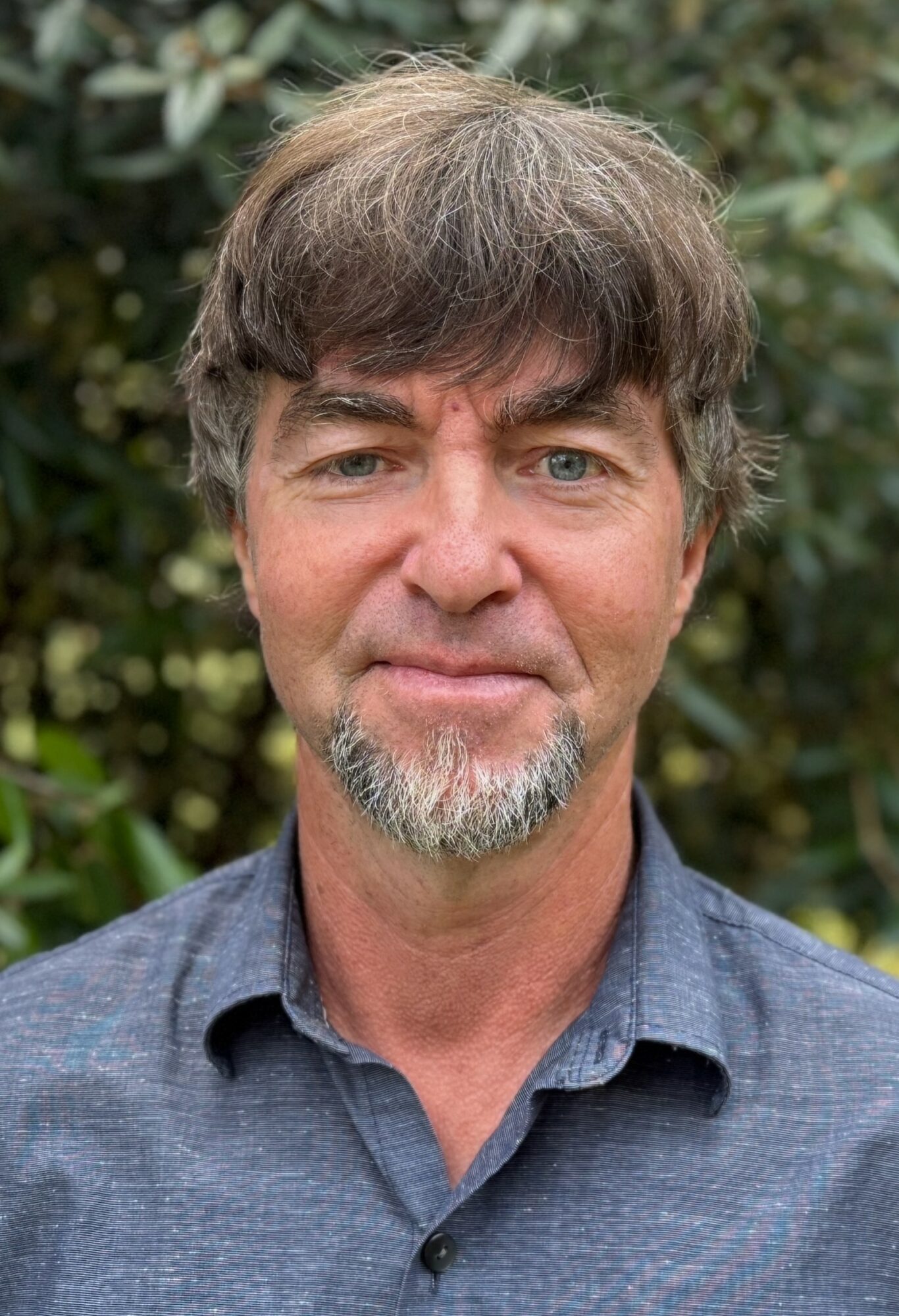
Today we’d like to introduce you to Rob Glover.
Hi Rob, thanks for sharing your story with us. To start, maybe you can tell our readers some of your backstory.
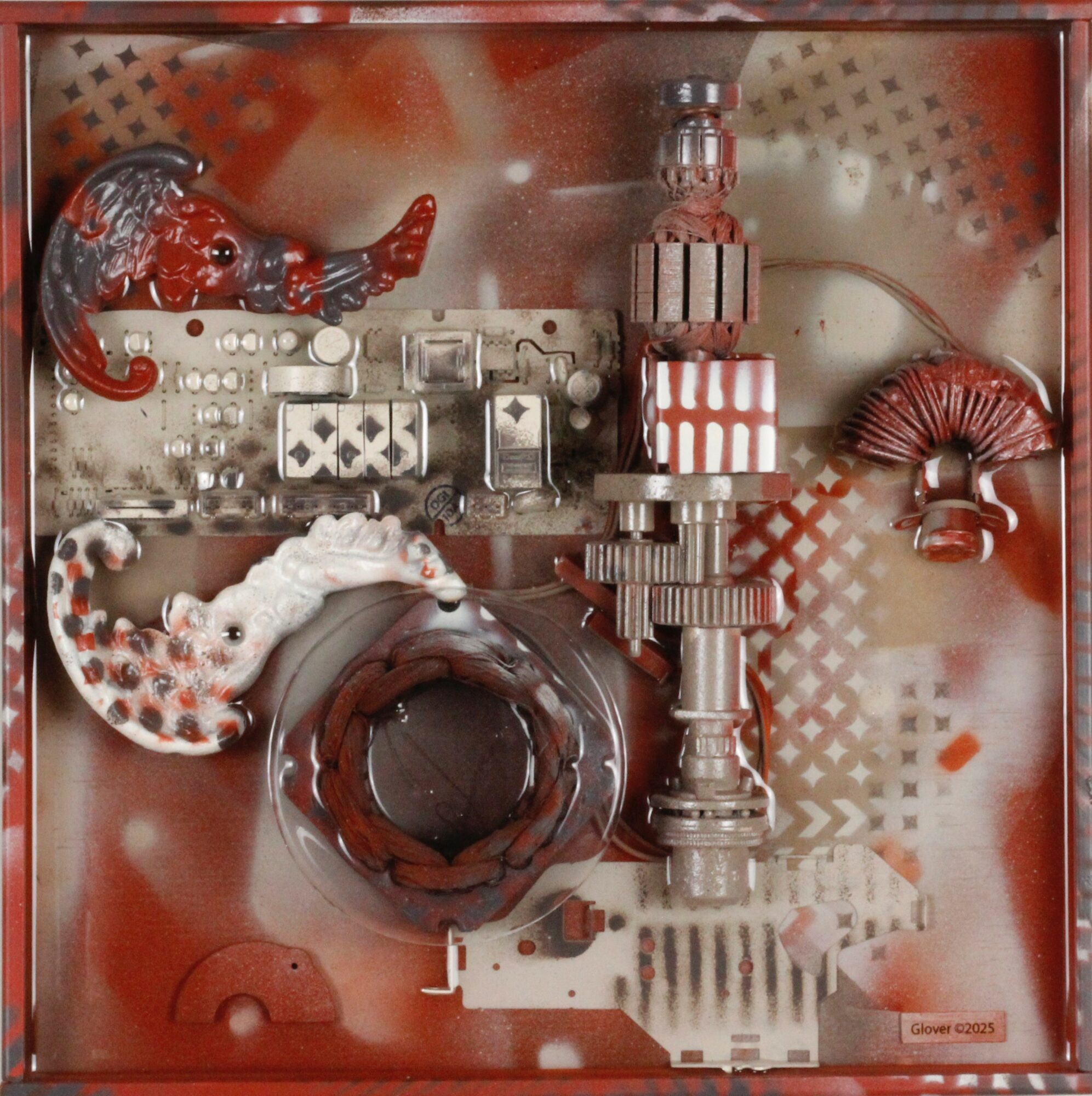
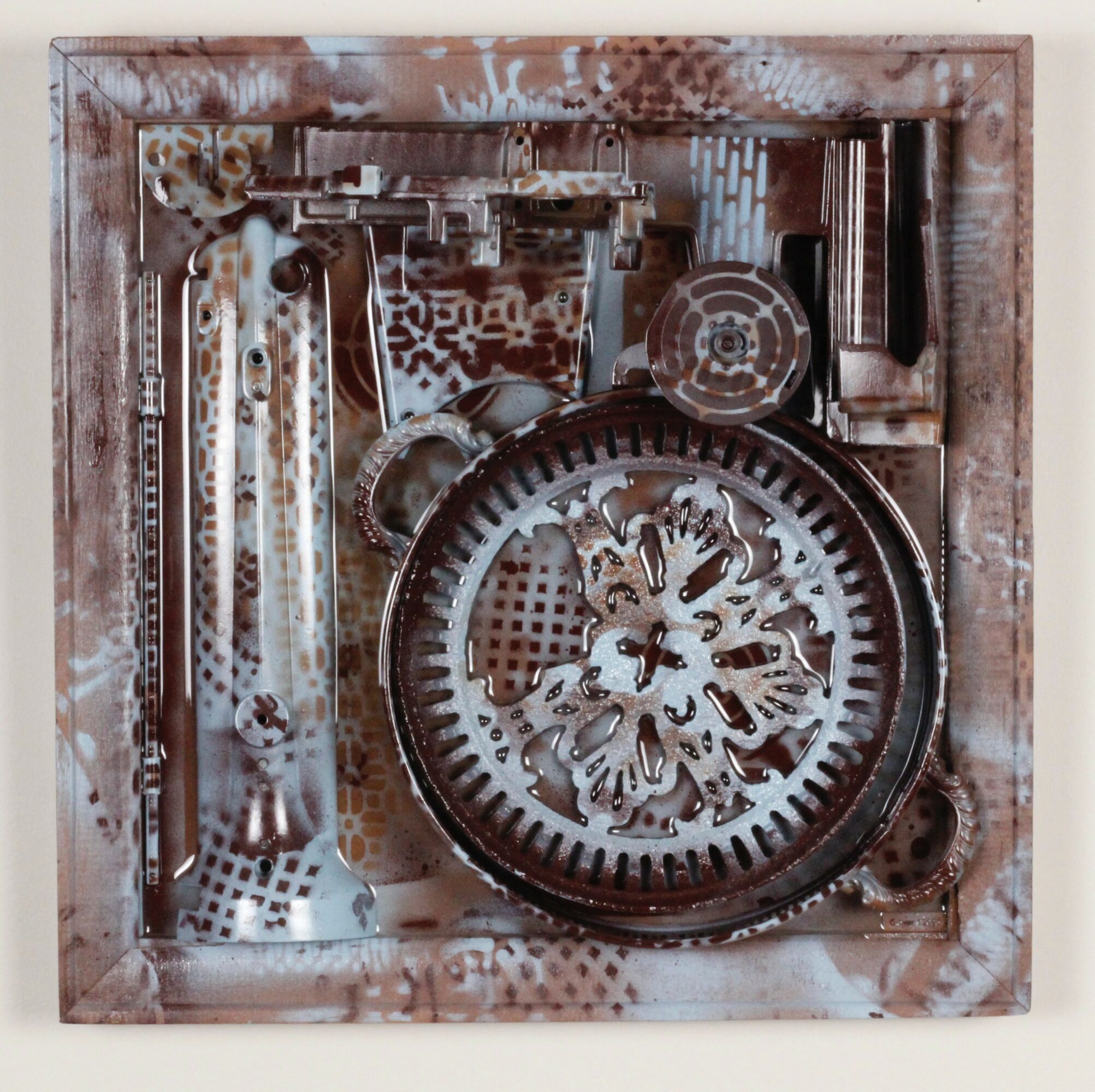
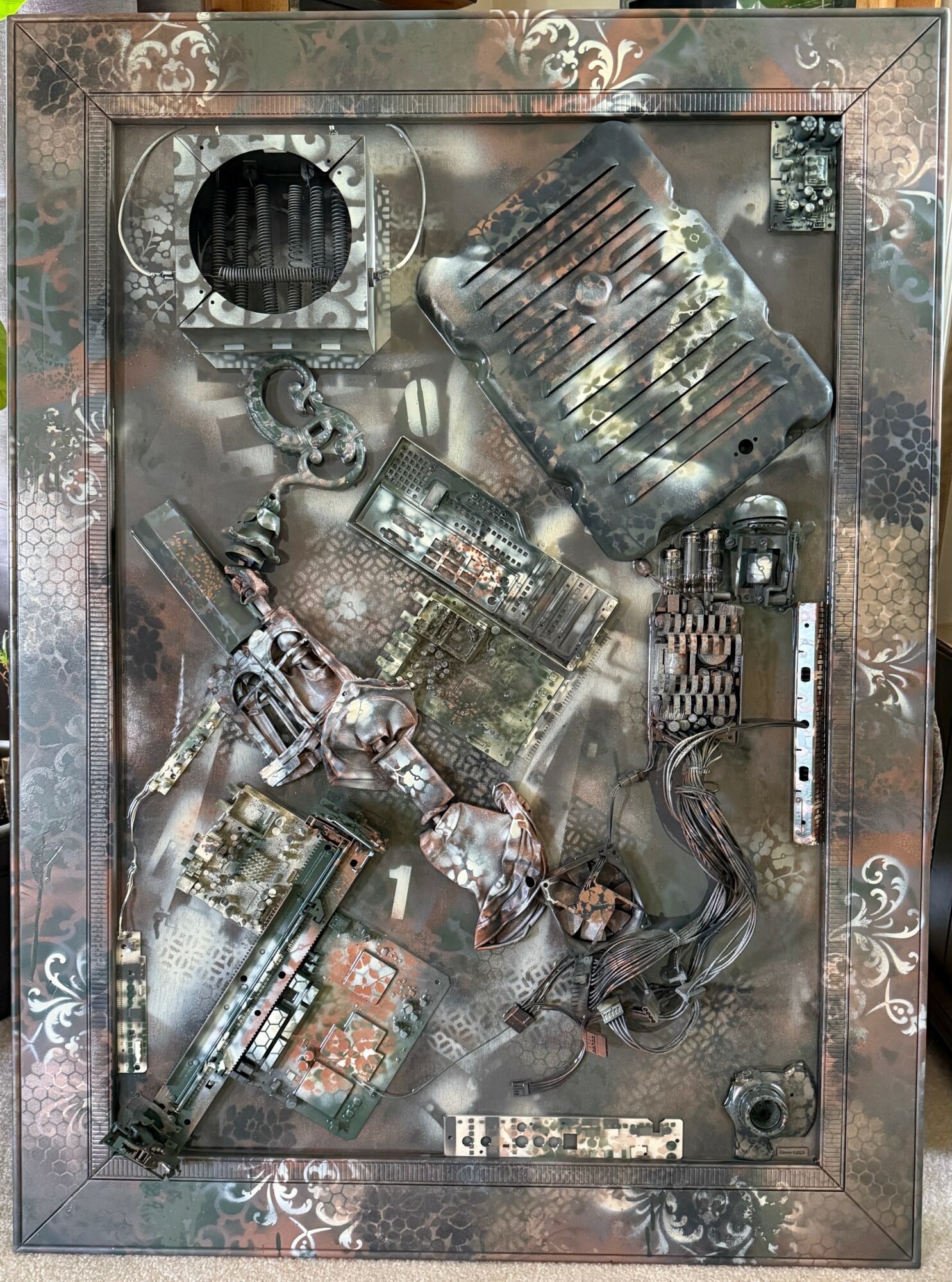
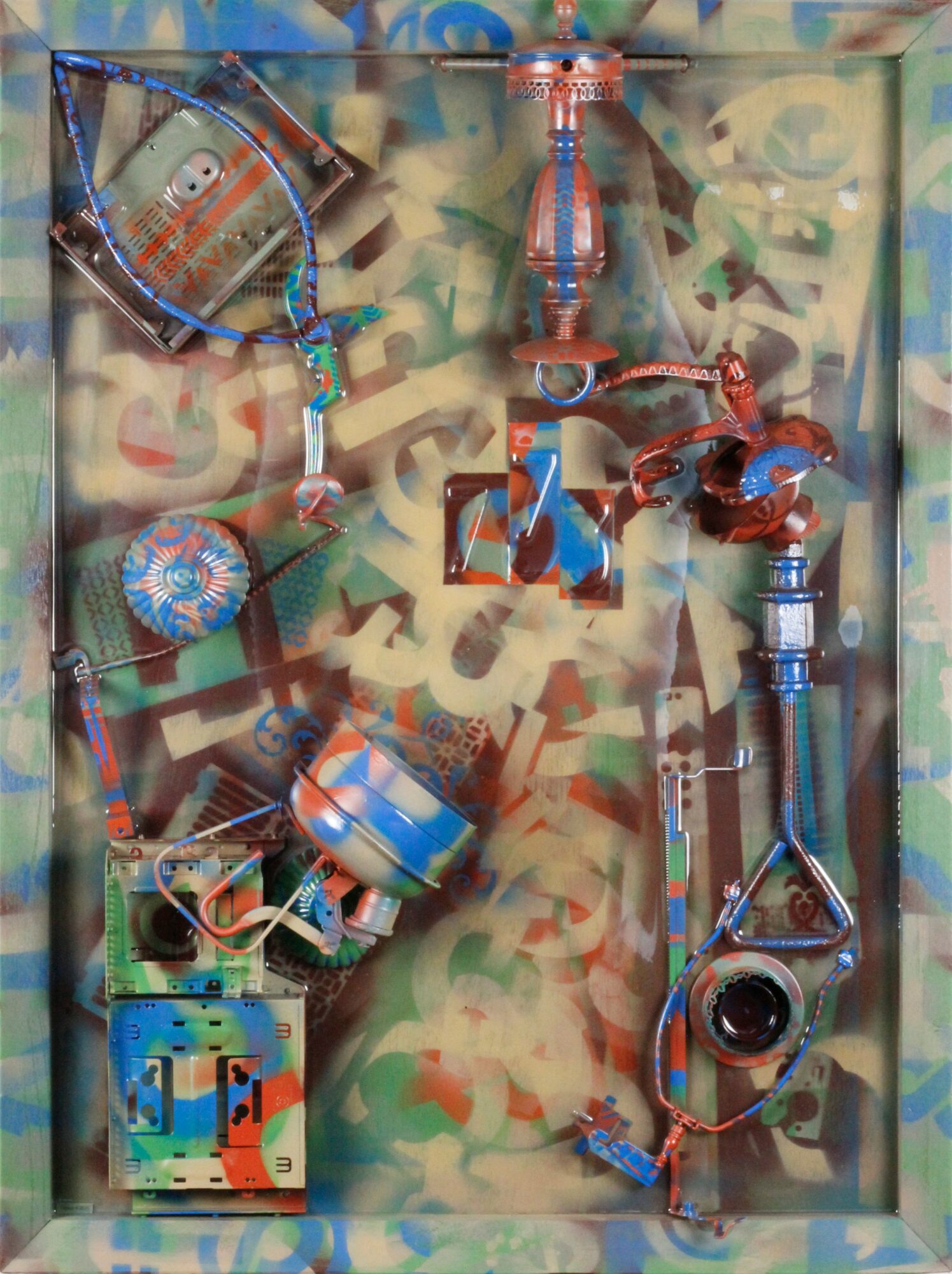
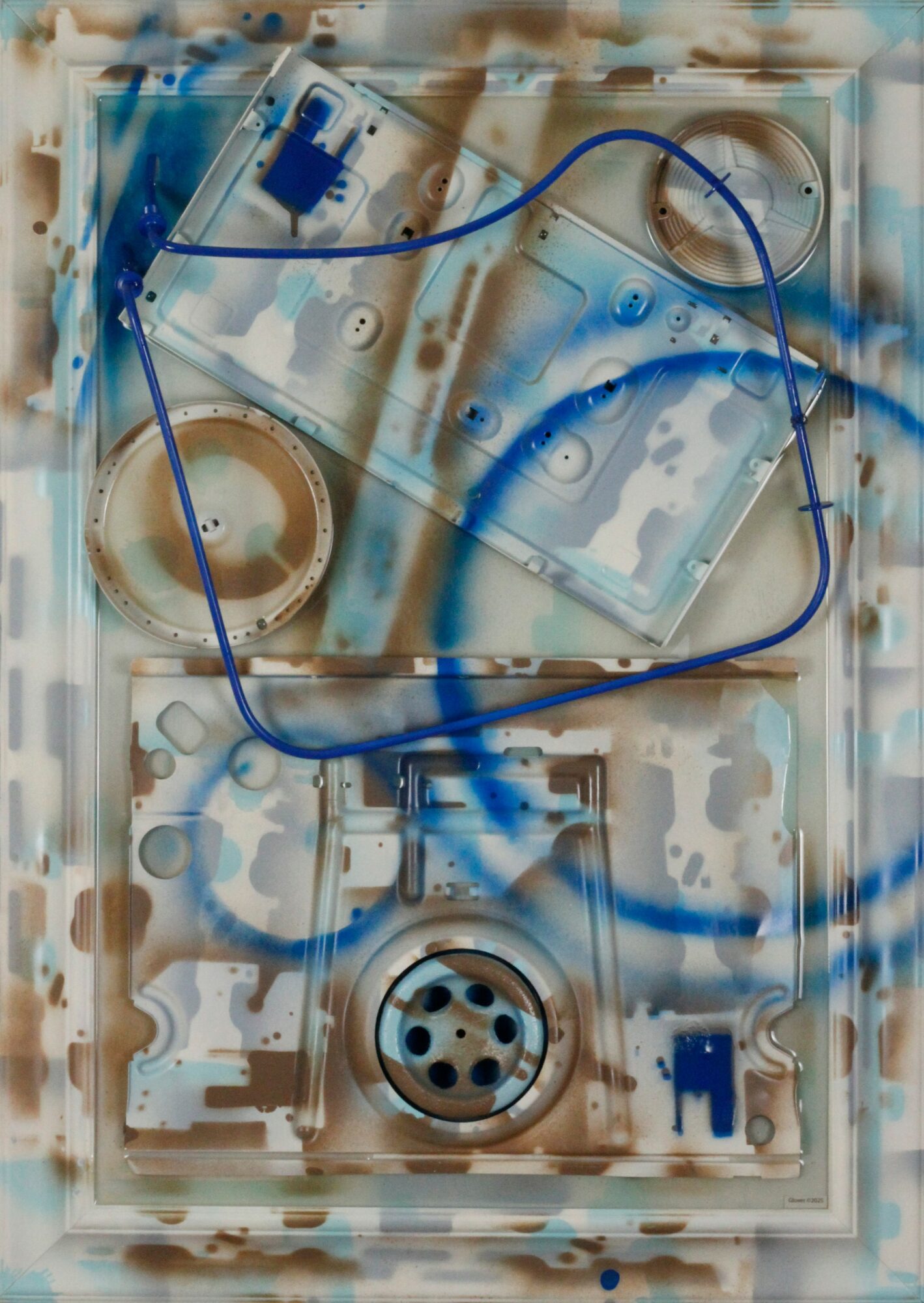
Art has always been a part of my life, but the journey has not been a straight line to be sure. As a child, I was fascinated by what was inside machines. Taking them apart for the sake of discovering what was inside was more interesting to me than figuring out how they worked. As I grew older, I found enjoyment in reusing the parts to create new, vibrant creations. I view obsolete machines as raw material with a new story to tell.
We all face challenges, but looking back would you describe it as a relatively smooth road?
In 1988, I graduated from The Ohio State University with a degree in Fine Arts, specializing in sculpture and glass. After college, I set out to continue making assemblage sculptures while also working various odd jobs. I created a large body of work, but failed in the area of making solid connections that would allow me to pursue an art career.
Years and many jobs later, I felt led to get into graphic design. In short, I bought everything the job descriptions listed as necessary and spent two years learning how to use these new tools to design print materials. Eventually, I got my foot in the door with a one-year contract job and then worked as an in-house graphic designer, designing books. This lasted for about eight years, but eventually the creative spirit in me was feeling stifled, and I longed for new challenges.
Next, I left the design job to start a photography career. This eventually led to creating large-scale corporate digital photographic collages. These served as a way for a company to tell a dynamic visual story that included details of not only their company’s history and products, but also the community in which they were located.
Then, in 2008, the housing market crashed, resulting in an overnight halt to my photographic commissions.
So, that led me back to regular jobs that, over time, led me further and further away from the creative work my heart longed for.
In the spring of 2025, I felt God calling me back into the studio. This both excited me and confused me because it seemed so impractical. But it turned out to be a fruitful and productive beginning to new work. God gave me new ideas and techniques that worked well with the discarded metal parts I found so interesting to work with. And, this time, I was determined to spend as much time researching and connecting with people who can help me in this artistic journey.
One of the first networking avenues I explored was the Over the Rhine Chamber of Commerce events. This led to a solo exhibition in Bricker and Graydon’s event space at 1421 Main Street, Cincinnati, OH 45202. The exhibit is scheduled to be on display from October 2, 2025, until sometime early 2026. I also joined the Cincinnati Art Club. This allows me to connect with other artists, participate in critiques, and provides opportunities to serve the community through art.
Thanks – so what else should our readers know about your work and what you’re currently focused on?
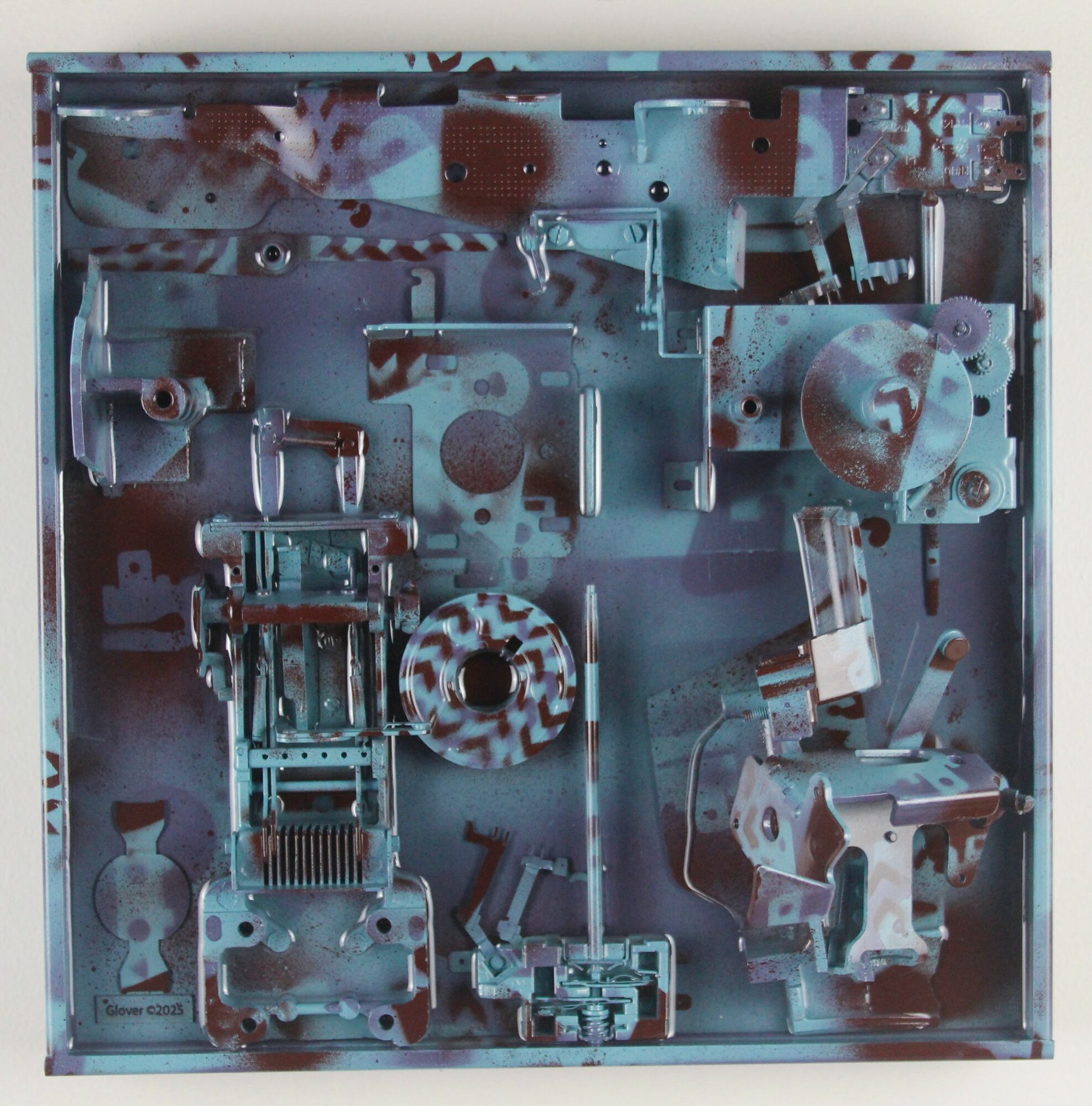
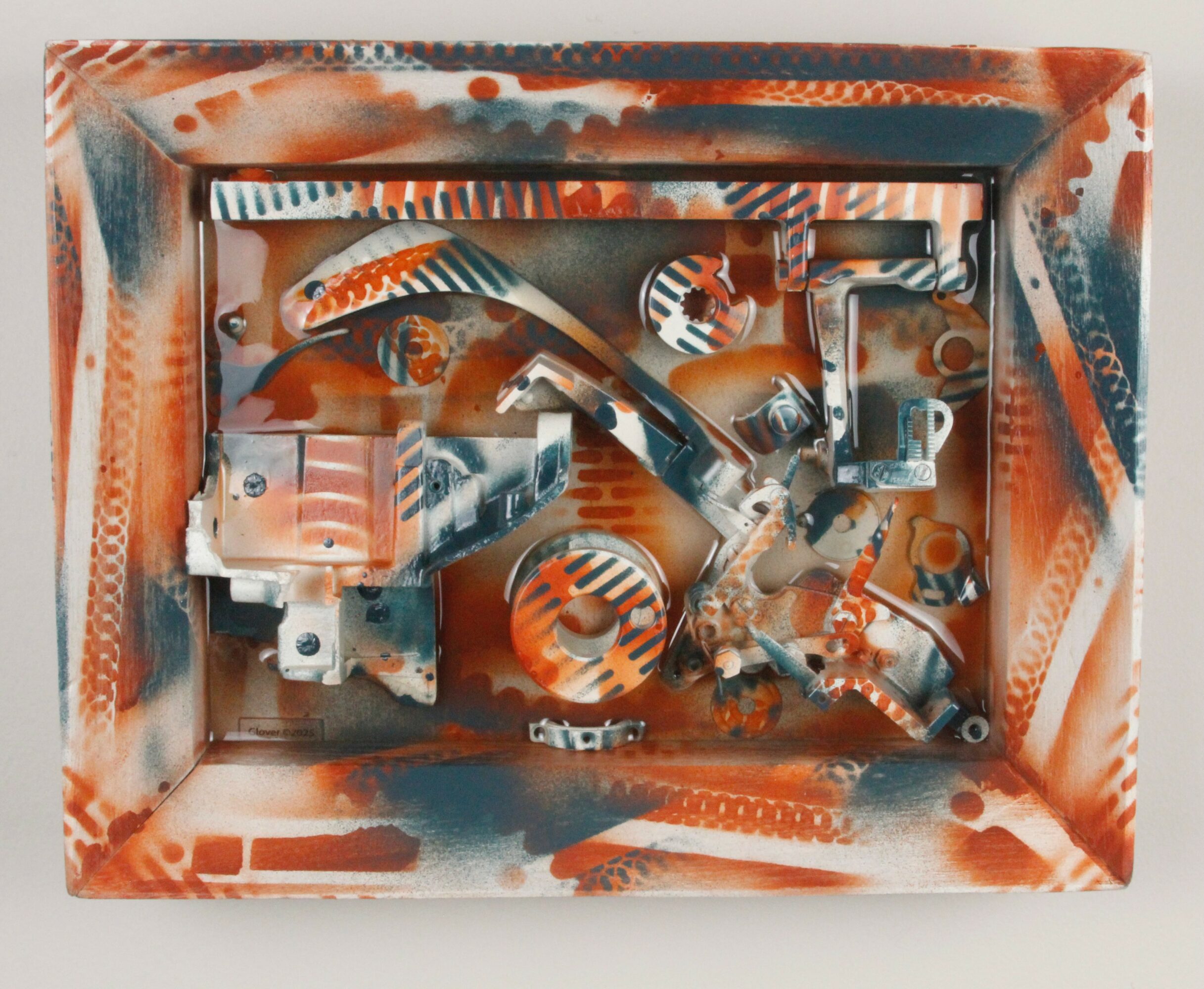
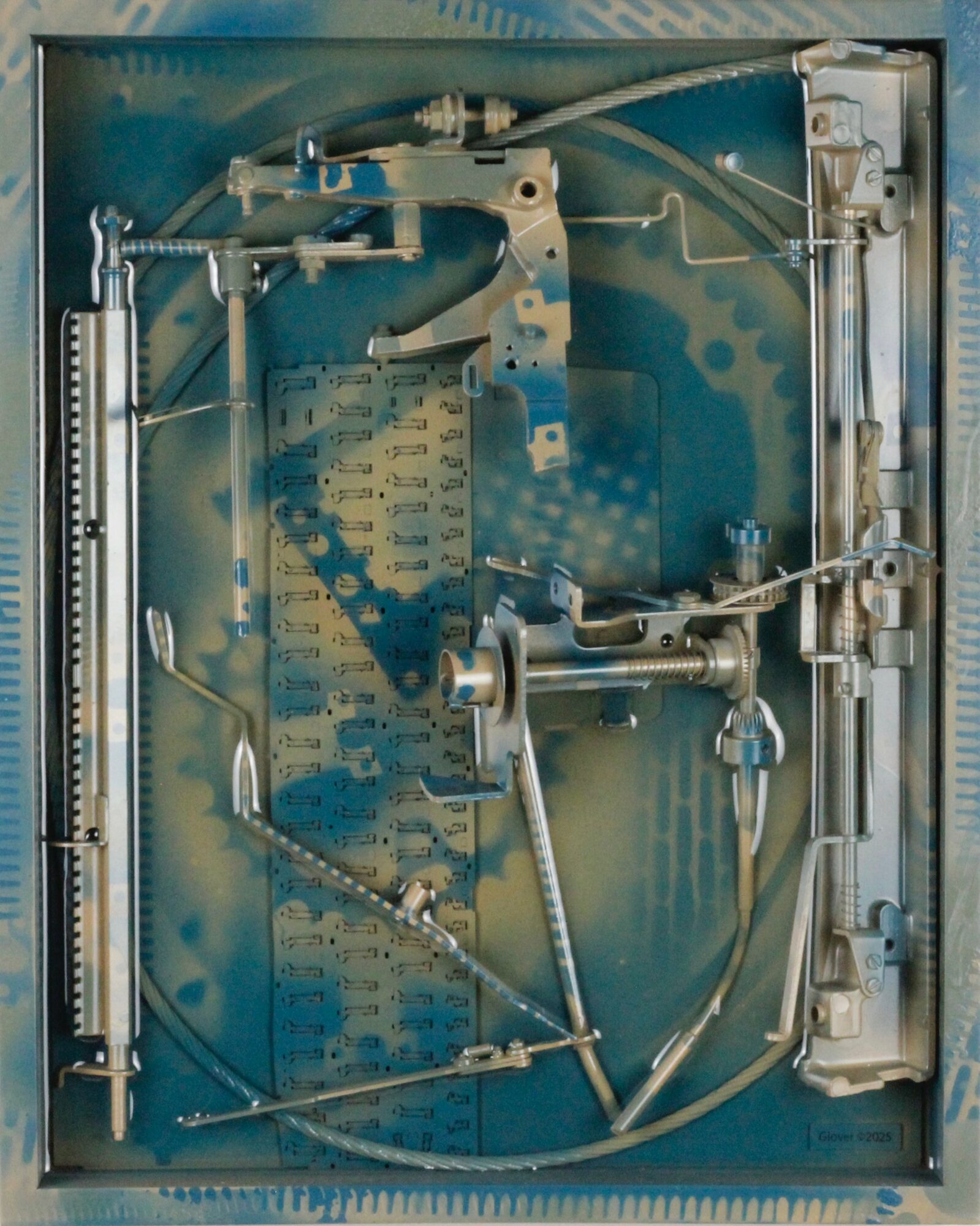
This work is a combination of sculpture and painting. Many steps are involved, beginning with the acquisition of the needed materials. I have been collecting for decades, but since production has ramped up, I find regular visits to thrift shops are necessary. Thrift store shopping is new for me, and it’s enjoyable to hunt for items that will provide parts that will read well in a piece. It feels like shopping for meal ingredients. Everything I buy gets disassembled and cleaned. Then comes the selection of individual objects, layout, and color choices. I use spray paint and a variety of found, created, and bought stencils. Working back and forth, eventually the frame, backing board, and all of the parts are painted and positioned. The final step is to take the piece, which has been created, lying flat on a table, and pour a flood coat of clear resin deep enough to hold everything in place. Once cured, the piece can now be hung on the wall.
As with any art form, composition, relationships between the parts, visual dynamics, emotions related to color, and other such topics are considered. While representational art is more common, I have always been wired to work in the abstract arena. Instead of creating a version of what I see, I have a personal language or understanding of what to use, what goes where, and when the piece is finished. I don’t guess; it’s not random, it is quite purposeful, and it all makes sense to me.
My challenge for the viewer is not to try to guess what machine each specific part came from, but instead to look at the piece like you would any other piece. How do the colors make you feel? Is it energetic or subtle? Is it heavy on pattern, or is it composition-driven? Does it help you see other things around you in different ways? How does it relate to other art you are familiar with? I try to build on what past artists have done and add my own voice to the mix. On one hand, honoring the past and on the other hand, leaving a legacy for the next person. There is always new territory to explore. The road goes on and on.
One philosophy I have always had is to regularly experiment with new materials. Whether I am working in the arts or not, I am always learning. I can’t tell you how many times this has paid off over time and in unexpected ways.
What has been the most important lesson you’ve learned along your journey?
God is in control; I am not. I can choose to be a willing participant and enjoy the ride, or try to do things on my own and in my own way. It’s interesting how things work out better when I follow God’s lead. Though it may take years, or even a lifetime, to understand what He is up to.
Contact Info:
- Website: https://assemblagesculpture.com/
- Instagram: https://www.instagram.com/assemblagesculpture/
Popular
-

Hidden Gems: Local Businesses & Creatives You Should Know
-

The Change-Makers: stories that inspire
-

Portraits of Ohio
-

Take Flight: Lamar Thomas on Building an Inclusive Brand Rooted in Youth, Community, and Purpose
-

Cultivating Inner Clarity: Angel Inspires on Thought, Healing, and Purpose
-

Local Highlighter Series