



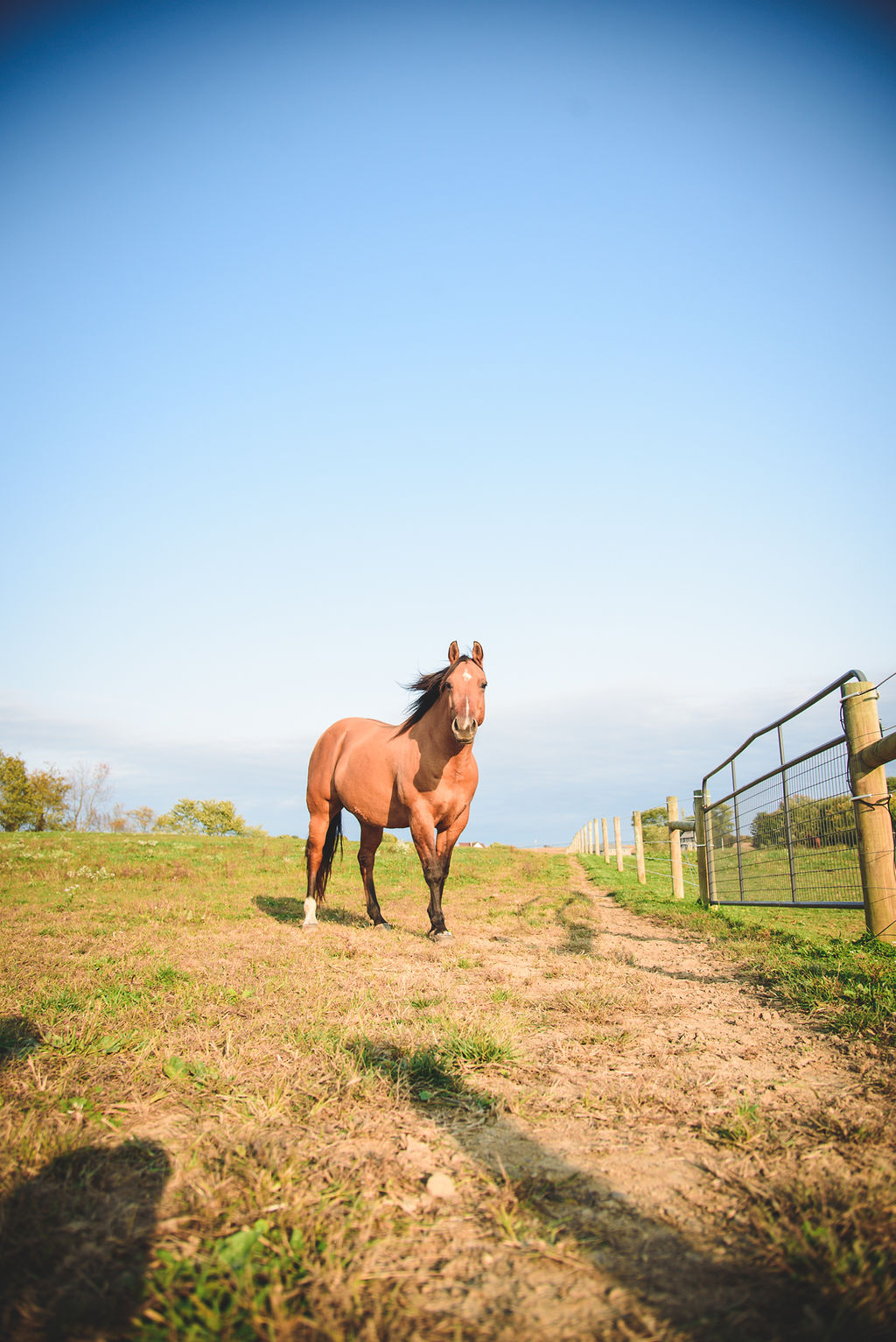
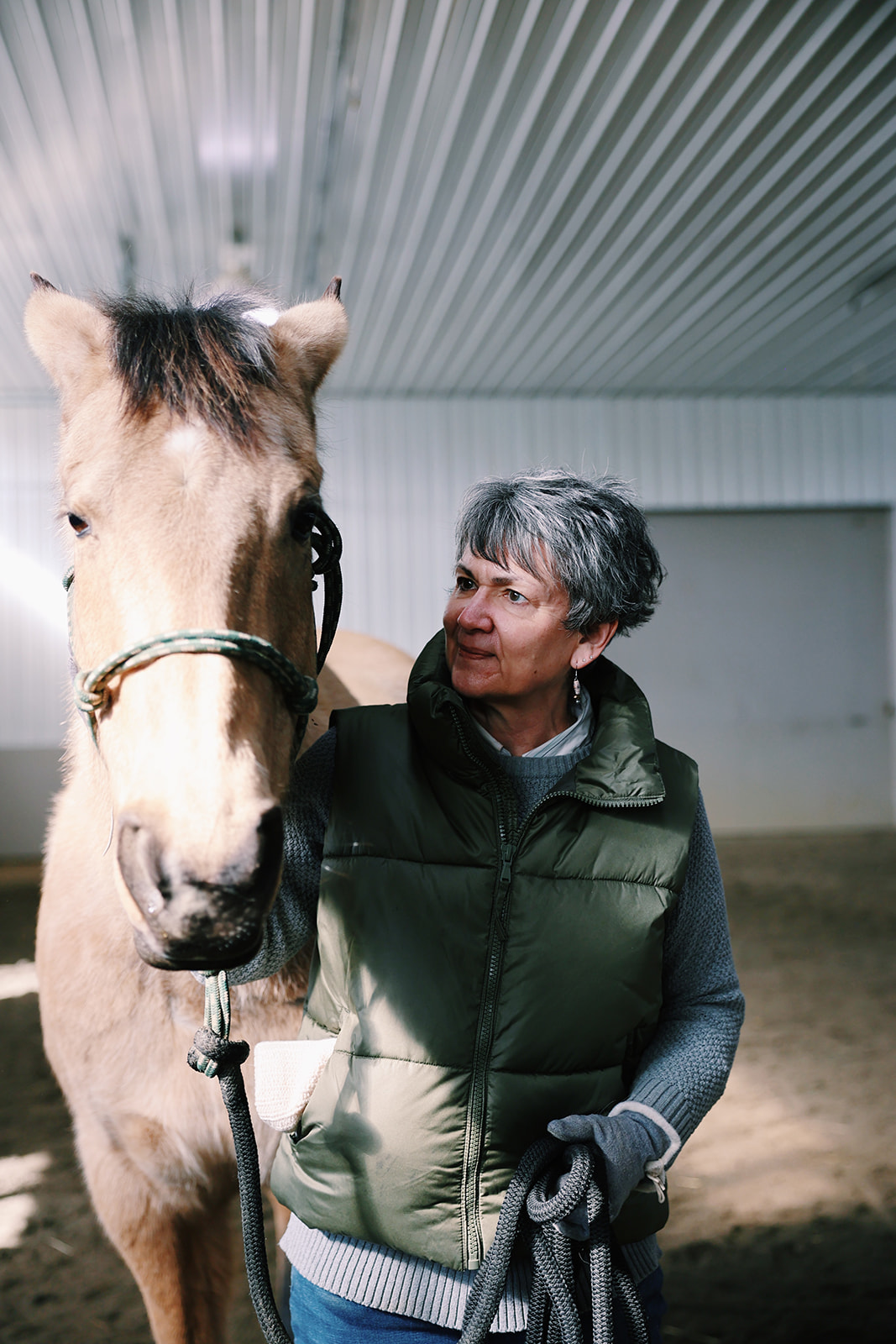
Today we’d like to introduce you to Celia King.
Hi Celia, so excited to have you with us today. What can you tell us about your story?
This morning I walked out of the barn with an executive who left in a more centered and grounded state than when she came in. And after this particular session, she had clarity about what to do in a difficult situation with her team.
I didn’t always have this Equine Assisted Learning (EAL) experience to offer people, but in 2016, I took a traditional coaching business and turned it into an organization that offers innovative leadership training by teaching Congruence: applying the intuitive elements of horsemanship to their roles as leaders.
Here’s my story in the hopes that the Congruence framework helps you continue your good work leading businesses, homes, schools, community groups and multiple other arenas.
It Started in a Therapeutic Riding Class
Like a lot of women, I stumbled into horses during a midlife crisis.
Well, not crisis exactly, but I’d resigned from my 18-year career in higher education to start Arrants McSwain Leadership Development. When I heard about Equine Assisted Learning (EAL), it piqued my curiosity. I thought it might be just the thing my business needed, so I signed up for a training.
I’d never been around horses – didn’t even own a pair of boots – so my next thought was, “Hmmm, I should probably learn something about horses before showing up to this training.”
Pegasus Farm in Canton, Ohio, had a great reputation as a therapeutic equestrian facility near me. I assumed they would do a good job training volunteers to be around horses, so here’s my chance. I could take advantage of their free training then volunteer for a couple of years to give back.
I was intimidated walking into that first therapeutic riding class and grateful to meet the instructor Diana Beardsley. She was calm. She was sure of herself and the situation while still being warm and approachable.
I watched her run that class with 6 horses, 6 riders with disabilities and about a dozen volunteers. I’m a teacher and know something of what it means to manage an experiential education environment, but this situation was nuts. Everyone in and out of the tack room, volunteers helping riders saddle horses, and people peppering Diana with questions about everything from tightening a girth to whether she was going to their birthday party.
One by one a group including 1 rider, 1 horse and between 1 and 3 volunteers took their turn at the mounting block to get the rider seated on the horse. Then Diana stood in the arena teaching a riding class with all these moving parts.
It was chaos. Only it wasn’t. Everyone was calm, assured. When they didn’t know something, they asked, and were given an answer. Then they focused on their job.
I watched Diana lead that class and thought, “That woman is one of the most effective leaders I’ve ever seen. Whatever she’s got is what I want to help my clients get.” Every person, rider and volunteer knew Diana was in charge without her ever saying so. And everyone was grateful to follow, knowing she would take care of them and show them the way. Even horses responded to her that way, occasionally checking in with her when the rider didn’t quite get the instructions.
It Moved to the Experimental Phase
Eventually, I met Tammi Gainer, who was then the Equestrian Director at Pegasus. We talked about the field of Equine Assisted Learning, including what turned out to be the biggest priority for both of us: safety.
We’d seen some EAL programs facilitated in a way that made us uncomfortable. Clients were sent to experience the horses and assign meaning to that experience, but weren’t taught anything about the horse itself, weren’t shown how to safely be around horses, weren’t given any actual information. Of course, meaning making is important – and the purpose of the work – but not at the expense of safety.
Tammi, Diana and I talked periodically about EAL and what it might look like. We even attended a training together which turned out to be a little useful, but not a lot. We realized we’d need to develop something on our own.
Pegasus has a second facility dedicated to programming for veterans and first responders. Diana had responsibility for the horses out there, so she and I started meeting a couple of days a week. To start, Diana had a lot to teach me. She began with the most basic information. “When you’re picking stalls, Celia, put it in the manure wheelbarrow, not the hay wheelbarrow.” (Oops.) Then moved to horsemanship skills like leading, lunging, rope halter work, etc. Occasionally we’d ride, but mostly it was groundwork.
I asked a ton of questions, “Wait, you mean you can just look at a horse and get it to move?” “They know if I’m asking them to do something but don’t really mean it?” “They can feel my tension when I grip the lead rope too tight?”
I was amazed at the things I was learning, but Diana sometimes had trouble explaining the answers. She knew the answers and she could show me what to do, but like lots of horse people, she didn’t always have words to tell it. Something significant was happening, but it was just beyond words. The most people could explain was a Winston Churchill quote, “The outside of a horse is good for the inside of a man,” and leave it at that.
What we were missing was a language to describe what’s actually going on in an interaction with a horse. The whole thing is so intuitive, so wordless. That’s what makes it powerful. But that doesn’t help me explain this thing to leaders who are trying to be better at their job.
We spent a few years trying to get it right. Running demos and pilot sessions, trying to figure out which words to use to describe what happens when people get around horses.
The 4 Intuitive Skills of Congruence
We finally landed on a framework we call the 4 Intuitive Skill of Congruence.
Congruence is when your actions are consistent with your inner state and your core values. It involves developing authenticity and emotional honesty. You may have recognized incongruence in a person who smiles with their mouth but not with their eyes or in a boss who says, “I feel your pain” while quickly slashing your budget. When someone says they value authenticity, they’re also saying they want Congruence, outer choices that match internal realities.
Being a Congruent leader includes focusing on the inner work of self-awareness as well as improving skills like supervising, vision casting, public speaking, hiring and other leadership responsibilities.
Congruent Leaders build strong teams by knowing their people and knowing how to help each member of their team thrive.
Horses are congruent animals who use their intuition to read Congruence in others. We identified four intuitive skills that horses require us to develop and use when relating to them. Those same four skills are what leaders need to develop when working with people.
Connection
When you’re thinking and working in sync with the horse, you can accomplish your objectives together because he is completely tuned in and responsive to your energy and communication. You’ve seen this kind of Connection between a quarterback and receiver or in a surgical team or construction crew where people just seem to know what to do next and how to respond to each other.
Intention
Setting Intention is when you are absolutely clear about where you’re taking the horse and how you’ll get there. It involves both having a logical plan and an inner certainty as you execute it. When leaders move along with clarity and confidence, people know what’s expected of them and are empowered to take responsibility for their role in accomplishing the task.
Energy
Energy is the way your presence affects how the horse responds to you. It might seem like emotion when you first become aware of it, but it’s really a sensation that’s deeper than emotion. Recognizing and managing your own Energy will help you in conversations where people typically report increased anxiety – like attending networking events, confronting unmet expectations with a colleague, or delivering performance reviews.
Pressure
Pressure includes applying Energy to different areas of the horse to get him to accomplish the goal you’re after. It involves learning how to manage and focus your Energy so the horse can understand what you’re asking him to do. When you’re learning to use appropriate Pressure, it’s just as important to learn when to release it as when to apply it. You use communication to apply and release Pressure with people. Verbally you select particular words for people to both understand and feel what you’re asking of them. Nonverbally, you use all sorts of cues – you may stand at a particular distance, choose whether to touch someone’s shoulder, or decide whether to sustain eye contact.
What Our Programming Looks Like
Arrants McSwain offers traditional one-on-one coaching, speaking engagements, and team training events. It’s not all with the horses, but we integrate the Congruence framework through all that programming.
When we do work with horses, our EAL offerings fall into three general categories.
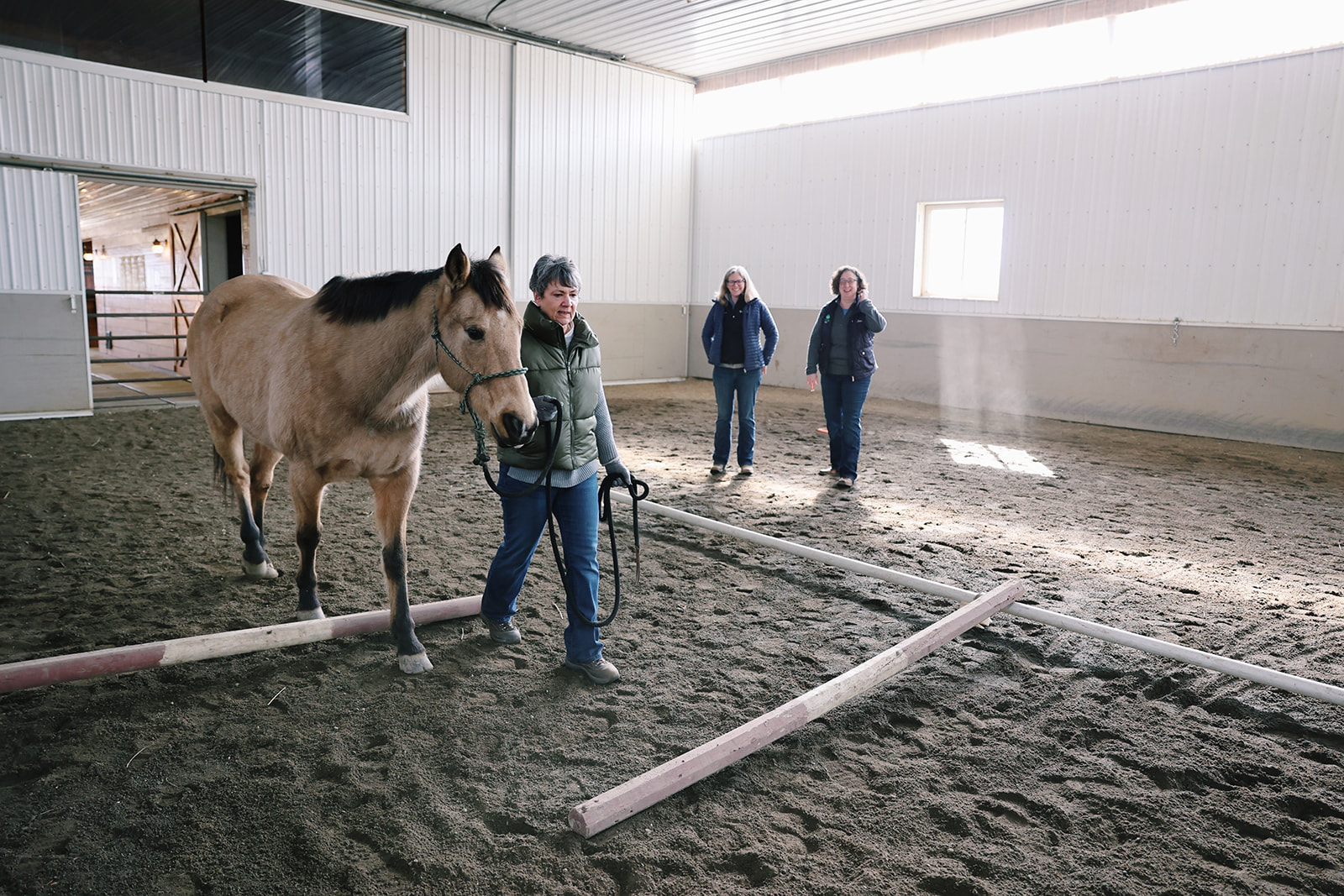
1. Working with Teams – Leaders bring their teams out for our half day or full day teambuilding experience. It’s all groundwork. We don’t have teams ride. Some groups come to address lapses in communication, or they need help learning to gel more. Others are generally working well together and want to get even stronger. Experiencing herd dynamics with the horses and practicing the 4 Intuitive Skills give them immediate results to understand their individual contribution to the team and become a more Congruent collective.
2. Coaching – Individuals come out to the barn to learn horsemanship and practice the 4 Intuitive Skills privately. Most of our sessions are groundwork although we also offer riding as part of the program. Some of our coaching clients are looking for clarity in a job or life transition, and working with the horses helps clarify Intent. Others are wanting to lead with authenticity and find the Congruence framework to be their most useful tool for developing that kind of leadership integrity.
For people who have access to and experience with horses, they may not meet with us in person. For example, Amanda MacDonald is the founder of Full Gallop Communications, a marketing consultancy based in Rochester, NY that works with B2B companies, equine health & veterinary companies, optics & photonics manufacturers to get more of the work they want. Amanda did some coaching sessions with us remotely. We met on the phone and assigned homework for her and her horse to do together. Here’s how she described the experience.
“Celia’s approach works equally well for mares and C-suite execs! I was fortunate to be able to try a long-distance approach with my horse to put what we discussed into immediate action, which was not only delightful, but I learned so much more than I expected. The Connection/Intention/Pressure/Energy approach works with my stickiest clients to get results for them and clarify what “we” should do next. Being aware of “taking pressure off” for some of my clients is sometimes the key to success. Sometimes, it is the key to my own success. As a result of working with the Arrant McSwain team, I have built a better relationship with my horse, and am a better partner to my clients.”
3. We’ve trained others to do this EAL work – For people who already have the skills to teach people how to have safe experiences with horses, we can help them learn to integrate the Congruence model into what they’re already doing.
You can learn more about an EAL session on Congruence at www.arrantsmcswain.com and access free Congruence assessments at https://www.arrantsmcswain.com/congruence-assessment.html.
How do you think about happiness?
Seeing people have those “aha” moments—whether it’s an executive gaining clarity on a tough decision, a team finding better ways to communicate or someone realizing their own leadership strengths.
I love creating experiences that help people become more self-aware and effective in their roles.
Pricing:
- Pricing is available on our website – https://www.arrantsmcswain.com/pricing.html
Contact Info:
- Website: https://www.arrantsmcswain.com/
- LinkedIn: https://www.linkedin.com/in/celia-king/
- Other: Congruence assessments – https://www.arrantsmcswain.com/congruence-assessment.html
Popular
-

Hidden Gems: Local Businesses & Creatives You Should Know
-

The Change-Makers: stories that inspire
-
Take Flight: Lamar Thomas on Building an Inclusive Brand Rooted in Youth, Community, and Purpose
-

Cultivating Inner Clarity: Angel Inspires on Thought, Healing, and Purpose
-

Local Highlighter Series
-

Highlighting Local Gems