



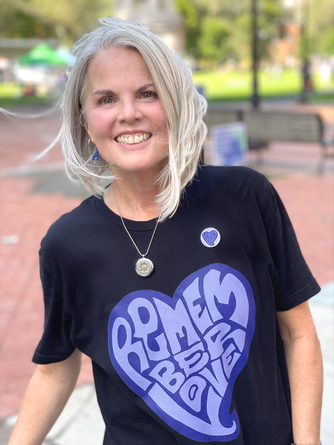
Today we’d like to introduce you to Patty Bode.
Patty, we appreciate you taking the time to share your story with us today. Where does your story begin?
My story is one of transforming tragedy into creative compassion. I founded the Remember Love Recovery Project after my son, Ryan Bode Moriarty, died of an accidental heroin overdose in 2018 at the age of 33. Ryan was a musician and artist who designed and hand-printed t-shirts. One of his most popular designs was a heart-shaped image that says, “Remember Love,” which he crafted on hundreds of shirts. I wanted to carry out the message that Ryan left us with: Remember Love. As an art form, printmaking compels the artist to reproduce its imprint over and over again. That’s the message from Ryan: To Remember Love is reproducible.
How could I remember love while navigating the grief of losing Ryan, and simultaneously confronting the outrageous realities of the opioid crisis and overdose death statistics in our country? How could I remember love and help prevent other families from suffering this inexplicable loss? To remember love preserves the humanity of those with substance use disorder. Remembering love rather than bolstering blame, remembering love contrasted with contempt, remembering love as an alternative to anger can transform assumptions into action. Addiction disorder changes the lives of everybody in its realm. Could I remember love through acts of solidarity and perspectives of empathy? The Remember Love Recovery Project envisions transformative choices that affirm self-determined lives. To remember love is to connect through our common humanity, and the struggles of people with substance use disorder and the families and friends who care about them.
After Ryan’s death, when we gathered his belongings, we found the linoleum block he carved of the Remember Love design. As my husband, Mark Moriarty – who is Ryan’s dad – and I prepared for the gathering of family and friends for Celebration of Ryan’s Life, we inked the block and printed hundreds of posters and hang those on a clotheslines to spread Ryan’s message and give as gifts to attendees. When I saw those Remember Love posters blowing in the wind, they reminded me of Tibetan prayer flags from the Buddhist tradition of spreading good will and compassion to bring benefit to all. It moved me to wonder about ideas for making “Recovery Flags” that I envisioned animated by the wind. Yet, my husband and I are not Buddhist, and I would never want to appropriate somebody’s faith tradition or try to co-opt the symbolism in a philosophical practice. While we are not Buddhist, we held a special relationship with the New England Peace Pagoda in Western Massachusetts which is a sanctuary cared for by resident Buddhist monks and nuns of the Nipponzan-Myōhōji order. We had brought our kids there for hikes in a meditative setting countless times over the years, and also brought busloads of our public school students on field trips. Furthermore, we had a foster son of Cambodian heritage for whom the Peace Pagoda was a site of Cambodian New Year celebrations and cultural connections. It was the place where I first encountered the power of hundreds of prayer flags dancing in the breeze and was inspired by the notion of spreading compassion. So, I consulted the Peace Pagoda monks about an idea. I sought assurances that a community arts practice of making small banners called Recovery Flags intended to generate human connection and healing would be a compassionate gesture and not offend or be disrespectful to the values taught in Buddhism. I received blessing to move forward with the Remember Love Recovery Project.
To destigmatize addiction disorder through art and education for human connection to end overdose became the driving mission of the Remember Love Recovery Project. Our commitment to arts activism honors Ryan’s memory as a visual artist in a wide range of media and his overall creativity as a deeply practiced musician and prolific writer. Moreover, my career as a public school art teacher with children of all ages, and as a college professor of undergraduate and graduate art education programs gave me a sturdy foundation to facilitate artmaking that cultivates community in large groups as well as practical functions of project management.
It took a couple years after Ryan’s death for all these ideas to coalesce into a vision. The first year after he died was one of caring for our family within a remarkable woven net of extended family and friends, which involved continuing our teaching careers and deepening our family’s meditative practices such as tai chi, yoga and walking and our creative work in visual art, woodworking and music. The second year, I collected Ryan’s art, music and writing into a self-published book-CD set to distribute to loved ones. During that time the vision for the Remember Love Recovery Project was germinating. Then the pandemic hit. I launched the project in earnest after the pandemic in 2022. Since that time, more than 5,000 Recovery Flags have been created always in conjunction with care providers such as social workers, nurses, addiction counselors, advocates of harm reduction and more. We have facilitated art-and-health workshops across thirteen states in the USA with programming in prisons, shelters, sober houses, recovery centers, museums, public schools, and arts festivals. Some workshops involve 4 people at a kitchen table, and some involved 2,000 participants at major art museums and arts festivals. After operating the Remember Love Recovery Project for more than three years, it was time to formalize our organization. I received our letter from the IRS of 501(c)(3) approval in June 2025, (after the application date in September 2024).
At each Recovery Flag workshop, we hold a mini-exhibit of some previously made flags and take time to hear reflections from the flag-makers that day. We give every flag-maker the choice to keep their Recovery Flag or to donate it to our collection. Many participants are excited to keep their Recovery Flag and display it in their home or workplace or give it as a gift. Equally as many are inspired to donate it to our collection so we can display it as an educational and inspiration tool for future flag-makers and art viewers to consider destigmatizing addiction disorder.
The stigma kills people. To destigmatize means to remove associations of shame or disgrace, and the Remember Love Recovery Project wants to change social thought about addiction disorder on a large scale. I wish I had known more about substance use disorders and stigma before Ryan died. The stigma around addiction propagates stereotypes and diminishes the humanity of people who are actively using substances, and their families. After Ryan’s death, I learned from many families touched by addiction that they wish they could interrupt the silence, isolation, stigma that forgets their love. In every space possible, I spoke the words, “Ryan died of an accidental heroin overdose” to actively invite dialogue about substance use disorders and remembering love. Even the most caring and empathetic people did not know what to say. Stigma is not an abstraction or a feeling; it is a social force that rips apart families, crushes self-worth, blocks access to clinical care and perpetuates blame and contempt. To destigmatize addiction disorder emphasizes the human right to effective care and the need for strong human connection in recovery journeys.
Fortunately, I am wrapped in a powerful web of family and community which supported my leap into the unknown to launch this project; this underscores the critical need for support. No one can make social change all alone. We need each other. We need loved ones and strangers, and professionals and volunteers. As a career art educator, I know the power of community connection in learning and artmaking to cultivate human connection and create change. Human connection creates empathy and care, which dissolves stigma. Since stigma is a social force – that means we can all participate in changing it by expanding social thought to destigmatize and save lives through artmaking. Stigma forgets love. To destigmatize is to remove associations of shame or disgrace. The opposite of disgrace is to give grace and remember love. Artmaking is an open door to enter into changing thoughts and building connection.
Changing social thought is a lofty goal. It can happen with one maker of Recovery Flags at a time. It can also happen when more people view the Recovery Flags in conjunction with public programs. In addition to our mini exhibits at each workshop, we are now planning some exhibits of Recovery Flags on a large scale. I know visual artmaking can change social thought and exhibits can expand that change. I draw inspiration from my experience as a very young art teacher in the late 1980’s and early 90’s when the AIDS Memorial Quilt was brought to the Washington, DC Mall. At the time, I was a community volunteer helping people make panels of the quilt; each one depicted the name, birthdate and death date of a person who died of AIDS – hence the nickname of “The Names quilt.” The stigma associated with AIDS was horrific. The stigma poisoned social thought and propagated deadly misinformation and violent hatred toward those suffering from a mysterious virus for which we had no scientific information. The stigma prevented funding for medical research and ripped apart families and communities. Then in 1987, during the National March on Washington for Lesbian and Gay Rights, the AIDS Memorial Quilt was exhibited on the National Mall featuring 1,920 panels covering a space larger than a football field. Nine years later the quilt was displayed again covering the National Mall from the Capitol to the Washington Monument with a staggering number of over 40,000 panels. During this time, I watched as the stigma associated with the HIV virus and AIDS was transformed into compassion by many people. The transformation of stigma into compassion paved the way for effective care that honored human dignity and medical research made strides toward the treatments that today allow people who are HIV positive to live long productive fruitful lives, like Magic Johnson, for example. The stigma around HIV and AIDS has not been eradicated, but now we have hope and concrete solutions.
There is no relationship between the disease of substance use disorder and the HIV virus. But there is a parallel path in the ravages of stigma. I intend to bring thousands of Recovery Flags to a site near or on the Washington, DC Mall to help raise awareness at the national level. I hope to do so in the year 2028, which will be 10 years after Ryan’s death.
Forthcoming Cleveland exhibit in 2027: We are mounting a major exhibit and public programming in the Waterloo Arts District of Cleveland, Ohio from August 6 through September 18 of 2027. The gallery will be filled with Recovery Flags many of which have been made in Cleveland, Columbus and Cincinnati – as well as others made from regions across the USA. I am also developing some installation artwork to coincide with the Recovery Flags. We are planning several public program presentations in collaboration with our vibrant partners from medical clinics and harm reduction teams in Cleveland such as The Centers and MetroHealth’s Project DAWN. This Cleveland exhibit will serve as a blueprint for planning our Washington, DC national exhibit in 2028!
Remembering love past, present and future: The Remember Love Recovery Project is a living organism at this point – and while it is one that I never imagined I would be leading, in some ways it is a logical and magical outgrowth of where I came from. I was born and raised on the Northside of Youngstown, Ohio, in a family of nine siblings: seven sisters and two brothers. My dad was a firefighter for the city and car mechanic on his days off from firefighting. My mom cared for us and helped make ends meet by decorating cakes, taking in sewing for other women’s wardrobes and cleaning other people’s houses. In this busy, noisy home where cake decorating and homework studying shared the kitchen table, and art projects and cooking were parallel play, I learned that almost anything was possible with lots of love and hard work. Expectations were clear: care for my little sisters and listen to my big brothers and sisters and dozens of aunt and uncles. Provide for the sick and disabled; share everything you had because whatever you had was more than enough to give some away. Set extra places at the dinner table every night; some of the neighbors might need a meal. Northeast Ohio shaped my heart and soul. In 2022 after decades away in New England, Mark and I returned to relocate our home in Cleveland to be close to family and to root the work of the Remember Love Recovery Project in the community where it is deeply needed. RLRP fulfills my purpose to channel grief into action—bringing people together around a table to make art, to remember love, and to assert that every human life touched by addiction disorder is worthy of care, respect, support, and connection. At our workshops people find a seat at expansive tables that are not set for mealtime, but instead are crowded with art supplies to accommodate large friend groups, big families and newfound families of strangers. Connecting people to creativity and clinical care they deserve, and need is an essential activism of Ryan’s message—Remember Love—which is reproduced in every flag, in every workshop, in every community RLRP reaches with creative compassion. While I never thought I would lose a son to overdose, and therefore never imagined choosing to lead something like the Remember Love Recovery Project, I have come to learn that sometimes your project chooses you. This feels familiar, like family and home.
We all face challenges, but looking back would you describe it as a relatively smooth road?
The most revelatory opening of the road on this journey was how people from all walks of life lean into our mission to destigmatize addiction disorder through art, education and human connection to end overdose.
Yet, in addition to those affiliated with substance use and recovery, we aim to serve and engage ALL people in our mission. To engage all possible participants in our mission, we oversimplify humanity into two categories: One category is those who are affiliated with substance use disorders and the recovery journey whether through their own lived experiences with substance use or family, friends, loved ones, or professionals who provide care. When we work in health care centers of recovery services, prisons, shelters for the unhoused, most participants hold their own fluency in recovery journeys and the specter of stigma. Overall those populations jump into the artmaking and our mission eagerly.
But the second category is the group who did not wake up this morning thinking about addiction disorder and its pernicious ripple effects. We welcome all into our workshops in public spaces such as arts festivals and museums. Many people attend those events to view art, hear music and enjoy food truck menus. They may not be thinking about stigma and substance use disorders. Then they enter our tent and listen to our welcoming words: “Welcome! The Remember Love design was created by Patty Bode’s son, Ryan, who tragically died from an accidental heroin overdose. Now we are using art and education to foster human connection to destigmatize addiction disorder, so people get the help they need and end overdose. We invite you to make Recovery Flags, into which you may pour compassion, hopes, concerns, wishes, questions, care and your own inspiration.” Boom! They lean in, enter our tent and create Recovery Flags expressing their hopes, compassion, and reflections on health and healing in a welcoming environment where no art experience is necessary in an environment of building trust and care. Of the more than 5,000 Recovery Flags created, only once can I remember a time when somebody said, “No thank you” and walked away. So the vision and facilitation has been welcomed, received and propagated with open arms in most spaces.
Other aspects of the road, like many highways and back roads holds some smooth stretches and rough patches. Early in the development of the Remember Love Recovery Project, I received an amazing grant of $50,000 from a private foundation, The Wild Gifting Fund which helped fund the art supplies, and hourly wages to pay students and local community members as project assistants – and some of the travel costs. The Wild Gifting Fund provided a forceful and steady wind as we were first hoisting our sails. That generous grant allowed Remember Love Recovery to flourish and reach thousands of participants. I frugally stretched that funding over almost 4 years. Until recently, I have been working a full-time job in a university while also working as the Founder, Executive Director and interim President of the Remember Love Recovery Project. So, time and energy were the most obvious struggles along with financial worries. But a few months ago, I left the university job so I could focus on Remember Love Recovery full-time, which is a huge relief in terms of time and energy, with a different struggle to maintain financial balance. Now the struggle – which is common for all nonprofits, is to pursue development opportunities that truly align with the mission, with fundraising to keep the activation of the mission steadily aiming at our goals.
But there is always a way. There is always a way to work on the nuts and bolts and practical matters. When you work – sometimes nonstop and with lots of sweat – and with genuine compassion and open hearts, there is always a way.
Thanks for sharing that. So, maybe next you can tell us a bit more about your work?
I am a lifelong art educator.
Now I am Founder/President of the nonprofit, the Remember Love Recovery Project, 501c3, whose mission is to destigmatize addiction disorder through art, education and human connection to end overdose. With the Remember Love Recovery Project, I am known for bringing a welcoming, warm, nonjudgemental entry to artmaking for those with and without art experiences, and generosity and compassion to cultivate community in surprising spaces.
Before I launched the Remember Love Recovery Project, I had been an educator for over 40 years.
As a young child, I was most comfortable in crowded, messy places in which I could bring some sense of creative order and wonderment of learning. I spent hours playing teacher to my dozens of ragdolls, sisters and cousins (the ragdolls were more interested in my lessons than my younger sisters I tried to enlist as students).
I attended Columbus College of Art and Design for my first two years of undergraduate studies funded by a scholarship and my savings from my multiple part-time jobs. I left after sophomore year to give birth to my first son, Bobby and as a single mom, worked part-time in schools and restaurants while reentering school part-time at Kent State, where I fell in love with art education. I also fell in love with my soon to be husband, Mark. (We’ve been married for 43 years). Mark and I brought another son, Ryan into this world. After Mark completed his master’s degree in English, we moved to Amherst, Massachusetts when Ryan was age 2 and Bobby was 6. I was still trying to complete my undergraduate degree in art education, but needed an income, so I opened a family day care in our little apartment where my childhood vision of teaching lots of little ones came to life. Mark landed his first high school English teaching job and a couple years later, when I was thirty years old, I graduated with BFA in art education and started teaching art in Amherst Public Schools. We stayed in Amherst 37 years; it was a vibrant and open hearted place to raise our kids, and we were lucky to bring a foster son into our family there, too.
I worked in public schools for over 20 years where my work was rooted in cultural sustainment, anti-bias practices and anti-racism. I felt most alive in busy, messy art rooms filled with students’ voices (not as quiet as my childhood ragdolls). Those PK12 public school years encompassed sixteen as an art teacher, two as a founding faculty member for a public school for the arts as magnet resource teacher who also taught art half the school day, and later, two years as a school principal. I earned my master’s degree and doctorate while I was a full-time art teacher under the mentorship of Dr. Sonia Nieto at the University of Massachusetts Amherst College of Education. I focused on critical multicultural education, culturally sustaining pedagogies and urban education. After earning my doctorate, I led art education programs in higher education for fifteen years. I am grateful to every student I taught along the way from preschool through doctoral students. I always learned far more from them that I could imagine they learned from me. My students know me for asserting curriculum as a living organism and advancing a not-very-academic concept of “curriculum as party planning.” I espouse learning as messy-business and classrooms as radically inclusive spaces. I am known for pursuing and asserting “crazy ideas” that can be transformed into creative learning.
My publications include the 2018 book with co-author, Sonia Nieto, the 7th edition of Affirming Diversity: The Sociopolitical Context of Multicultural Education, used by teacher education programs nationally and internationally, an achievement of gratitude to all my past students, love and commitment to every student in the future and dedication to my mentor’s legacy.
The value and weight of experience to lead the Remember Love Recovery Project (RLRP) has come into focus now.
RLRP’s work is a woven outgrowth of the those forty years in education entwined with my personal journey. My career has spanned art teaching in public schools, university professorship, leadership as a school principal and assistant dean, and published research on justice-centered arts education. Each role in my professional life built on insights and inquiry from my ongoing personal growth. Remember Love Recovery Project braids these together by facilitating artmaking with people of any background, building trust quickly in unfamiliar settings, leading an organization, and grounding the work in scholarly evidence. This experience also shapes how I am received in the communities where RLRP works; humility is vital. In prisons, shelters, recovery centers, and on street corners with harm reduction teams, credibility is earned, not assumed. The life experience and humble perspectives that come with age, including the loss of my own son to overdose, allows me to enter these spaces not as an outsider delivering a program but as someone who understands grief, loss, and the long arc of recovery. I am an elder, teacher, mentor to the younger people, and a peer to the adults RLRP serves – the family caregivers navigating a loved one’s addiction, the professionals who have spent careers in recovery services, and people in long-term recovery themselves.
We love surprises, fun facts and unexpected stories. Is there something you can share that might surprise us?
Something surprising most people might not know about me when they meet me in a professional context is about my large family of origin, which is such a deep support structure for me. I could talk about the influence of family all day, but I shared a brief bit about that earlier in the interview.
They also may not know that I walked 600 miles across the north of Spain on El Camino de Santiago from May 2019-July 2019, which was the year after Ryan died. I wanted to be there on the one-year anniversary of his death, June 9, and on his birthday June 19. It was a sacred journey on which I carried some of his ashes, and also an amazing adventure. I was on the Camino for forty days and forty nights. I did not plan it that way, but it just happened. During that journey the seeds of the Remember Love Recovery Project were germinating in my body, mind and soul.
And it may or may not be surprising that I am passionate about baking cakes for people I love.
Contact Info:
- Website: https://www.rememberloverecovery.org/
- Instagram: https://www.instagram.com/rememberloverecovery
- Facebook: https://www.facebook.com/rememberloverecovery
- LinkedIn: https://www.linkedin.com/company/remember-love-recovery-project
- Other: https://www.pattybode.com/
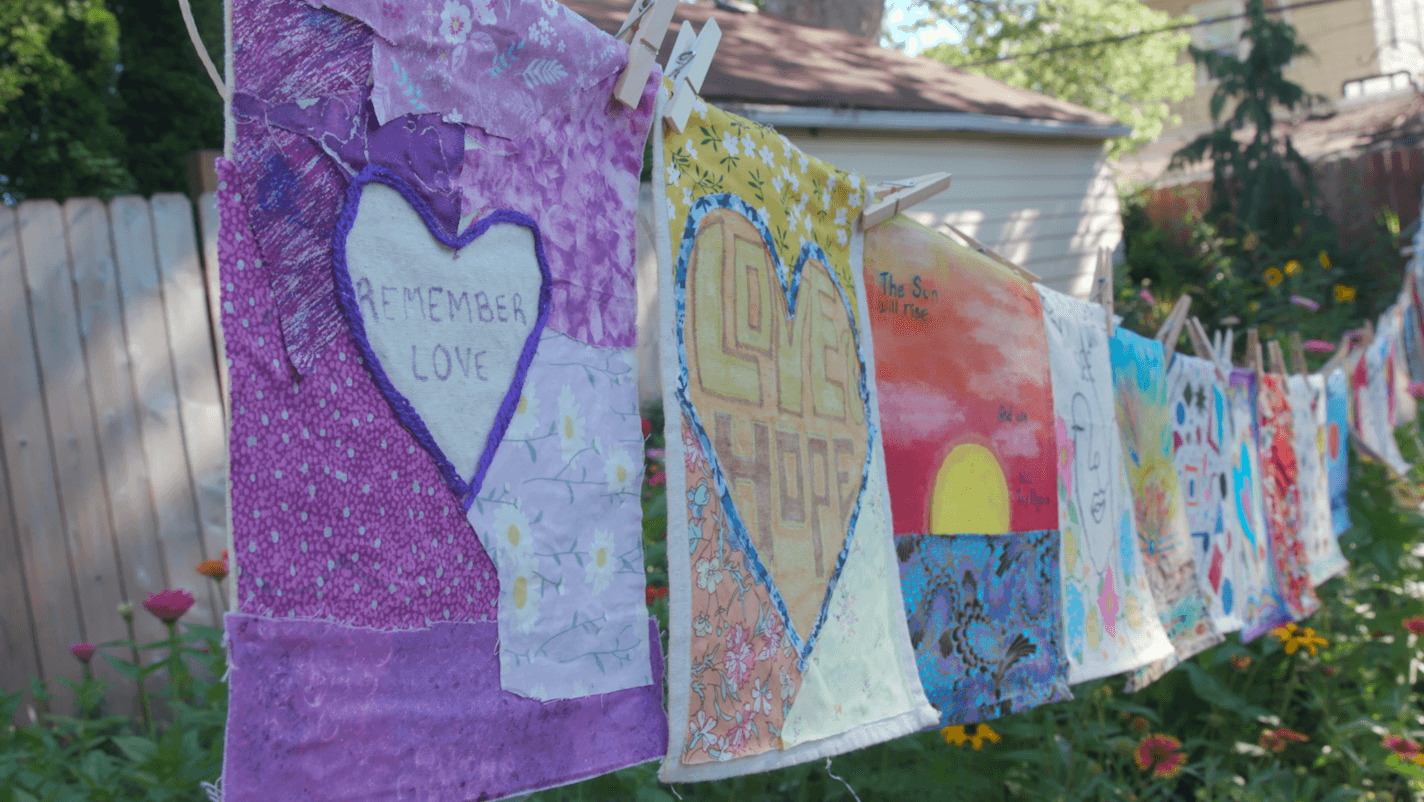
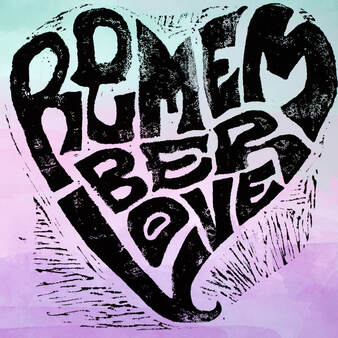
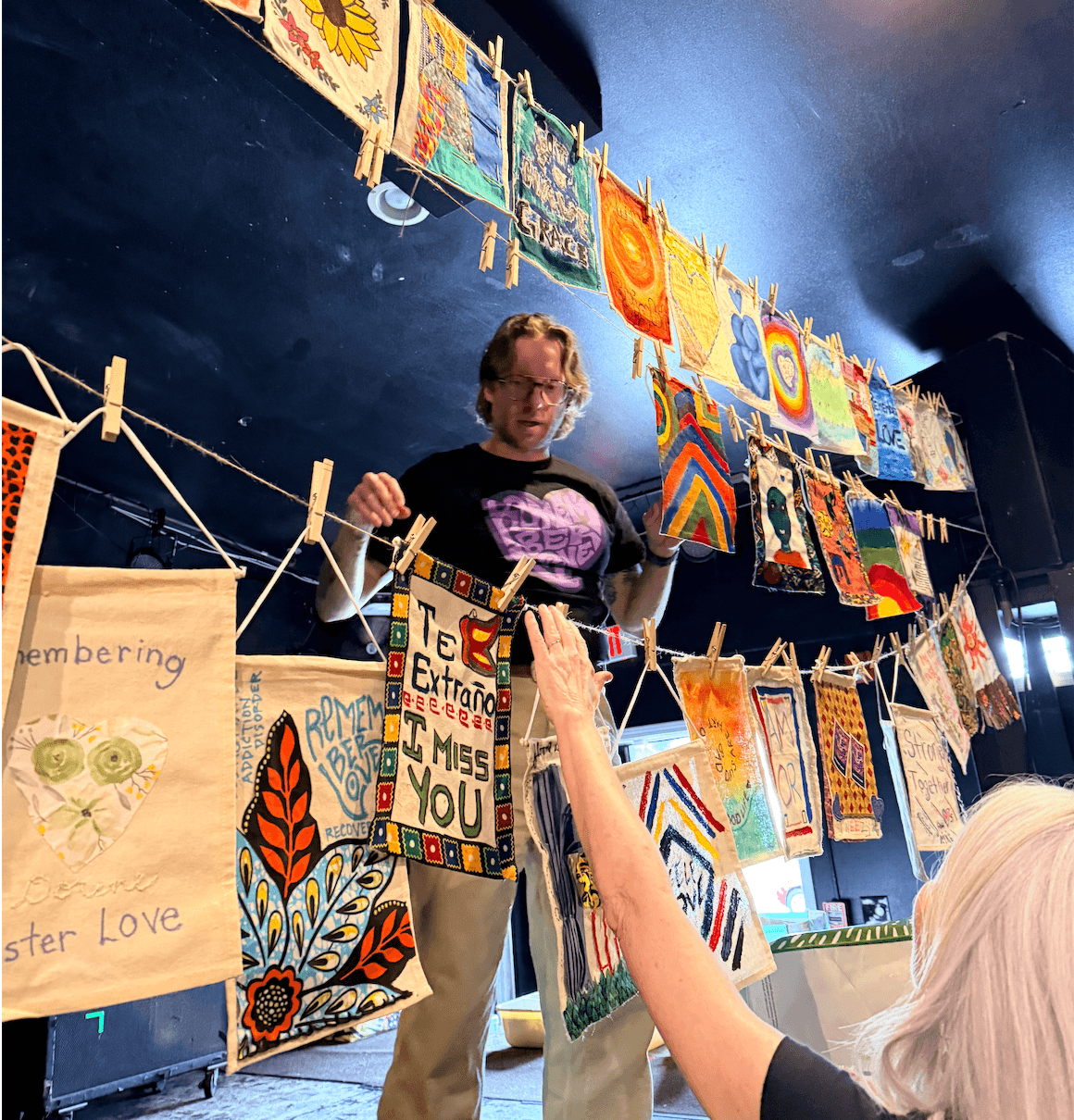
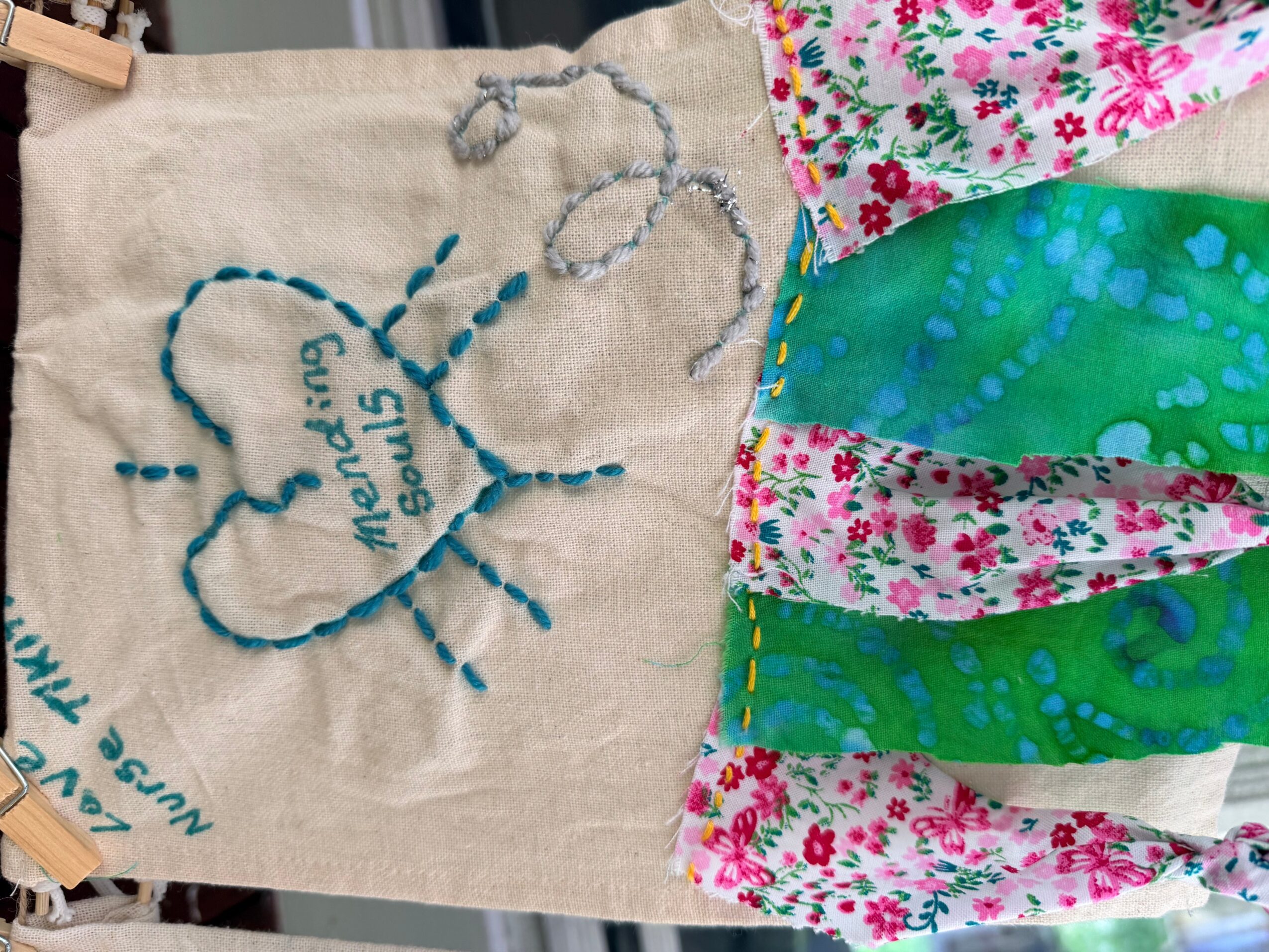
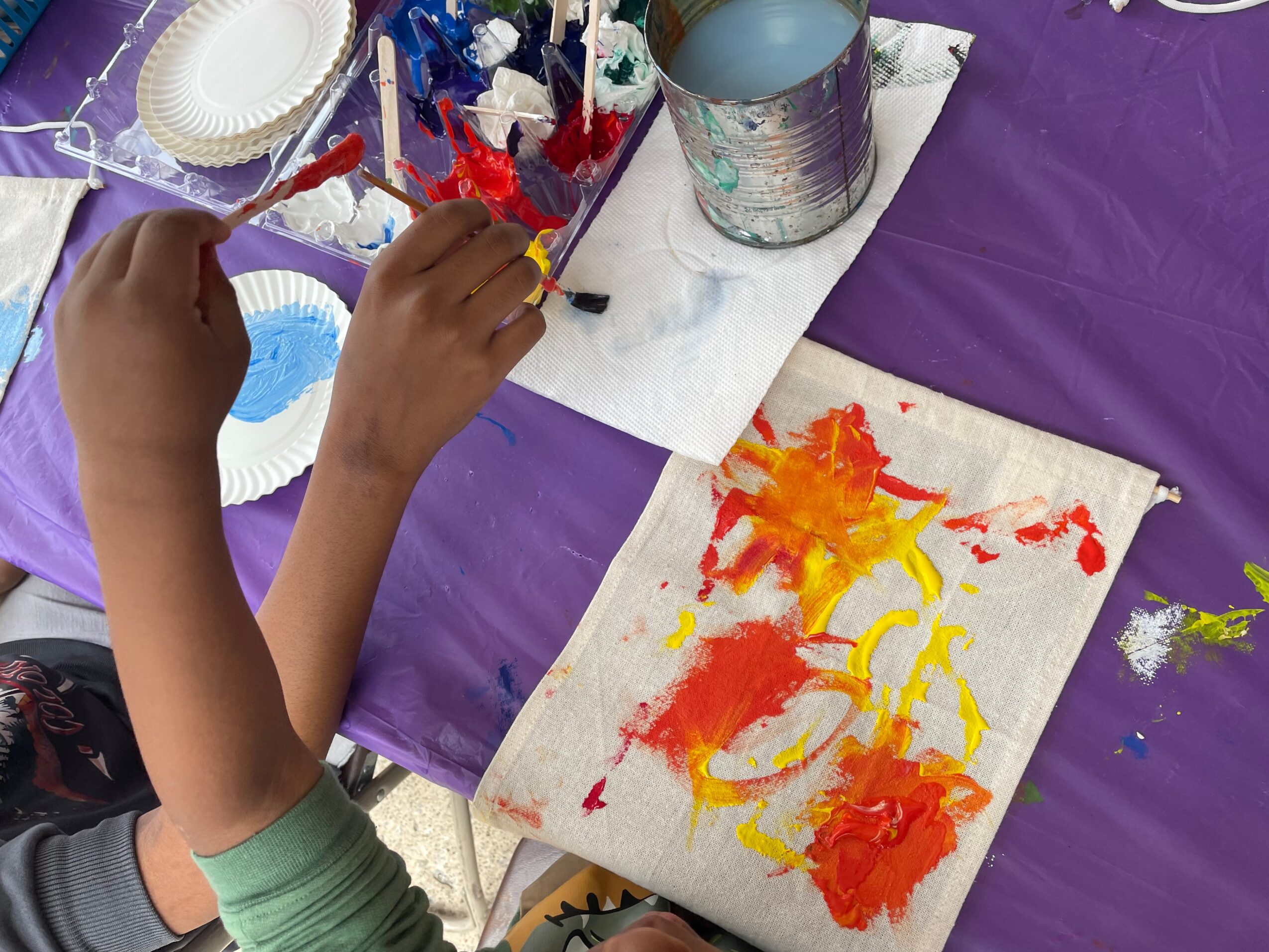
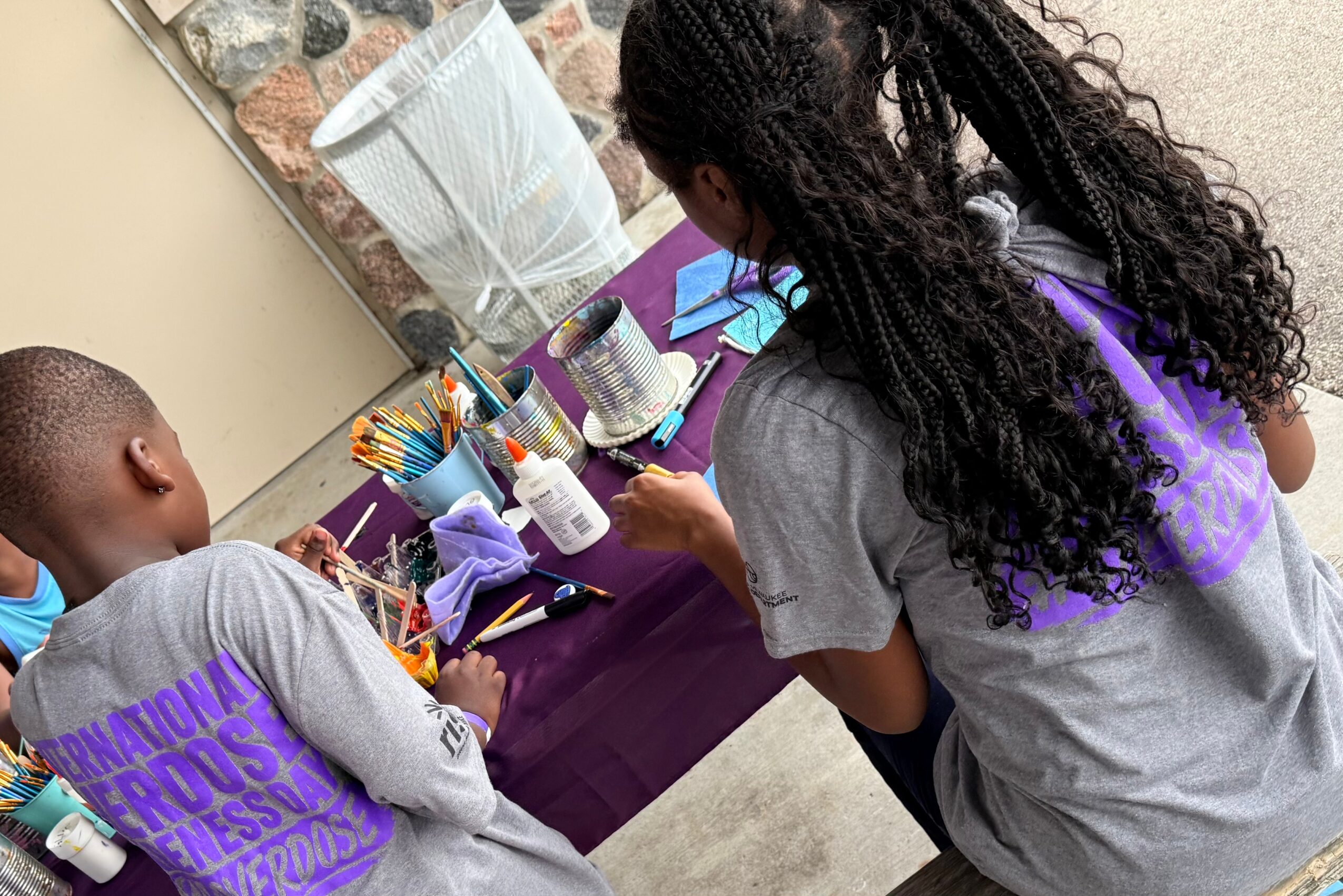
Image Credits
The photo credit is to Kate Bennis – for first photo of the flags on the clothesline (with the purple Remember Love flag first). All other photos are Patty Bode and the Remember Love Recovery Project.
Popular
-

Hidden Gems: Local Businesses & Creatives You Should Know
-

The Change-Makers: stories that inspire
-

Portraits of Ohio
-

Take Flight: Lamar Thomas on Building an Inclusive Brand Rooted in Youth, Community, and Purpose
-

Cultivating Inner Clarity: Angel Inspires on Thought, Healing, and Purpose
-

Local Highlighter Series