



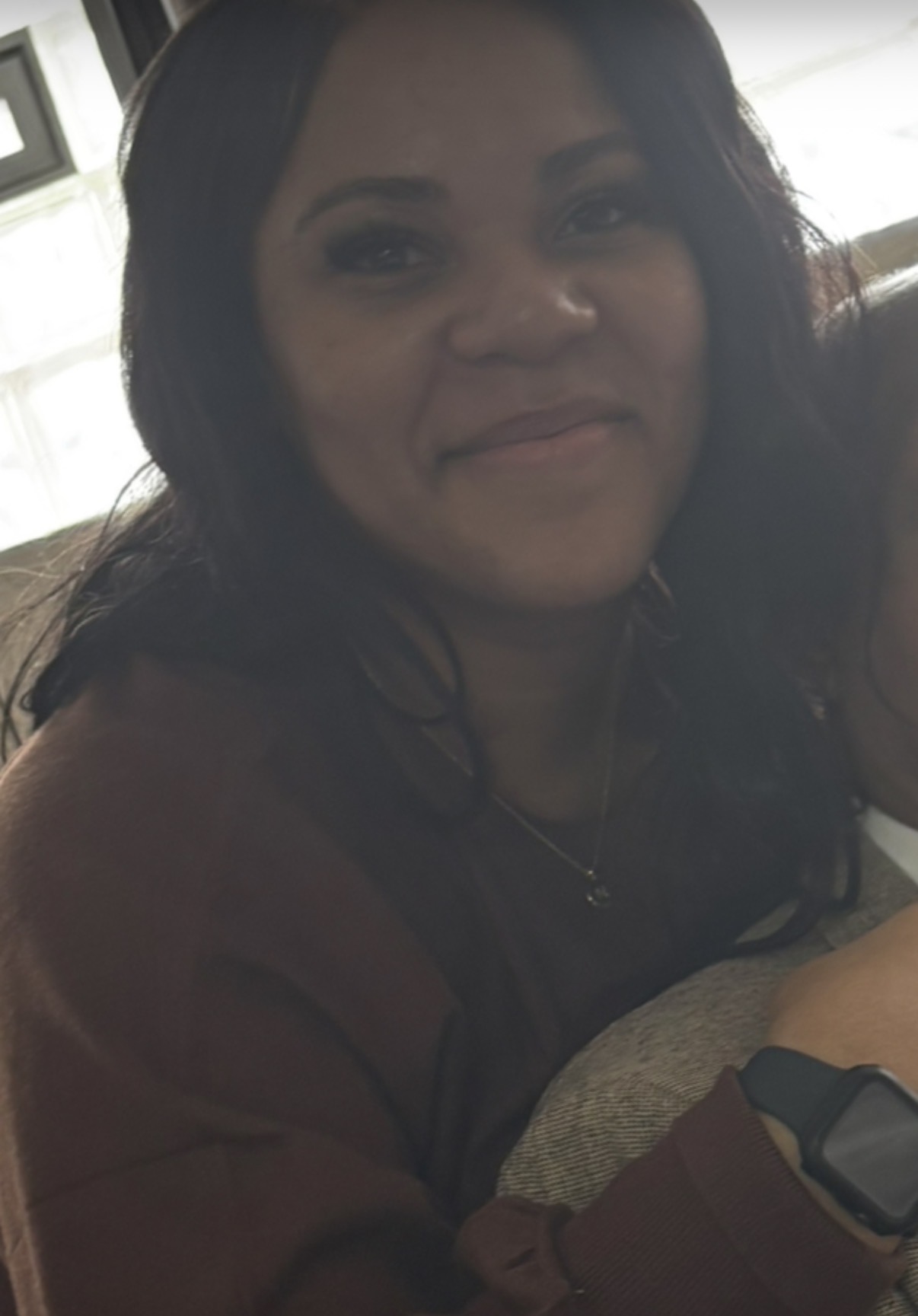
Today we’d like to introduce you to Nia Holland.
Hi Nia, so excited to have you with us today. What can you tell us about your story?
My name is Nia C. Holland, and I am a domestic violence survivor, advocate, community leader, mother, and the Founder and CEO of Rise & Rebuild Foundation, LLC. My story is one of survival, heartbreak, resilience, and the determination to create change for individuals and families affected by domestic violence.
Behind the woman people see today is a woman who has experienced pain that words cannot always fully explain. I know what it feels like to navigate the aftermath of abuse, to carry emotional wounds that others cannot see, and to face the difficult process of trying to rebuild your life while still healing from what you have endured.
Domestic violence does not end simply because a relationship ends, a court date passes, or an order of protection expires. Its impact can follow survivors into their homes, workplaces, relationships, finances, mental health, and everyday lives. The journey toward healing is not always straightforward. Some days require courage, while others require patience, support, and the strength to take one more step forward.
My experiences have shown me that surviving domestic violence is about more than making it out of an abusive situation. It is also about finding safety, regaining your voice, restoring your confidence, protecting your children, and learning how to envision a future beyond the pain.
As a survivor, I have had to navigate the emotional, personal, and practical challenges that can come with rebuilding. I have learned that survivors need more than words of encouragement. They need access to safe housing, financial assistance, mental health services, legal advocacy, community resources, and people who are willing to listen without judgment.
I also understand that every survivor’s story is different. Some are trying to leave. Some are trying to recover after leaving. Others are navigating the legal system, raising children, searching for employment, or trying to find stability after losing so much. No survivor should have to prove that their pain matters before receiving support.
We all face challenges, but looking back would you describe it as a relatively smooth road?
If I am being honest, this journey has not been easy. Being a domestic violence survivor is difficult on its own, but experiencing that journey as a mother adds another layer of responsibility, emotion, and strength that is not always visible to the outside world.
As a mother, I have had to navigate my own healing while also recognizing the importance of protecting my child, maintaining stability, and continuing to show up even on the days when I may not have felt strong myself. Motherhood does not pause when you are hurting. Bills do not stop coming, responsibilities do not disappear, and life does not always give you the time or space you need to process what you have experienced.
One of the hardest parts of this journey is knowing that domestic violence can affect more than the person directly experiencing the abuse. Children can be impacted by the environment around them, the changes in their family, and the emotional challenges their mothers may be trying to navigate. As a mother, that reality is something I take seriously.
There is a particular kind of pressure that comes with trying to rebuild your life while raising a child. You want to be strong for them, protect their innocence, provide a sense of normalcy, and make decisions that will give them a better future. At the same time, you are still a human being who deserves time to heal, support when you are struggling, and permission to acknowledge that what happened to you was painful.
There have been challenges along the way, and moving forward has not meant that everything suddenly became okay. Rebuilding after domestic violence can involve emotional healing, financial uncertainty, legal concerns, changes in relationships, and the difficult process of rediscovering yourself. It can mean trying to establish stability while managing circumstances that other people may never fully understand.
Great, so let’s talk business. Can you tell our readers more about what you do and what you think sets you apart from others?
There is a part of my domestic violence journey that I believe people need to understand, because surviving abuse is not always the end of the story. Sometimes, the hardest part begins when you are left trying to make sense of everything that happened, especially when the opportunity to receive answers, accountability, or closure does not unfold the way you expected.
My experience was not simply about being in an abusive relationship and finding the strength to move forward. It involved navigating the court process, preparing myself emotionally for what I believed would be an opportunity to confront the situation through the legal system, and trying to rebuild my life while carrying the weight of what I had experienced.
Going through the court process brought its own challenges. There is an emotional burden that comes with having to revisit painful experiences, deal with legal proceedings, and prepare yourself for the possibility of seeing the person who hurt you. You may be trying to heal privately while having to discuss your experiences publicly. You may be attempting to regain a sense of control over your life while waiting for a legal process that is largely outside your control.
For me, there was the reality of knowing that the person who had caused me pain was also the person I was preparing to face in court. I had to carry the emotional weight of what had happened while trying to prepare for what I thought would come next.
Then everything changed.
My ex-boyfriend, the person I identified as my abuser, died before the case reached trial.
There are no simple words to explain what that moment meant to me. His death did not erase my experiences, undo the harm I had endured, or automatically bring me peace. It also changed the future I had been preparing myself for. The court process I had been navigating was no longer going to unfold in the way I had anticipated.
I was left with emotions I did not necessarily know how to name. There was the trauma of what had happened, the reality of his death, the loss of the opportunity to see the case proceed to trial, and the difficult task of understanding what all of this meant for my own healing.
People do not always understand that a survivor can experience complicated feelings when an abuser dies. There is no universal emotional response. A person may feel sadness, anger, confusion, relief, disbelief, grief, or several of these emotions at once. Sometimes, there may be feelings that seem to contradict one another.
For me, one of the hardest things was realizing that I had not been given the time or space to process everything. I was still trying to make sense of my experiences when I was confronted with another life-changing event. I had been preparing for one kind of ending, and instead, I was left trying to understand an ending I had never expected.
And then there was another part of the situation that made it even more difficult to process.
The woman who had been involved with him while he and I were together was also in the accident in which he died. That reality brought another layer of complicated emotions and reflection. It was a situation I never imagined I would have to make sense of while already carrying the pain of what I had experienced.
I found myself confronting emotions that were not easy to explain to anyone who had not lived through something similar. There was the history of the relationship, the abuse, the court process, his death, and the reality that another woman connected to that history was also involved in the same tragedy.
I could not simply separate one part of the experience from another. Everything was connected in my mind, and I was still trying to understand how to move forward.
For a long time, I had been focused on surviving, protecting my peace, navigating the legal process, and figuring out how to rebuild my life. I had been carrying the hurt associated with what happened, even as I tried to keep moving forward. Sometimes, when you are focused on getting through the next day, you do not have the opportunity to fully process what you are feeling.
Then I began to recognize something about my own healing: I had not fully forgiven him for what had happened to me.
That realization was not about saying the abuse was acceptable. It was not about excusing his actions, minimizing my pain, or pretending that the consequences of what happened had disappeared. It was about acknowledging that there was still something within me that I had not been able to release.
His death forced me to confront the fact that I could no longer approach forgiveness with the expectation that it would happen through a conversation, an apology, an explanation, or the outcome of a trial. I had to consider what forgiveness would mean for me, independent of anything he could say or do.
And somehow, in the midst of processing this tragedy, I began to understand that I was reaching a place of forgiveness.
It was not a moment that erased my memories. It did not mean that I suddenly understood everything or that the pain no longer mattered. It meant that I was beginning to recognize that my healing could not depend entirely on receiving something from the person who hurt me.
I could acknowledge what happened. I could recognize the harm I experienced. I could grieve the complicated reality of his death without rewriting my history or denying my own pain. And I could begin to release the expectation that my healing had to look a certain way.
For me, forgiveness became less about what he deserved and more about the kind of future I wanted to create for myself.
I am still learning how to process the different emotions attached to this experience. I do not believe anyone should be expected to move through trauma or grief on a predetermined timeline. I also believe survivors should be allowed to tell the truth about their experiences without being pressured to forgive, reconcile, forget, or explain their feelings to make other people comfortable.
My experience taught me that grief is not always straightforward, particularly when the person who died is also someone associated with deep personal pain. It is possible to grieve the reality of a death while still acknowledging the harm that occurred. It is possible to wish that things had been different without pretending that the relationship was healthy. And it is possible to seek peace without abandoning the truth of your own experience.
I share this part of my story because domestic violence does not affect every survivor in the same way, and the aftermath can be more complicated than people realize. Legal proceedings, unexpected deaths, unresolved emotions, motherhood, and the demands of everyday life can all become part of the process of rebuilding.
As the Founder and CEO of Rise & Rebuild Foundation, LLC, I want survivors to know that healing is not a straight line. Sometimes, you are working to rebuild your life while trying to understand what has already happened. Sometimes, you discover feelings you did not know you were carrying. Sometimes, peace begins not with an answer, but with the realization that you are allowed to continue living even when every question has not been answered.
I cannot change what happened to me. I cannot return to the courtroom and experience the trial I had anticipated. And I cannot go back and give myself a different version of that relationship.
What I can do is decide how I move forward.
I can continue to advocate for survivors. I can speak about the importance of accountability, prevention, and meaningful support. I can help create opportunities for other people to find safety and stability. And I can allow myself the same compassion I want every survivor to receive.
My story is not about presenting a perfect picture of healing. It is about being honest about what survival can look like when the ending is unexpected, the emotions are complicated, and the work of rebuilding continues long after the world assumes the story is over.
I am learning that forgiveness does not change my past, excuse the harm I experienced, or require me to forget. It allows me to acknowledge what happened while giving myself permission to pursue peace.
We’d be interested to hear your thoughts on luck and what role, if any, you feel it’s played for you?
When I reflect on my life since experiencing domestic violence, I sometimes ask myself what role good luck has played in my journey. For a long time, I was focused on surviving what happened to me, navigating the court process, raising my child, and trying to find a way to move forward. I was not always in a position to recognize the good things that might still exist in my life because so much of my energy was going toward processing what I had experienced.
I have come to understand that good luck does not always look like winning, receiving an apology, getting the outcome you hoped for, or having life return to the way it was before. Sometimes, it looks like an opportunity to start again. Sometimes, it is meeting people who believe in your vision, discovering a purpose you did not know you would have, or finding the courage to speak about something you once struggled to process.
My journey has not been without hardship. The death of my ex-boyfriend before the court process reached trial left me facing emotions and questions I had not expected to confront in that way. I had been preparing for one outcome, and suddenly I had to make sense of a completely different reality. I was left to process my own experiences, the loss of the opportunity for the trial I had anticipated, and the complicated emotions surrounding his death.
I would not describe those circumstances as good luck. There is nothing fortunate about experiencing abuse or having to navigate the trauma that follows. However, I can acknowledge that even in the aftermath, I began to see parts of myself and my future differently.
One of the most significant realizations has been my understanding of forgiveness. I began to recognize that I had not fully forgiven him for what happened to me. His death did not erase the harm, but it made me reflect on what it meant to continue carrying that pain and what peace might mean for me moving forward. I began to understand that I could acknowledge the wrongs I experienced without allowing those experiences to determine every part of my future.
Contact Info:
- Facebook: https://www.facebook.com/share/1EaZsaha53/?mibextid=wwXIfr
- LinkedIn: https://www.linkedin.com/in/nia-c-holland-9848723b4?utm_source=share_via&utm_content=profile&utm_medium=member_ios
Popular
-

The Change-Makers: stories that inspire
-

Hidden Gems: Local Businesses & Creatives You Should Know
-

Portraits of Ohio
-

Take Flight: Lamar Thomas on Building an Inclusive Brand Rooted in Youth, Community, and Purpose
-

Cultivating Inner Clarity: Angel Inspires on Thought, Healing, and Purpose
-

Local Highlighter Series