



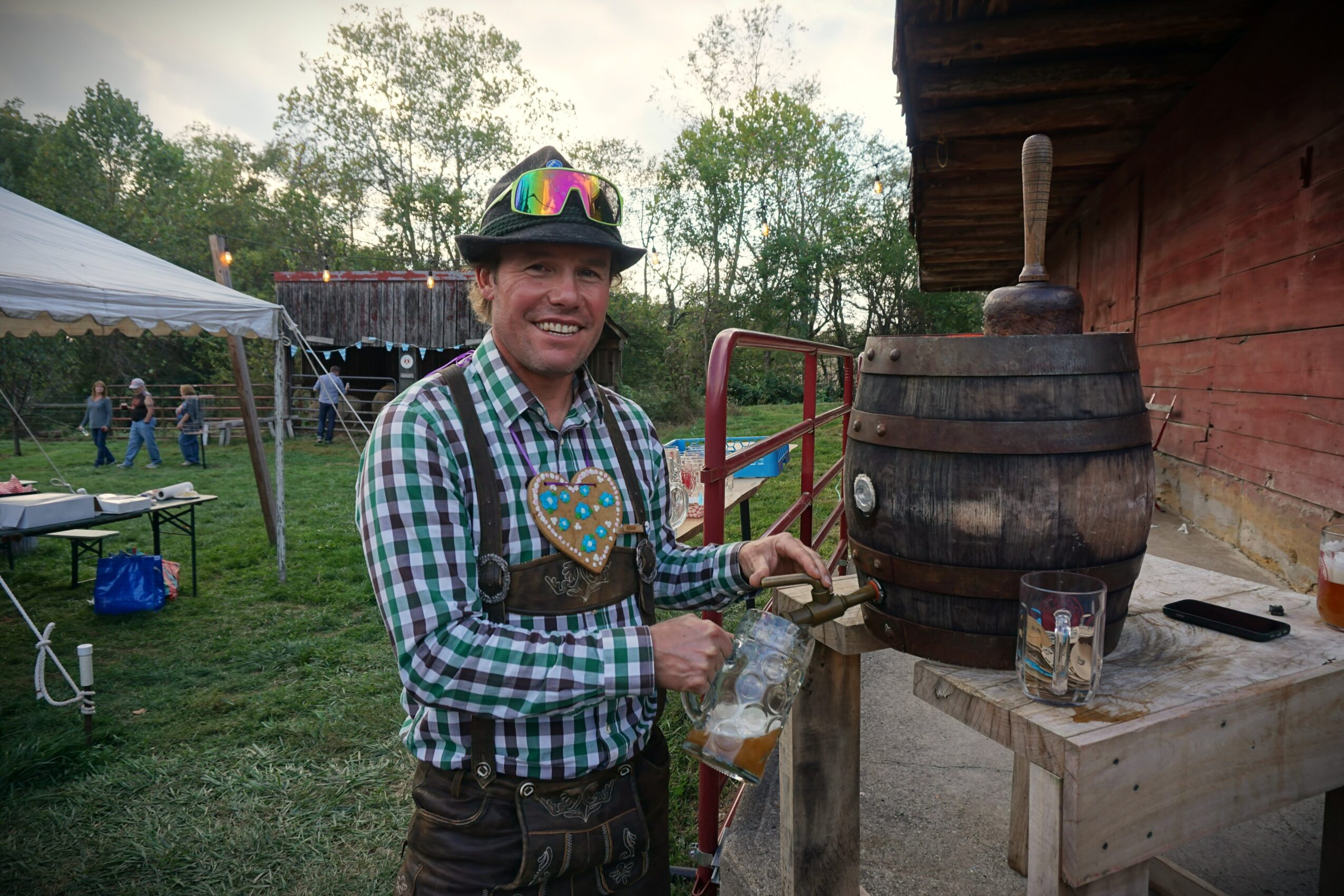
Today we’d like to introduce you to Kevin Ely.
Hi Kevin, so excited to have you on the platform. So before we get into questions about your work-life, maybe you can bring our readers up to speed on your story and how you got to where you are today?
Our Farm
Everyone has a story to tell.
And every place is shaped by its own story.
Our story involves an old barn, a passion for traditional German beers and an abundance of family reliance. Come, join us for a beer and a story.
The Backstory
The 90-acre farm is located in east central Ohio overlooking the Tuscarawas River, a tributary to the Muskingum River. For over 150 years it belonged to the Norman family who first herded sheep, then ran a dairy, and later, raised crops. The original farmhouse still stands on the property, and its red barn sits atop a stone foundation inscribed with the date 1866.
When the farm became available for purchase in 2014, Kevin and his wife Jael Malenke, who grew up on a homestead less than a mile away, had been dreaming of opening a craft brewery which honored the German tradition of teaming beer with farming and community. They were able to purchase the farm with Jael’s brother, Aaron Malenke (“the farmer”), and his wife, Lauren Malenke (a veterinarian).
Our Story Today
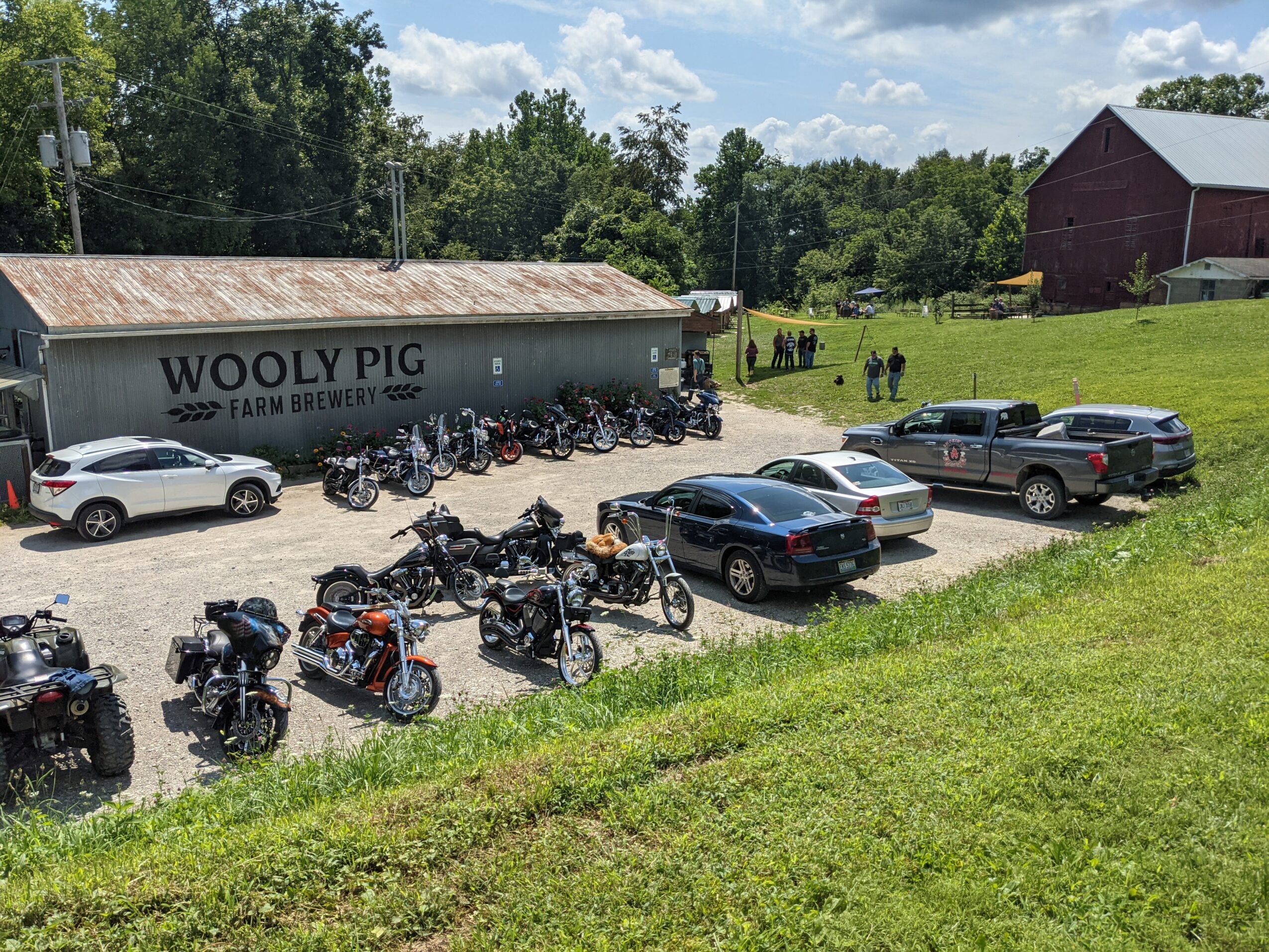
The Wooly Pig Farm Brewery now occupies a converted barn that once housed a tractor and plow. Rustic planks and hand-hewn beams salvaged from a collapsed outbuilding integrate the tasting room to the farm’s longer history. Its beers are sourced from a farm well developed by the Norman families for their animals and crops. Between the brewery and the old farmhouse a row of Saaz hops climb 20-foot-tall trellises. (These fresh hops are added in the lagering process to one of our beers each fall.)
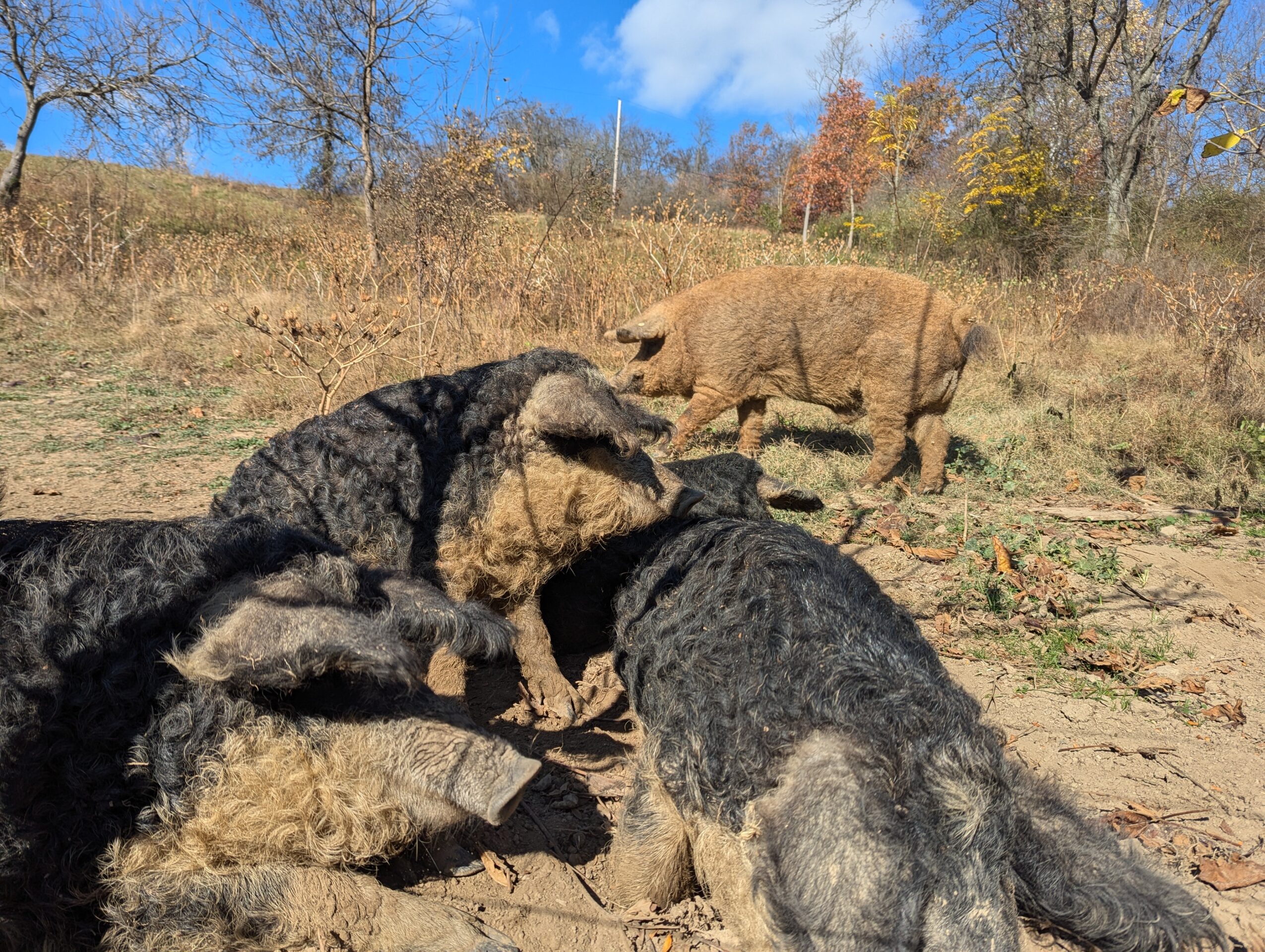
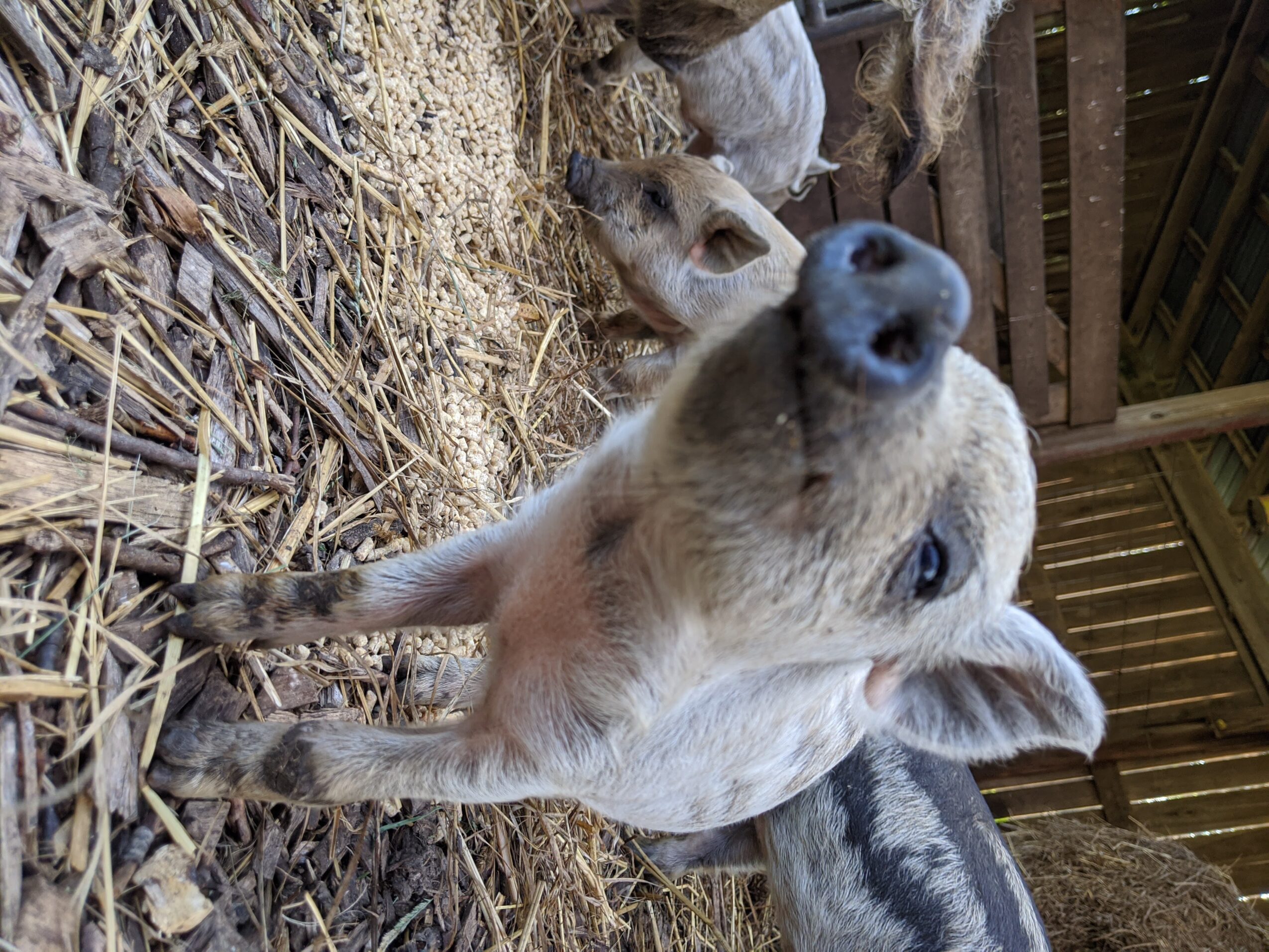
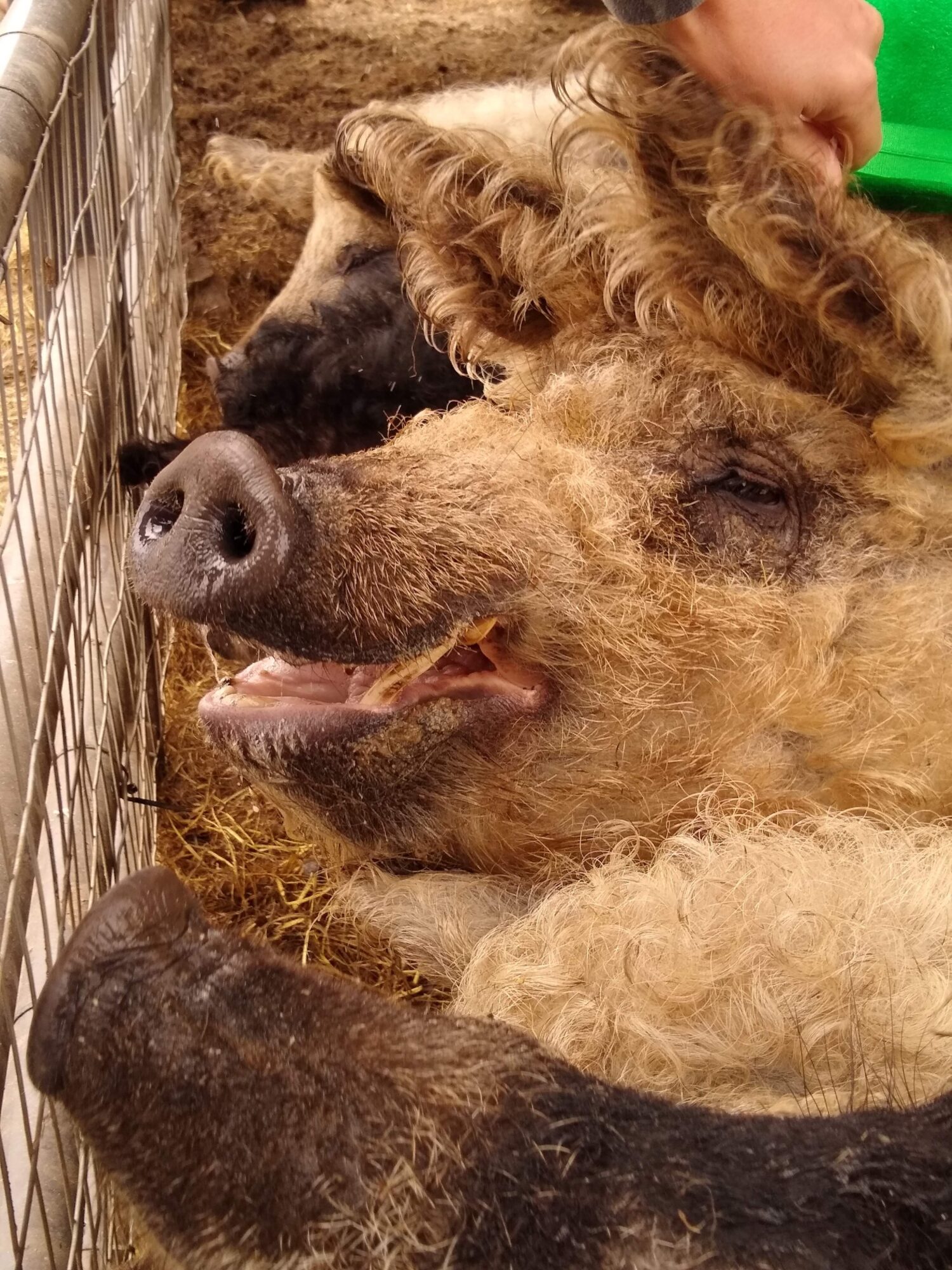
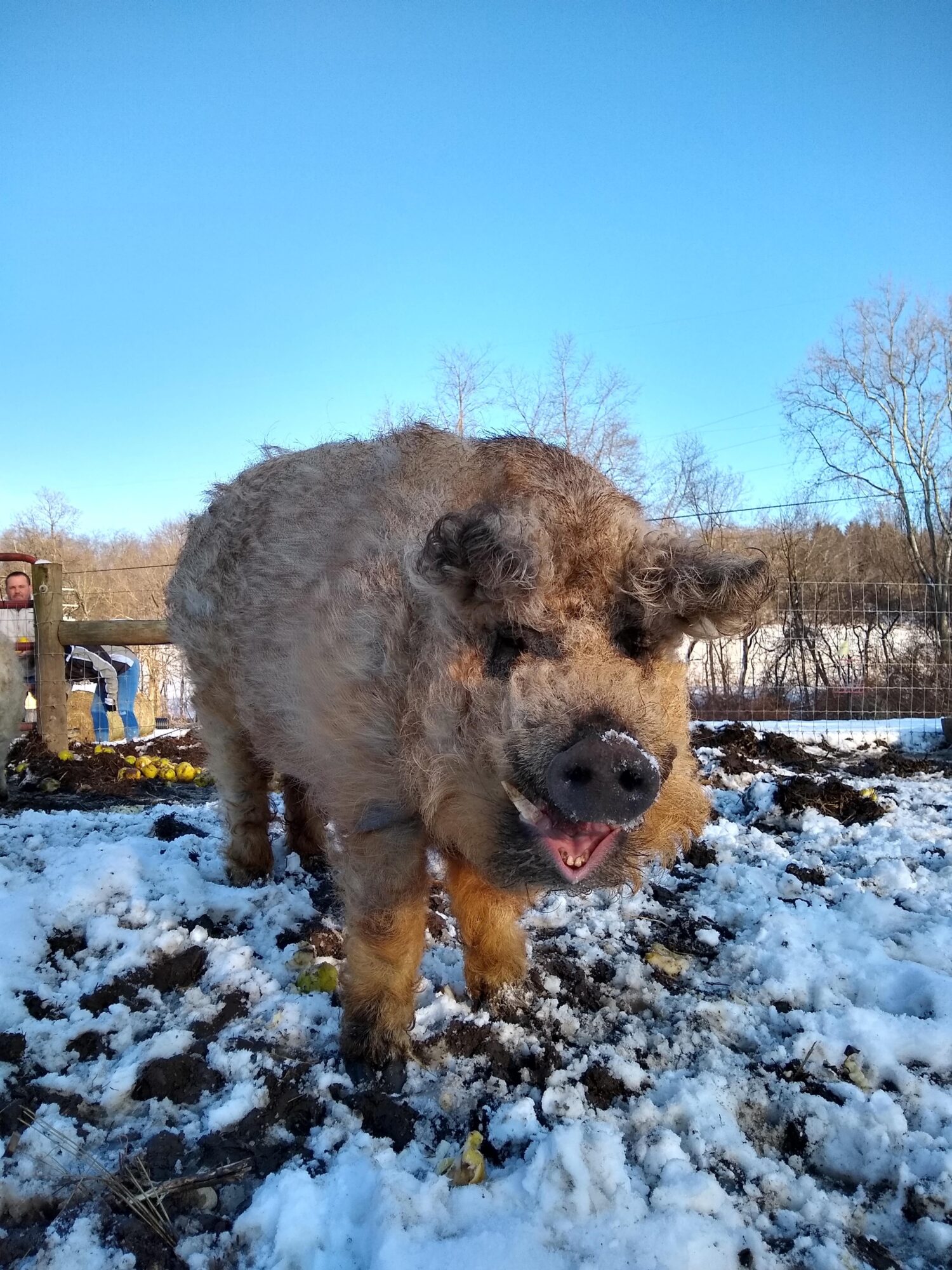
And the curly-haired mangalitsa pigs that Kevin admired while traveling from brewhouse to brewhouse in Bavaria? They love foraging for hickory nuts and walnuts on the farm’s hillsides and contribute to the brewery by consuming the spent grain and other organic brewery byproducts. Mangalitsas are a Hungarian breed of domestic pig developed in the mid-19th c. Their meat is prized for its marbled fat and rich taste, a perfect pork for curing and charcuterie. They grow thick curly hair causing visitors in winter months to mistake them for sheep.The farm is also home to sheep—all tended by Aaron and Lauren, who built their off-the-grid house near the northern edge of the property. The whole family is committed to sustainable farming practices, preserving the farm’s natural resources, and minimizing the brewery’s footprint.
The Wooly Pig Farm Brewery is unique in central Ohio, but it carries on a long legacy of hard work, connection with the land, and commitment to community. Join us for a beer, and make our story part of yours.
I’m sure it wasn’t obstacle-free, but would you say the journey has been fairly smooth so far?
low footprint brewery (sustainability AND growth
It seems like building a business from the ground up is never very smooth, but our family, friends and community have made it much easier to do. We have faced some of the same challenges that others have faced, namely the Pandemic and inflation. We intentionally built a low footprint brewery, where we focus on sustainability, which comes with it’s own challenges and rewards. We are owned, run, opperated, and managed by family. This has it’s inherent and obvious challenges., but also it’s rewards. We did have one notable challenge that worked out very well in the end. This was our 100kW solar power project.
We have always focused on making smart and helpful sustainable projects a reality. Most of the focus is on “low hanging fruit,” as they say. These are simple projects that have immediate and positive impacts, with low ROIs. We wanted to reduce our energy consumption as much as possible before diving into a large solar array power supply. We are a 100% electically powered facility, so that means not natural gas or propane. It also means that our electricity bill are quite large for a small brewery business, so we are always looking for ways to reduce our electricity consumption. The necessary elements for such a project: a reputable installer, federal grants, and a manageable investment aligned and made the project feasible, so we committed, invested and commenced the installation of the solar array.
During the designing and engineering phase the U.S. elected a new president. During the installation phase the U.S. government decided to freeze funds for solar projects, which was deemed unconstitutional, but that did not stop the freeze, It just became a freeze without calling it a freeze. What this translated into was a blocking of our REAP (Rural Energy for America Program) grant which was already federally approved and transferred to a secure accoune at the Ohio Deparment of Agriculture. The way this grant works is tha we complete the project, prove that the project is completed and operational and then the grant funds are released. For us this meant spending nearly 300 thousand dollars with the signed commitment from the federal government to then provide a grant of about 143 thousand dollars, This created a monumental finalcial problem for out business, so we got to work.
We spoke with our installer, and other local farmers dealing with REAP grant freezing. We then worked with our U.S. Senators and Representative to help find a solution. We also reached out to our supports through social media. We received support from everyone. This felt good, but we were still in a pickle. Eventualy the government was told it must relase the funds, and then without any notification, we received our reimbursement. With that, we could get back to business as usual and spend our time and efforts on running our business instead of fighting unnecessary political battles.
It was worth it in the end. Our electrical bills are about 60% lower. Support from our local, state and general supports was tremendous. We became a household name in our Senator’s and Representative’s offices, with regular check in’s and personal meetings. In the end we built new relationships, strengthened old ones, and made new ones.
Thanks – so what else should our readers know about Wooly Pig Farm Brewery?
Eins, Zwei, Drei–G’Suffa! One, two, three–Drink! The Wooly Pig Farm Brewery serves up both traditional German lagers AND traditional German brewery fun. German breweries are a key part of community life. Neighbors not only stop by for a beer on a Saturday night but also for a midweek birthday toast with friends or to celebrate cultural festivals marking spring, the harvest and other big days.
The Wooly Pig recreates that atmosphere in Fresno, with its warm and welcoming tasting room, family-friendly environment, and large outdoor space perfect for kids and dogs. And let’s not forget the German festivals–each with their own Wooly Pig twist!
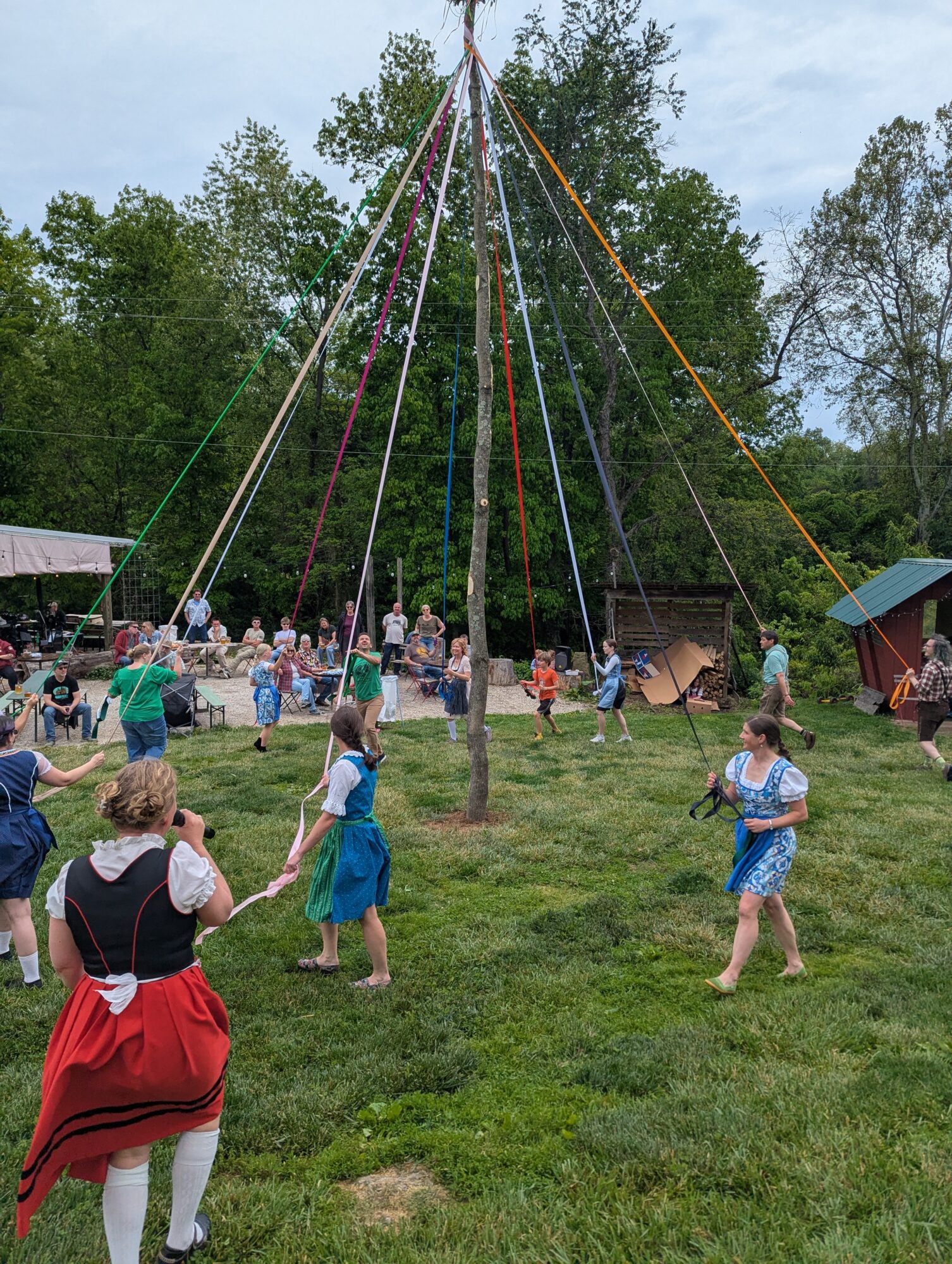
The end of winter always deserves a party! In Germany, Maifest takes place in the beginning of May, marking the arrival of Spring. At the Wooly Pig, the Maibaum (May Pole) is harvested from the farm and erected in the yard. To celebrate, visitors are invited to grab a ribbon and dance to the strains of a local band. (Bluegrass banjos might not be the classic Maifest accompaniment, but it works in the Appalachian foothills!.) There’s no improving on the Maibock, though! This classic strong golden lager is balanced with a healthy dose of quintessential German hops, and tapped especially for the occasion.
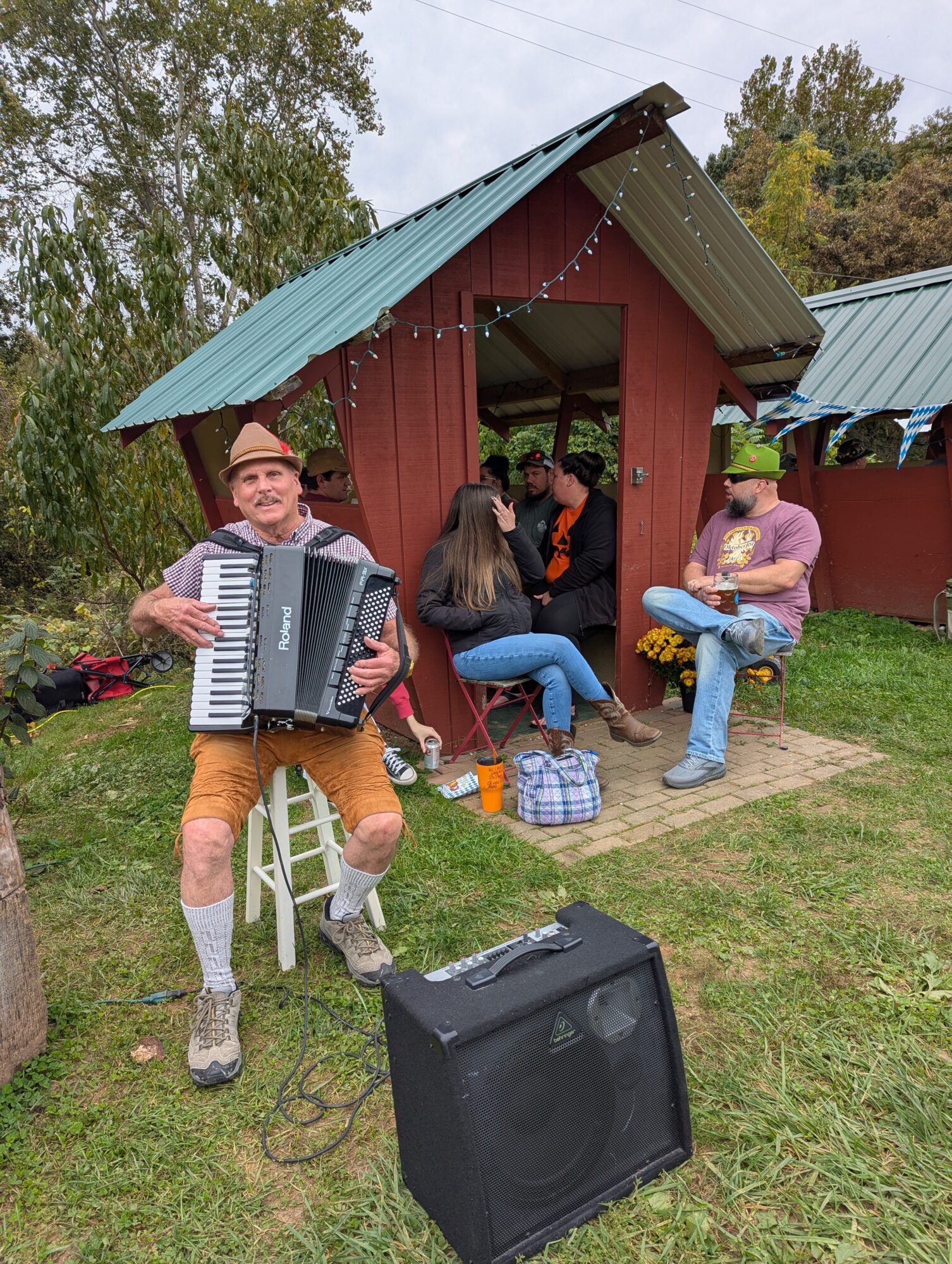
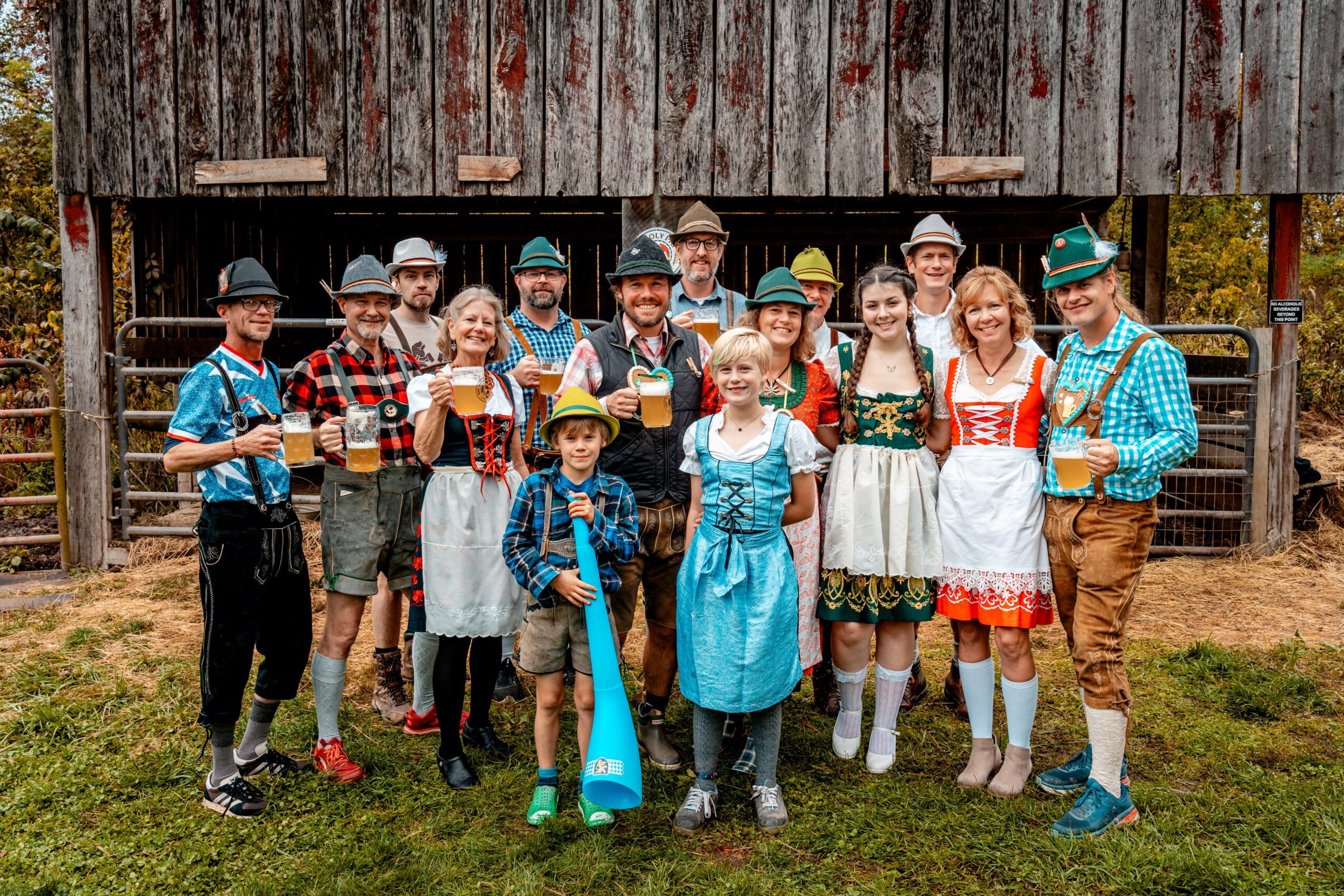
The biggest festival of the brewery year is Oktoberfest, and one has to dig deep into German vocabulary to find the right words! Oktoberfest at the Wooly Pig is marked by tapping of the specially-brewed Festbier from a traditional hand-made wooden barrel called a holtzfass. If visitors don’t have trachten to wear, they can admire the staff in their dirndls, lederhosen and alpine hats (and maybe be inspired for next year)! What would a celebration be without games and party favors? There’s a stein-holding competition for men, women and children alike. And fest-goers can give their sweethearts locally-made lebkuchen, heart-shaped cookie necklaces decorated with flowers and Oktoberfest messages.
November, when nights are long, is the perfect time for the tapping of the Bock beer and for Bierstacheln. Bierstacheln or “beer sting” is the historic practice of gently submerging a red hot poker into a cold mug of something dark and strong. At the Wooly Pig, the wrought iron pokers (or stachelns) are made by Todd Malenke, a blacksmith and father of the brewery’s owner. Heated to glowing in the outside fire pit, the stachelns cause the Bock to foam thickly, caramelizing the sugars and warming the beer’s head, creating a contrast with the remaining cold, yet robust malty flavors and hoppy bite in the dark amber lager. While this may not be the most well-known German tradition, its authentic and delicious outcome make it a favorite!
Year ‘round, the Wooly Pig Farm Brewery offers a variety of beers and experiences. Come try some old traditions and make some new friends!
Before we go, is there anything else you can share with us?
Kevin Ely, Co-owner/brewmaster had been a brewer for quite a while. He studied Biochemistry and Brewing Science at UC Davis in the mid 90’s and completed a brewing internship at Ska Brewing in Durango, CO in 1998 and has been a professional brewer for over 25 years.
Contact Info:
- Website: https://www.woolypigfarmbrewery.com
- Instagram: Wooly Pig Farm Brewery
- Facebook: woolypigfarmbrewery
Popular
-

Hidden Gems: Local Businesses & Creatives You Should Know
-

The Change-Makers: stories that inspire
-

Portraits of Ohio
-

Take Flight: Lamar Thomas on Building an Inclusive Brand Rooted in Youth, Community, and Purpose
-

Cultivating Inner Clarity: Angel Inspires on Thought, Healing, and Purpose
-

Local Highlighter Series