



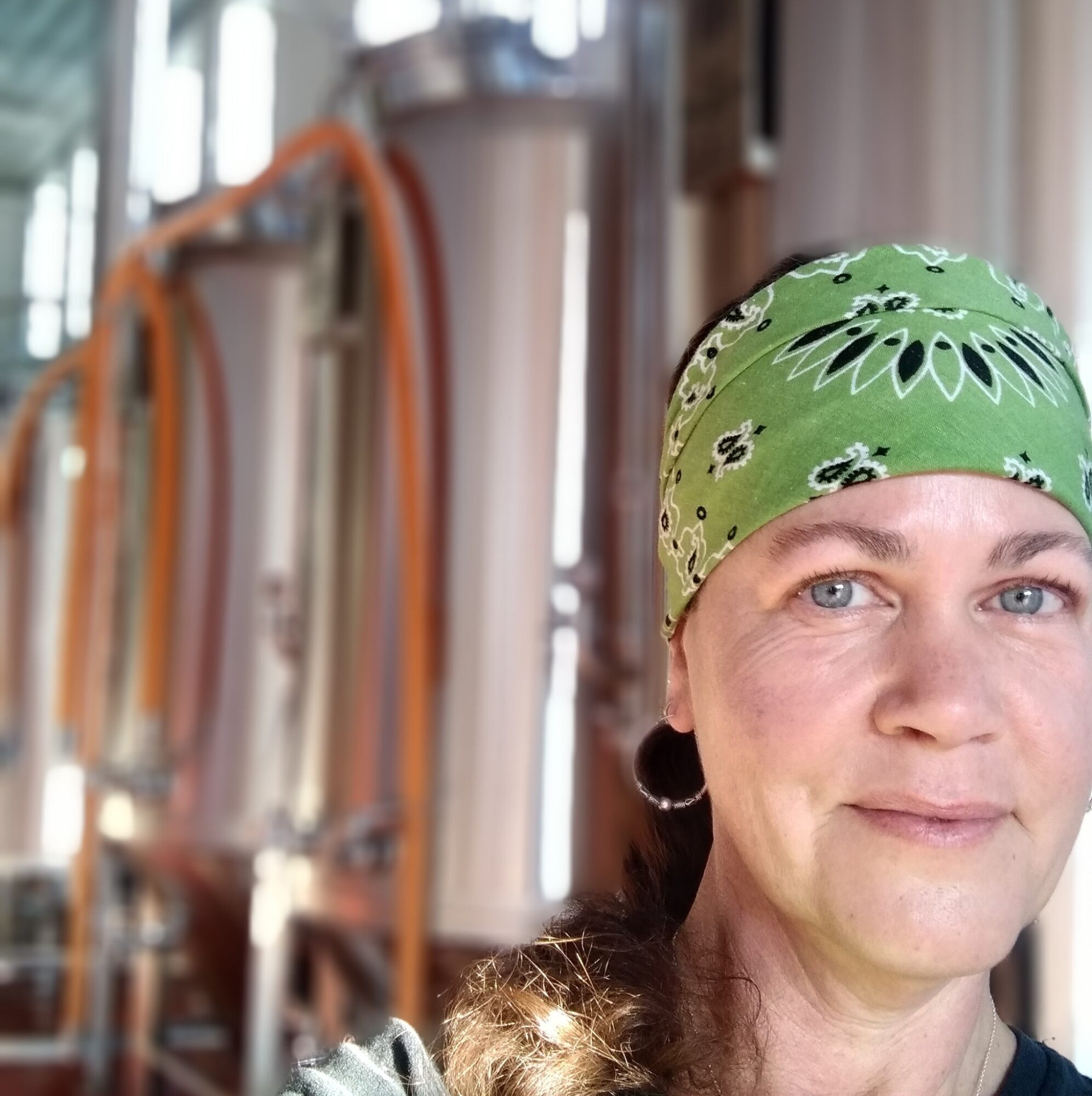
Today we’d like to introduce you to Jennifer Hermann.
Hi Jennifer, so excited to have you on the platform. So before we get into questions about your work-life, maybe you can bring our readers up to speed on your story and how you got to where you are today?
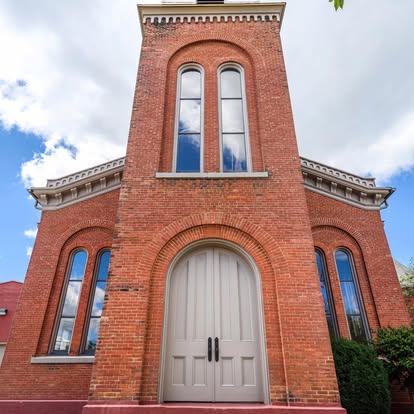
I am the Head Brewer and Co-founder of Bell Tower Brewing Co. in Kent, Ohio. We are preparing to celebrate our 5th Anniversary this October, 2026! The following answers are based on both of these roles at Bell Tower, but focusing mostly on my philosophy about crafting beer.
I homebrewed for about two decades before I became a professional brewer, and I came into brewing somewhat sideways. I never grew up thinking I was going to be a brewer, and I certainly didn’t follow the traditional brewing-school-to-brewery path. What began as a hobby slowly became an obsession figuring out why beer does what it does—and eventually I found myself building a career around something I never expected to become such an important part of my life.
My homebrewing years showed me camaraderie through shared joy, the power that freedom of expression—and interpretation—carries, and the profound connection that can happen when something you create becomes meaningful to someone else. Homebrewing also taught me how to let go of a bad beer, figure out what went wrong, and start again. That’s a lesson that has stayed with me throughout my professional career. Beer is complicated. Enjoying it shouldn’t be.
I learned by doing, and asking a lot of questions. I wanted to understand the technical side of brewing, but I also wanted to understand the why behind it—why a yeast behaves differently at one temperature than another, what water chemistry contributes to the finished beer, how a small change in process can alter perception, and why two beers made with seemingly similar ingredients can tell completely different stories. I’m still a student of beer, and I think that’s one of the things I love most about the craft: there is always something more to learn.
My curiosities eventually led me beyond brewing itself. I became a Certified Beer Judge and a Cicerone, experiences that taught me to pay attention not only to how beer is made, but to how it is perceived, evaluated and experienced. That perspective absolutely helped shape the beer program I’ve created for Bell Tower. I love being able to move between German lagers, American IPAs, Belgian and English ales—not because I want to make everything, but because every style asks me different questions. Each one has its own history, traditions, technical challenges and opportunities for individual interpretation.
Competition was also part of my education. Wining medals is gratifying, of course, but what I value most is what sits behind them: the experimentation, failures, adjustments and refinement that nobody sees. An award doesn’t tell me that I’ve mastered brewing; it tells me that, at least on that particular day, I got something right—and gives me another reason to keep learning.
I’ve also come to understand that brewing isn’t just about making technically good beer. It’s about creating an experience and telling a story, and that’s something I approach with absolute intention. The beer, the building, the brews who create and care for itmthe ones who serve it, and the people who drink it are all part of the same experience.The technical craft gets the beer into the glass. Everything else is what makes someone want to come back to it.
Bell Tower represents what I’ve grown into. I’ve become a better brewer, a trusted voice in the industry and a much more resilient person because of the challenges I’ve overcome. I’m very proud of what I’ve built, but I’m most proud of who I had to become to build it.
Can you talk to us a bit about the challenges and lessons you’ve learned along the way. Looking back would you say it’s been easy or smooth in retrospect?
Absolutely not. I don’t think I would trust a career in brewing that had been.
There have been plenty of technical challenges: equipment failures, fermentation problems, recipes that didn’t behave the way I expected, and what I like to call establishing relationships with machines. Every piece of brewery equipment has a personality. Pumps have moods, boilers have temperaments, glycol systems develop opinions, and eventually you learn the difference between a normal noise and the noise that makes you stop and say, “What the hell was that?”
Brewing on a larger scale has a wonderful way of showing you that a recipe that behaves perfectly on a small batch can have a completely different personality in a production brewhouse. You learn pretty quickly that brewing isn’t just about knowing what should happen. It’s about recognizing what is actually happening and figuring out what to do next.
Some of the hardest lessons, though, have had nothing to do with beer. Building a business with other people is complicated. You can be completely aligned on the goal and still disagree about how to get there. I’ve learned that being passionate about something doesn’t automatically make my perspective the correct one. Sometimes you need to listen and change your mind. Sometimes you need to be willing to say, respectfully, that you think something isn’t working.
That’s taught me that judgment matters as much as resilience. Resilience isn’t simply pushing through every problem. It’s knowing when to keep going, when to change course, and when to admit something isn’t working. Sometimes that means dumping the beer. Sometimes it means having a difficult conversation. Sometimes it means taking serious time away from the job.
Running a brewery has also taught me that craftsmanship and hospitality aren’t opposing forces. The business side of brewing isn’t inherently opposed to making great beer. The challenge is protecting what matters while still making the decisions necessary to keep the whole thing healthy.
The medals are wonderful, and I’m proud of them. But some of the things I’m proudest of aren’t on an awards shelf. They’re the judgment to know when something needs to change, the willingness to keep learning, and the ability to keep caring about the beer and the people around it when things aren’t going according to plan.
So no, it hasn’t been a smooth road. But I don’t think I would want it to have been. Making beer is only part of the job. The rest is learning how to navigate people, problems and uncertainty without losing sight of why you started in the first place.
Alright, so let’s switch gears a bit and talk business. What should we know about your work?
I’m a brewer, but over time I’ve come to think of myself as a bit of a liquid artist. I like taking an existing idea and figuring out how to get it into a glass. That means understanding the ingredients, the process, the science—and then knowing when to stop listening to the rules and start listening to the beer.
I’m endlessly curious about why things work. Water chemistry, yeast, fermentation, ingredients, process, scale—I can get pretty obsessive about all of it. But I don’t want to make beer that’s technically correct and forgettable. I want it to have a point of view. I want someone to taste it and know that somebody cared about what was in the glass.
I love traditional styles because they teach you discipline. A great lager doesn’t give you many places to hide. But I also love experimentation, and I’m not particularly afraid of getting something wrong. Some of the best beers I’ve made started with an idea that didn’t behave exactly the way I expected. You learn to pay attention, make adjustments and sometimes admit that the beer knows more than you do.
I think what sets me apart is that I live pretty comfortably between the technical and intuitive sides of brewing. I want to understand the science behind a decision, but I also trust my palate. I’m interested in creating balance, texture, drinkability and character—not just making a beer that checks the technical boxes.
And I’ve come to believe that the beer isn’t really finished when I finish brewing it. It’s finished when somebody else experiences it. Beer has always been part of ritual and community—celebrations, conversations, hospitality, people gathering around a table. Bell Tower was founded on the belief that beer has the power to bring people together, and the longer I do this, the more I understand what that really means. We make the liquid, but we don’t get to control what it means to the person drinking it.
Ultimately, my job is to make something technically sound, genuinely delicious and distinctive enough to mean something to the person holding the glass. Science tells me what I can do. Experience teaches me when to do it. But ultimately, it’s the people experiencing it that make the meaning.
What matters most to you?
People. I think that’s the short answer. A lot of what artists create matter because of what it means to other people.
I care deeply about craft and excellence. Of course, I want to make great beer, and I’m endlessly curious about why something works. But craftsmanship, to me, is also a form of respect: for the ingredients, the tradition, the people who taught me, and the people I’m making it for.
That’s where hospitality comes in. A great beer can become part of a much bigger experience. It can bring people to a table, start a conversation, mark a celebration, or become part of a memory.
The awards are meaningful, and I’m proud of them, but they’re evidence of the work, not the reason for it. What matters most to me is creating something that has meaning beyond itself, whether that’s the beer, a place, something I’ve taught someone, or simply a moment that mattered to another person.
I think that’s what I want my work to leave behind: something well made, something worthwhile, and something that made another person’s life a little richer.
Contact Info:
- Website: https://www.belltowerbrewing.com
Popular
-

The Change-Makers: stories that inspire
-

Hidden Gems: Local Businesses & Creatives You Should Know
-

Portraits of Ohio
-

Take Flight: Lamar Thomas on Building an Inclusive Brand Rooted in Youth, Community, and Purpose
-

Cultivating Inner Clarity: Angel Inspires on Thought, Healing, and Purpose
-

Local Highlighter Series