



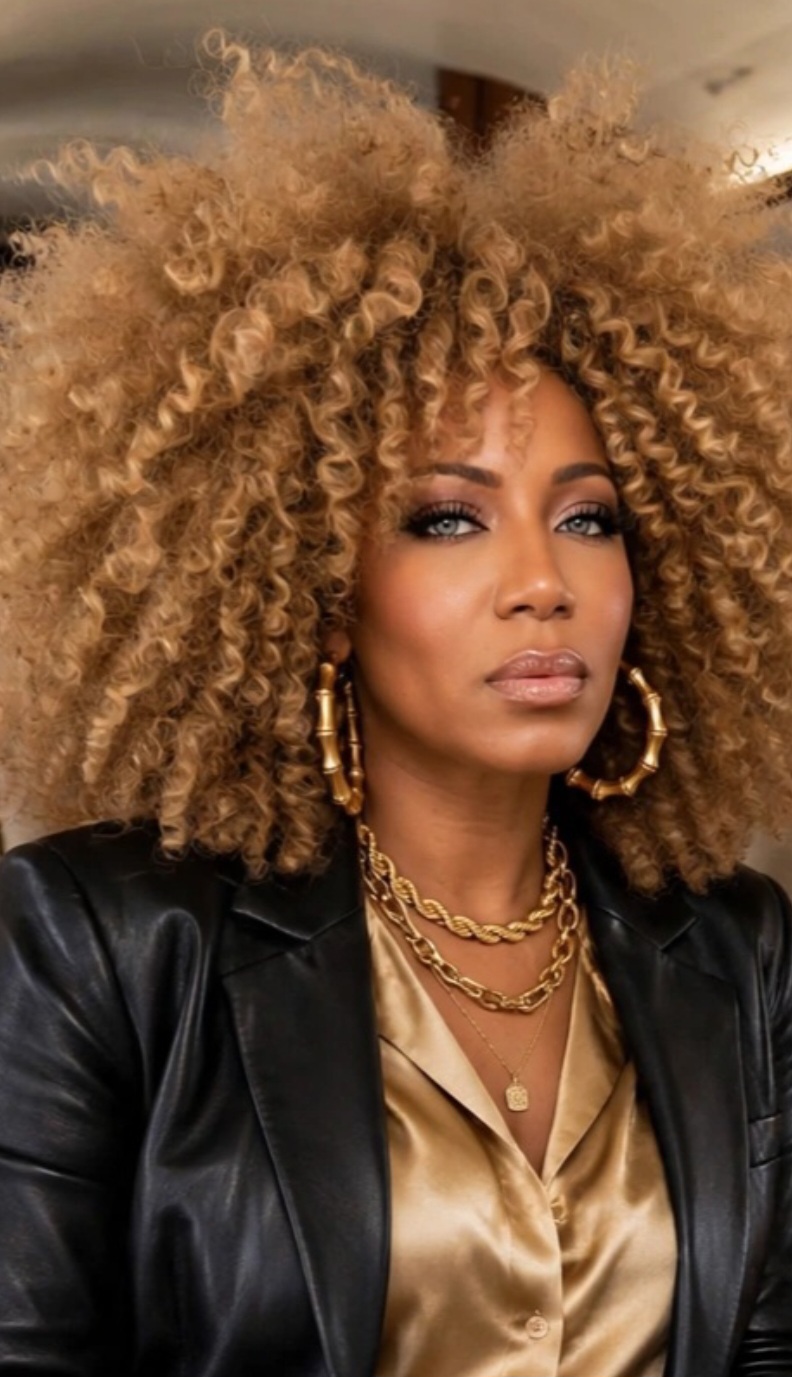
Today we’d like to introduce you to Australia Lawrence.
Hi Australia , we’re thrilled to have a chance to learn your story today. So, before we get into specifics, maybe you can briefly walk us through how you got to where you are today?
My story has never followed a straight line, and I think that has ultimately been one of my greatest advantages. I spent many years working in healthcare and healthcare technology, including large-scale clinical systems and implementation work. That world taught me how to think in systems—how individual pieces connect, where processes break down, and how an idea has to function in the real world, not just sound good on paper.
Over time, that way of thinking began showing up in areas far beyond my professional work. I found myself creating, researching, developing concepts, and asking a question that still drives much of what I do today: Why does it have to be done the way it has always been done?
Eventually, I began building around those ideas. Today, my work crosses business strategy, creative development, technology, product development, and intellectual property. On the surface, the projects themselves can look very different. To me, they are connected by the same discipline: identify what is missing, create something with intention, and build the structure necessary for it to grow.
I have also learned to be comfortable building quietly. I don’t believe everything has to be announced while it is being developed. Some of my most important work has happened away from public view, where there is room to research, make mistakes, refine an idea, and decide what it truly needs to become.
Where I am today is really the result of allowing myself to remain curious. I haven’t limited myself to one title or one industry, and I no longer believe that everything meaningful about a person’s work has to fit neatly into a single box. I’m still building, still learning, and still asking what is possible.
I’m sure it wasn’t obstacle-free, but would you say the journey has been fairly smooth so far?
No, it has not been a smooth road—and I don’t think meaningful work usually is.
One of the greatest challenges has been building in spaces where I did not necessarily arrive through the traditional door. When you move across disciplines, people often want an easy explanation of who you are and why you belong there. I learned that I didn’t need to fit someone else’s expected profile before I could learn, create, or contribute something valuable.
There have also been the practical challenges: protecting intellectual property, finding the right collaborators, navigating systems I had never encountered before, and learning when an opportunity was genuinely aligned versus simply available. Some things have taken far longer than I expected. I’ve had ideas rejected, doors remain closed, projects change direction, and moments when I had to go back and rethink something almost entirely.
Perhaps the hardest lesson has been understanding that creating something and building something are two different disciplines. A great idea is only the beginning. You have to research it, protect it, structure it, communicate it, and develop it into something that can function beyond the original idea.
I’ve also learned not to confuse a “no” with a final answer. Sometimes no means the idea needs work. Sometimes it means you’re speaking to the wrong person. And sometimes it simply means not yet.
Those experiences have made me more deliberate. I research more, protect what I create, share thoughtfully, and pay close attention to who and what I allow into the building process. The road hasn’t been smooth, but the difficult parts have sharpened how I operate.
Alright, so let’s switch gears a bit and talk business. What should we know about your work?
My work is difficult to place into one conventional category, which is something I have come to appreciate rather than resist. My professional foundation is in healthcare technology, where I spent years working with complex clinical systems, implementations, workflows, training, and large-scale projects. That experience taught me to look beyond individual tasks and understand how entire systems work together.
Today, I apply that same way of thinking much more broadly. My work involves strategy, creative development, intellectual property, technology, product development, and building ideas from concept toward something tangible and sustainable. I am particularly interested in the space between an idea and its execution—figuring out what something could become, what makes it distinct, and what structure is necessary to support it.
I don’t consider myself defined by a single industry. I can be deeply involved in a creative project and then approach a completely different problem through research, systems thinking, or business strategy. To me, those aren’t competing identities. They are different applications of the same ability to see connections and possibilities that may not be immediately obvious.
What I am most proud of is becoming comfortable trusting that ability. There was a time when I thought credibility required staying within the boundaries of what I had already done professionally. I’ve learned that experience can be a foundation without becoming a limitation.
What sets me apart is probably the combination of curiosity and discipline. I ask a lot of questions, including whether something needs to exist in its current form at all. But I also understand that originality alone isn’t enough. An idea needs research, structure, execution, and the patience to develop into something meaningful.
I have also become comfortable not having everything figured out at the beginning. I can enter an unfamiliar space, learn its language, understand how it works, identify what I don’t know, and keep moving. I think some of the most interesting possibilities appear when you’re willing to learn beyond the boundaries of what you’re already known for.
Before we go, is there anything else you can share with us?
I think one of the most important things I’ve learned is that you don’t have to become only one thing.
We are often encouraged to choose a lane, define ourselves by a title, and stay close to what we’ve already proven we can do. I understand the practicality of that, but I also think it can cause people to underestimate their own capacity.
Curiosity has taken me into rooms I wasn’t originally trained for and into subjects I once knew very little about. I have learned to research, ask questions, find people who know what I don’t know, and be willing to begin again as a student. There is something powerful about being comfortable enough with what you know to admit what you don’t.
I also believe there is a difference between being seen and building something worth seeing. We live in a time when there can be enormous pressure to announce everything—to make the idea public, document the process, and prove that you’re moving. I’ve learned to value the part of creation that happens before anyone is watching. Not everything needs an audience while it is becoming.
At this stage of my life, I’m less interested in fitting into a category and much more interested in doing work that is thoughtful, original, and useful. There are still things I want to learn, things I want to create, and ideas I haven’t even had yet.
I like that.
I hope I never reach the point where I think I’ve become all that I’m capable of becoming.

Image Credits
Larencielle Productions
Popular
-

The Change-Makers: stories that inspire
-

Hidden Gems: Local Businesses & Creatives You Should Know
-

Portraits of Ohio
-

Take Flight: Lamar Thomas on Building an Inclusive Brand Rooted in Youth, Community, and Purpose
-

Cultivating Inner Clarity: Angel Inspires on Thought, Healing, and Purpose
-

Local Highlighter Series