



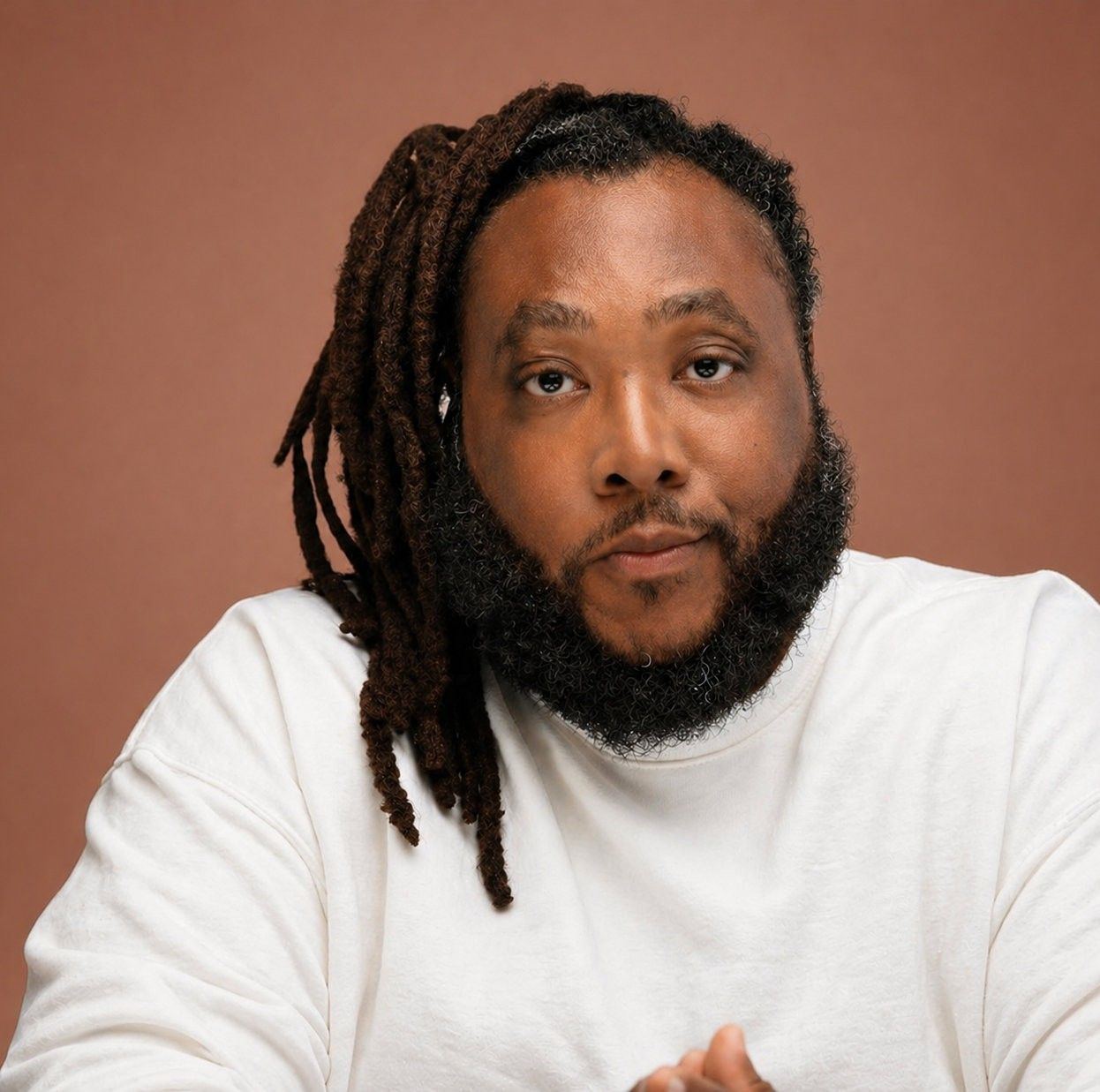
Today we’d like to introduce you to Jide Fresh.
Hi Jide, can you start by introducing yourself? We’d love to learn more about how you got to where you are today?
The funny thing is, VoyageOhio interviewed me a couple of years ago, and I told a lot of the story of how I became Jide’ Fresh. So I won’t make everybody sit through the sequel to the origin story.
The short version is that I’ve spent most of my life making things. I’ve been a graphic designer, photographer, videographer, author, artist, entrepreneur, and probably five or six other titles depending on what day you catch me. For a long time, I thought I needed to figure out which one I was. At this point, I’ve pretty much accepted that I’m all of them.
What’s changed over the last few years is how I think about the purpose of the work.
I’ve become much more interested in what happens when art leaves the wall or the page and becomes something people actually participate in. Can a book get somebody to have a conversation? Can art help somebody think about their mental health without feeling like they’re doing mental health work? Can creativity get people outside, moving around, meeting each other, or looking at a place they’ve passed a hundred times differently?
I have a saying that has become a big part of my work: **People need help, but help feels like work.** So I’ve been trying to make the work feel less like work.
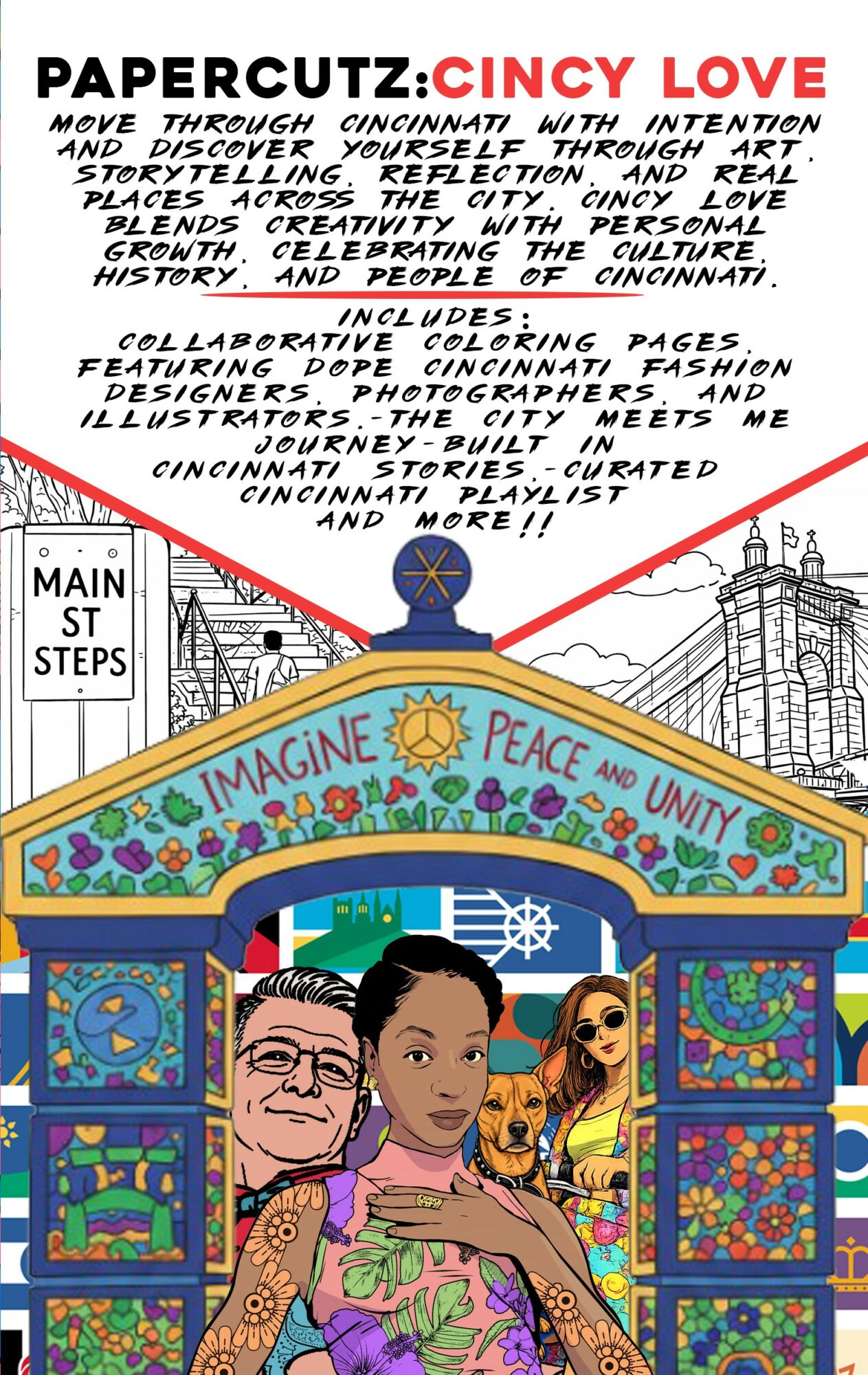
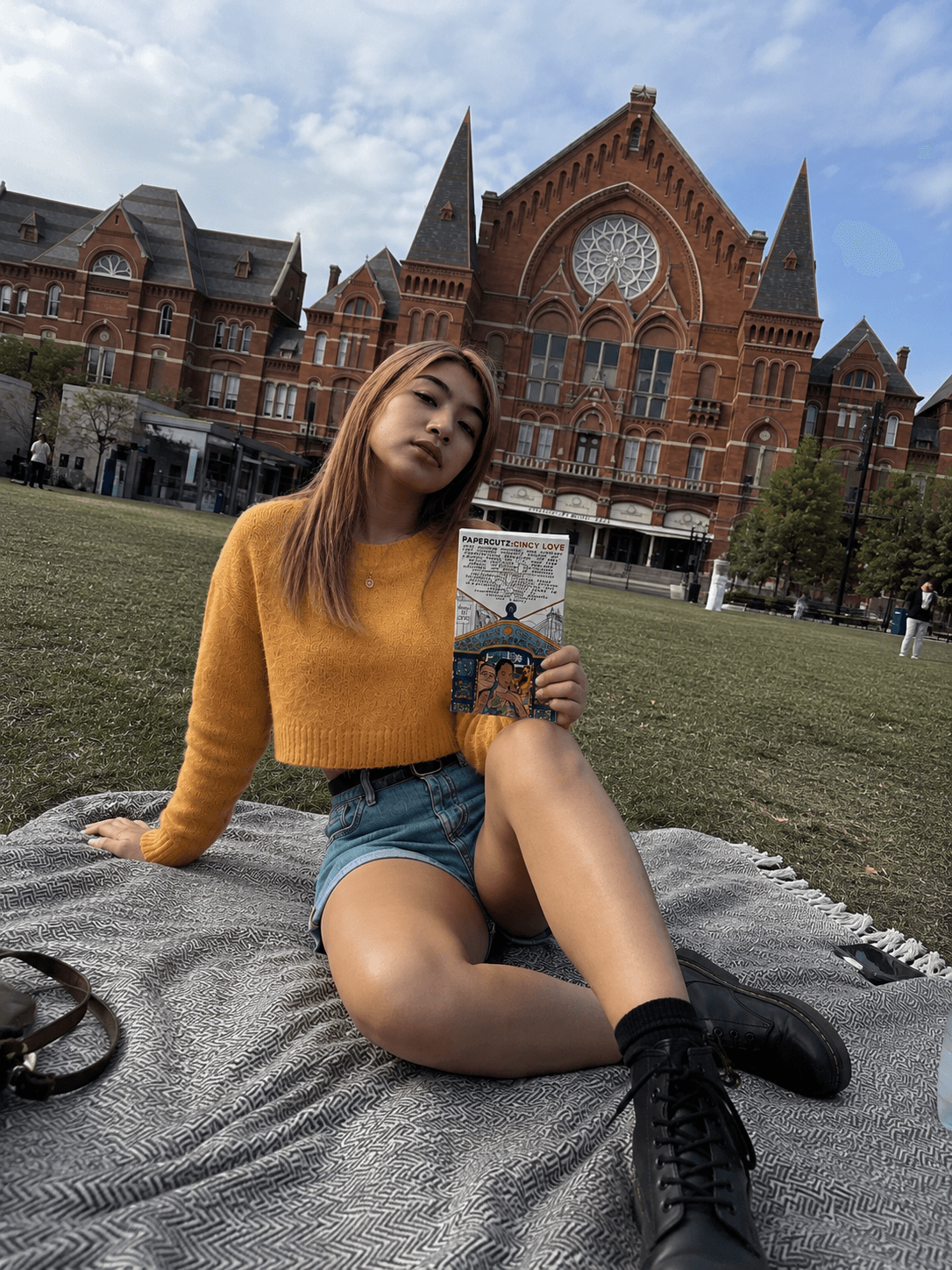
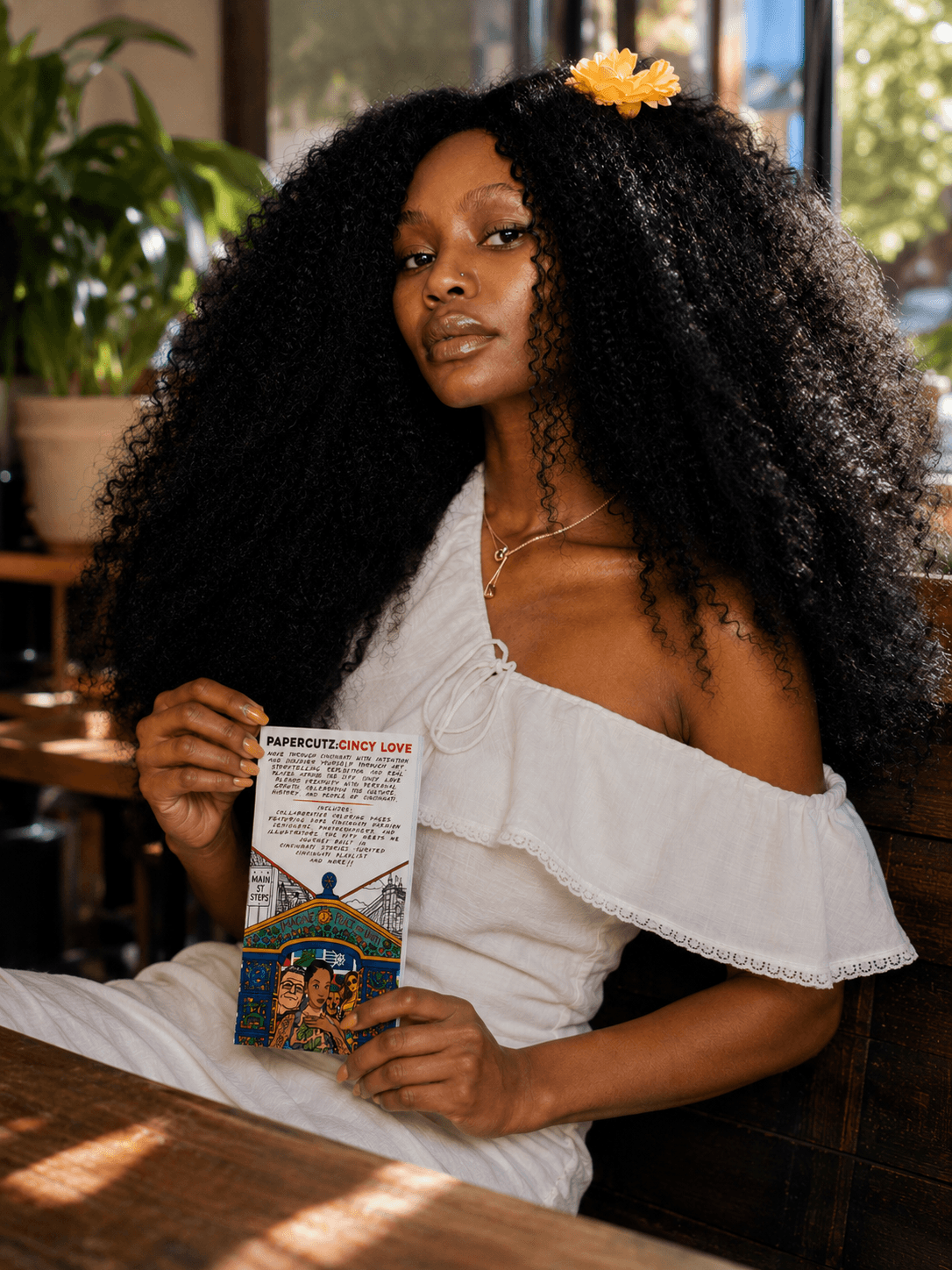
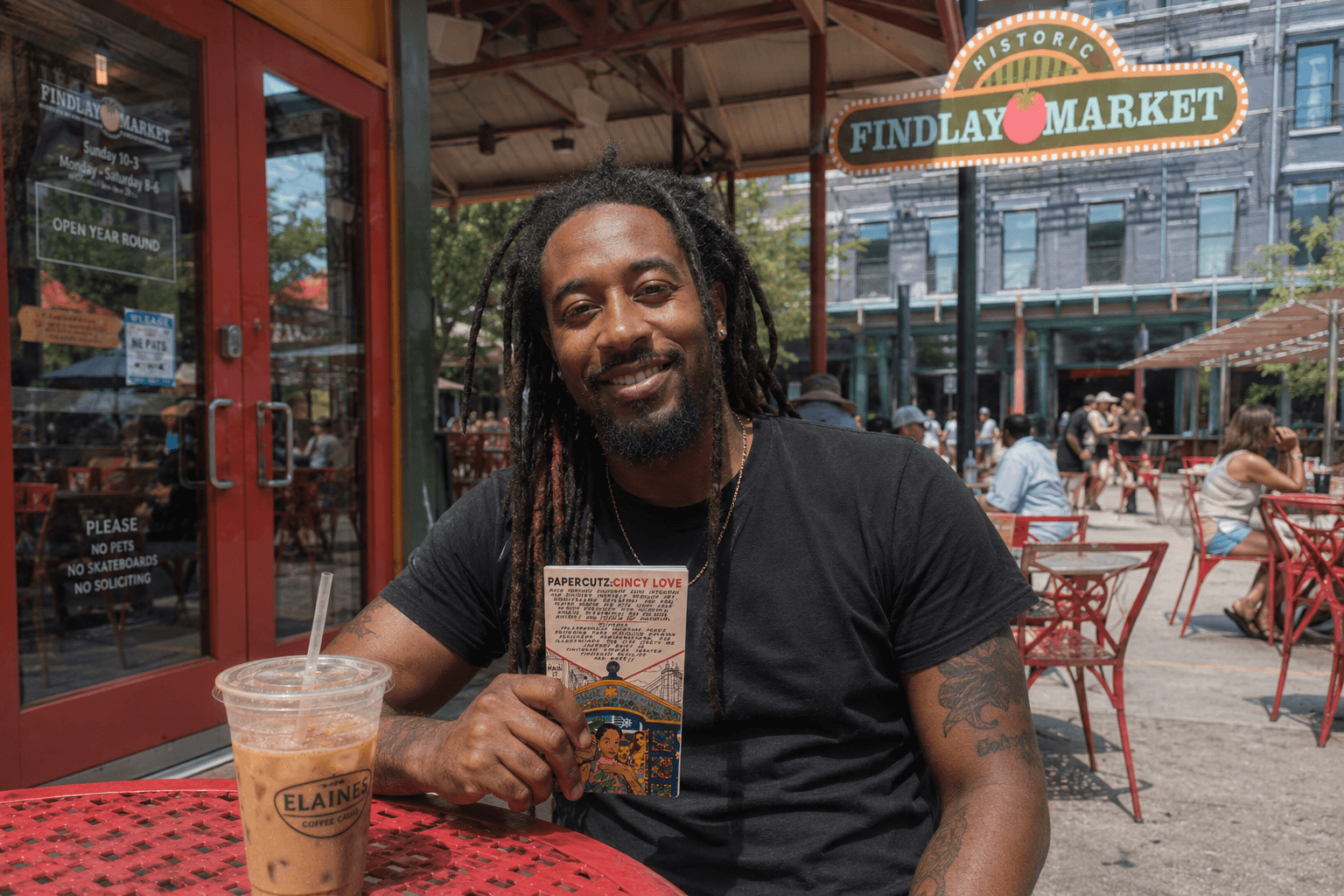
That’s really what has led me to where I am today and to my newest project, *PaperCutz: Cincy Love*.
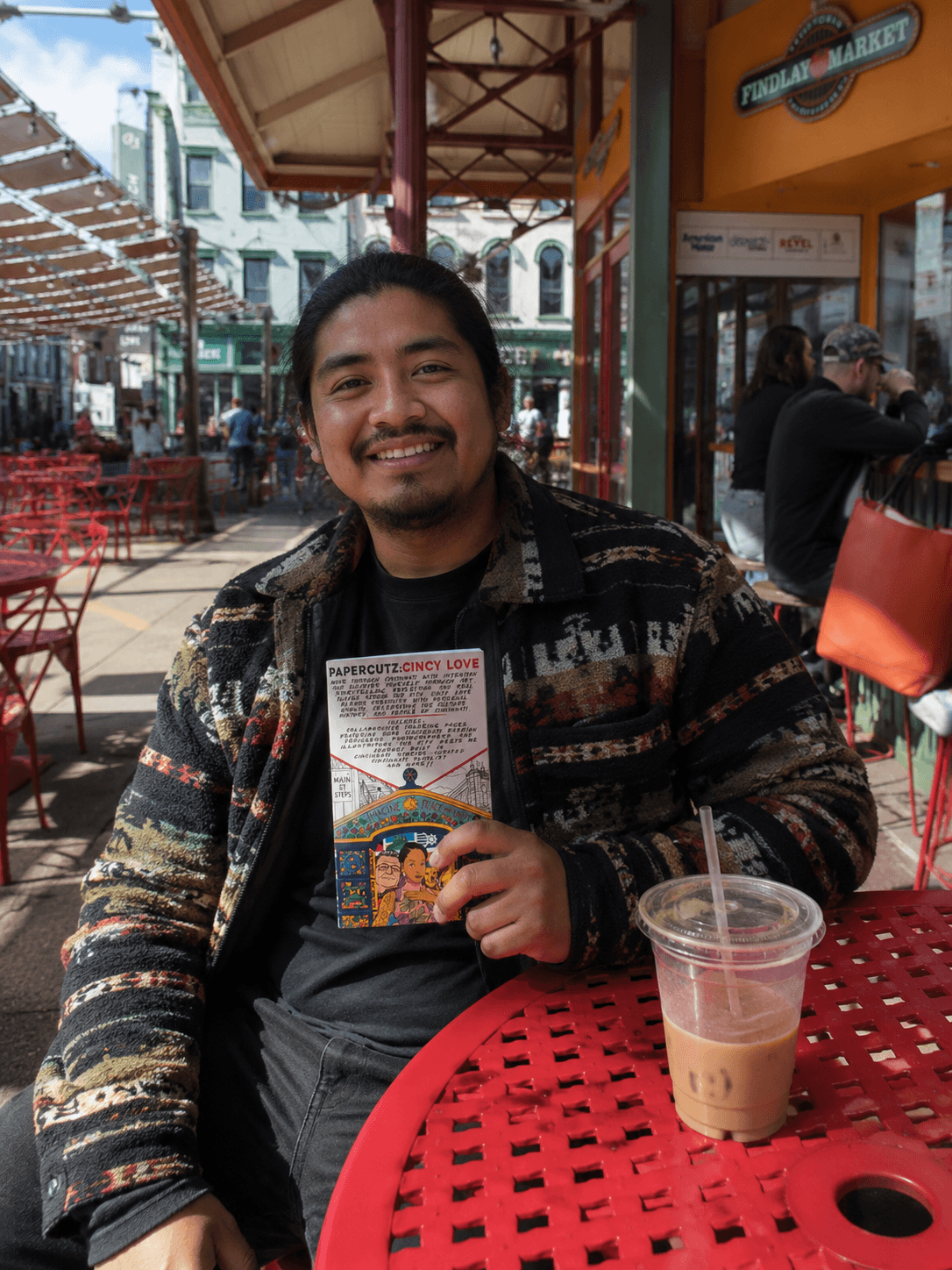
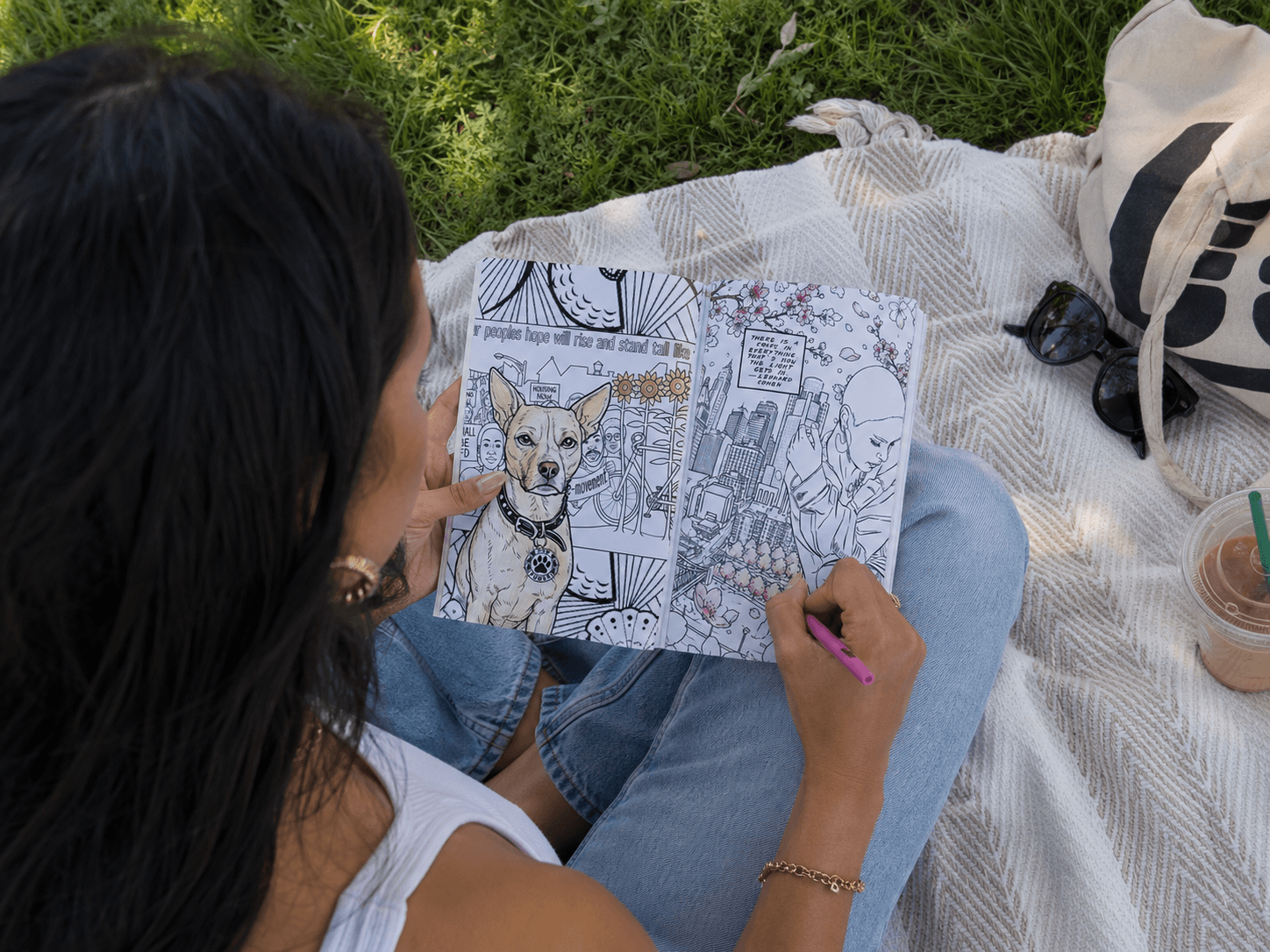
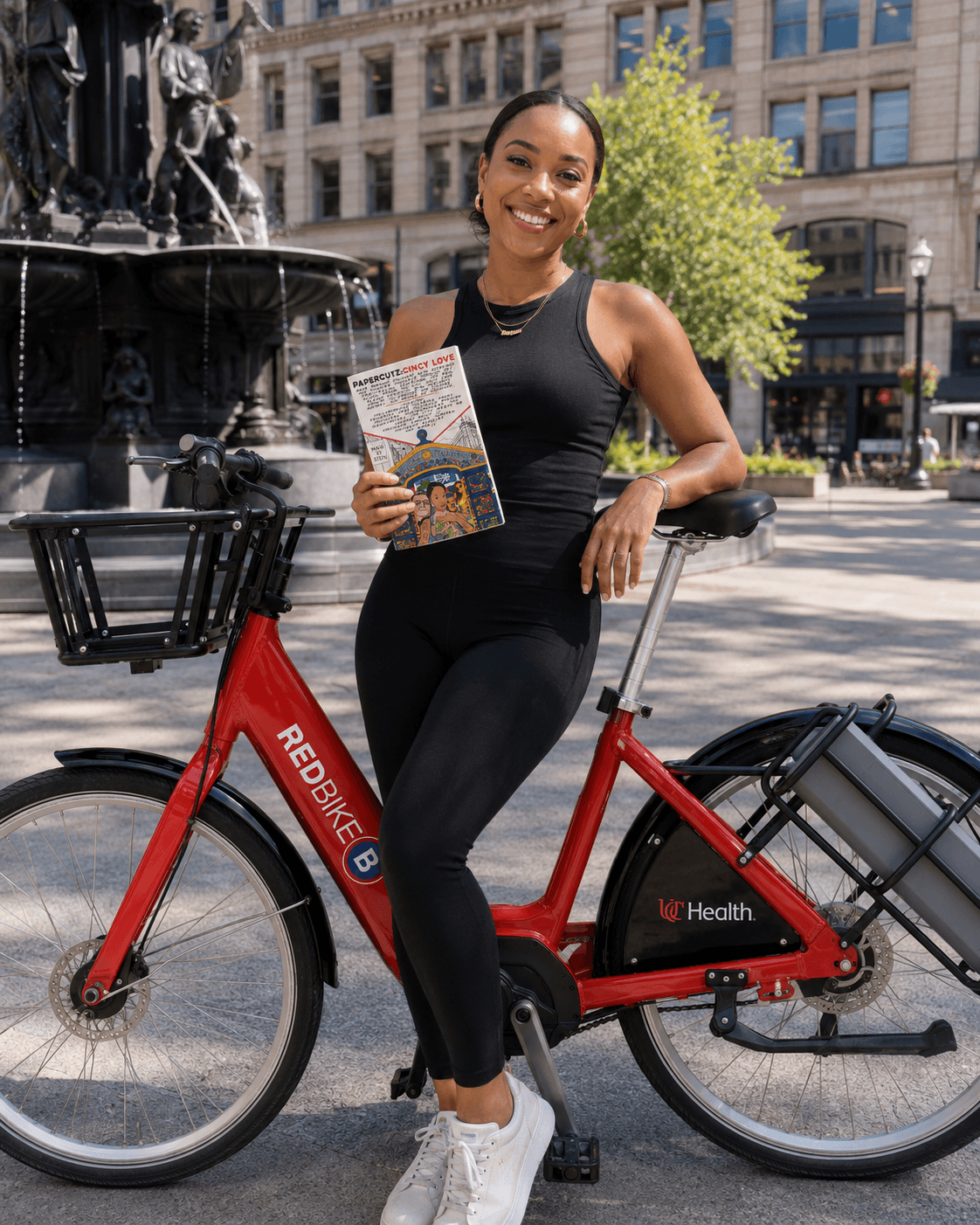
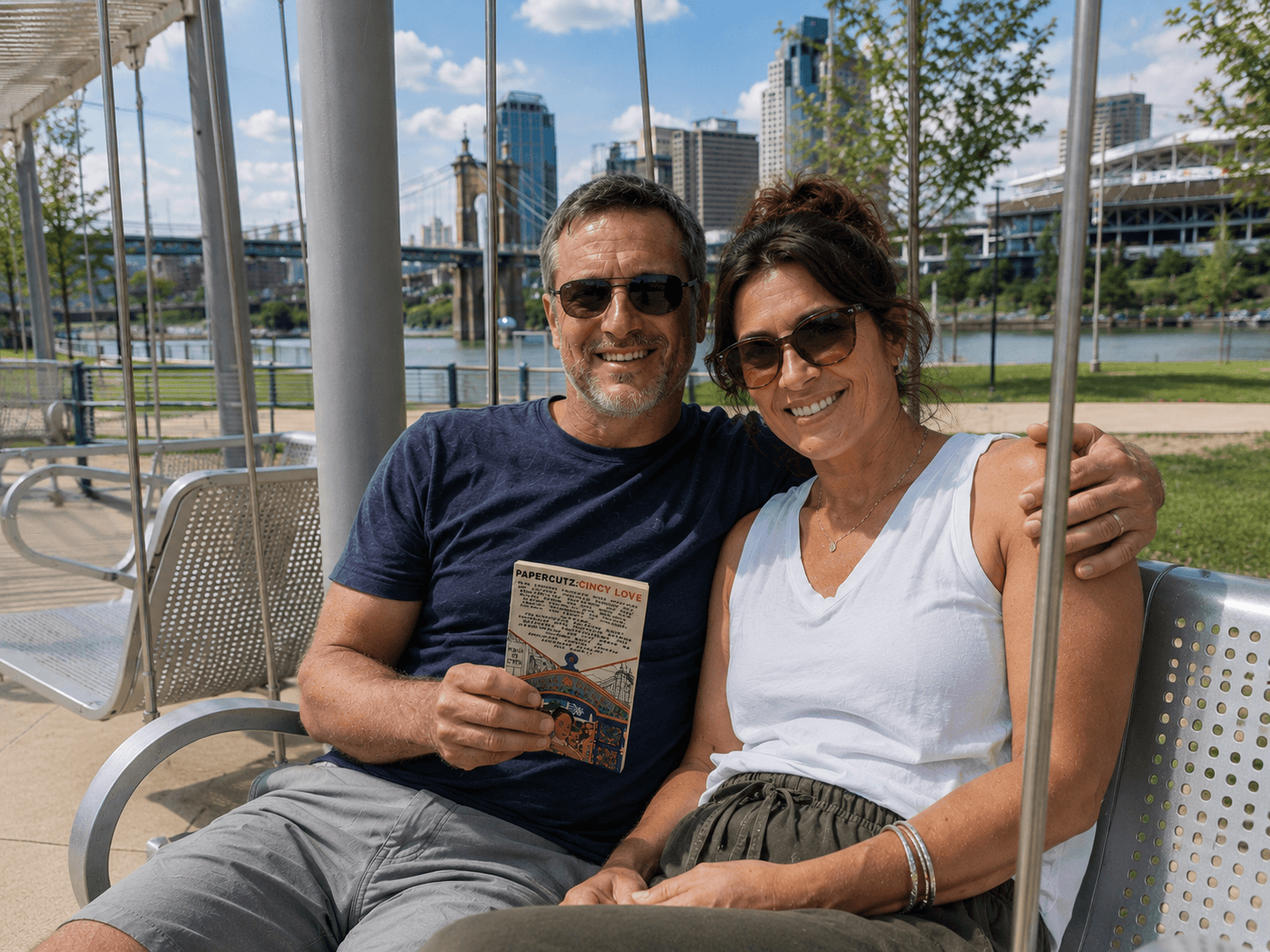
*Cincy Love* takes a lot of the ideas I’ve been experimenting with over the years and turns Cincinnati itself into part of the experience. It’s a book, but I don’t really want people to just sit at home and read it. I want you to put it in your pocket, go outside, ride the streetcar, walk somewhere you’ve never walked, listen to the music, color something, meet somebody, and maybe notice something about Cincinnati that you’ve been driving past for the last ten years.
I’ve lived around this city for a long time, and I’m still discovering it. I think most of us are like that. We know our route to work. We know our neighborhood. We know where we get our food. But there’s a whole city happening around us that we don’t always experience.
So I guess that’s where I am today as an artist. I’m still making things, but I’m increasingly less interested in making something that you simply look at.
I want to make things that give you a reason to **go do something.**
Alright, so let’s dig a little deeper into the story – has it been an easy path overall and if not, what were the challenges you’ve had to overcome?
Not at all. *Cincy Love* actually started about two years ago as a much bigger idea than what you see today.
The original vision was kind of crazy. I wanted to bring together around 80 Cincinnati creatives and build something collectively. Photographers, fashion designers, illustrators, artists, all working together and interpreting the city through their own creative lens. In my head, it was going to be this huge creative love letter to Cincinnati.
That didn’t happen. [laughs]
We did get about 20 artists involved, which is still a lot of people to get moving in the same direction. The original goal was to create 20 full illustrated collaborations. We ended up completing five.
For a while, I looked at that as the project not working. I kept thinking about everything it was *supposed* to be instead of looking at what we had actually created.
Eventually I had to ask myself, **Why am I sitting on good work because it doesn’t match the original vision?** Twenty people gave their time and creativity to this. Five really beautiful pieces were finished. There’s something here. Put it out.
So I made the vision smaller, but strangely enough, I think the idea got bigger.
Instead of trying to make this massive showcase of Cincinnati creatives, I started thinking more about the person holding the book. What if the real point wasn’t just to show you Cincinnati? What if the book could actually get you to **go experience Cincinnati?**
That’s when *PaperCutz: Cincy Love* really started becoming what it is now.
I stopped measuring the project against the 80-person version that existed in my head and started building around what was actually in front of me. We incorporated the artwork, photography, music, places around the city, walking, reflection, coloring and exploration. The city became part of the book.
There’s probably a lesson in there that I’m still learning. Sometimes you have to let an idea fail in its original form so you can see what else it can become.
*Cincy Love* isn’t the project I imagined two years ago.
I think it’s better because of that.
Thanks – so what else should our readers know about your work and what you’re currently focused on?
I always struggle with this question because I do a lot of different things. I’m an artist, author, designer, storyteller, and creative director. I work across books, illustration, photography, video, sound, public art, and community experiences. Basically, if I have an idea, I don’t like being limited by the medium.
But if there is one thing I specialize in, it’s probably taking big ideas and figuring out how to make them approachable.
A lot of my work deals with things like mental health, identity, community, self-reflection, and how we connect with each other. Those can be heavy subjects. I’m interested in finding ways to sneak some of that medicine into something that feels good. That’s where my saying, **”People need help, but help feels like work,”** comes from.
Sometimes that becomes a coloring book. Sometimes it’s music. Sometimes it’s an installation, a walk through the city, a conversation, or something completely different.
I’m probably best known for my M.E.S.H. books, which stands for Mental, Emotional, Social, Health. I’ve created a whole collection of books that use art, storytelling, coloring, and activities as a different doorway into wellness and self-development. Over the years, that work has put me in rooms I never really expected to be in and allowed me to work with schools, museums, arts organizations, community groups, and people all over the place.
What I’m most proud of, though, isn’t necessarily one project. I’m proud that I’ve built a body of work that actually looks like me. It took me a long time to stop worrying about whether I was supposed to be an artist, a designer, an author, or an entrepreneur. Now I realize that being able to move between those worlds is probably my superpower.
*PaperCutz: Cincy Love* is a really good example of that.
It’s part coloring book, part city guide, part playlist, part self-reflection, part art project, and honestly, part excuse to get out of the house. [laughs]
I don’t know exactly what category you’re supposed to put that in.
And I kind of like that.
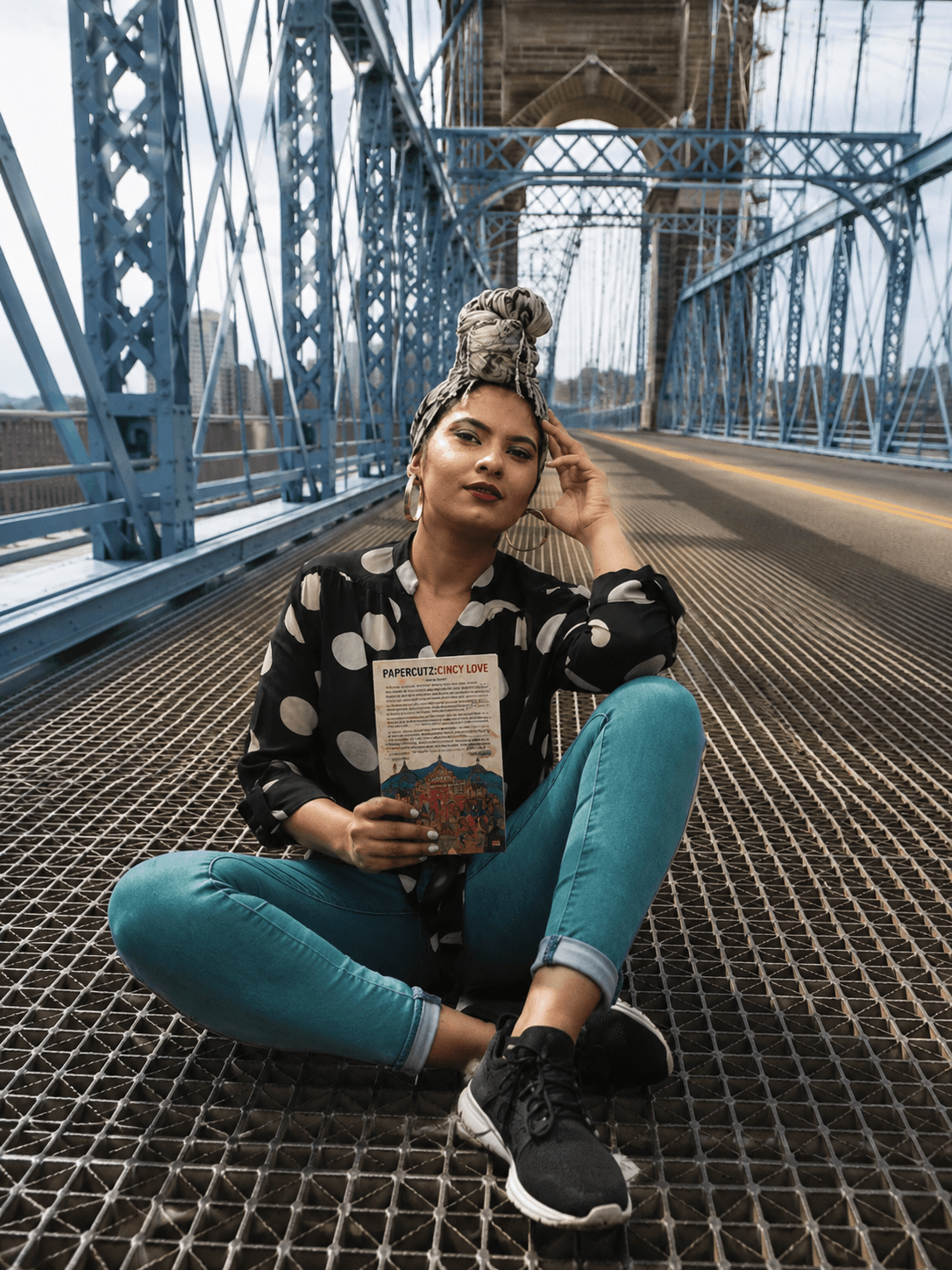
I want someone to pick it up because they think it’s cool, and then realize they’re being invited to experience their city differently. Go walk across the Roebling Bridge. Ride the streetcar somewhere. Find a little corner of Cincinnati you’ve never paid attention to. Put your headphones on. Sit down. Color. Think. Talk to somebody.
I think that’s what sets my work apart. I’m not that interested in telling people what they should feel or what they should learn.
I’d rather build something interesting enough that you walk into it on your own.
Risk taking is a topic that people have widely differing views on – we’d love to hear your thoughts.
I think being an artist is a risk in itself. You’re constantly making something that doesn’t exist yet and hoping somebody else sees what you see.
I’ve taken plenty of risks over the years, some smart and some probably questionable. [laughs] But I’ve also learned that risk doesn’t always mean making some huge dramatic leap. Sometimes the risk is simply putting something out before it’s perfect.
*Cincy Love* is actually a good example of that.
Like I mentioned earlier, this project didn’t become what I originally imagined. I could have easily kept working on it for another year, waiting for more artists, more illustrations, more money, more partnerships, more everything.
At some point I had to say, **this is enough to begin.**
That was a risk because I had to let go of the version in my head and believe in the version that actually existed.
I also took a financial risk. I printed 1,000 copies myself. There wasn’t a giant institution standing behind me saying, “Don’t worry, we’ll buy them.” I basically made the decision that I believed enough in this idea and in Cincinnati to put my own money behind it.
So now I have 1,000 little reminders of that decision sitting in boxes. [laughs]
But I think that’s part of building something independently. Sometimes you have to move before you have proof that it’s going to work.
My relationship with risk has changed, though. When I was younger, risk sometimes meant just jumping and figuring everything out on the way down. Now I’m more interested in calculated risk. What’s the worst realistic outcome? Can I survive it? What do I learn if it doesn’t work? And if it does work, what becomes possible?
With *Cincy Love*, the bigger risk might have been never releasing it at all.
I’d rather put something real into the world, learn from it, adjust it, and keep building than spend years protecting the perfect version of an idea that nobody ever gets to experience.
Pricing:
- PaperCutz: Cincy Love $20
- Hustle and Motivate $25
- Bad and Bushido $25
- Jits and Jots $25
- Capes and Come-Ups $25
Contact Info:
- Website: https://www.inflywetrust.com
- Instagram: https://www.instagram.com/inflywetrustinc/
- Facebook: https://www.facebook.com/inflywetrustinc
- Youtube: https://www.youtube.com/@inflywetrust8375
Popular
-

The Change-Makers: stories that inspire
-

Hidden Gems: Local Businesses & Creatives You Should Know
-

Portraits of Ohio
-

Take Flight: Lamar Thomas on Building an Inclusive Brand Rooted in Youth, Community, and Purpose
-

Cultivating Inner Clarity: Angel Inspires on Thought, Healing, and Purpose
-

Local Highlighter Series