



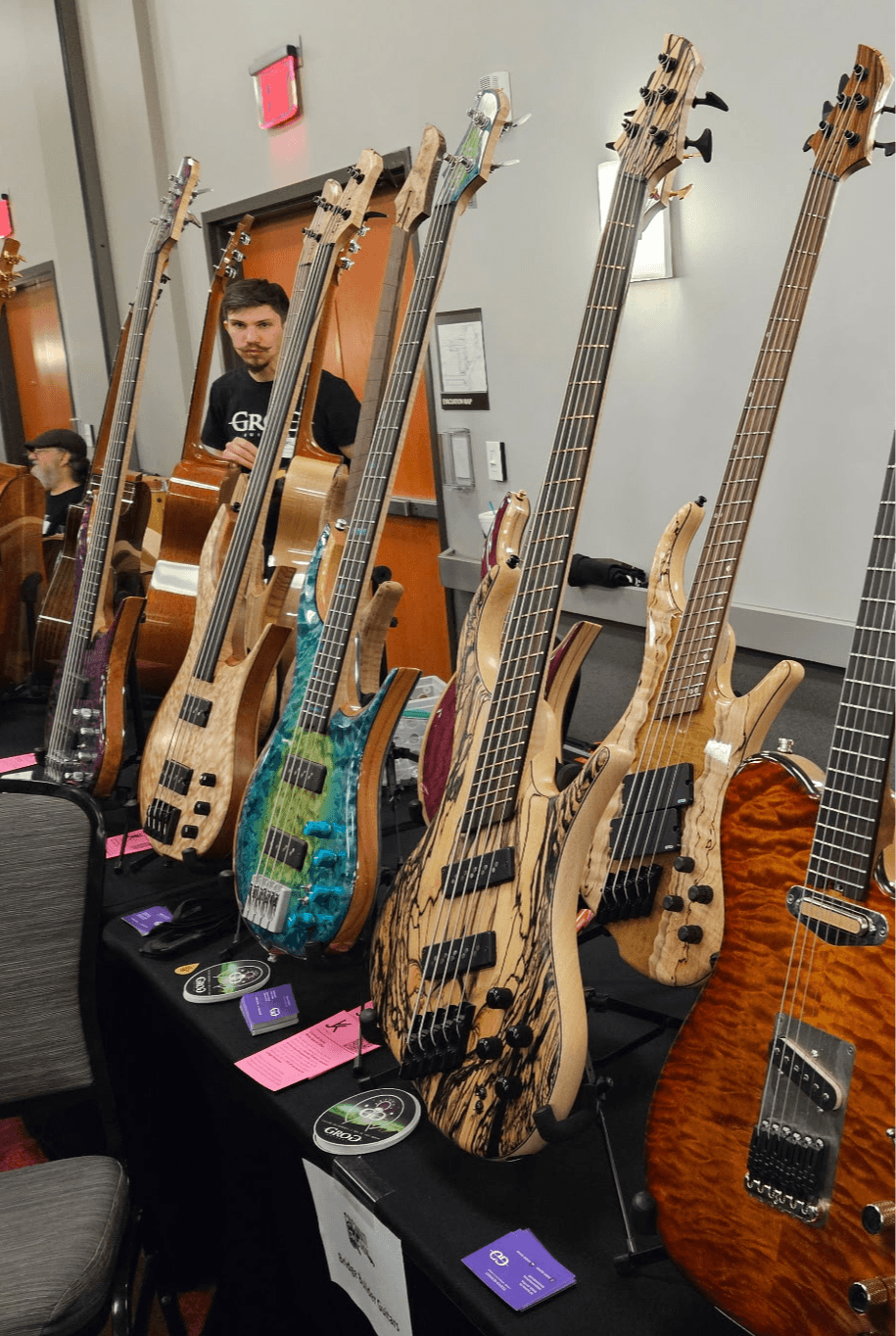
Today we’d like to introduce you to Tiernan McKinney.
Hi Tiernan, so excited to have you with us today. What can you tell us about your story?
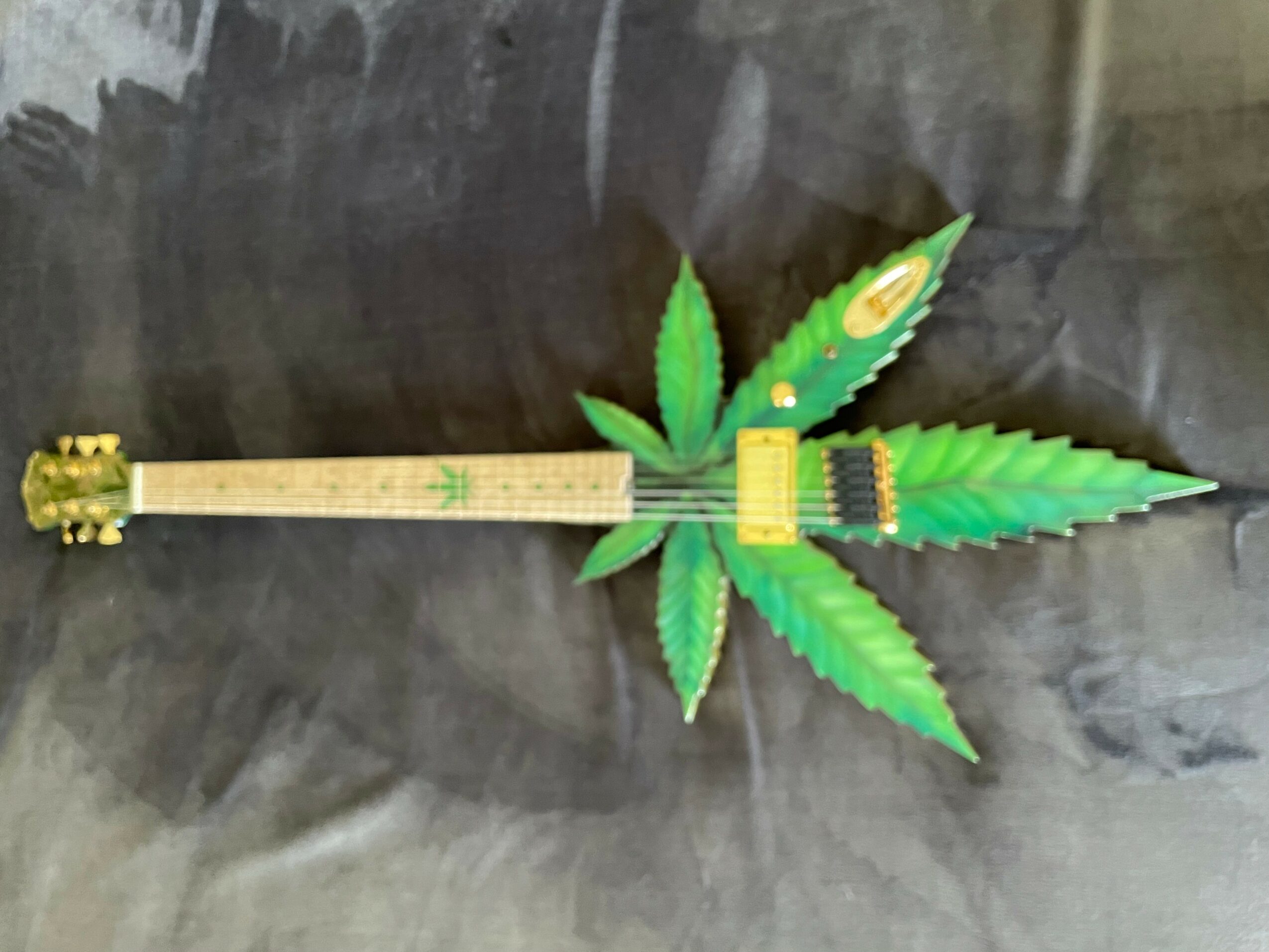
When I was in high school my buddies and i got really into modifying our guitars. I loved doing it so much that my senior project ended up being all about luthiery and moding one of my personal basses. We started out small but worked our way all the way up to building our very own kit guitar. I found that i really loved working with my hands and woodworking in particular became my main hobby. After high school I did the normal college thing. I quickly realized that normal academic college just wasn’t for me. Its kind of hard to be a chemical engineer when you fail chemistry. So i finished my studies at UC as quickly as i could, graduating with an associates degree in business, and decided to go to a luthier trade school in Nashville Tennessee. It was a 9 month program and while i was there i built my first 3 guitars from scratch, 1 acoustic and 2 electrics. When i finished, a friend got me in contact with Justin Kennedy at Jkennedyguitar repair and that’s when I started my journey as a full fledged guitar tech and luthier working for him. I have been working for Justin for 7 years now and have spent that time mastering my craft and personal aesthetic for the instruments I build. I have built some extremely unique instruments in that time, including a puzzle piece shaped bass and a pot leaf shaped guitar for Afroman.
Would you say it’s been a smooth road, and if not what are some of the biggest challenges you’ve faced along the way?
The journey here has had its fair share of struggles, but working through them made the destination so much more rewarding. The Luthier trade school I went to, Musicians Institute in Nashville, was not cheap. Not to mention that i had to move all the way to Nashville to attend. I spent a year and a half working construction 60-70 hours a week in order to pay for school. With all that work I was able to fund my life in Nashville for about 3 months, but when the funds ran out i had to find a way to survive the rest of my schooling. So i got a job at the Gibson plant shaping necks. It was actually a great opportunity to see a large guitar factory in action and see if that would be the direction i would want to go with my schooling. It was not. For 3 months i worked 12 hours a day from 5am to 5pm shaping necks on the Gibson line. Then i would go to school from 6pm to 11pm. I lived on 4 hours a sleep a day for those 3 months. It was hard, but worth it in the end. The funny part is that i didn’t even quit, my final 3 months of classes started earlier, at 3pm. when i informed Gibson that i would have to start leaving early they told me that i couldn’t continue working if i wasn’t working “Full Time” apparently 50 hours a week wasn’t enough for them.
Thanks – so what else should our readers know about your work and what you’re currently focused on?
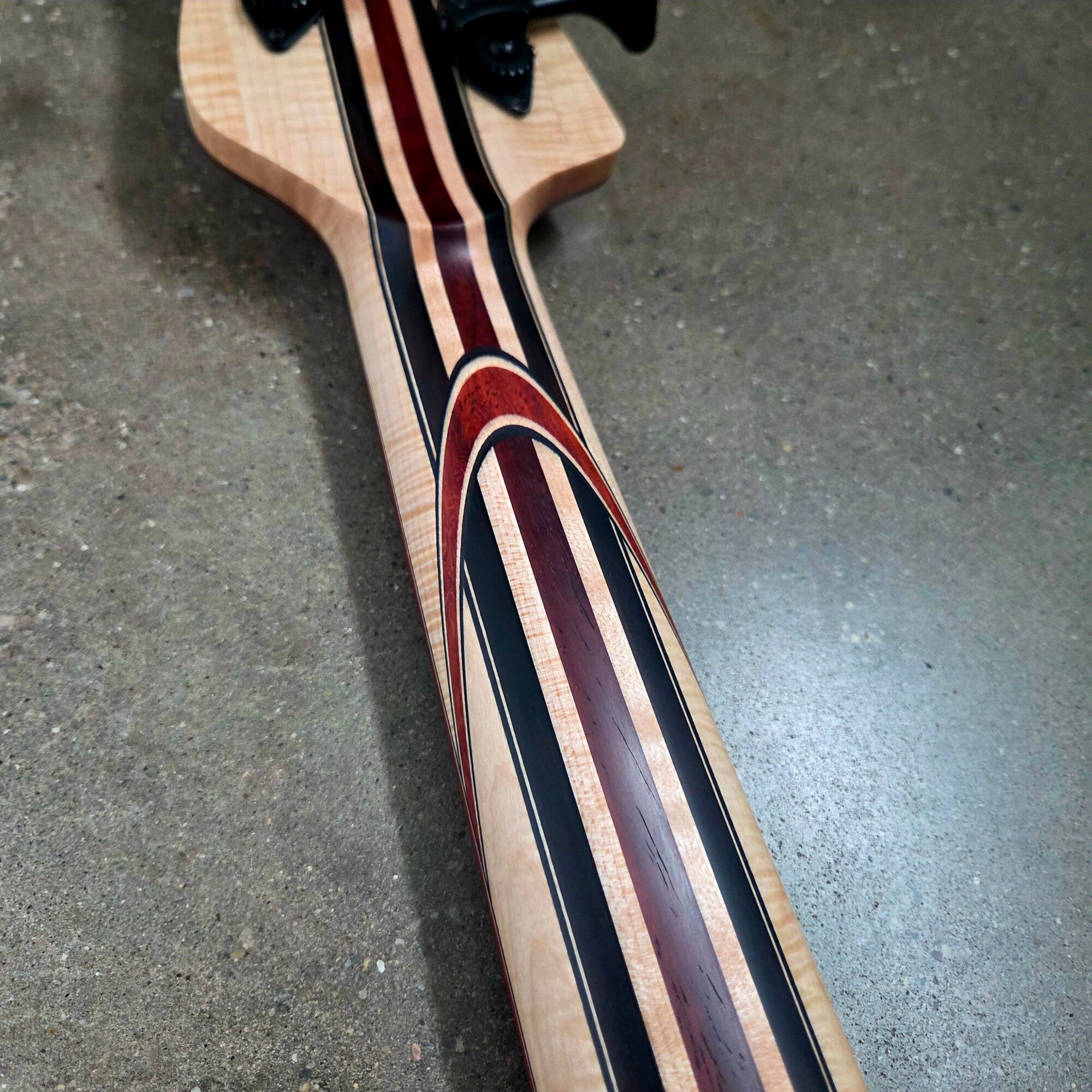
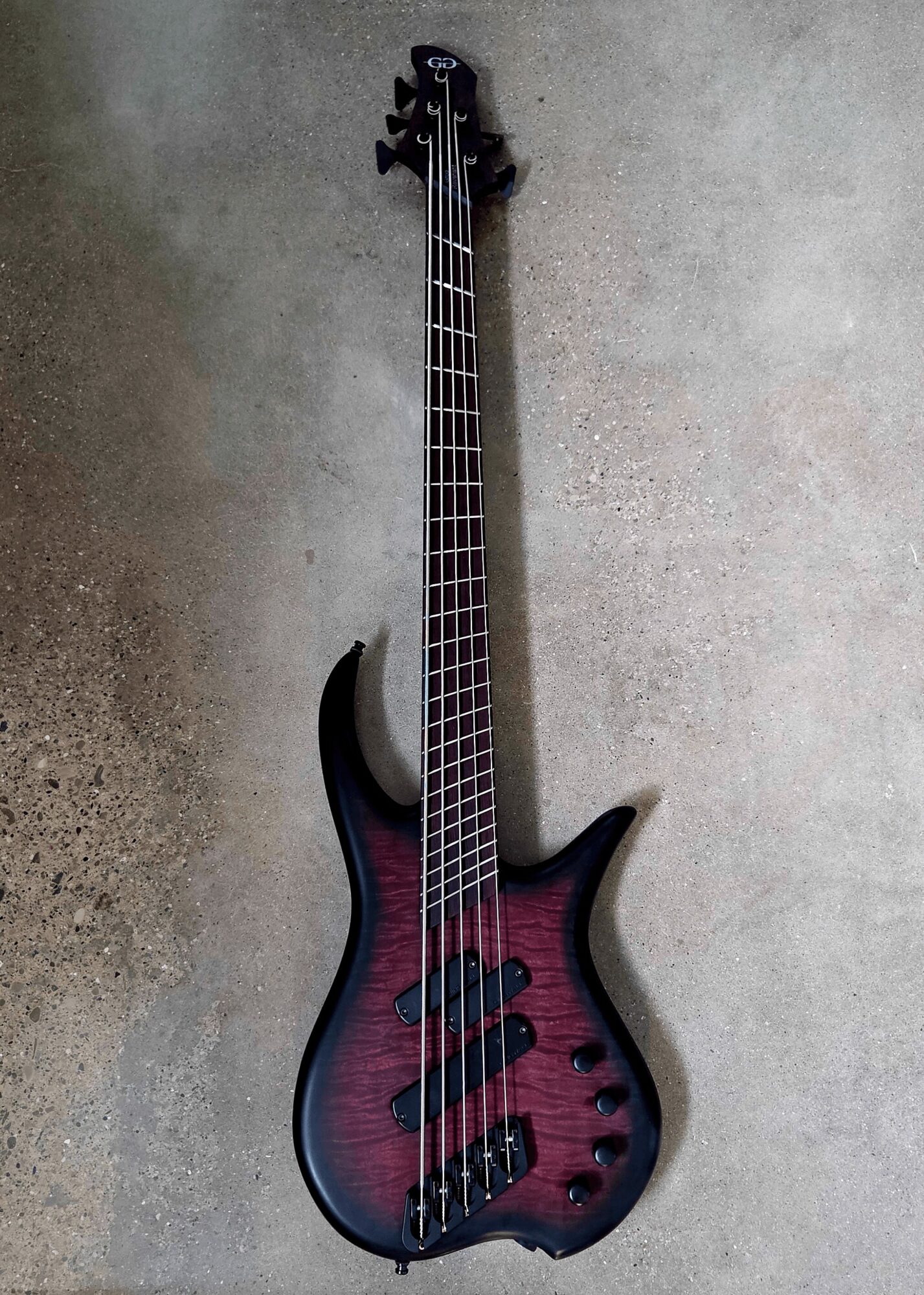
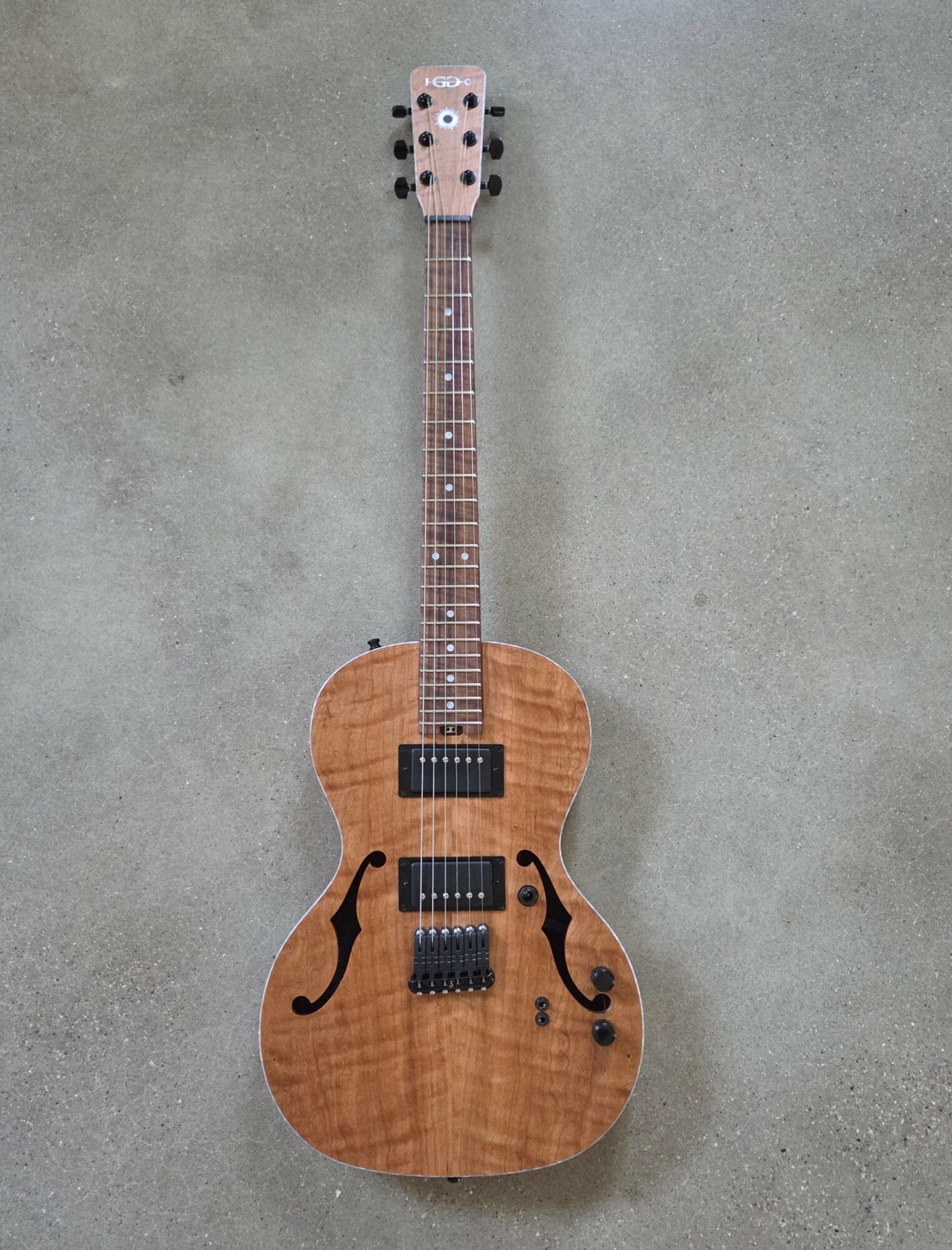
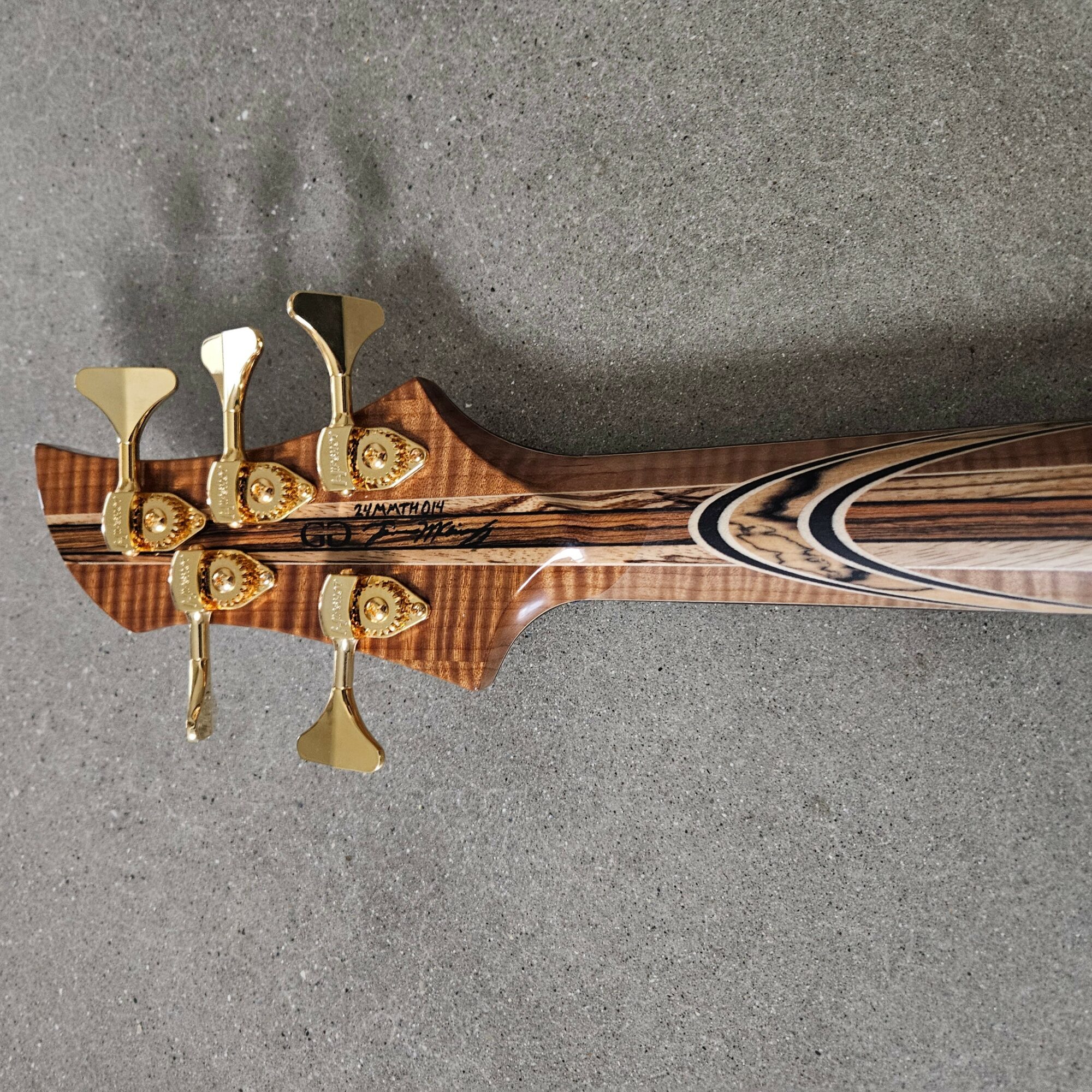
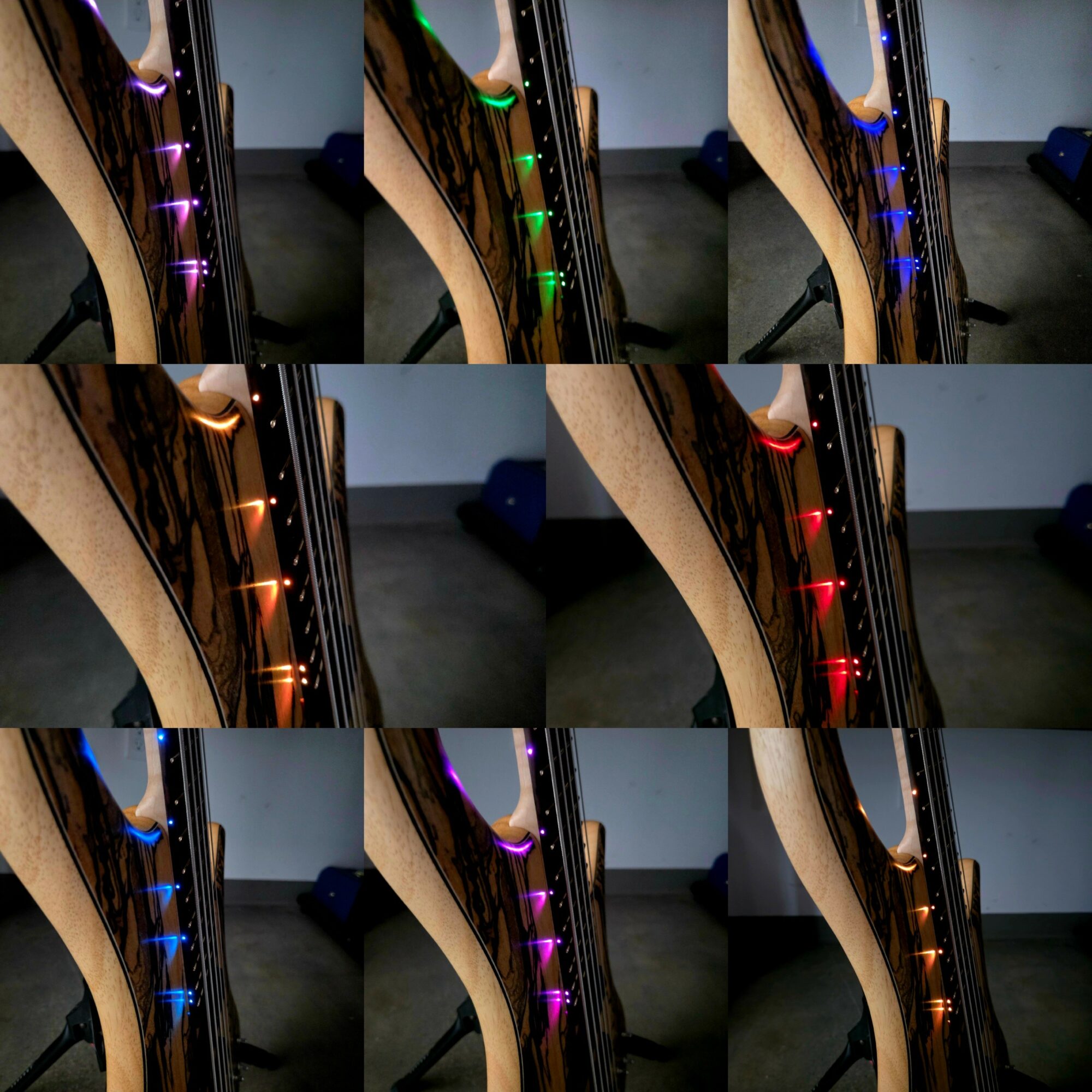
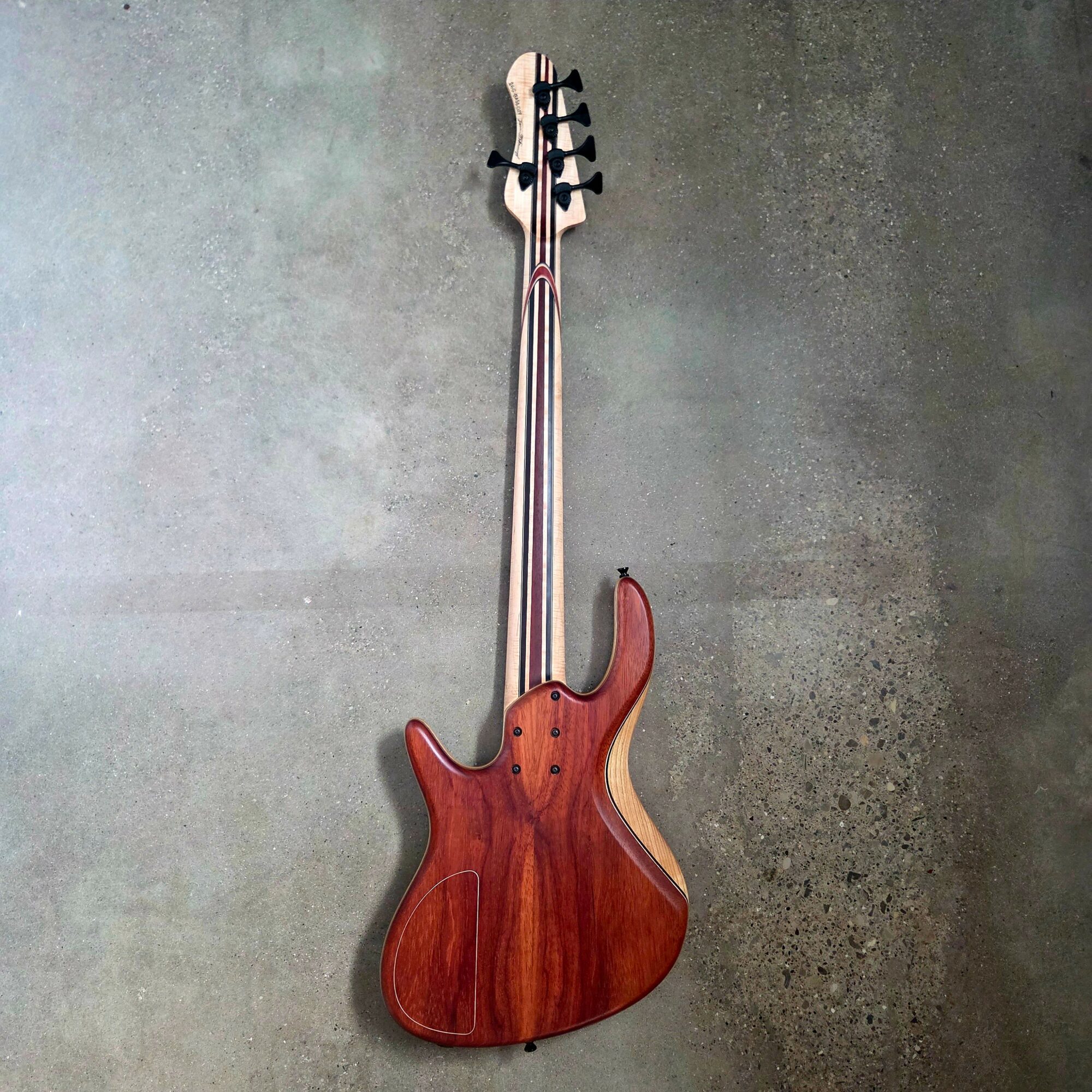
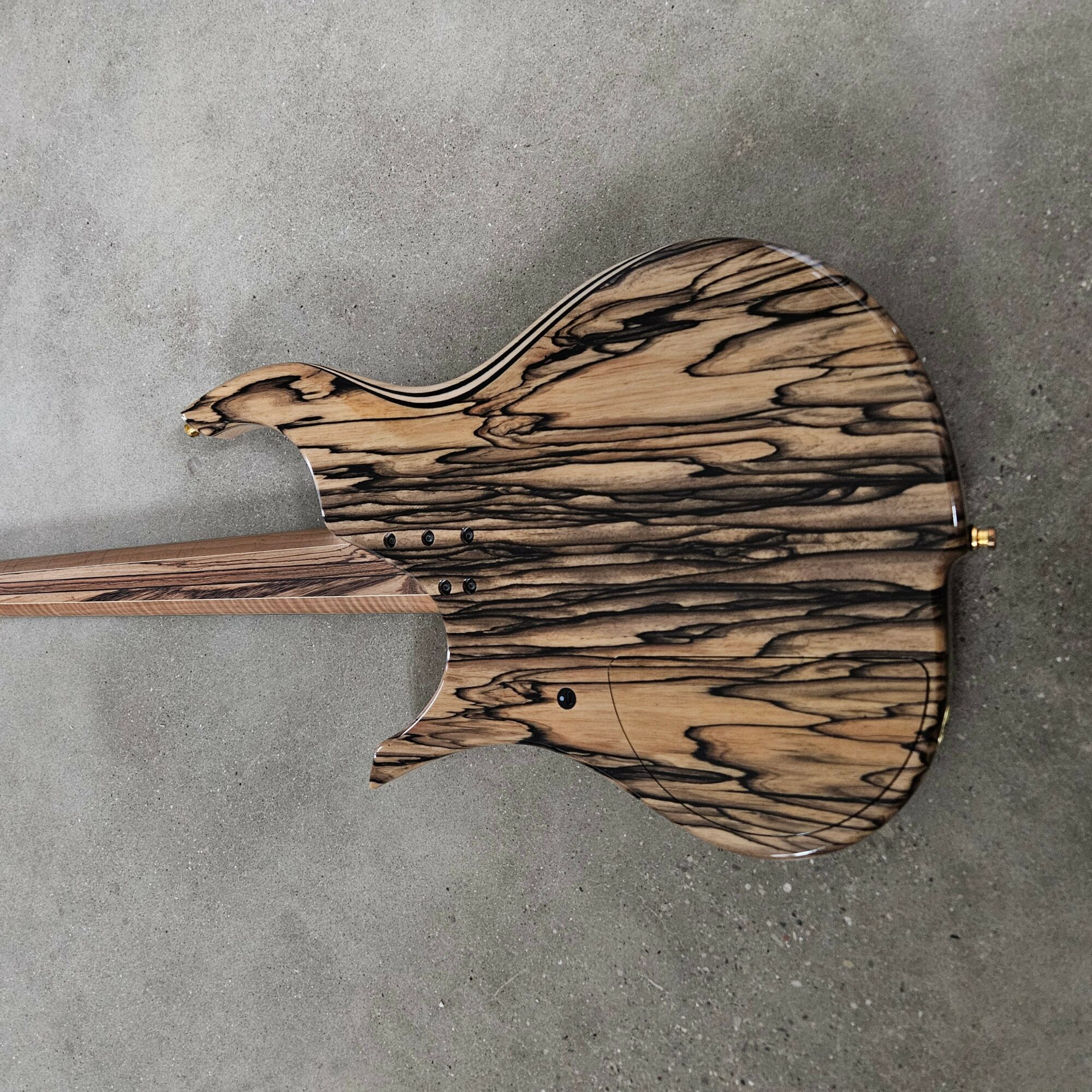
As a luthier, i can build any fretted stringed instrument. But i focus mostly on electric instruments and tend to focus mostly on basses. I specialize in highly custom designs and unique features and am probably most known for building Afromans pot leaf guitar. But lately i have been spending more time working on my personal design portfolio and building up my Grog Guitar brand with standard models, although they are still highly customizable. Perfecting my designs is definitely my favorite part of what i do and what i am most proud of. There are many things that i feel like set me apart from other boutique luthiers but i think the biggest thing would be my necks. Every guitar and bass neck i build is meticulously hand carved by me. Each one is a multi piece neck, usually consisting of multiple species of woods to compliment the body, and has an artistic scarf joint with continuous laminates. Sometimes i also include an artistic volute to match the scarf joint as well. The neck finish i use makes for an extremely beautiful but incredibly smooth surface that never gets sticky. its the best feeling neck you will ever play. Not to mention the LED side dots that i can include so you always know where you are no matter how dark the stage or room you are playing in.
What would you say have been one of the most important lessons you’ve learned?
Always have a healthy fear of your tools. its one of the best ways to keep all your fingers. Also, don’t be afraid to fail. Some of my favorite innovations in my designs and instruments have been from not being afraid to try something new. It almost never goes right the first time but every failure makes my next instrument even better.
Pricing:
- Bass Guitars start at $4200 and go up from there based on options
- Guitars start at $3800 and go up from there based on options
- Full custom body and headstock designs start at $5600 and go up from there based on options
Contact Info:
- Website: https://www.grogguitars.com
- Instagram: @grog_guitars
- Other: TikTok @grog.guitars
Popular
-

The Change-Makers: stories that inspire
-

Hidden Gems: Local Businesses & Creatives You Should Know
-

Portraits of Ohio
-

Take Flight: Lamar Thomas on Building an Inclusive Brand Rooted in Youth, Community, and Purpose
-

Cultivating Inner Clarity: Angel Inspires on Thought, Healing, and Purpose
-

Local Highlighter Series