



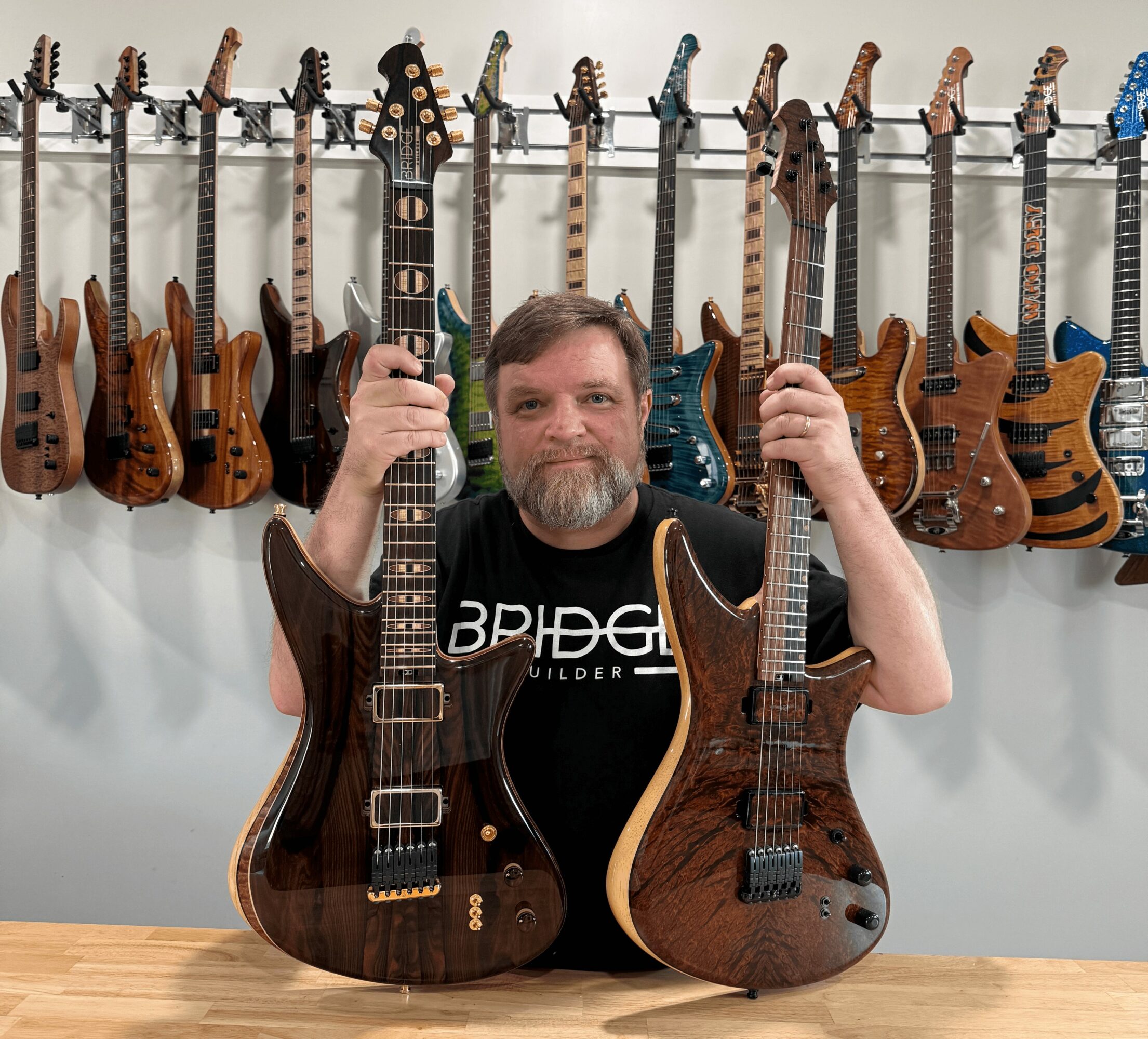
Today we’d like to introduce you to Justin Kennedy.
Hi Justin, please kick things off for us with an introduction to yourself and your story.
I’m a guitar dork. A guitar dork of the highest order. But a dork is still a dork.
In 1993, at 12 years old, I got my first bass guitar, a fiesta red Fender Squier P-bass. That bass started an obsession with guitars and basses that still exists today. I spent most of high school drawing instrument in notebooks that should have had notes for actual school subjects. In 1996 I was introduced to one of my lutherie mentors Tom Weber. Tom would eventually go down in guitar-history as Eddie Van Halen’s longest tenured and last guitar tech, but back in the ’90s he owned and ran Guitar Technologies, a busy repair shop in Cincinnati’s then un-gentrified Over The Rhine neighborhood. Despite being surrounded by the worst of Cincinnati’s late 20th century urban blithe, it was the most beautiful place I’d ever been. I knew then THAT was what I wanted to do.
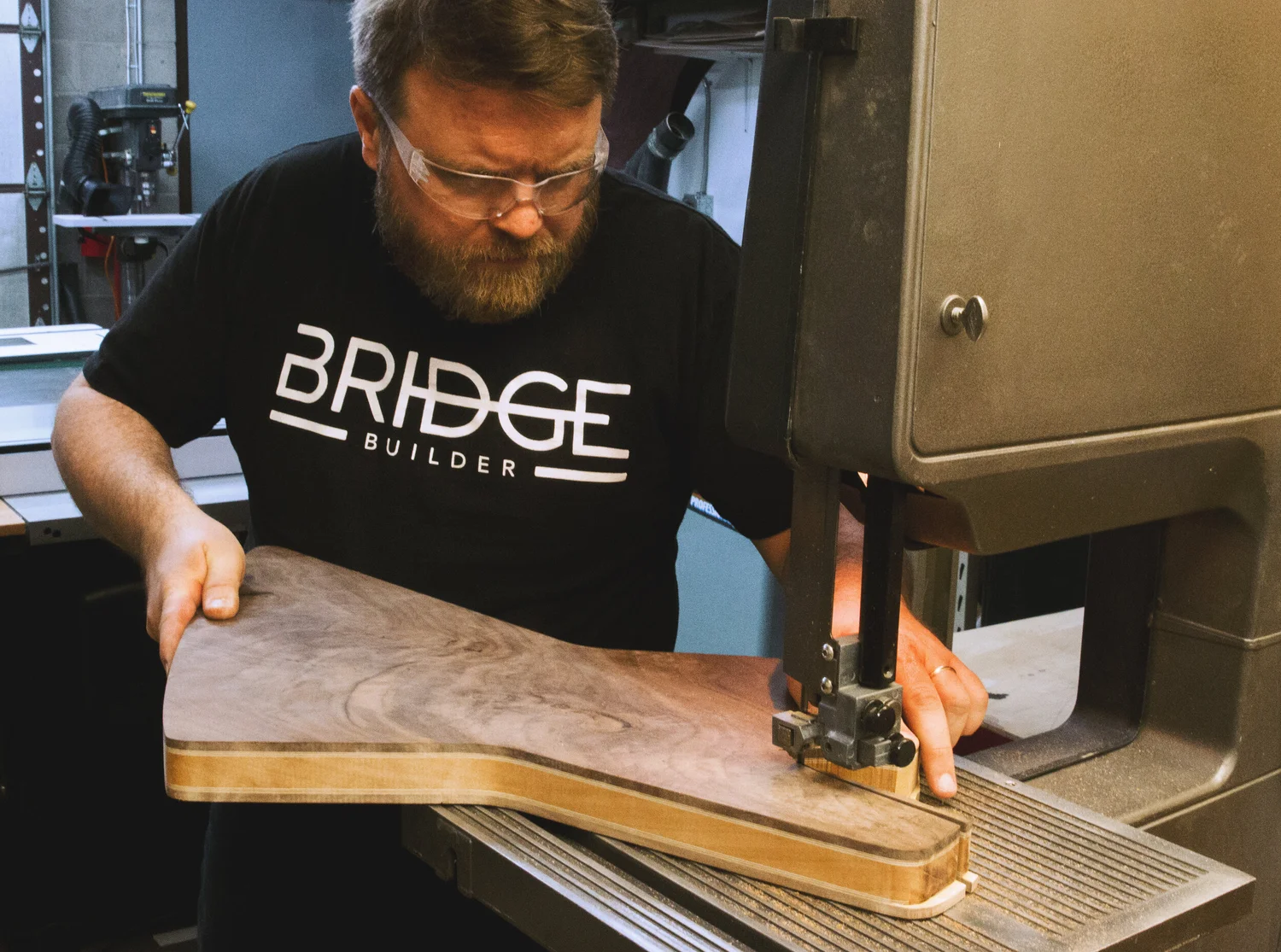
Fast forward several years, and Tom never kicked me out of his shop. Since I refused to leave Tom taught me how to service frets, wire guitars, and perform various types of guitar repairs and services on existing instruments. Eventually Tom’s touring commitments forced him to mothball his lutherie shop, but shortly thereafter I found myself learning custom lutherie from Matt Friedman of Acacia Instruments in Philadelphia. I drove up and back on the Pennsylvania turnpike enough that I’d be fine to never drive that stretch of highway again. 🙂 Matt taught me how to read woodgrain for making necks, how to cut and season wood for instrument construction, how to carve necks, and various other skills for building instruments from raw wood. With the skills I learned from Tom and Matt I literally learned guitars’ construction and processes forward (raw building instruments) and backward (retrofitting and repairing existing instruments).
in 2019 after I moved my tools out of my extra bedroom into my first “public” shop inside a friend’s music school. Initially I split time working in a restaurant and doing lutherie work on my days off, but after a few years in the music school, and then sharing shop space with a tube amp repairer, I moved into my own shop and made the jump to doing guitar repairs full time. Over the next 5 years I gained firsthand knowledge working on some of the world’s finest guitars, and plenty more knowledge working on bad guitars. I started figuring out what I felt made great guitars great, and what made bad guitars not so great.
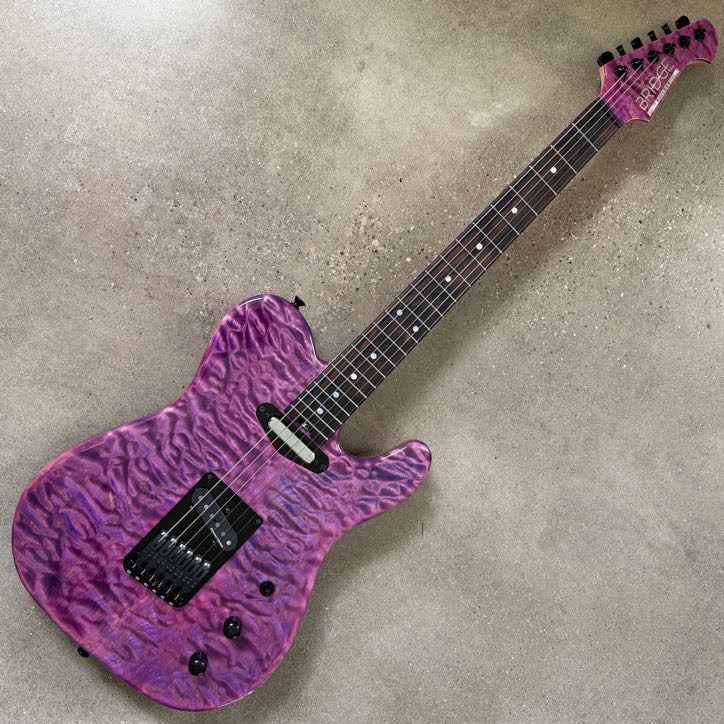
In 2013 I began tour guitar tech-ing for Cincinnati natives, the multi-platinum selling band Walk the Moon. After a few years of splitting time in the shop and on the road I felt like I finally had zeroed in on what I wanted my “voice” in custom guitars to feel like. In 2017 I finally took the plunge to build my first Bridge Builder Guitar, a purpley flamed maple Gibson-firebird inspired guitar that went to Walk the Moon’s guitarist Eli Maiman.
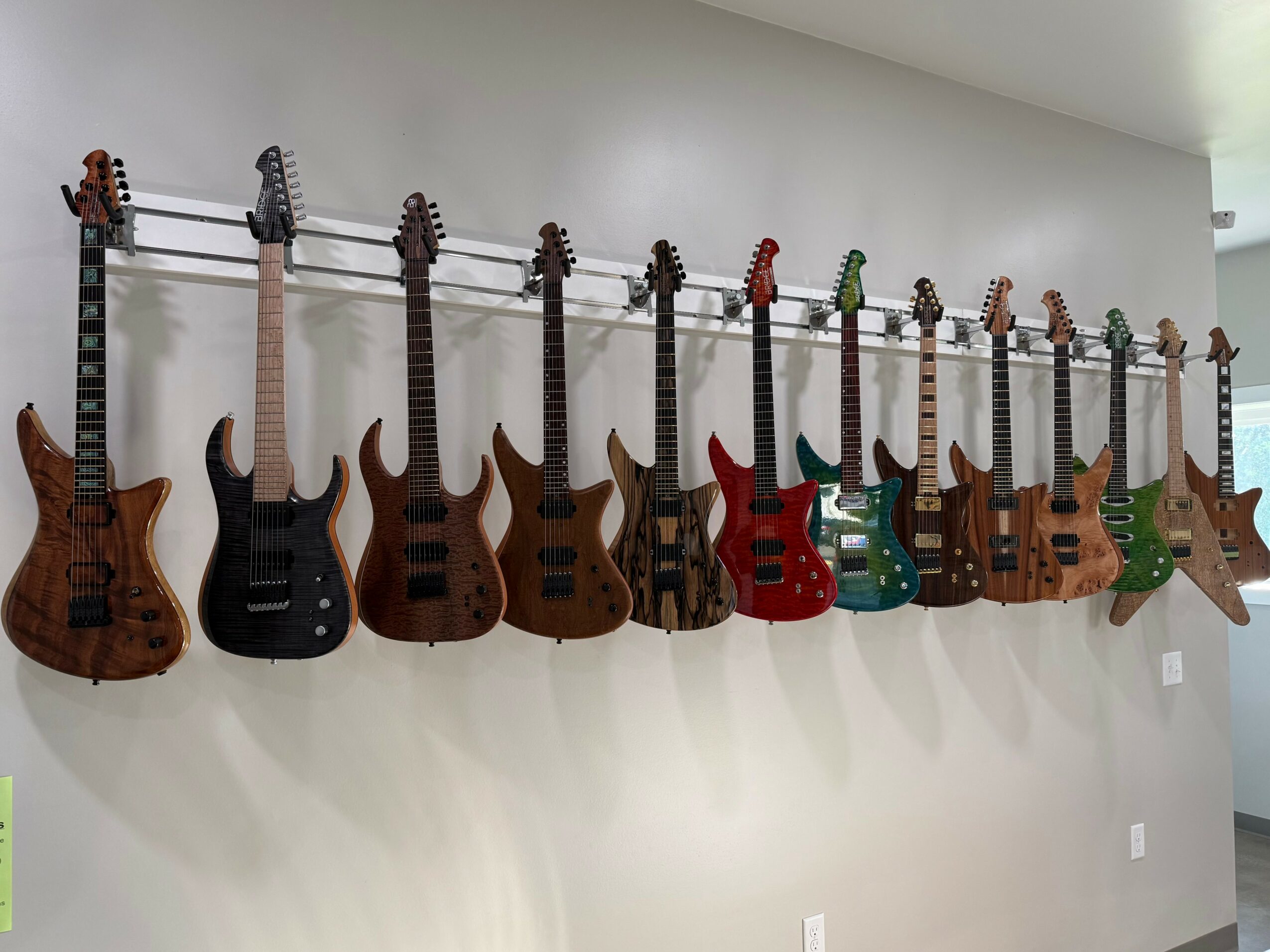
Now almost a decade later, I’ve built more than 100 bespoke guitars. The staff at the shop has grown to include myself, 3 service techs, 3 luthiers, and a CAD/CNC operator. in 2026 we’re on pace to service nearly 2500 guitars for repairs, and we should complete more than 40 custom guitars (our biggest year yet). I’m still on a quest to find what makes for the best guitars and am continually refining my instruments to build a “more perfect guitar”.
I’m sure it wasn’t obstacle-free, but would you say the journey has been fairly smooth so far?
Someone once told me that “self-employment is unemployment, it’s just a matter of how unemployed you happen to be at any moment.” That mantra guided me for most of the first decade I was in business. The constant fear of running out of work (which never happened), or keeping peoples’ guitars too long haunted me. I never wanted to rush through repairs; if somebody thought their guitar was special enough to bring to me for service I treated as I would my own. This led me to work 65+ hour weeks for years on end. My social life suffered, and I screwed up more relationships than I should probably admit to (sorry everybody). I was a full blast workaholic in the worst sense of the word.
Eventually I was able to hire people who I trusted, and with the help of my very wonderful and patient wife Leanne I was able to establish a better work-life balance. While I still find myself obsessing about guitars outside of work I’m in a much better mental state. Now when I’m going down rabbit holes doing guitar research it’s about the true love of the art, not figuring how I’ll handle _____ job waiting for me at the shop.
Appreciate you sharing that. What else should we know about what you do?
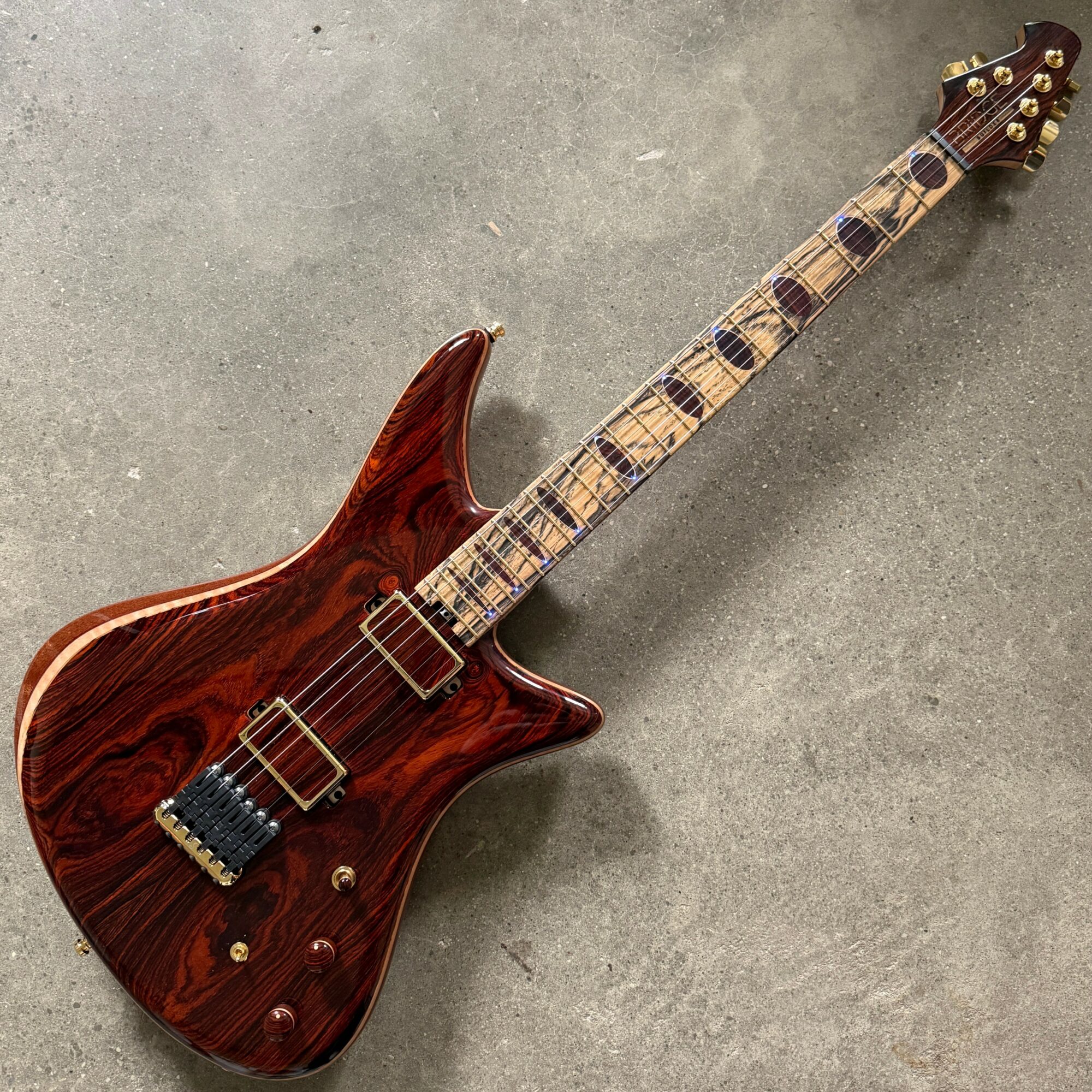
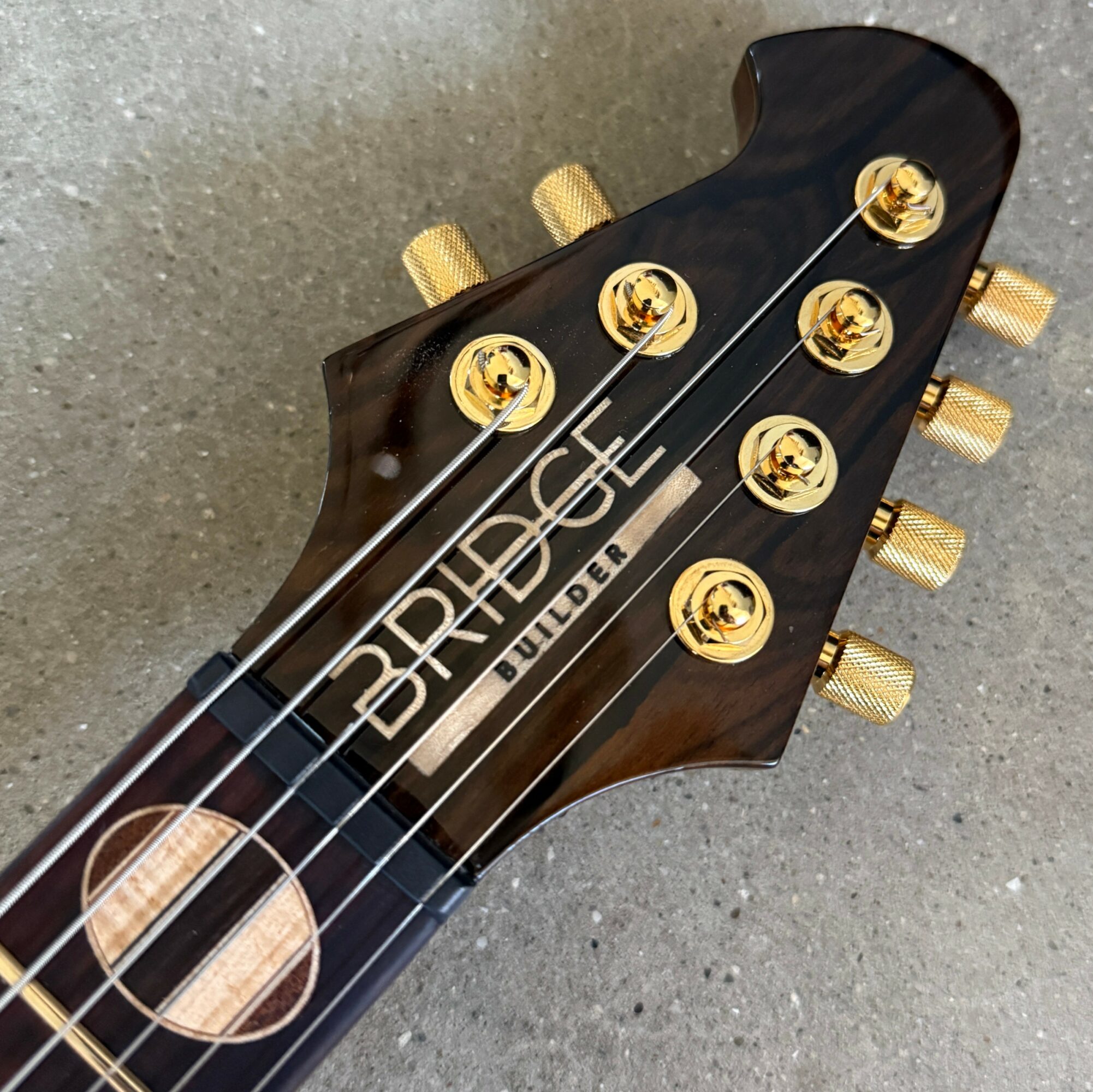
I build guitars that make people’s jaws drop. But they’re as functional and well executed as they are strikingly beautiful.
With my repair knowledge as a baseline, combined with modern lutherie techniques influenced by my life long guitar obsession, and a willingness to embrace modern materials and components, exotic woods, and new construction methods I’ve created guitars that push the boundaries of how good a guitar can look, play, sound, and feel while still retaining a familiarity to endears them to the player.
With Bridge Builder Guitars I’ve created a line of electric guitars that both honor the legacy of the best guitars ever built and push new ideas of what the electric guitar can be in the 21st century and beyond. Bridge Builder instruments are a modern testament to the DNA of the best guitars ever made, while being substantially more durable, more resonant, better balanced, and more comfortable than many that came before. I have an uncompromising attitude toward excellence in the art of lutherie, and my guitars are a testament to what a life long guitar dork can create.
Can you talk to us about how you think about risk?
Self employment is always risky. After working for other people from 15 to 31, I remember my first month without a regular paycheck and how scary it was. I remember how strange it felt to find my own health insurance. For so long I was worried about what would happen if I didn’t have guitars to work on. When I bought the building my shop is in currently I was so scared. “What happens if we don’t have the work? How will I pay for all of this?” was a thought that went through my head constantly. Luckily, I haven’t had to worry about that much recently. Now the biggest risk I find myself taking is wondering if new guitar designs will be well received, or if we’ll lose a guitar body or neck trying some a new construction method.
Contact Info:
- Website: https://www.jkennedyguitars.com
- Instagram: https://www.instagram.com/bridgebuilderguitars/
- Facebook: https://www.facebook.com/jkennedyguitars
- Other: https://share.google/XZt7IE50iZ2Q2pYKa

Popular
-

Hidden Gems: Local Businesses & Creatives You Should Know
-

The Change-Makers: stories that inspire
-

Portraits of Ohio
-

Take Flight: Lamar Thomas on Building an Inclusive Brand Rooted in Youth, Community, and Purpose
-

Cultivating Inner Clarity: Angel Inspires on Thought, Healing, and Purpose
-

Local Highlighter Series