



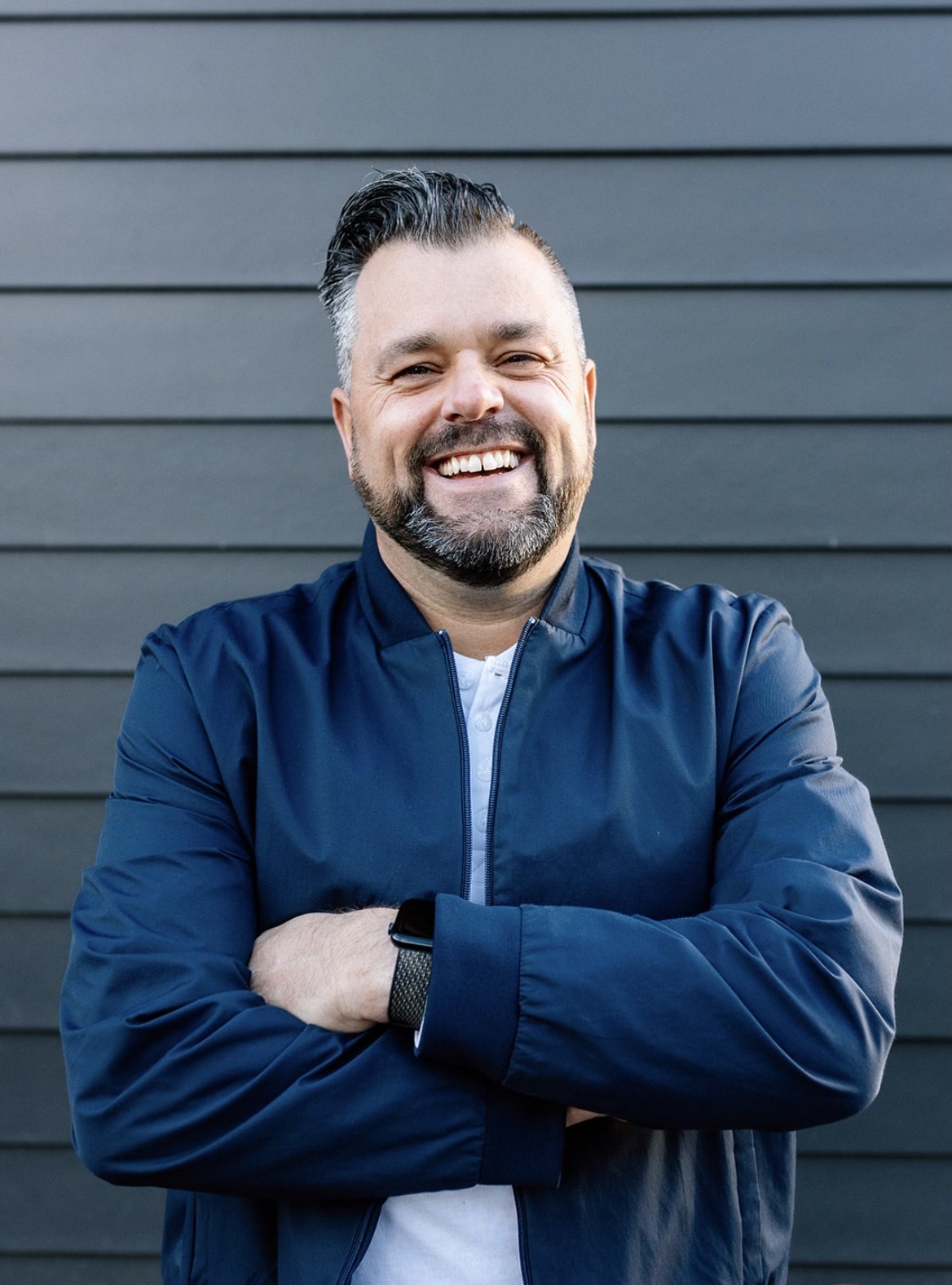
Today we’d like to introduce you to Keith Minier.
Alright, so thank you so much for sharing your story and insight with our readers. To kick things off, can you tell us a bit about how you got started?
I grew up in Northeast Ohio with my older brother and younger sister. Life revolved around family, school, and a deep love for Cleveland sports—no matter how heartbreaking the seasons often were. I loved playing sports and eventually basketball became my passion. I poured countless hours into the sport, eventually playing through high school and into college.
My faith journey began early as well. When I was 13, I attended a Christian camp with my local church, and it was there that I gave my life to Christ. That decision became a defining moment for me. It shaped the way I navigated my teenage years, influenced the friends I surrounded myself with, and ultimately guided my decisions about college, career, and calling.
I graduated from Cedarville University, a Christian college in Southwest Ohio, where I continued playing basketball and earned a degree in Chemistry. It was during these years that I grew not only academically and athletically but also spiritually, sensing that God was building a foundation for something bigger down the road.
Shortly after graduation, I married Kelly, my wife of almost 25 years. Soon after, we accepted a long-term missionary opportunity in Cambodia, where we lived and served for about 6 months. Our time there was transformational. We worked closely with local churches and community leaders, helped develop ministries that supported families and children, and walked alongside people in some of the most challenging and meaningful moments of their lives. Cambodia expanded our worldview and deepened our dependence on God in ways we never could have experienced otherwise.
When our missionary work came to an end, we returned to the United States and I returned to my job as a chemist with a company in Columbus, Ohio. Kelly and I settled into the Columbus area, joined a local church, and quickly became involved—volunteering in young adult ministry, leading a small group, and investing in the people around us.
While I loved chemistry and appreciated the stability it provided, I began sensing that God was stirring something new in me. The pull toward vocational ministry became stronger and more clear. In 2004, I was invited to preach at a small church in Pickerington, Ohio, whose pastor had recently resigned. The church had about 60 attenders at the time and was in a fragile place, unsure what its future held. After spending time with the congregation, building relationships, and seeking God’s direction, the leadership team approached me about stepping into the role of lead pastor.
Over the last 20+ years, God has grown that small 60-person congregation into a multi-site church with more than 5,000 attending each weekend across four campuses and over 8,000 that call the church home. It’s been overwhelming at times to look back and see how God has moved—reshaping lives, restoring families, and expanding the mission of Grace Fellowship beyond anything we could have imagined.
Every step of my journey—my childhood, my time in Cambodia, my career as a chemist, my years in seminary, the earliest days of our church—has been part of a path that God has used to mold and prepare me. His faithfulness shows up at every turn.
Would you say it’s been a smooth road, and if not what are some of the biggest challenges you’ve faced along the way?
Not at all. Pastoring and growing a church is both deeply rewarding and incredibly difficult. Ministry, like every job, has its challenges; it’s gritty, emotional, and often exhausting. But it is also meaningful in a way few other things are.
One of the biggest challenges is simply the reality of sin and brokenness. People carry wounds, regrets, burdens, and battles that don’t disappear overnight. Being invited into those places as a pastor is a gift, but it also comes with heartbreak. You walk with people through addiction, infidelity, illness, grief, conflict—things that can’t be solved with a quick prayer or a simple answer.
Another challenge is that leadership sometimes means making hard decisions that not everyone agrees with. There have been seasons when people who loved and served the church deeply chose to leave because of decisions we made to protect the mission or preserve the health of the church. Those moments hurt. They leave scars. But they also shape you and teach you to trust God more deeply than before. Signing up to be a leader is signing up to be misunderstood. While the opportunity is worth it, the cost is real.
COVID was another enormous obstacle. Navigating a global pandemic as a pastor was something none of us were trained for. Overnight, we had to transition our entire church to an online experience. We had to be a voice of hope and clarity in a world full of fear and confusion. And then came the reopening—mask debates, distancing policies, sanitization protocols, differing opinions from every side. It was draining, disorienting, and humbling.
And then there’s the cultural climate of today. Pastoring a church with a commitment to biblical truth has become increasingly unpopular. Many foundational Christian beliefs run counter to the values of society. We’ve had to learn to speak truth with grace, conviction with compassion, and clarity without compromise. That’s a fine line to walk in an environment where every word is scrutinized.
But through every struggle, God has been faithful. He has sustained us, strengthened us, and reminded us that ministry is His work—not ours.
Can you tell our readers more about what you do and what you think sets you apart from others?
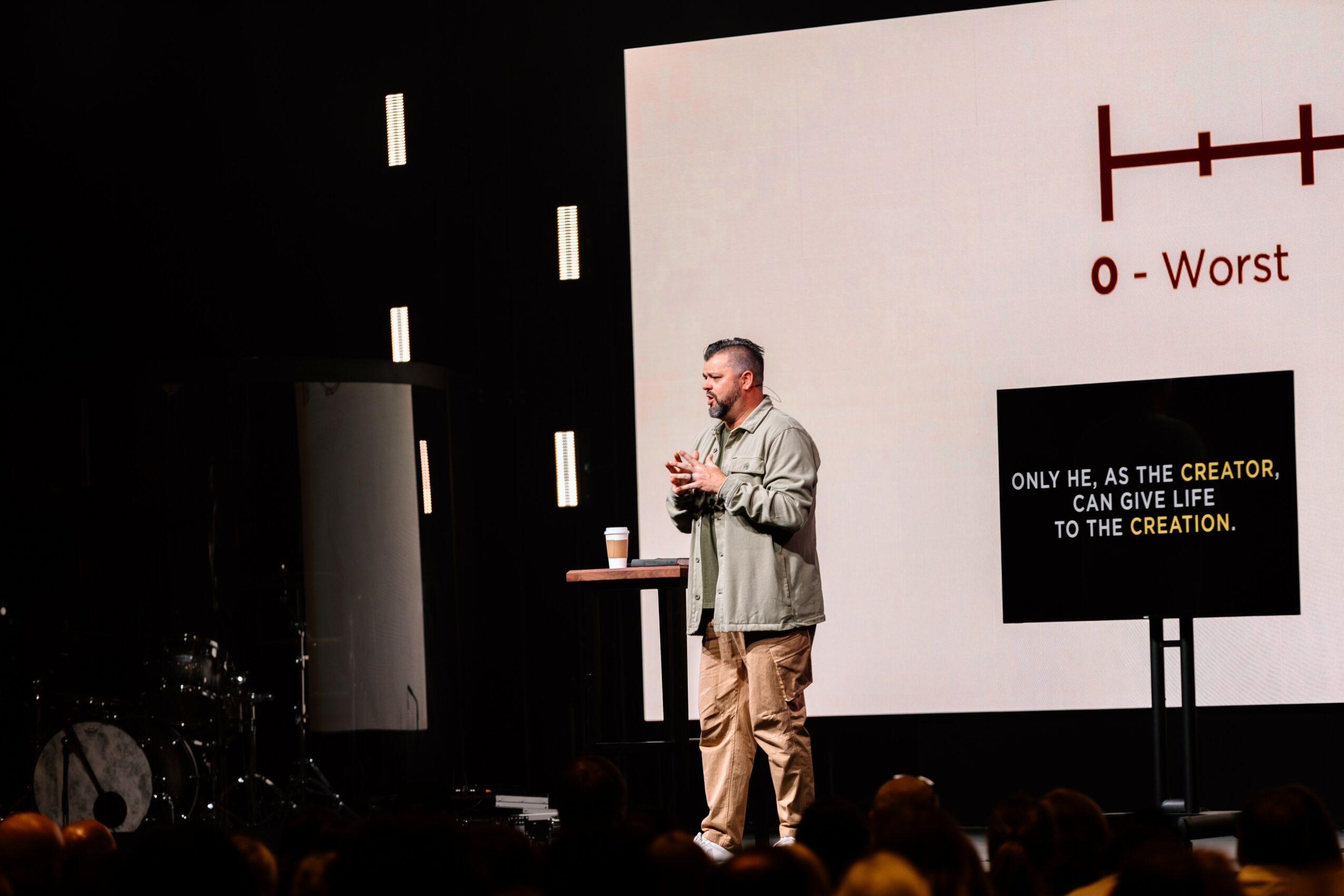
Serving as the Lead Pastor of Grace Fellowship is one of the greatest privileges of my life. Every day I’m surrounded by an incredible team of more than 75 staff members who love Jesus, love people, and are committed to the mission God has given our church. Leading a team of this size isn’t simply administration — it’s shepherding. It’s encouraging, challenging, equipping, and helping each person thrive in the unique calling God has placed on their life. I’m deeply grateful that I get to invest in leaders who, in turn, invest in thousands of others across our church family.
One of the things I value most about our culture is the emphasis we place on both professional and spiritual development. We don’t just want to get the work done; we want to become the kind of people who honor Christ with our character, our competence, and our commitment. From intentional coaching to ongoing training to shared spiritual practices, we work hard to create an environment where our staff can grow as disciples and as leaders. It’s important to me that our team feels supported, challenged, and encouraged to pursue Jesus wholeheartedly in every aspect of their lives.
Our mission has always been to help people live Jesus-centered lives, and that mission is bigger than any one ministry or weekend service. As a church, we feel a deep responsibility to advance the Kingdom of God right where He has placed us. That means knowing our communities, serving our neighbors, and being present in the places where people live, work, and struggle. I’m constantly inspired by the way our church steps up — whether through local partnerships, community impact initiatives, or simply showing up for people in need.
But the call doesn’t stop locally. From the very beginning, Grace has had a heart for the nations. We believe that the Gospel is meant to move outward — across cultures, across borders, across barriers. Leading a church that is committed to both local and global impact means I get to watch God work in extraordinary ways: through global partners we support, missionaries we send, and teams we deploy to share hope in places far beyond our own backyard. Watching our people catch a vision for God’s heart for the world is one of the most rewarding parts of my role.
What keeps me excited after all these years is seeing how God continues to move at Grace. Lives are being transformed. Families are being restored. Leaders are being raised up. And communities — both here and around the world — are being reached with the truth and grace of Jesus. To lead in a place where the mission is clear, the people are committed, and the Spirit is at work is an honor I don’t take lightly.
Every weekend, every meeting, every conversation is another reminder that God is building something far bigger than any of us. I’m grateful to be part of it. And I’m grateful for the people of Grace who link arms with me to pursue this mission together.
Do you have any advice for those just starting out?
I have been in professional ministry for over 20 years now. This means I am no longer one of the “young guys.” So now I often get younger leaders who come to me and say, “what do you wish you knew back then? What are the things that make the difference?”
These questions are good ones. But the challenge is to distill and curate answers that are universal. There are certainly universal principles and realities that translate to every situation. But often the wisdom you need is situational. That said, here are a few concepts that I would say every young leader needs to know.
You will never regret the work of building a great team. If you want to go fast, go alone, but if you want to go far, go with others. Surrounding yourself with talented, like-minded people who believe in the vision of what is happening is a gift that will keep paying dividends. Find, recruit, train, empower, and support quality people to run alongside and with you.
Do what you are being called to do. Learn from others. Study others. Draw from others. But be you. There is a tendency in any industry and certainly in the ministry world to copycat and just do what everyone else is doing. Trust your gifts and what the Lord has called you to do. There is only one of you, and the world needs to see what you bring to make it better.
You have to get over always wanting to be liked. People in ministry really have a desire to love people. This is a great thing. But sometimes loving people and leading people means you will make calls that they will not agree with or want. This is true with staff members, volunteers, and attenders. It can be easy to believe that if you get a bad emotional reaction – disappointment, frustration, anger or whatever – that you have done something wrong. But that is not necessarily the case. Leadership comes with the reality that you will make calls that people do not support and that can result in both the feeling and reality of being unliked for a moment, a season, or even ongoing. Yet, this is a price leaders pay.
Contact Info:
- Website: https://gracefellowship.cc
- Instagram: @yourgracechurch
- Youtube: https://www.youtube.com/@GraceFellowship
- Spotify: https://open.spotify.com/episode/0qa5p0QcWgPTthYRVzScTr



Popular
-

The Change-Makers: stories that inspire
-

Take Flight: Lamar Thomas on Building an Inclusive Brand Rooted in Youth, Community, and Purpose
-

Cultivating Inner Clarity: Angel Inspires on Thought, Healing, and Purpose
-

Local Highlighter Series
-

Highlighting Local Gems
-

Hidden Gems: Local Businesses & Creatives You Should Know