



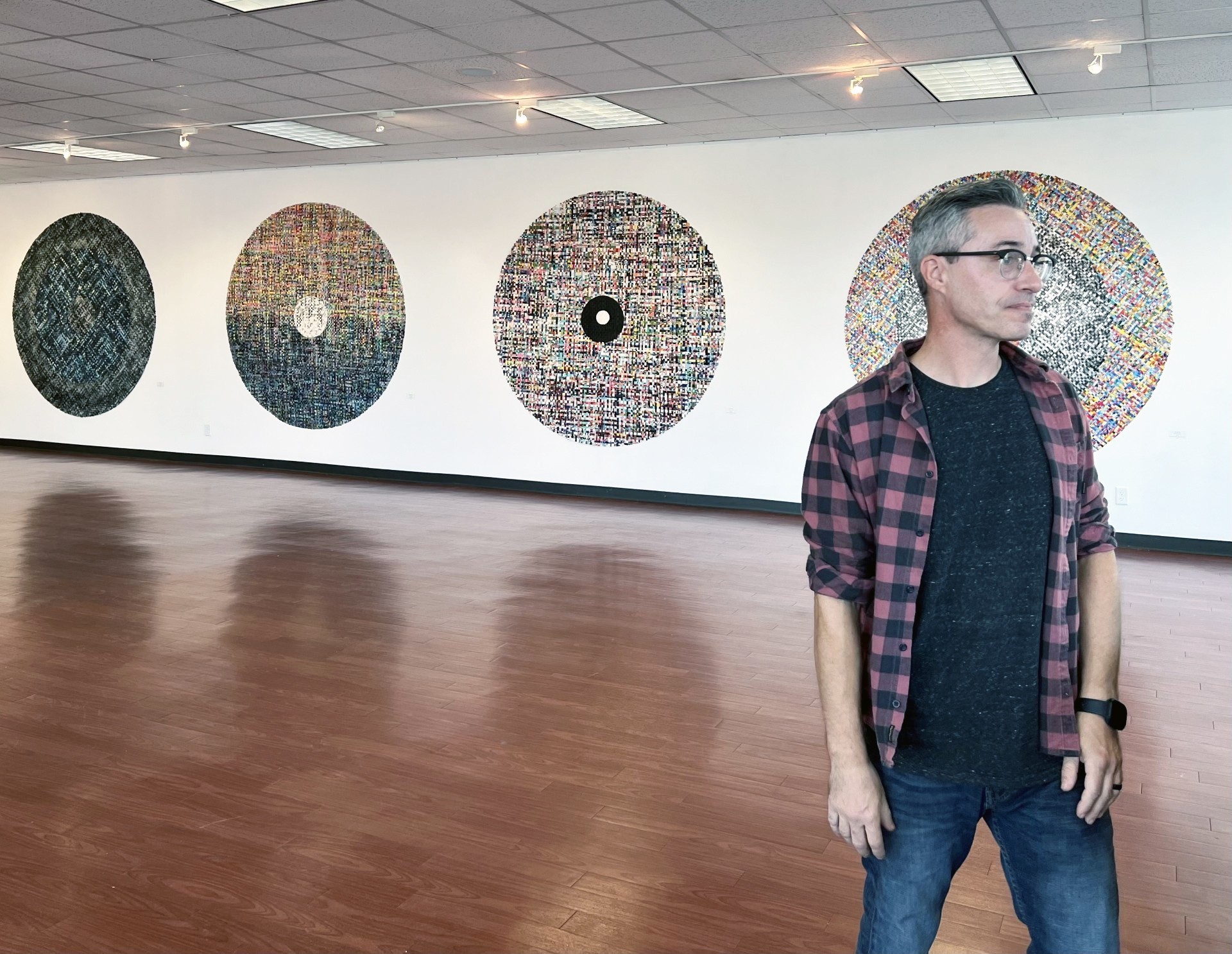
Today we’d like to introduce you to Jonpaul Smith.
Hi Jonpaul, thanks for sharing your story with us. To start, maybe you can tell our readers some of your backstory.
Growing up in a small town in North Central Indiana, where craftsmanship was deeply valued, shaped my early appreciation for creativity and sparked a lasting interest in the relationship between art and craft. I was surrounded by talented makers who continually inspired me. My grandfather could create almost anything from metal, my aunt produced beautiful oil pastel portraits, and my mother had an extraordinary ability to bring her creative ideas to life.
My family also owned a small business, a liquor store, which introduced me to the visual language of consumer packaging at an early age. I was fascinated by how my father arranged products in organized rows, creating intricate patterns of color, repetition, and structure. Looking back, those everyday displays had a profound influence on my artistic sensibilities. I have always been drawn to making and creating, but it was through my education that I began to recognize those interests as an artistic practice.
I earned my Master of Fine Arts from the University of Cincinnati’s College of Design, Architecture, Art, and Planning (DAAP), concentrating in printmaking. That experience solidified my appreciation for paper as both a medium and a material.
During graduate school, I began challenging the traditional processes of printmaking by deconstructing my prints, initially cutting them into squares and reassembling them into large, grid-based compositions reminiscent of quilts. This exploration eventually evolved into cutting prints into strips and weaving them together, a process that became central to my artistic practice.
A significant turning point came during an artist residency in Budapest, Hungary, where I began collecting found materials. The city’s discarded paper, printed ephemera, and everyday visual remnants fascinated me. Incorporating these materials into my work expanded my approach to printmaking and helped shape the layered, woven compositions I continue to explore today.
Alright, so let’s dig a little deeper into the story – has it been an easy path overall and if not, what were the challenges you’ve had to overcome?
I imagine very few people experience a completely smooth professional or personal journey. Like any career, pursuing a life in the arts comes with challenges, unexpected responsibilities, and moments of uncertainty. I have come to believe that how we respond to those experiences often shapes both our character and our professional growth.
Balancing creative work with family responsibilities, personal relationships, health, and the everyday demands of life requires constant attention. It can be easy to become so focused on what needs to happen next that we overlook what we have already accomplished.
One of my greatest challenges has been learning to navigate the many roles required of a working artist. Beyond the creative process itself, there is an entirely separate business to manage. Preparing, crating, and shipping artwork for exhibitions; coordinating commissions; maintaining relationships with galleries, collectors, and clients; managing finances; developing an online presence; and continually pursuing new opportunities all require time and energy.
Learning to balance these responsibilities while protecting the time and focus necessary to create has been an ongoing process. However, embracing the entrepreneurial side of being an artist has also been incredibly rewarding. Each challenge has provided an opportunity to develop new skills, broaden my perspective, and become more intentional in both my creative practice and professional life.
Thanks – so what else should our readers know about your work and what you’re currently focused on?
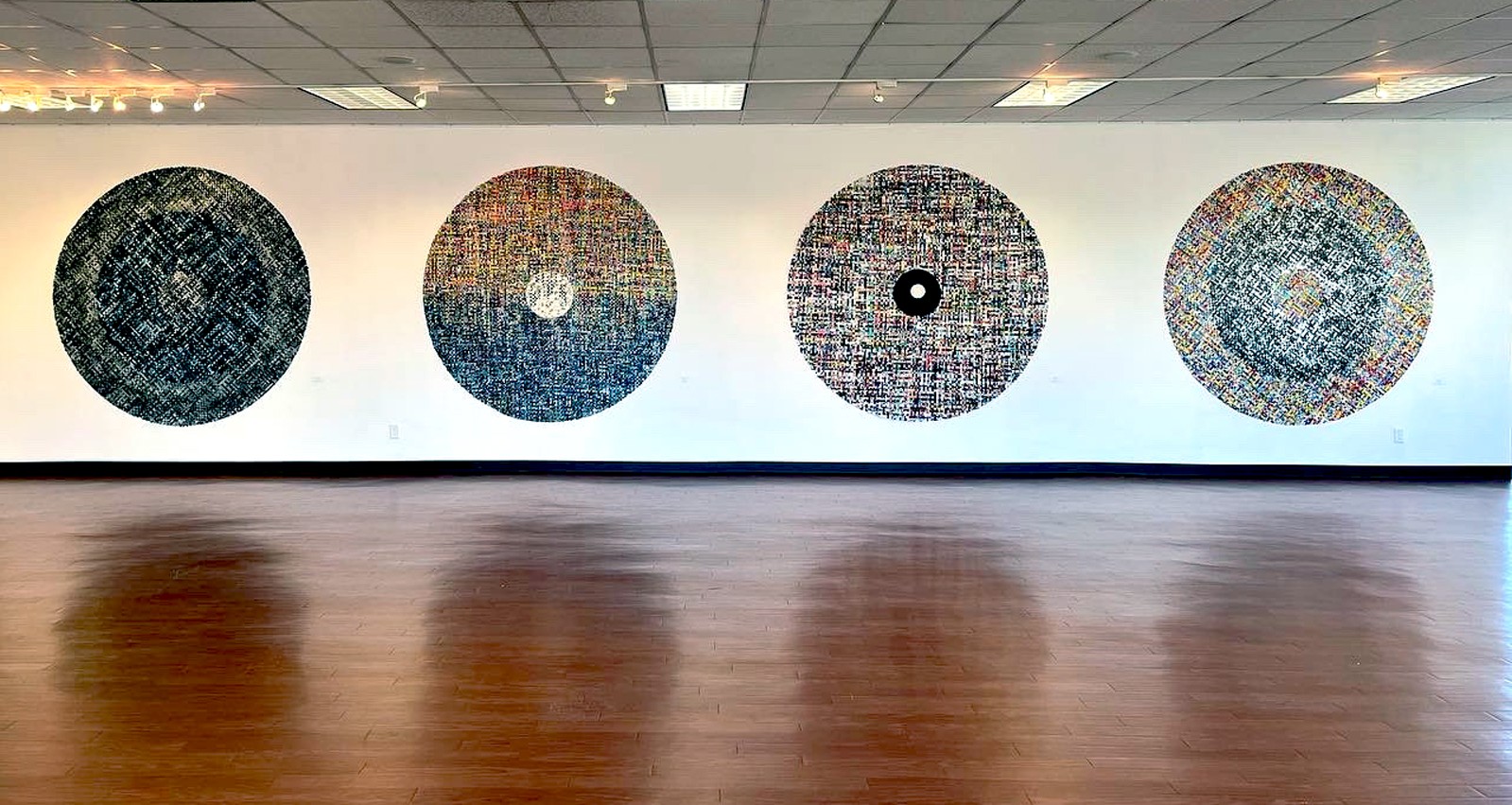
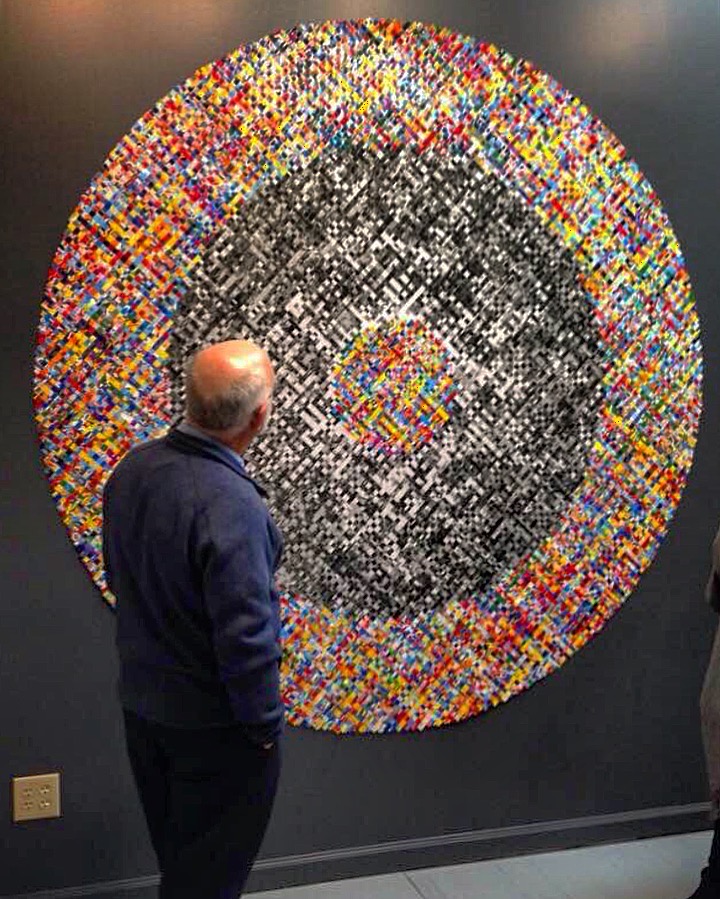
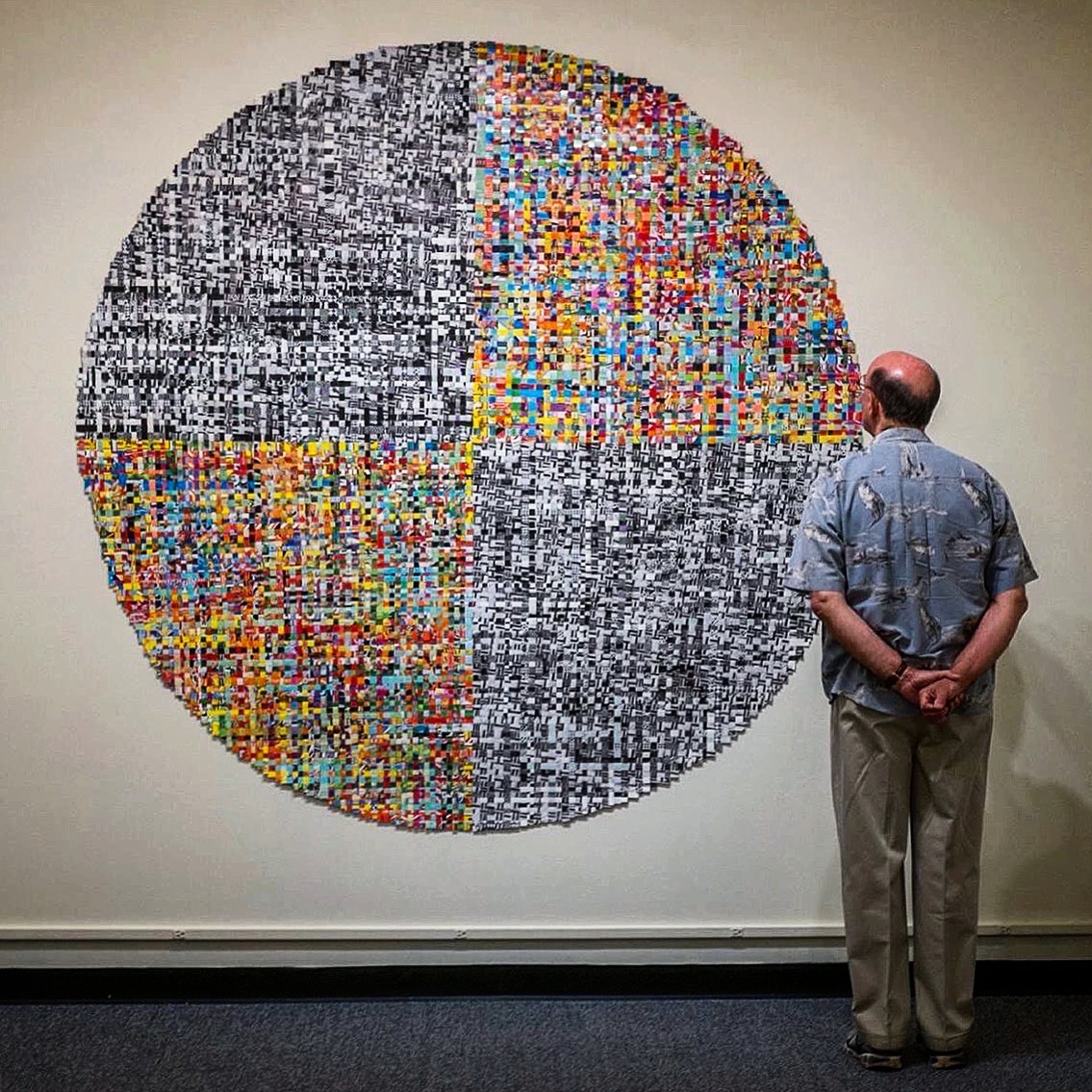
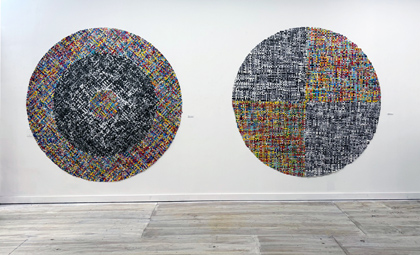
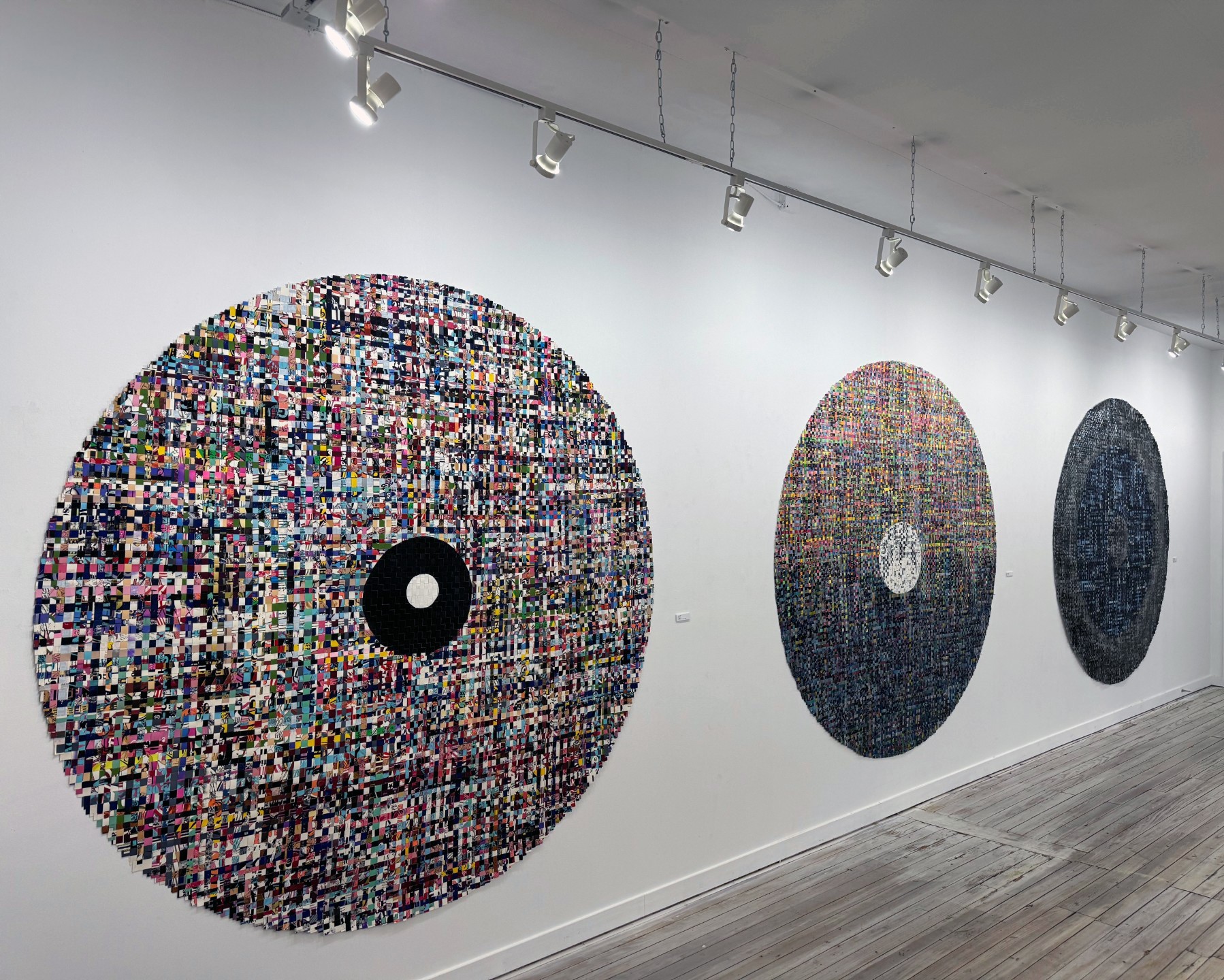
I am a printmaker with a particular interest in relief printmaking, although my practice has evolved well beyond traditional printmaking methods. I am best known for my large-scale, print-based woven paper constructions, which combine traditional and alternative printmaking techniques with mixed media and found or discarded materials.
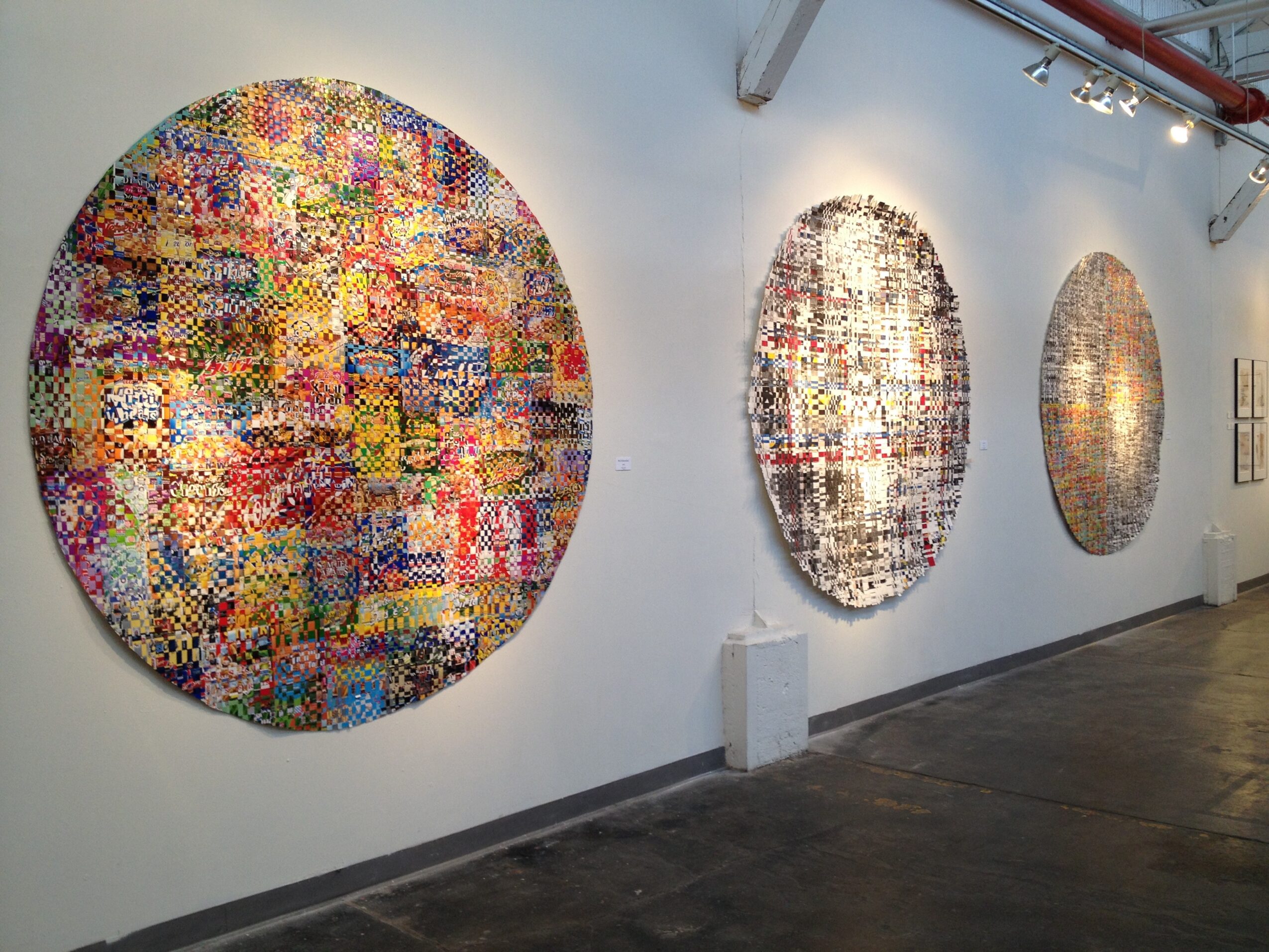
At its core, my work is about gathering, reinterpreting, and redistributing visual information. I am particularly interested in the paper remnants of our consumer culture—packaging, printed imagery, discarded materials, and everyday ephemera that often go unnoticed.
Through a process of collecting, cutting, arranging, and hand-weaving, I transform these seemingly unrelated materials into complex, tapestry-like compositions. Individual works can contain hundreds of interwoven strips, bringing together fragments of consumer packaging, traditional and experimental prints, and other printed materials. The resulting surfaces create intricate relationships between color, texture, pattern, and fragmented imagery.
Rather than communicating a single, definitive message, I want my work to invite interpretation. The juxtaposition of familiar imagery and unexpected materials creates an open-ended visual experience, allowing viewers to discover their own connections, memories, and narratives within each piece.
I am particularly proud of developing a recognizable artistic process that transforms ordinary, often discarded materials into something visually compelling and meaningful. The labor-intensive nature of the work is an essential part of its identity, reflecting both the physical act of making and the transformation of familiar materials into a new visual language.
I also value the collaborative opportunities my practice has created. I work with private collectors, commercial galleries, designers, and art consultants, and I especially enjoy collaborating with clients to thoughtfully integrate my work into their spaces. Seeing how a piece interacts with its environment and becomes part of someone’s everyday experience is an incredibly rewarding aspect of what I do.
What has been the most important lesson you’ve learned along your journey?
One of the most important lessons I have learned throughout my creative and professional journey is to remain open to inspiration, particularly in the ordinary and often overlooked aspects of everyday life.
Ideas and inspiration do not always arrive in expected places or moments. They emerge through observation, experience, and the simple act of paying attention. I have learned that some of the most compelling creative possibilities exist within the mundane, whether in the natural world or the objects and materials that surround us.
Extraordinary beauty is often easy to recognize, but there is something equally meaningful about discovering beauty in what others might overlook. That perspective has become fundamental to both my artistic practice and the way I experience the world.
Another important lesson has been finding the balance between believing in my own creative vision and remaining receptive to the perspectives of others. Confidence and conviction are essential, but so are humility, curiosity, and a willingness to learn.
Like many creative professionals, I have experienced moments of self-doubt and imposter syndrome. During those times, returning to the work itself, trusting the creative process, and seeking perspective from respected colleagues can be invaluable.
Ultimately, I have learned that artistic growth requires both persistence and openness: the determination to pursue your own vision while remaining willing to evolve, question, and discover something unexpected along the way.
Contact Info:
- Website: https://jonpaulcsmith.com
- Instagram: @jonpaulsmithart
- Facebook: jonpaulsmithartist
- Other: https://www.lilypress.com/artists/jonpaul-smith
Popular
-

The Change-Makers: stories that inspire
-

Hidden Gems: Local Businesses & Creatives You Should Know
-

Portraits of Ohio
-

Take Flight: Lamar Thomas on Building an Inclusive Brand Rooted in Youth, Community, and Purpose
-

Cultivating Inner Clarity: Angel Inspires on Thought, Healing, and Purpose
-

Local Highlighter Series