



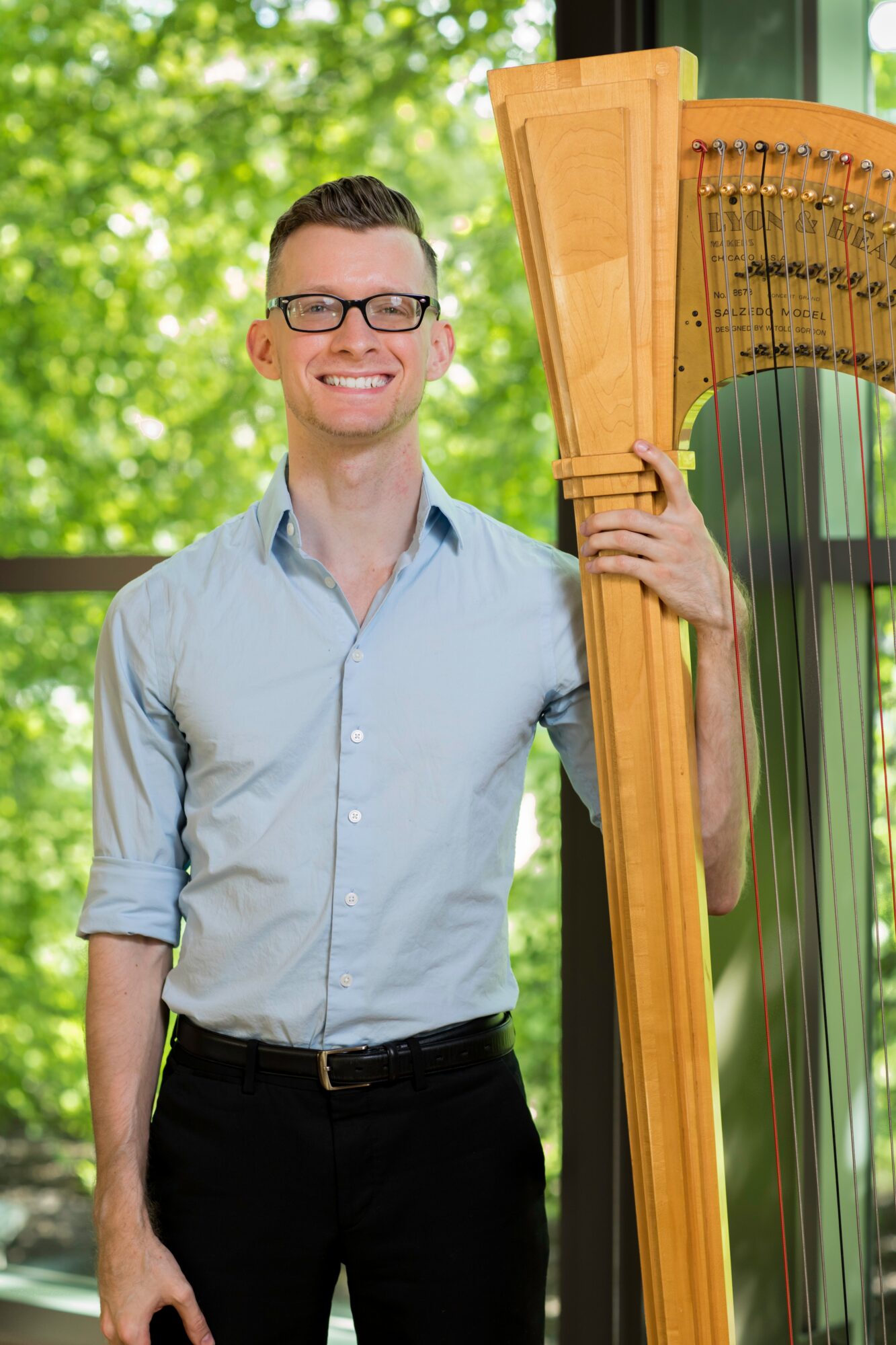
Today we’d like to introduce you to Joseph Rebman.
Hi Joseph, so excited to have you with us today. What can you tell us about your story?
I am from Finneytown, Ohio, a small suburb just north of the Cincinnati city line. Finneytown is predominately lower-middle class families, and my family was exactly that. Neither of my parents went to college, my mother got the lowest-level nursing license while working as a waitress and my father eventually earned an associates degree after 10 years of night classes through a community college while working a sales job. My mother grew up poor in rural south-east Indiana with limited opportunities, so a goal of hers was that my brother and I could attend college and do whatever we wanted.
I first discovered the harp through Disney’s Fantasia, which opens with the orchestra slowly walking to their instruments and warming up. When it showed the harp I instantly knew I wanted to do that, but had never seen a kid play harp before. Finneytown public schools offered a string orchestra class starting in 4th grade, and a band class starting in 5th grade. So, I made a master plan that I would play bass in 4th grade then flute in 5th grade then harp when I was old enough. The string orchestra teacher heard my plan and said “we actually have a harp”. I switched from bass to harp as soon as I could. I started private lessons with Michelle Gwynne, harp professor at Northern Kentucky University, and between her and the Finneytown orchestra program, I had a huge number of opportunities to perform and grow from 4th grade through my senior year, with my parents supporting and hauling a harp to ensure I could do them all. I got into the Cleveland Institute of Music and studied with Yolanda Kondonassis, and continued on into having performing and teaching harp as my full-time career.
We all face challenges, but looking back would you describe it as a relatively smooth road?
Creating a career in the arts is never a smooth road. I’d say I had three main struggles.
1. Financially surviving through college – Even with work study and part-time jobs, it is really tough to push through the early parts of an arts career. I had to be extremely frugal and get creative in multiple ways to continue pursuing my dreams while still being able to pay rent and afford food.
2. The most common and most readily available employment for a harpist is with an orchestra, but the audition process is brutal. Orchestras only have one harpist on their permanent roster, and they often hold their positions well past retirement age. When a good position does open up, it is highly competitive with a large number of highly-qualified harpists vying for the same position. The orchestra sends you a list of usually the most difficult orchestra parts and solo music for you to spend multiple months preparing to perfection. During the audition itself they select maybe 5 minutes of music from that list, which then determines whether you move on to the next round. All those months of work can come down to one single wrong note in the 5 minutes they select. Calling an audition stressful is an understatement, plus the more time spent preparing for an audition means less time working your part-time job, so some auditions you literally can’t afford to take early in your career.
3. Many of my opportunities have required me to repeatedly prove my skill and my worth, but none come close to when I first got my school position. There were 12 students in the program and half were juniors and seniors, with zero fourth graders. If I wanted to keep this job, I had to rebuild the program from the ground up, and it took five years before the program was on solid footing again.
Thanks for sharing that. So, maybe next you can tell us a bit more about your work?
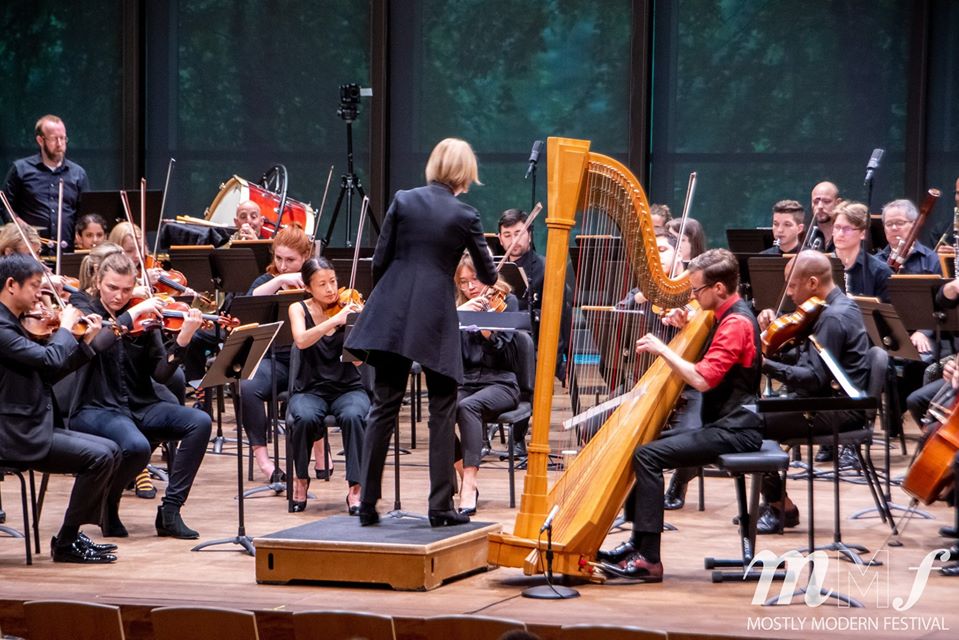
As a harpist I have two main fields: performing and teaching. As a performer I have two orchestra positions, regularly sub with orchestras all around my region, and do solo and duo concerts. As a teacher I have two main positions, The Mostly Modern Festival and SCPA.
1. Orchestra positions: I am principal harpist of the Kentucky Symphony (KSO) and the Huntington Symphony (HSO). KSO is based in Northern Kentucky and primarily rehearses and performs at Northern Kentucky University, which is just 10 minutes south of downtown Cincinnati. As part of KSO we do subscription series classical concerts, summer pops concerts, and I have been involved with the release of one album of Halloween-themed orchestra music. HSO is based in Huntington, West Virginia, which is at the tri-state of western West Virginia, southern Ohio, and eastern Kentucky. They do many of the same things as KSO, plus yearly Nutcracker ballet performances in both Huntington and in Ashland, Kentucky.
2. Freelance musician: While I do play for weddings and special events like many harpists do, I consider my expertise being an orchestral harpist. While many orchestras have their principal harpist, like I am with KSO and HSO, anytime a harpist is sick, takes time off, or the orchestra needs more than one harpist, then they bring in a freelance harpist to fill in. I have been fortunate to do this with many orchestras in my area including the orchestras of Louisville, Lexington, Columbus, and Cincinnati. I’m quite proud of my ability to learn music very fast with minimal or no rehearsal, and last January I was called in last-minute to perform with the Cincinnati Symphony on a brand-new 45-min work with no rehearsal, just show up and play the concert. That is something very few musicians, but especially harpists, are able to do!
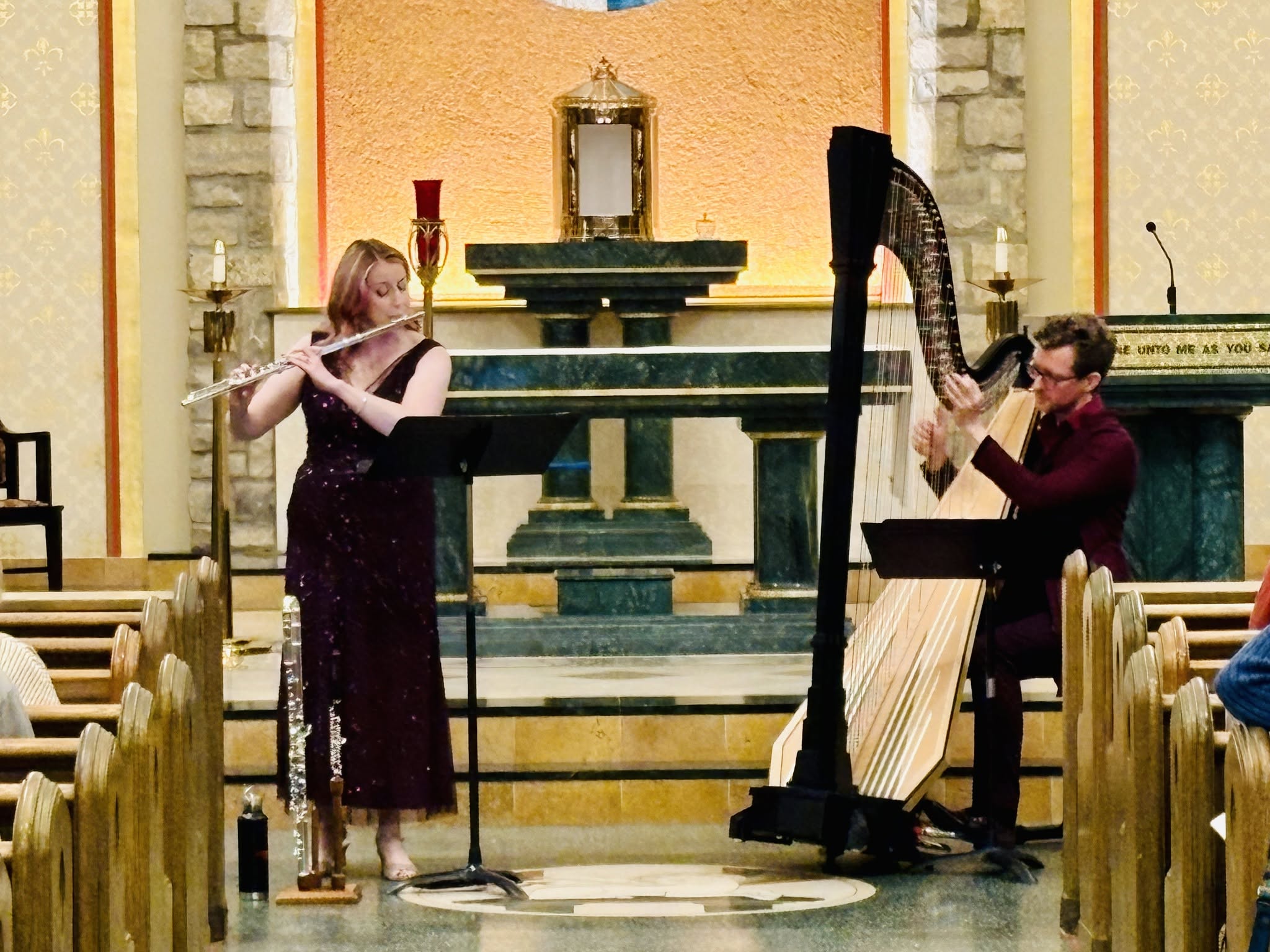
3. Solo and chamber groups: I frequently perform as a solo artist and released my debut album “Eros” three years ago. This album featured multiple of my own compositions, plus music from other composers written specifically for me. I am also part of two duos: The JOLO duo is harp and trombone with Louis Setzer and we released an album in 2020. The Apollo duo is harp and flute with Lindsey Goodman and we are very actively performing around Ohio.
4. The Mostly Modern Festival: A music festival in the classical world is quite different from the pop world. For us, a music festival is a multi-week music intensive, often held on a college campus, where students from all around the world come together to form an orchestra and multiple smaller groups to present multiple concerts each week. It is a summer camp intensive. Some famous older examples are Tanglewood, Aspen, and Chautauqua. The Mostly Modern Festival is quite young, with summer of 2027 being our 7th season, and I have been involved since the beginning. As harp faculty I recruit and teach 2-3 harp students across the entire festival, give lectures for both harpist and other students, and perform as part of the faculty ensemble.
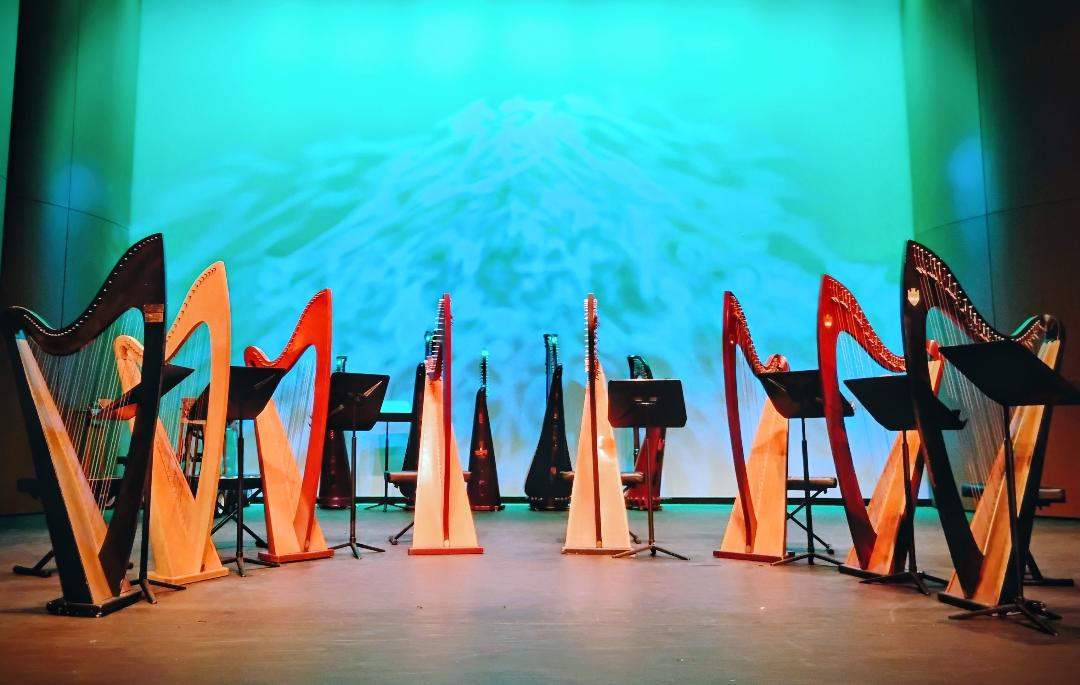
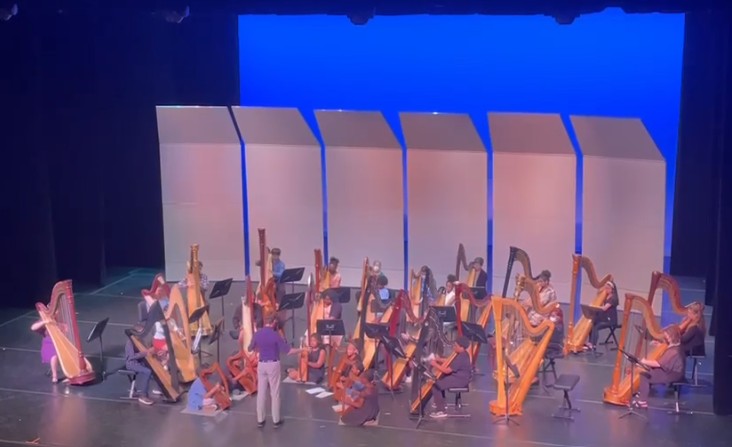
5. SCPA: Saving the biggest for last, Cincinnati’s School for the Creative and Performing Arts is a magnet school within Cincinnati Public Schools. While similar models are common for private schools, it is rare for a public school system to offer a arts school. SCPA is one of only 7 public schools in the entire country that offers a harp program, and none of the other 6 follow the same model as SCPA. Imagine a high school orchestra or band, except every student plays harp instead. I started at SCPA in the fall of 2017, so I’m currently in my tenth school year, and across those nine years the program has grown from 12 students to 42 students, 16 harps to 38 harps, two classes a day to six classes a day, and my position changed from part time contractor to full time CPS employee, same as every other teacher. Since no other public school has a similar harp program, I’ve had to create nearly everything I do from scratch.
Any advice for finding a mentor or networking in general?
Classical music is similar to an apprenticeship: your teacher makes a huge impact on your future. This both applies to your first teacher, and any teacher in your further education. Looking at colleges for harp is far more about finding the right harp teacher than it is about finding the right college. As for networking, having strong connections with a wide variety of classical artists makes a huge difference in forging your own path. None of my main career positions would have happened without other people knowing my skill from first hand experience and vouching for me as the best harpist for the job.
Contact Info:
- Website: https://www.josephrebman.com/
- Instagram: https://www.instagram.com/josephrebmanharp
- Facebook: https://www.facebook.com/JosephRebmanHarp1
Popular
-

The Change-Makers: stories that inspire
-

Hidden Gems: Local Businesses & Creatives You Should Know
-

Portraits of Ohio
-

Take Flight: Lamar Thomas on Building an Inclusive Brand Rooted in Youth, Community, and Purpose
-

Cultivating Inner Clarity: Angel Inspires on Thought, Healing, and Purpose
-

Local Highlighter Series