



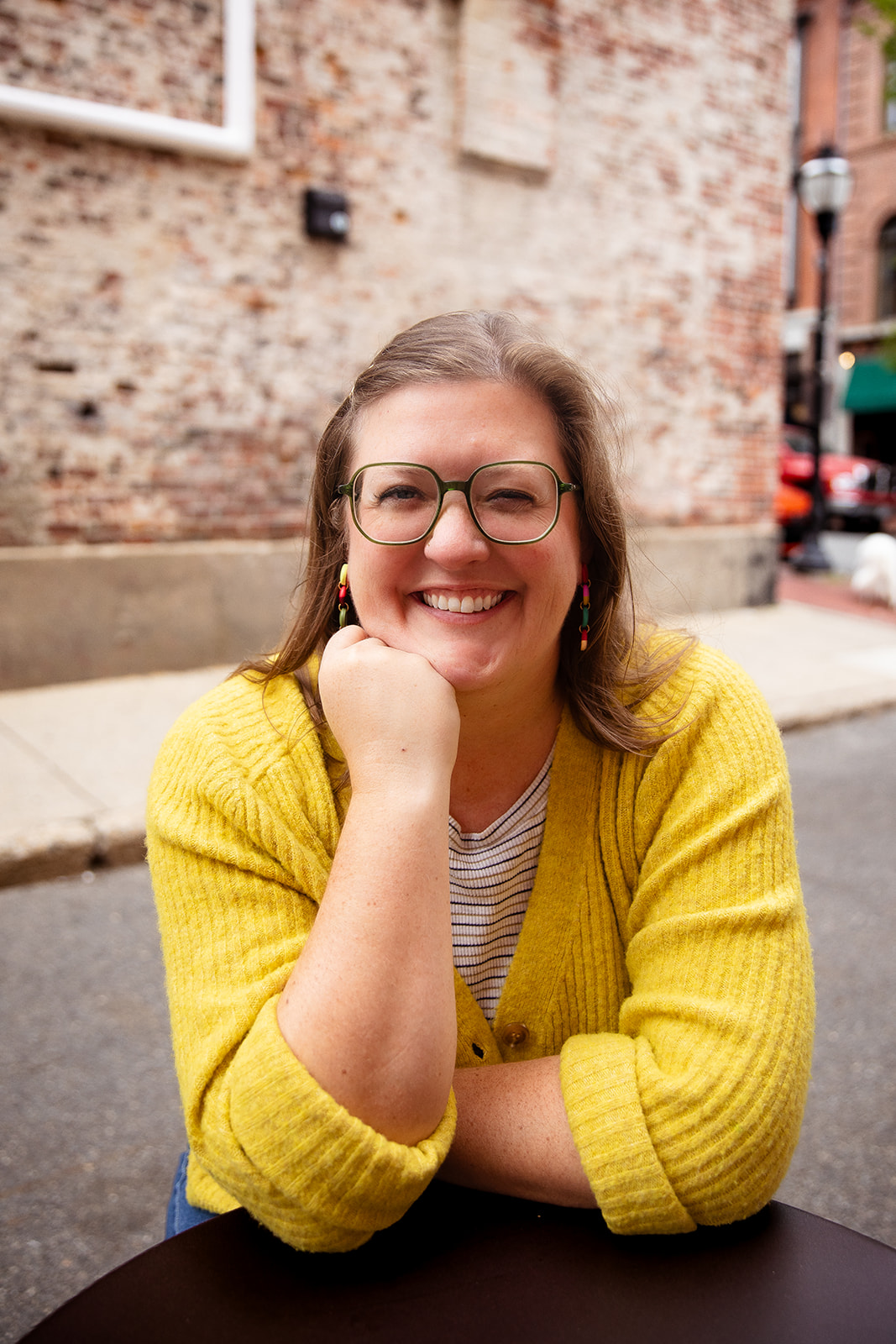
Today we’d like to introduce you to Meghan.
Alright, so thank you so much for sharing your story and insight with our readers. To kick things off, can you tell us a bit about how you got started?
The plan has always been to be a therapist. I went to Xavier University for undergrad and majored in psychology with the hope of moving on to grad school immediately. I am so grateful that I did not choose that path. I thought I understood what therapy was when I was younger – give people advice (I was so good at that! My high school friends could tell you how often I told them what to do – it was not actually therapeutic!)
As I continued to live more of my life & engage in a career in the mental health field (not as a therapist) I found trauma-informed work and I was immediately hooked. I began to look at the world and people in it as making a lot more sense based on what had happened to them and less about being biologically broken (the pathology paradigm of mental health).
I started graduate school for Clinical Mental Health Counseling at Xavier (again) in 2016 (almost 10 years after undergrad) where I really enjoyed learning about mindfulness as an intervention for counseling.
After graduation in 2019, I started training in Somatic Experiencing – a three year trauma resolution training program through Somatic Experiencing International. During those years, I learned more about how trauma can impact the body and that trauma doesn’t always have to be the big T traumas that we hear about (war, assault, etc.) to leave an impact. In 2025, I became a Somatic Experiencing Practitioner – which means that I completed the 3 year training and did a number of personal sessions where I experienced what it was like to engage in the therapy & received consultation from other providers.
As my career has progressed, I have learned more about neurodivergence and how often people have received anxiety and depression diagnoses that might actually be hiding in ADHD or Autism. I talk a lot with clients about masking their true needs in order to be valued by society in a way that really actually harms them and their nervous system, I really want to be clear that neurodivergence does not exclusively mean ADHD or Autism – it is any kind of brain that deviates from what is “typical” so any diagnosis like OCD or anxiety is neurodivergence and other disabilities like dyslexia, dyscalculia, etc. (I think there are way more neurodivergent people than we realize!)
My own personal story has kind of followed the arc of my clinical interest. The more I have learned about myself, the more I have wanted to help others who seemed fine (even like they are thriving) on the outside, but inside they are looking for more fulfillment and to live a life that actually feels like theirs.
Alright, so let’s dig a little deeper into the story – has it been an easy path overall and if not, what were the challenges you’ve had to overcome?
Business ownership feels a lot like pivoting most of the time.
I started my private practice right out of grad school in October of 2019…which means that Covid was just around the corner. I signed a new lease in January of 2020 and had to pivot to telehealth in March – luckily my landlords were gracious and didn’t collect rent when I was strictly telehealth & we were in the middle of a pandemic.
I was excited to complete Somatic Experiencing training in person close to where I live and then that got moved online as well (I actually think that was really good for my nervous system).
I learned about my own lived experience with neurodivergence as I was building a practice – this actually turned out to be very helpful as it gave me some understanding of what I needed to do to meet my own needs and how I could help clients learn to how accommodate themselves.
I’ve changed my schedule more times than I can count and feel incredibly lucky that I have the freedom to do so.
All of these pivots have felt like monumental stressors at the time – and they were! – but as I reflect on them, they have also worked out better than I could have imagined and I am so grateful to be where I am in my business ownership.
As you know, we’re big fans of A Lot Like Living Counseling . For our readers who might not be as familiar what can you tell them about the brand?
I named my practice A Lot Like Living to help normalize the need for asking for help at certain points in our lives. I have found therapy to be enormously beneficial in my own life and would love for everyone to have that opportunity.
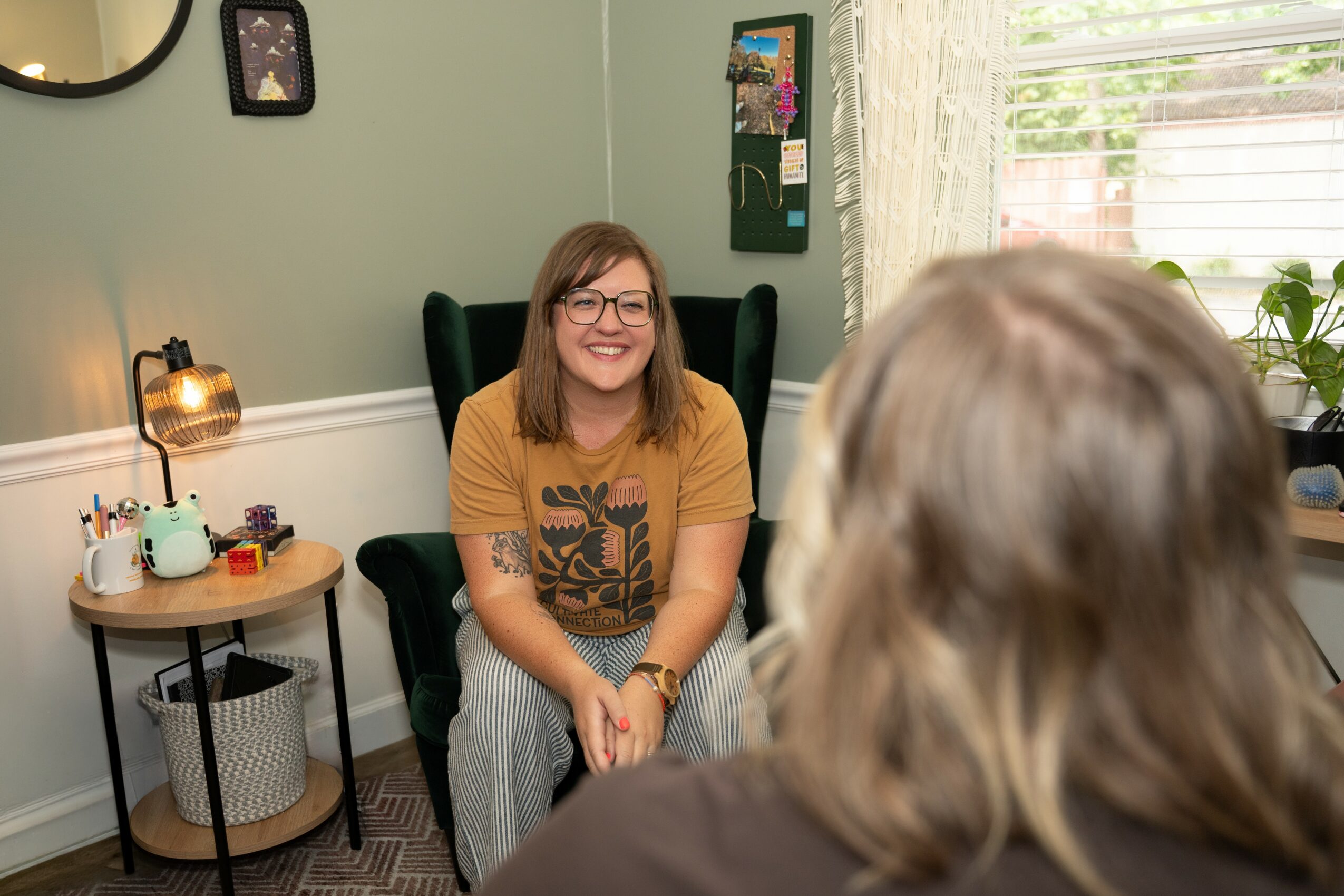
I see individual clients for mental health therapy – primarily people who have been identified (by themselves or professionally assessed) as Autistic or ADHD later in life, sometimes both, otherwise known in the community as AuDHD. I work from a Neurodiversity Affirming lens, meaning that I think ADHD and/or Autism are natural variations of the human brain (a neurotype) and not something that needs to be cured (a disorder). They definitely need to be supported and can be disabling and I love working with clients to help them learn how to support their brains and nervous systems.
The people I work with might also describe themselves as people pleasers, perfectionists, empaths, first born daughters (this one is a little bit of a joke, but I do think that as a first born daughter, we sort of resonate with each other). People I work with really want to do well in therapy and the first thing that we talk about is that therapy with me isn’t about winning or getting an A, but it is about learning to be ok with yourself in a world that has asked you to be someone different.
I often work with people who haven’t had a lot of success with therapy in the past – most often because they were trying to work on the wrong thing. If you are trying to decrease your anxiety but it is rooted in sensory struggles, powering through the anxiety (which is the common treatment) will just make those sensory struggles more intense. But, if you are able to identify what the sensory struggle is that is leading to anxiety, we can accommodate that and you can still do the thing you want (most of the time) and decrease anxiety!
I really love working with my clients to help them learn what their needs really are, how to meet those needs, and how to ask for help (which can sometimes feel like the scariest thing of all!) So often, my clients have moved through life paying so much attention to those around them, that they forget to pay attention to themselves. I heard someone say recently that they felt like they have been performing a version of themselves for such a long time, they woke up in their 50s and didn’t know who they actually were.
It is important to me that I work with clients to understand why they started to perform in the first place, how it might have felt safe or beneficial, and what kind of support they might need to live a life that feels like theirs to be able to drop the performance.
I recently became a Licensed Professional Clinical Counselor with a Supervisor designation in the state of Ohio, which means that I can supervise Licensed Professional Counselors in Ohio on their way to become independently licensed. I have a group supervision that is focused on being trauma informed, neurodiversity & queer affirming, & learning about where our privilege might impact our counseling practice. I really love working with newer counselors on how they are developing their clinical style and helping them to feel less like they have to perform as well.
Something I have noticed as I have worked with individual clients is our (as a society) difficulty with community. So I am trying to practice what I preach – I have been in solo private practice for about 7 years and I am continuing to build my own professional community of collaborators. I am collaborating with two other practitioners to offer more group based activities – recently we offered Relax into Reconnection right before the autumn equinox where participants were were able to engage in guided journaling, gentle yoga, and creating a communal nature mandala. We intentionally made this Neurodiversity informed by sharing videos of what to expect both from the practices and the space prior to the event, shared exactly what to expect in the time we would be together, & offered alternatives to the guided plans (coloring books if solo/decreased demand time was more interesting than writing, yoga, or mandala making). The plan is to offer more gatherings during the change of seasons. I’m so excited to collaborate with others in the Cincinnati area to offer more gatherings like these!
How can people work with you, collaborate with you or support you?
Potential clients can schedule a free 15 minute consultation through my website: alotlikeliving.com
I provide individual and group supervision to Licensed Professional Counselors (LPCs) in Ohio & people can email me about that if they are interested in learning about how to be a counselor from a trauma responsive, neurodivergent & queer affirming, and on-going anti-racist lens.
I offer consultation with other therapists, business owners, or providers if they are on a journey to become more trauma and/or neurodiversity informed in their practice.
I would love to work with others who are neurodiversity & queer affirming on group gatherings to increase community in the Cincinnati area.
Pricing:
- $170/50 minute individual therapy sessions
- $100-170/individual supervision session
- $100/1.5 hour group supervision
- $200/hour consultation
Contact Info:
- Website: https://www.alotlikeliving.com
- Instagram: https://www.instagram.com/alotlikeliving/
- LinkedIn: https://www.linkedin.com/in/meghan-mcnamara-ma-lpcc-s-8b827a13/

Popular
-

Hidden Gems: Local Businesses & Creatives You Should Know
-

The Change-Makers: stories that inspire
-

Portraits of Ohio
-

Take Flight: Lamar Thomas on Building an Inclusive Brand Rooted in Youth, Community, and Purpose
-

Cultivating Inner Clarity: Angel Inspires on Thought, Healing, and Purpose
-

Local Highlighter Series