



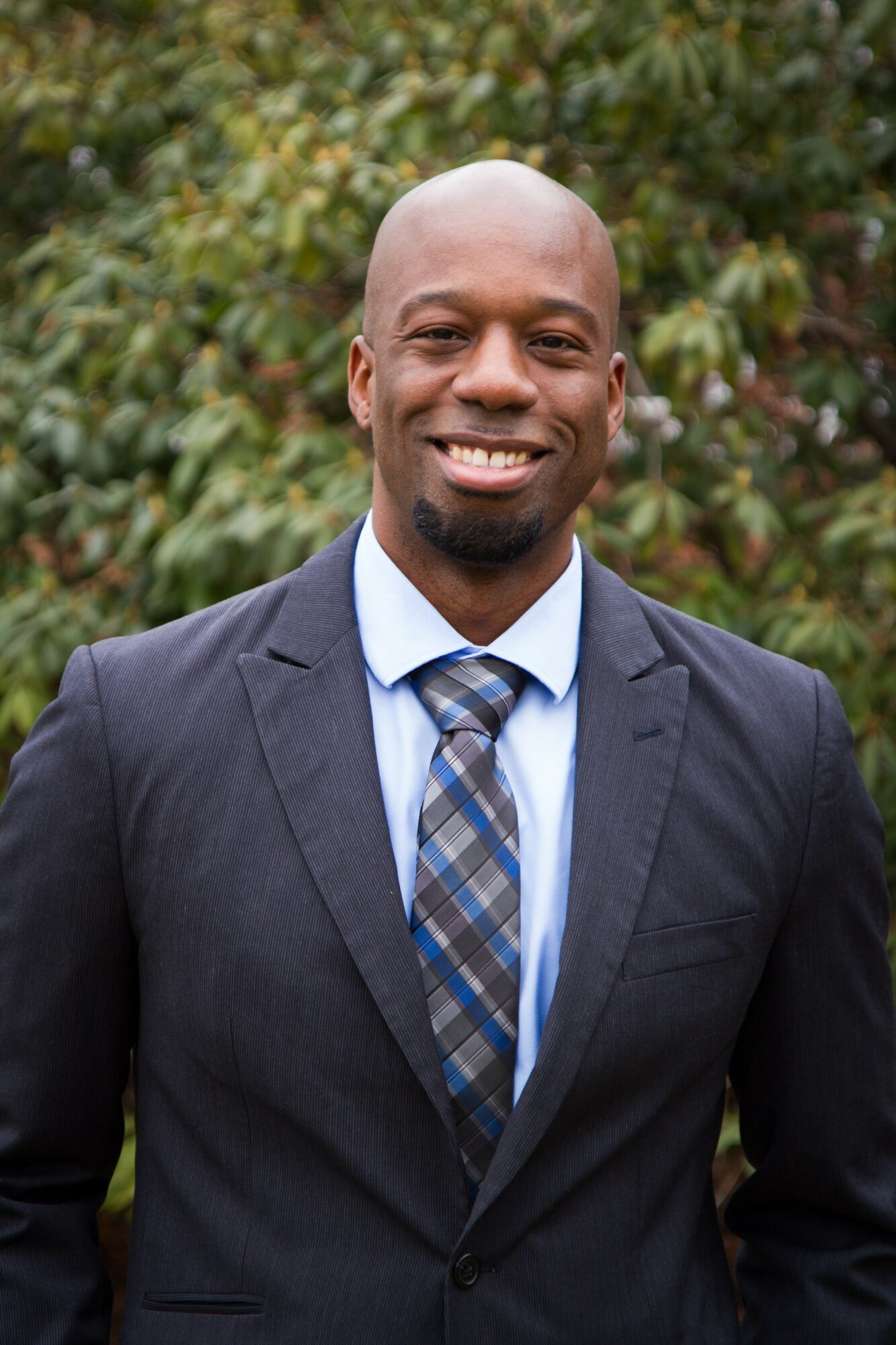
Today we’d like to introduce you to Steven Hankle.
Hi Steven, can you start by introducing yourself? We’d love to learn more about how you got to where you are today?
# Dr. Steven Hankle
## Personal and Professional Background for Interview
### From Chicago, Basketball, and Family to a Life in Music
Dr. Steven Hankle grew up on the South Side of Chicago. Athletics, particularly basketball, played a central role in his childhood and young adult life. He first became interested in basketball while watching his older brother play and eventually developed into a competitive player himself. Basketball carried him through high school and into college, where he earned the opportunity to continue playing at both the junior-college and four-year collegiate levels.
Long before music became his profession, however, singing was becoming an important part of his life.
One of Hankle’s earliest musical influences was his father. Because his father often worked long hours, music became one of the ways they connected when he was home. His father would play artists including Anita Baker, Whitney Houston, George Michael, The Temptations, The Four Tops, Prince, Michael Jackson, Cameo, and The Gap Band. Hankle remembers listening and singing along with him.
He also began singing in church around middle-school age. Although he attended a Catholic church, the church’s African American music minister incorporated musical traditions extending beyond traditional Catholic repertoire, exposing Hankle to a broader range of musical expression.
After transferring to Kenwood Academy High School in Chicago, Hankle joined the boys choir and was subsequently invited into the school’s concert choir. The ensemble grew to approximately 100 singers during his high-school years. Through rehearsals, performances, and touring, he began to discover something in choral music that complemented what basketball had already taught him: teamwork, discipline, leadership, belonging, and the experience of pursuing something larger than oneself.
### Discovering Music in College
Hankle entered college primarily as a basketball player, but his interest in music continued to grow.
At junior college he began formal musical study, including music theory, piano, jazz history, and ensemble singing. At the time, he wondered whether his future might be in music production, inspired in part by artists and producers such as Babyface. His formal musical training began comparatively late. He did not begin studying piano until college and did not receive consistent private voice training until later in his undergraduate experience.
Nevertheless, choir remained the place to which he continued returning.
When he transferred to San Francisco State University, Hankle sought out an ensemble that would allow him to experience the kind of high-level singing and touring he had enjoyed in high school. He joined the Chamber Singers.
That decision would eventually change the direction of his life.
### Turning Point One: Cuba
While singing with the Chamber Singers at San Francisco State, Hankle participated in a choral tour to Cuba.
During the trip, the ensemble visited a school and participated in a musical exchange with Cuban students. The facilities had limited resources, influenced in part by the economic circumstances surrounding Cuba, but Hankle was struck by the extraordinary talent, commitment, and spirit of the students.
One particular experience stayed with him.
Another group of young singers had planned to attend the exchange, but their bus broke down. Rather than miss the opportunity, the students walked approximately two miles to reach the school.
Hankle’s director asked the Chamber Singers to perform again for them.
Eventually, students from different backgrounds and countries joined hands and sang together.
For Hankle, something changed in that moment.
He remembers thinking, in essence:
**“I don’t know how I’m going to do this, but I want to do this for the rest of my life.”**
Music was no longer simply something he enjoyed doing. He began to understand its ability to connect people across nationality, culture, economics, language, and circumstance.
### Turning Point Two: Choosing Music Education
Several months after the Cuba experience, Hankle attended a summer choral program in the mountains of Southern California on scholarship.
He was singing for hours each day and loved the experience.
During one rehearsal period, the conductor gave the singers an unusual assignment. He encouraged them to spend some time alone and consider two questions:
**What do you love doing?**
**How can you make a living doing it?**
Hankle began connecting the pieces of his life.
He loved singing in choirs.
He loved the community created through music.
He had experienced firsthand in Cuba what singing could do between people.
And basketball had already helped develop him as a leader, including serving in leadership roles such as team captain.
The answer became increasingly clear.
He wanted to become a music educator.
Hankle returned to college and changed the direction of his studies toward music education. He completed his remaining basketball eligibility while committing additional semesters to completing the musical and educational preparation required for his new career.
What initially appeared to be a dramatic change from athletics to music ultimately proved to be a continuation of many of the same values: discipline, teamwork, leadership, excellence, community, and helping people accomplish something together that none could accomplish alone.
### From Teacher to Professor
Another important moment occurred during Hankle’s teacher-credential preparation at San Francisco State University.
He spoke with Dr. Jamal Cooks, an African American professor, about the possibility of eventually teaching at the university level.
Dr. Cooks helped him understand the multiplying effect of teacher education. A secondary-school teacher can profoundly influence generations of students. A university professor preparing future teachers can equip those educators to enter many classrooms and influence thousands more students over the course of their careers.
That idea resonated deeply with Hankle.
He began to envision music not simply as his profession, but as a conduit through which he could develop people, teachers, leaders, communities, and future generations.
That realization helped put him on the path toward graduate study, collegiate teaching, choral conducting, and music teacher education.
### September 15, 2026: Living the Dream
Today, Dr. Steven Hankle is a professor at the University of Dayton, where his responsibilities include choral music, conducting, and music education.
Among the courses he teaches is **Choral Methods**, where he prepares undergraduate music education students to become effective choral educators.
There is special significance in that work.
Years ago, Hankle sat with a professor and imagined what it might mean to prepare future teachers who would go out and influence young people through music.
Today, he is doing exactly that.
The child from Chicago who initially imagined his future through basketball now stands in front of future music educators, helping them prepare to build their own programs, teach their own students, and create communities through singing.
For Hankle, that is not simply a career accomplishment.
It is the realization of a dream.
And his hope is that the impact continues multiplying through every student, ensemble, teacher, and community he has the privilege to serve.
### Themes That Have Shaped His Journey
Several ideas connect the different chapters of Hankle’s story:
– **Community:** Whether on a basketball team or in a choir, he has been drawn to environments where people work together toward something greater than themselves.
– **Leadership:** Athletics first gave him opportunities to lead. Choral music eventually gave that leadership a lifelong purpose.
– **Connection through music:** The experience in Cuba demonstrated how music can cross cultural, economic, national, and linguistic boundaries.
– **Education as multiplication:** Teaching future teachers allows an educator’s influence to extend far beyond a single classroom.
– **Representation:** His own experiences with Black educators, musicians, family members, and mentors have informed his understanding of the importance of students seeing possibilities for themselves.
– **Purpose:** His career developed not through one predetermined plan, but through a series of experiences that gradually revealed how his abilities, passions, and values could work together.
– **Impact:** Ultimately, Hankle sees music as a vehicle for helping people grow, connect, lead, and build meaningful communities.
### A Question at the Center of the Story
The question posed to Hankle many years ago in the mountains of Southern California continues to resonate:
**What do you love doing, and how can you make a life doing it?**
For Steven Hankle, the answer became choral music, education, leadership, and people.
Today, he has the opportunity not only to live that answer himself, but to help his students discover what their own answer might become.
Alright, so let’s dig a little deeper into the story – has it been an easy path overall and if not, what were the challenges you’ve had to overcome?
## Obstacles and Challenges Along My Journey
One of the greatest challenges throughout my journey in music was beginning my formal musical training later than many of my peers.
While music had always been part of my life through family, church, school, and singing, I did not begin formal piano study until college, and much of my musicianship training also began at that point. As I progressed into more advanced musical environments, I was often surrounded by people who had been studying music formally for much longer than I had.
That sometimes created a feeling that I was behind or that I was not good enough. There were moments when I questioned whether I truly belonged in the spaces I had entered.
Fortunately, my background as an athlete had already taught me an important lesson: being behind in an area does not mean you cannot improve. Basketball taught me how to train, accept coaching, work through frustration, and continue developing even when progress is uncomfortable.
I brought that same mentality into music.
Singing was one of my natural strengths, so I continued developing my voice while deliberately working to strengthen the areas in which I had less experience, particularly musicianship, piano, theory, and other technical skills. Rather than allowing the gaps in my training to determine what I could become, I tried to identify those gaps and work on them.
Graduate school presented another set of challenges.
Academic writing was particularly difficult for me. I sometimes looked at the abilities of my peers and questioned whether I was intelligent enough or academically prepared enough to succeed at that level. Instead of hiding from that weakness, I sought help. I worked with tutors, asked professors to review my writing, accepted revisions and criticism, and continued practicing.
Musically, I experienced similar doubts. Some of my graduate-school colleagues had extensive backgrounds and extraordinary musical abilities. Comparing myself to them could easily make me question my own abilities and whether I belonged.
Over time, however, I began to understand that belonging did not require me to possess the same strengths or follow the same path as everyone around me.
I learned to recognize what I did well, remain honest about what I still needed to develop, and continue doing the work.
An important part of overcoming those challenges has also been the people around me. Throughout my education and career, professors, mentors, colleagues, family members, and friends have invested in me, challenged me, encouraged me, and sometimes reminded me of my abilities during moments when I could not fully see them myself.
Even today, I continue to surround myself with people who help me grow.
Those experiences have changed how I think about success. I no longer believe that being successful means reaching a point where there are no weaknesses, insecurities, or areas that need improvement. For me, it means knowing my strengths, being willing to acknowledge where I still need to grow, seeking help when I need it, and remaining committed to becoming the best version of myself.
In many ways, the lesson I first learned through basketball continues to guide me in music, teaching, and leadership:
**You do not have to begin as the most talented or most prepared person in the room. You have to be willing to learn, work, be coached, and keep growing.**
Thanks for sharing that. So, maybe next you can tell us a bit more about your work?
I put people first over music and build a community that is inviting and fun. Then I work the singers hard! 🙂
Do you have recommendations for books, apps, blogs, etc?
The Secret to Success. Eric Thomas. use.motion.con organization/scheduling app.
Contact Info:
- Instagram: @stevenhankle
- Facebook: stevenhankle/facebook
- Other: https://linkr.ee/drhanklechoralmusic
Popular
-

The Change-Makers: stories that inspire
-

Hidden Gems: Local Businesses & Creatives You Should Know
-

Portraits of Ohio
-

Take Flight: Lamar Thomas on Building an Inclusive Brand Rooted in Youth, Community, and Purpose
-

Cultivating Inner Clarity: Angel Inspires on Thought, Healing, and Purpose
-

Local Highlighter Series