



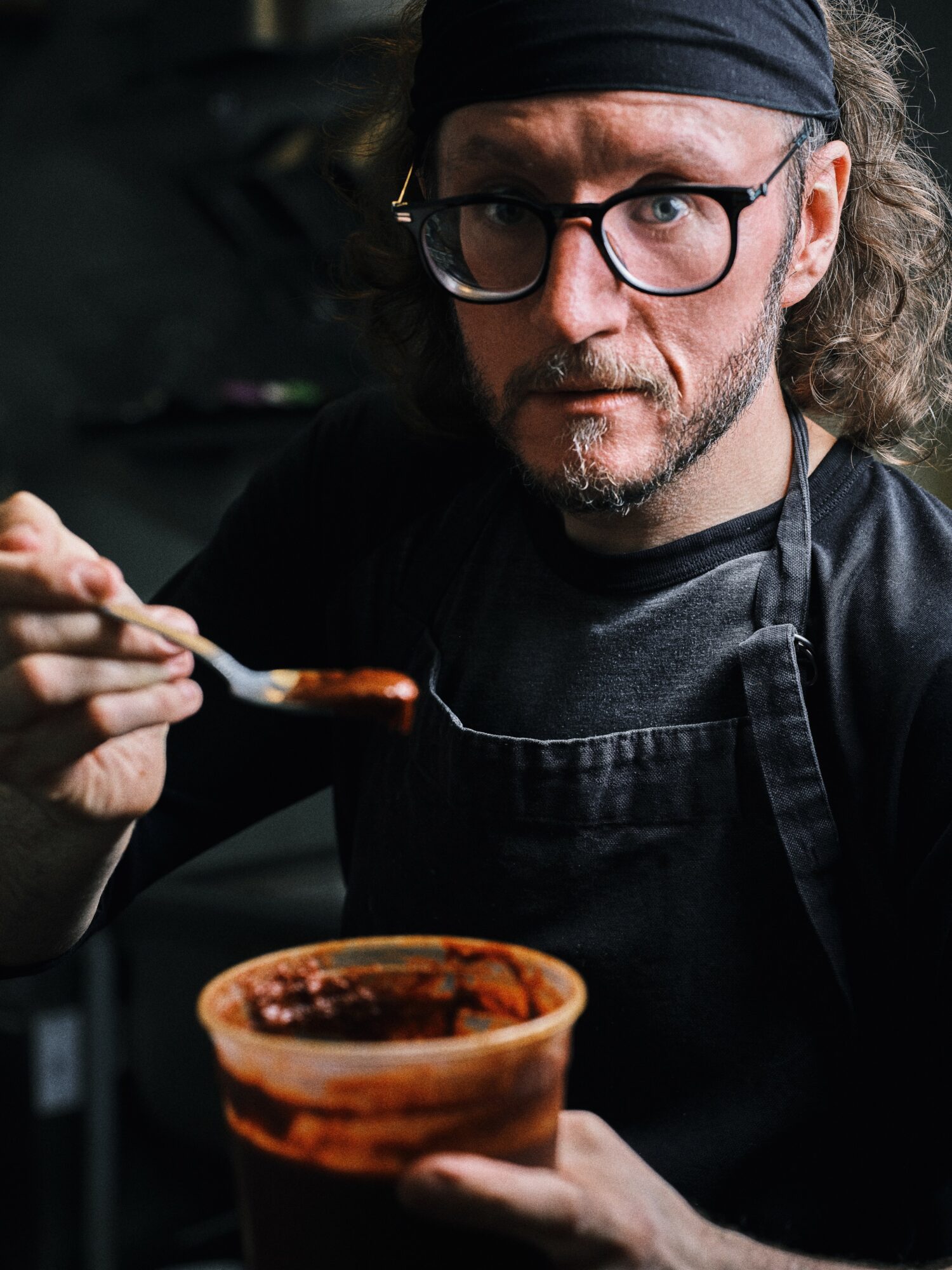
Today we’d like to introduce you to Joshua Sias.
Joshua, we appreciate you taking the time to share your story with us today. Where does your story begin?
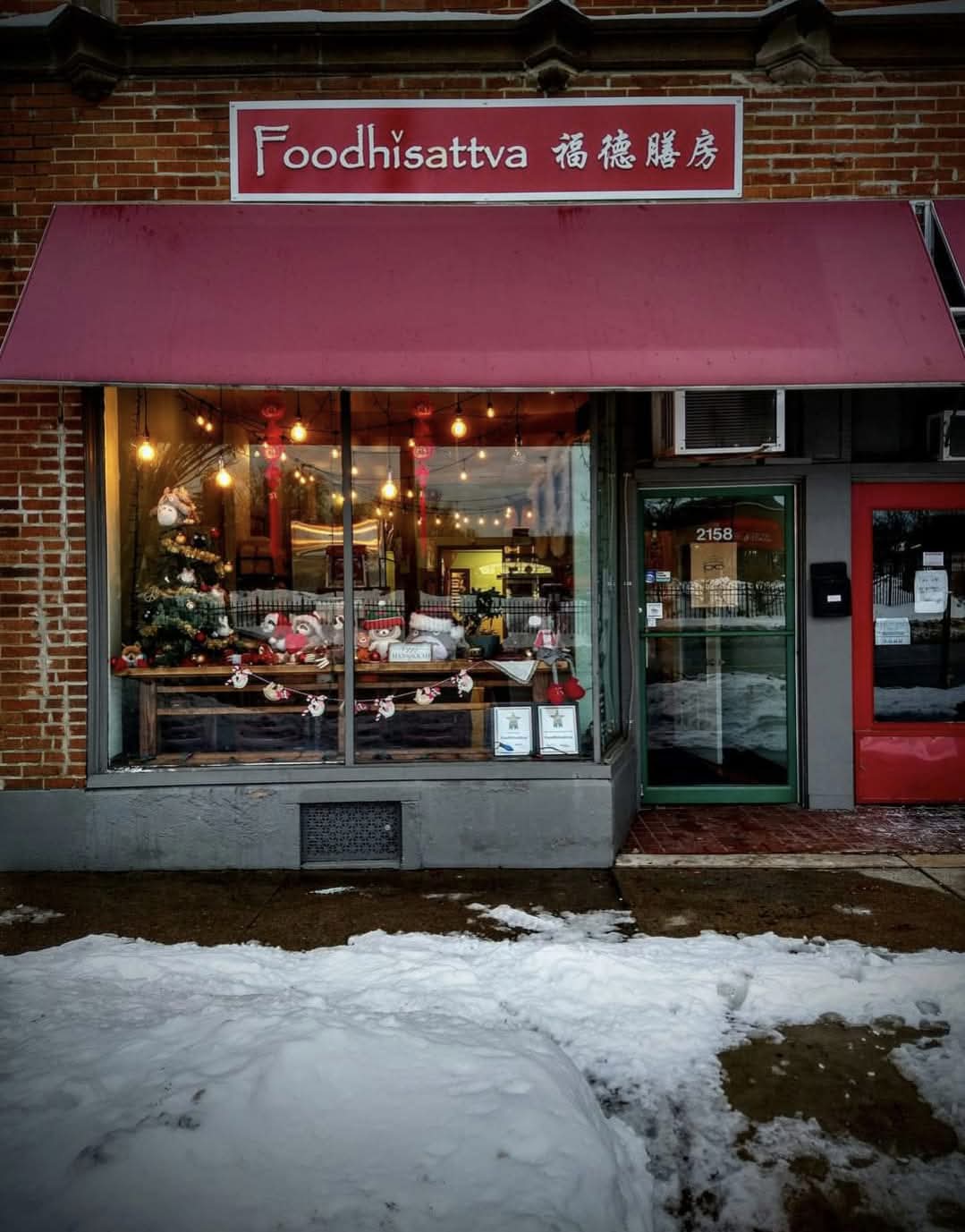
Foodhisattva started as a series of pop-ups I hosted with a partner while I was in college. I was studying philosophy, with a focus on animal rights and Upanishadic ethics, while also working as a vegan advocate. Cleveland didn’t really have a vegan restaurant scene at the time, and because I had learned to cook out of necessity back in high school, I started hosting pop-ups to help a neighborhood shop bring people through the door. Those pop-ups eventually grew into fundraisers and vegan nights at venues all over town.
When I graduated with my Master’s degree, I had a choice to make: go teach ethics, or rent the little hole-in-the-wall kitchen around the corner from my apartment. I chose the kitchen.
It’s been a struggle. We opened in 2019, just before the world changed, and then spent the next several years pushing through COVID and all the other upheavals that followed. But I’ve managed to build something I’m genuinely proud of.
As an Asian-fusion scratch kitchen, Foodhisattva has given me a way to introduce my community to traditional flavors and cooking techniques that can be difficult to find in Ohio, while also giving me a place to develop and serve dishes I’ve created over the years. Food builds community, and I believe good food, made with care and from a place of concern for others, can make even a little neighborhood restaurant meaningful.
It’s a lot of work, but I get to make a living without setting my values aside. And I get to show people just how good compassionate cuisine can be.
Can you talk to us a bit about the challenges and lessons you’ve learned along the way. Looking back would you say it’s been easy or smooth in retrospect?
No, not at all. To be honest, it is still incredibly challenging.
COVID hit before the restaurant had even made it through its first year, and I’ve been dealing with rising costs for virtually everything ever since. I didn’t take a wage for the first seven years. I sometimes joke that being a chef is the most ironic form of starving artist, but there is a serious side to that joke. I genuinely worry about what happens if I get sick, get injured, or if the current economic downturn continues. When you are the business and the person doing the work, there isn’t much of a safety net.
Being both the owner and the chef in this economy can be crushing, financially and physically. I’ve worked seven days a week for seven years, and that takes a real toll on your body. I’m at a point where I honestly don’t know how much longer I can sustain that pace.
There are challenges specific to what I do, too. Foodhisattva is a pretty niche concept: a scratch-kitchen serving vegan Asian-fusion cuisine, which is admittedly a bit of a mouthful. I work with techniques and flavors that aren’t always familiar to people here, and I’ve had to navigate the biases that come with being a vegan chef in a Midwestern food culture that still leans heavily toward meat and potatoes.
I’ve also sometimes felt like I’m working without much of an industry support network. Cleveland absolutely has a food scene, but I’ve often felt like I’m on the outside of the part of that scene where chefs, food writers, and other industry people connect with one another. Being “the soy guy” can make it harder to get taken seriously, even when you’ve been doing the work for years.
So no, it hasn’t been a smooth road. I’ve had to fight pretty hard just to keep the doors open. But I’m still here, still cooking, and still trying to build something that I believe is worth keeping around.
Appreciate you sharing that. What else should we know about what you do?
I think what sets me apart is also what I’m most proud of: I’m painfully old-fashioned.
When a lot of restaurants began swapping in the newest vegan meats and cheeses to hit the market, I stuck with the old traditions. I make my seitan, milks, and cheeses from scratch. It isn’t necessarily the most profitable way to run a restaurant, but I feel like I’m contributing to a much older tradition of compassionate cuisine, one that stretches back through centuries, temple halls and kitchens alike.
I also get a lot of joy from creating new interpretations of dishes that might be unfamiliar to my customers. My favorite dish on the menu is probably the best example. Daikon Cake is a traditional dim sum dish, but at Foodhisattva I make it from scratch and serve it over kabocha puree with sautéed garlic watercress and Taiwanese sweet chili sauce.
I love the traditional techniques behind the dish, but I also love its story. It has never been a huge seller. In fact, it bombed pretty badly the first few times I ran it as a special. But I stuck with it, and over time it developed a small following of its own. I’ve had people travel through Cleveland, try the dish, and tell me it was one of the best things they’ve ever eaten.
That means a lot to me. There is something special about making a dish that doesn’t necessarily make sense on a spreadsheet, sticking with it anyway, and eventually having it become meaningful to someone. I’m proud that I didn’t let the sales data make that decision for me.
We love surprises, fun facts and unexpected stories. Is there something you can share that might surprise us?
I’m a self-taught chef. People often ask where I went to culinary school or which kitchens I honed my skills in. Honestly, I didn’t. I came into food through ethics.
I read Peter Singer’s Animal Liberation in high school, along with the work of Thích Nhất Hạnh, and decided then and there that I needed to learn how to cook. Growing up in Cleveland, I was fortunate to have an incredible selection of Asian grocery stores around me. The fundamentals of compassionate cuisine, tofu, tempeh, seitan, mushrooms, beans, and vegetables, were all things I studied in those aisles as a kid, like an honor student in the classroom.
It’s cliché to say the world was different then, but it really was. Tofu wasn’t something most American grocery stores carried, let alone something most Americans were making for dinner. It took a lot of reading, experimentation, and failed meals before I could make food I was proud of.
My college life followed the same path. My ethics eventually led me to study dietary ethics, particularly Buddhist and Jain traditions, in depth. In a funny way, though, all of that study also kept me fed. I was reading and testing my way toward figuring out how to feed myself.
It’s kind of ironic that I’m now feeding other people with the things I spent all those years studying. That’s still essentially how I cook: I read, I experiment, I fail, I learn, and eventually I put something new on the menu.
Contact Info:
- Website: https://Foodhisattva.com
- Instagram: https://instagram.com/foodhisattva
- Facebook: https://Facebook.com/Foodhisattva
Popular
-

The Change-Makers: stories that inspire
-

Hidden Gems: Local Businesses & Creatives You Should Know
-

Portraits of Ohio
-

Take Flight: Lamar Thomas on Building an Inclusive Brand Rooted in Youth, Community, and Purpose
-

Cultivating Inner Clarity: Angel Inspires on Thought, Healing, and Purpose
-

Local Highlighter Series