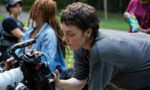
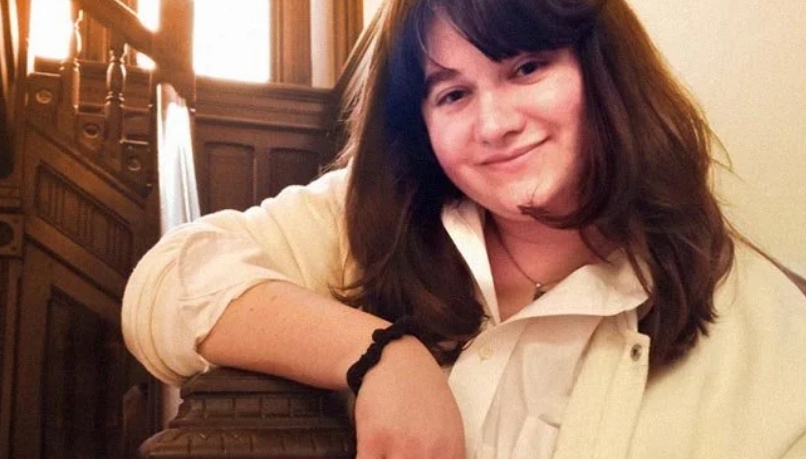
Today we’d like to introduce you to Mikaela Prescott.
Hi Mikaela, it’s an honor to have you on the platform. Thanks for taking the time to share your story with us – to start maybe you can share some of your backstory with our readers?
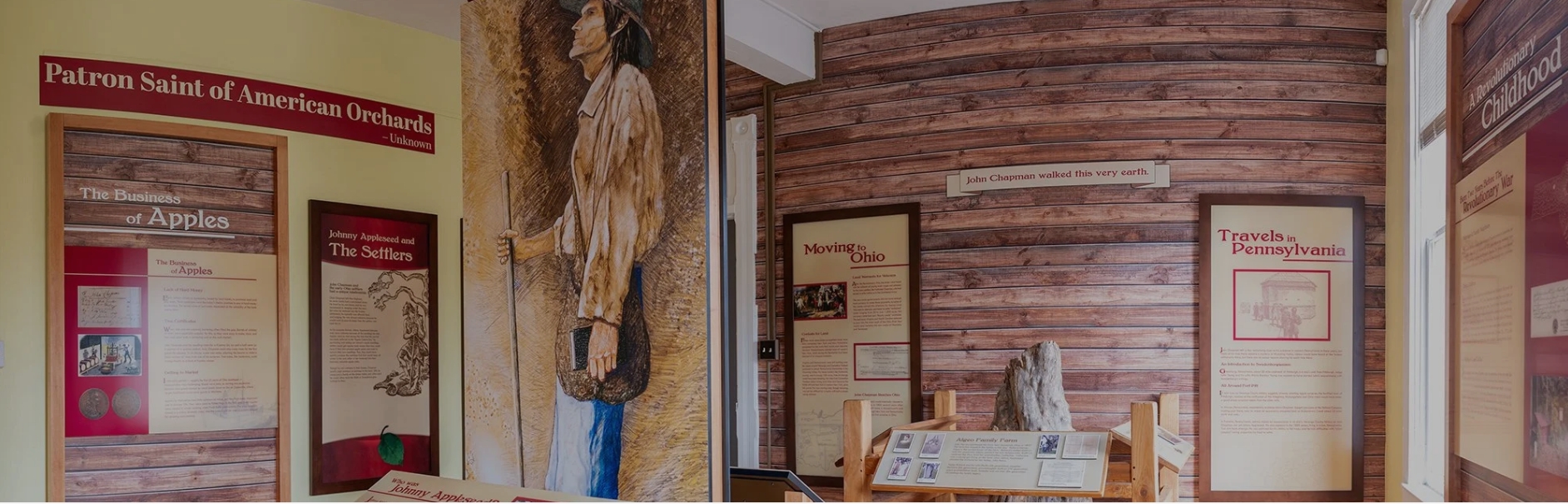
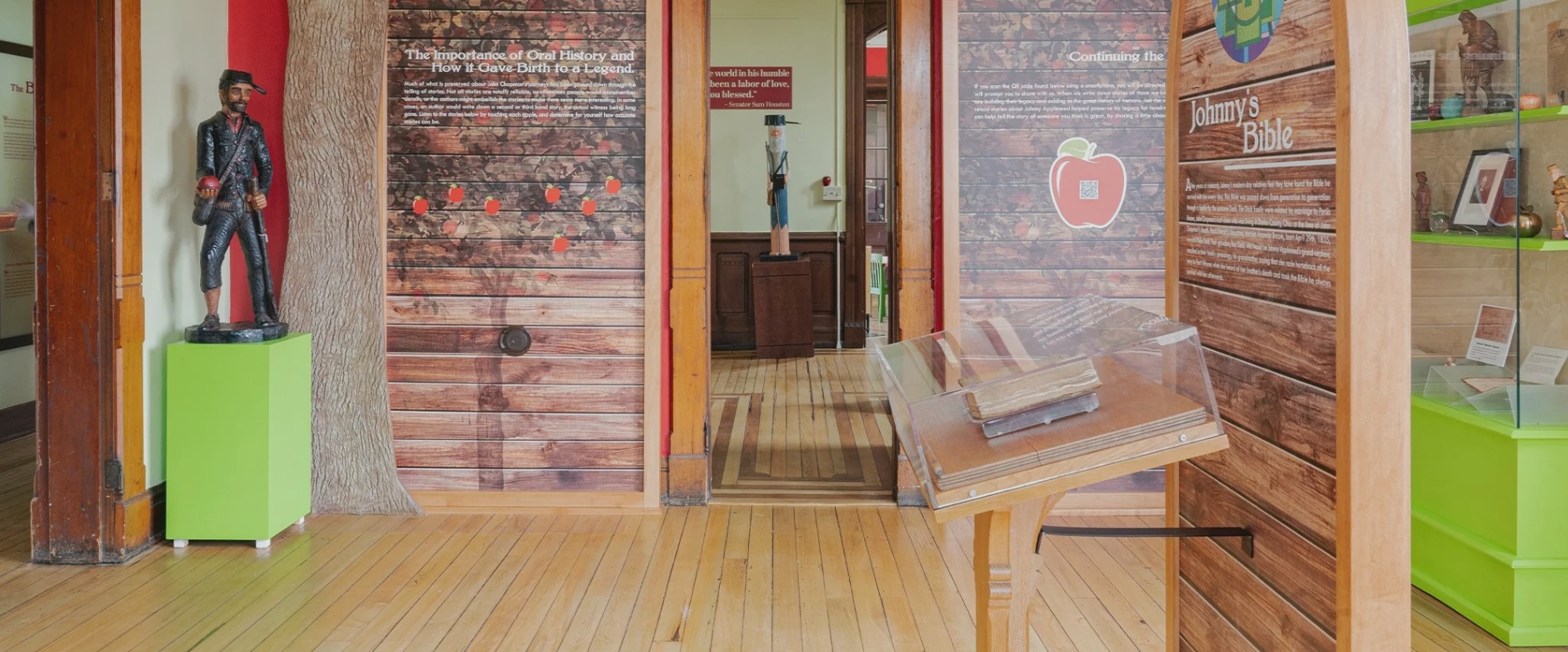
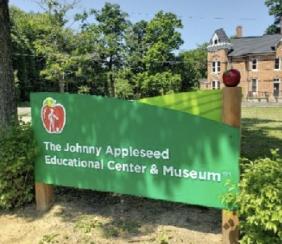
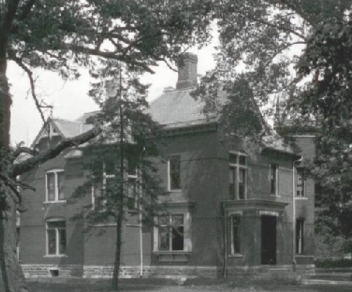
I am the Director here at The Johnny Appleseed Educational Center and Museum, or Johnny Appleseed Museum for short, which has a long, winding history. To truly understand our roots, you have to go back to a woman named Florence Murdoch. Florence was a historically impactful woman in the Cincinnati area, and she was a devout Swedenborgian as well as the owner of the land which became Cedar Bog Nature Preserve-which your readers might have read about in your last issue. Being a Swedenborgian, she had a lot of interest in preserving the true story of John Chapman, better known as Johnny Appleseed, who was a prominent missionary for the Swedenborgian faith. She collected as much archival material and research on Chapman as she could and stored it in her church. When the church eventually closed, Murdoch’s collection was moved to Urbana University (formerly Urbana College), as it was a Swedenborgian college and had room and an interest in fellow Swedenborgian collections. One professor, Joe Besecker, and a librarian, Hugh Durbin, began to think that the contents of Murdoch’s collection could be the foundations of an entire museum. In the 1990s, the Johnny Appleseed Society, a group of interested volunteers, came together in Urbana to begin organizing the museum. The Johnny Appleseed Museum opened with the support of Urbana University in the historic Barclay and Bailey halls. They hosted tours as well as held classes for educators who used Johnny Appleseed as part of their curriculum. In 2014, Urbana University was purchased by Franklin University, but the University ultimately closed in 2020, forcing the museum to also close. The Johnny Appleseed Foundation, a 501(3) (c) non-profit that oversees the museum, was able to purchase an off-campus building once owned by the University, known locally as Browne Hall, to be the new museum. This historic, 145-year-old Victorian home underwent roughly three years of construction as the Foundation fundraised to do basic building maintenance, hire staff, and completely redesign a totally new and updated museum, which reopened to the public on April 27th, 2024. Since then, the museum has been successfully operating and offering free tours, low-cost programming for school groups, participating in and hosting community events, and continues to expand and offer access to our archives to researchers. I have a lot of passion for what I do-you have to in order to work in the non-profit world, especially in small museums where our institution’s employment includes myself and only one other part time staff person.
Would you say it’s been a smooth road, and if not what are some of the biggest challenges you’ve faced along the way?
Working in a museum is always fun, but it is never easy! We are lucky to have such a whimsical name as Johnny Appleseed. It allows us to connect with people far and wide, young and old! However, we did have to start from scratch in many ways. At a time when many nonprofits and museums were closing due to the pandemic, we were trying to buy a building, start fresh, and get to work rather than retreat from it. That was a very unique challenge in and of itself. Naturally, the most difficult thing on anyone’s plate is fundraising-it constantly feels like you are asking for help and support. We always need people’s time, energy, and yes, their donations too. We are a non-profit. We are not designed to make a lot of money, but we do still have to keep the lights on and the water running. In the last two years, many grant opportunities have disappeared. Sometimes when you fill in a grant, it can be like applying to a job. You can tailor your application and feel confident that your project or organization is a perfect match, then feel entirely blindsided when you don’t hear anything or they choose to go a separate direction. Grants are also very important to projects, but they don’t usually help with major day-to-day funding like salaries or bills. Donors are needed. After spending years fundraising for our building, for our construction, and for our staffing. We fear that we have exhausted our supporters. We are confident that what we are doing is worthwhile and good, but that doesn’t always translate to consistent donations. When I tell people the museum needs support, though, they might tell me they can’t afford to donate, and I completely understand that, but there are so many ways to support an organization, just as simply as liking our social media posts, or volunteering for one event a year, can be free to you but be entirely life-changing to us.
Thanks for sharing that. So, maybe next you can tell us a bit more about your work?
I’m the Director here, and let me tell you-it’s not the job title I ever thought I would have. I really wanted to be a collections manager; my goal was to be locked away with as many old things as I could be. I would be perfectly content never seeing the light of day or speaking with another living soul outside of an email chain ever again. It isn’t that I’m anti-social, I just never was bothered by the lack of socialization. I have never been the life of a party because I never went to them, I stayed at home with a good book! When I was first hired part-time by the Johnny Appleseed Museum, I was brought in to do collections management, and it was really fabulous. I was set up with folding tables in this big old spooky Victorian house in mid-February, with boxes upon boxes of things and stuff, all pretty freshly moved from the closed-down campus. They were in need of a totally new catalog and inventory to ensure everything they thought they had was, in fact, still in their possession. The board of the museum was all very passionate about Johnny Appleseed, what good the history and folklore could do, and his importance in Ohio history, which was half the battle, but they didn’t know much about museums. Up until that point, the museum side of the business had been handled by the University, which housed them and hired their staff, and maintained the buildings. I knew nothing about Johnny Appleseed, but I had part-time jobs in archives, collections, and a curatorial internship with a historical society under my belt-so while I didn’t know everything, I had a few of the pieces of the puzzle they were missing. When my time was up and everything was cataloged, the board indicated they no longer needed a collections manager-what they needed was a Director. While that wasn’t the job title I ever had imagined, it had the benefit of being a full-time position, and I couldn’t imagine passing that up, as it would allow me to finally quit the dreadful ten-hour shift desk job I was commuting an hour for four days a week. Now I sit at a desk, I give tours, run school groups, speak to audiences, present at conferences, join committees, I give interviews for podcasts, newspapers, magazines, and television. It’s very bizarre. The coolest thing I have ever done was go with my former boss and mentor, Dr. Tanya Maus of The Peace Resource Center, to Japan, where we repatriated a wooden cross to the Urakami Cathedral. It was this wooden cross, which was part of the church’s altar piece, that had somehow survived the atomic bombing. A U.S. Marine found it and took it home, and his family donated it to our center. Dr. Maus arranged to give it back to the Cathedral, and I was lucky enough to go with her. It was returned on the 75th anniversary of the dropping of the bomb. Pope Francis visited the cross three months after we returned it. The story made international news. It was the most honorable and coolest thing I have ever had the privilege to be a part of and will forever be what I am proudest of. Outside of museums, I volunteer with this organization called YEDA, the Youth Equestrian Development Association-where kids ages eight to eighteen can show horses without having to own horses or tack and compete for college scholarships as a way to make horseback riding a more fiscally accessible sport. One of the parents of the students in the group chat, whom I didn’t think even knew me as anything other than a ‘volunteer,’ randomly texted the whole group that she had seen me on TV doing Johnny Appleseed stuff-it was a really surreal moment to think that I had suddenly done something that had, at least locally, surpassed the Urakami Cathedral trip, that now I was getting recognized by my own merits and work suddenly and no longer tangentially for projects I had merely helped with and worked on. It was really strange and cool.
What has been the most important lesson you’ve learned along your journey?
Emails and email etiquette are a necessary evil in today’s world. Follow through and follow up! While young people cringe at the idea of ‘double texting’-the concept that if someone hasn’t responded to your first text, it’s a major faux pas to text them again as it seems desperate- you have to get over that fear in my opinion. Volunteerism is down across the board, and many organizations are struggling to find people willing to pitch in and step up. When someone expresses an interest in helping out, you have to get a hold of them quickly-there’s no such thing as playing it cool and waiting three days when it comes to capturing volunteers. If you wait even a day too long, that volunteer will have found something more interesting to do, lost motivation, or filled their calendar. When you are discussing ideas with other busy professionals, and the communication suddenly drops off? You have to send a follow-up a few days later, forward the email back to them-chances are they opened the email, read it, promised to respond later, then got a dozen other more pressing emails and forgot to respond. Just send the email again with a simple, kind note along the lines of “Hey, just hoping we can check in about this!” It’s as simple as that. I feel like I have lost a lot of opportunities just because I’ve assumed people on the other side of the screen have heard, read, or seen an email I sent when, in fact, it went to a junk folder or they simply forgot to respond! Never be afraid of CC’ing a second person, so multiple people are held accountable for keeping important conversations flowing!
Contact Info:
- Website: https://johnnyappleseedmuseum.org
- Facebook: https://www.facebook.com/JohnnyAppleseedMuseum/